
[The Secret Mechanism: How Otters Smell Underwater]-[Revealing the Survival Secrets of Otters | BBC Earth]
📋 Summary
The Underwater Olfactory Mystery
The ability of otters to navigate and hunt in aquatic environments has long intrigued researchers. While it is well-established that many animals utilize chemical cues to survive, the specific mechanisms otters employ to detect prey in dark or murky waters have remained a subject of speculation. This podcast explores the hypothesis that otters possess an "undiscovered survival skill": the ability to smell underwater through a unique bubble-based process.
The Hypothesis: Bubbles as Sensory Tools
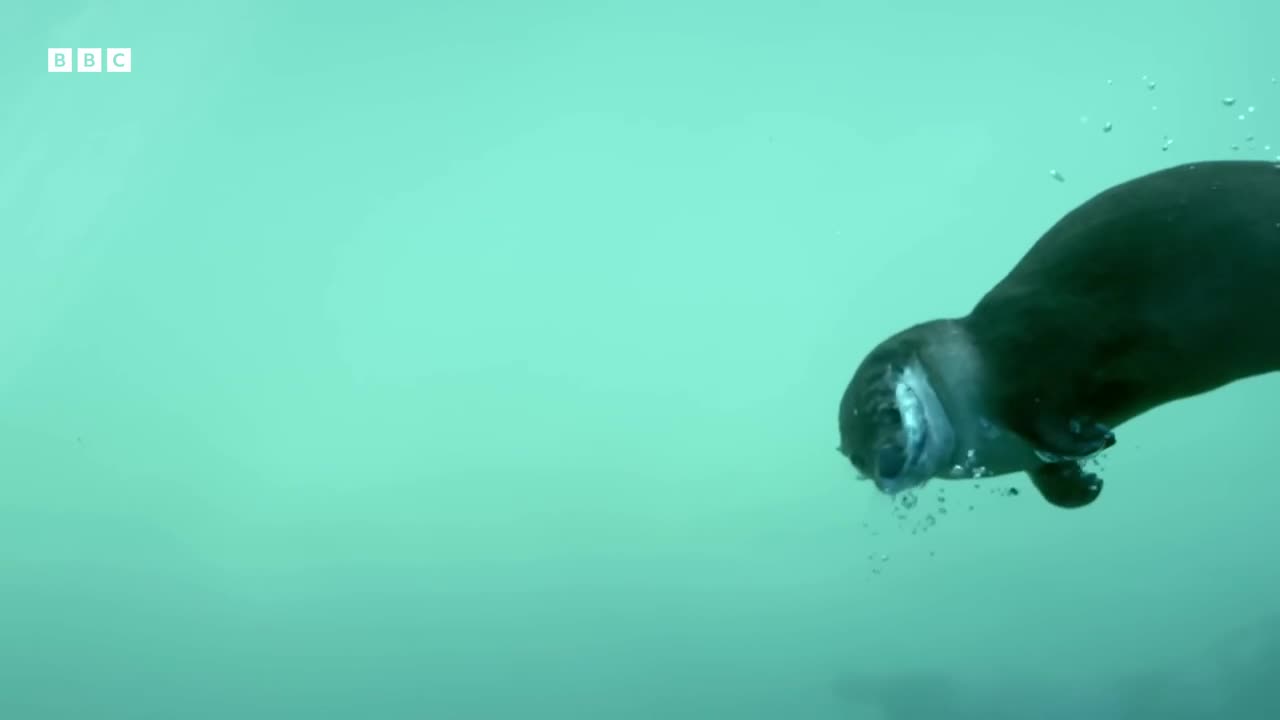
The investigation begins with the observation of an otter interacting with a fish. The animal is seen "nosing" and "sniffing" the prey, accompanied by the release of "whole loads of bubbles" around its mouth. The hosts propose that these bubbles are not merely accidental but serve as a medium for scent molecules. By releasing air, the otter may be creating a localized environment where "chemical cues" become sufficiently concentrated for the animal to process, effectively allowing it to "smell underwater."
Experimental Methodology
To move beyond conjecture, the team designed a controlled experiment using an otter named Rudy. The objective was to determine if Rudy could distinguish between a real fish and a "fake piece of plastic trout net." The experimental setup required Rudy to investigate two identical-looking objects underwater. The researchers relied on high-speed cinematography, capturing the interaction at a rate "40 times slower than real life," to observe the "subtle" and "fast" behaviors that are otherwise invisible to the naked eye.
Analyzing the "Sniffing" Mechanism
The high-speed footage revealed a fascinating sequence of events. As Rudy approached the fish, he would "actively push a bubble onto the surface of the fish." This action allows the bubble to pick up "scent molecules" from the target. The crucial moment occurs when Rudy "sucks it back in," drawing the bubble into his mouth. This process provides Rudy with enough sensory information to make a definitive choice, as evidenced by his complete lack of interest in the fake, plastic decoy.
Implications for Survival
This discovery provides a breakthrough in understanding otter behavior. In environments where "underwater eyesight" is compromised by turbidity or darkness, otters rely on this active olfactory technique to locate food. The experiment confirms that the bubble is not merely a byproduct of respiration, but a tool the otter uses to "sniff it out." By capturing the bubble and the subsequent sensory intake, the researchers have successfully demonstrated a sophisticated survival strategy that allows otters to thrive in challenging aquatic habitats. This evidence supports the theory that the otter’s ability to smell underwater is a functional, intentional, and highly effective adaptation.
Deep Learning with ListenLeap


