You're listening to TED Talks Daily, where we bring you new ideas to spark your curiosity every day.
I'm your host, Elise Hugh.
Why aren't restaurants part of the climate solution?
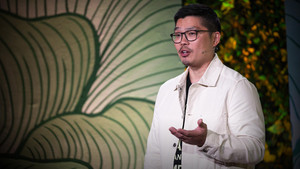
This was the question that inspired restaurateur and systems changer, Anthony Miint.
He went from opening buzzy pop -ups to pushing for a shift to regenerative agriculture.
But it didn't go the way he expected at first.
Lessons from trying to change the way we eat and the way we farm are coming up after the break.
Support for this show comes from Capital One.
Banking with Capital One helps you keep more money in your wallet with no fees or minimums on checking accounts and no overdraft fees.
Just ask the Capital One bank guy.
It's pretty much all he talks about.
In a good way. He'd also tell you that this podcast is his favorite podcast, too.
Aw, really? Thanks, Capital One bank guy.
What's in your wallet?
Terms apply. See CapitalOne .com slash bank, Capital One N .A., member FDIC.
TED Talks Daily is sponsored by ADT.
ADT knows a lot can happen in a second.
One second, you're happily single, and the next second, you catch a glimpse of someone and you don't want to be.
Maybe one second, you have a business idea that seems like a pipe dream, and the next, you have an LLC and a dream come true.
And when it comes to your home, one second, you feel safe, and the next, something goes wrong.
But with ADT's 24 -7 professional monitoring, you still feel safe.
Because when every second counts, count on ADT.
Visit ADT .com today.
Support for the show comes from LinkedIn.
If you are a B2B marketer, you know how noisy the ad space can be.
A lot of noise. If your message isn't targeted to the right audience, it'll just disappear.
But with LinkedIn ads, you can be a lot more precise.
You can reach the professionals who are more likely to find your ad relevant because LinkedIn has targeting capabilities to help you reach folks by job title, industry, company, and more.
You can stand out with LinkedIn ads and start converting your B2B audience into high quality leads right away.
I've learned so much about the vastness of LinkedIn because it does seem like everybody is on there, so it's helping me find some leads or think of connections that I wouldn't have otherwise thought of without the technology.
It's helping me stay informed and stay educated.
Start converting your B2B audience into high quality leads today.
We will even give you a $100 credit on your next campaign.
Go to LinkedIn .com slash Ted Audio to claim your credit.
That's LinkedIn .com slash Ted Audio.
Terms and conditions apply, LinkedIn, the place to be, to be.
And now our Ted Talk of the Day.
I started cooking to not talk to people.
At this point, I'm almost like a cross between a salesperson and a preacher for a whole new industry and movement that could maybe reconnect every business and chef to farming, but not in the way you'd think.
I was a line cook who inadvertently became a chef when I asked, why doesn't someone just use this hole -in -the -wall Chinese takeout restaurant to serve different food?
That kind of hypothetical question, asking why doesn't somebody just XYZ, has kind of defined my whole career.
I mean that and then diving in and putting in the work.
And so in this case, I roped my wife into trying something that journalists would later call a pop -up.
We had different menus and charities and themes for each event, a bunch of stuff that appealed to food bloggers.
This was 2008, by the way.
Cara joked that it was like planning a wedding twice a week.
Somehow we made it through 139 events, and then it turned into a permanent pop -up called Mission Chinese Food with my friend Danny Bow and a chef.
Our second location was named Restaurant of the Year by the New York Times.
Around that time, I became a father, and I just started to think a lot about the future and the food system.
And I asked, why aren't restaurants part of the climate solution?
And so I roped some friends into starting a nonprofit with me called Zero Foodprint.
Together we conducted 80 lifecycle assessments of food service operations and restaurants, and the main lesson was that the vast majority of every operation's food print was the food.
And I mean, really, it was the embodied agricultural scope three emissions from the ingredients.
And so that means that the usual best practices, less food waste, better ingredient choices, they were good, they were reducing harm, but they weren't really getting to the root cause.
Because in order for society to make real progress on climate, the food system needed a way to change farming.
And this began my obsession with regenerative agriculture and the idea that we could restore the climate while growing more nutritious ingredients.
And I think it's the answer to the dilemma of how we save the world while feeding the world.
If we could just shift from a focus on extracting short -term yields and profits through soil chemistry to a focus on restoring the long -term health of the people on the planet through soil biology, we can improve biodiversity, resilience, hydrology, the prosperity of communities.
I mean, basically, that shift from farming against nature to farming with nature is probably society's biggest and most optimistic win -win -win.
And so once again, I roped my wife into starting a restaurant with me.
This time the question was, why doesn't somebody just inspire thousands of chefs to support regenerative agriculture?
And so we tried to do it ourselves.
But the change in farming didn't quite happen, because it turns out that we needed a different approach.
So let me try to save you 10 years in five minutes.
See, we went crazy trying to be good.
We were showcasing game -changing ingredients like a new perennial wheatgrass that replaced 30 percent of the annual monoculture wheat in our sourdough bread.
We had a butchery program with carbon -ranched beef showcasing research from UC Berkeley's biogeochemistry pilots, where they were studying adaptive multipatic grazing plus compost application to accelerate the durable soil carbon sequestration and the accumulation of microbial necromass.
I mean, the whole thing was a little bit ahead of its time.
People didn't even really know the term regenerative agriculture yet.
Sometimes customers would get excited and ask, you know, oh, my God, where do I buy these ingredients?
And I had to say, sorry, there's no supply.
Journalists would kind of dig in and say, OK, so I get it, you know, supporting the restaurant seems important, but how does that turn into the change in the field?
And I had to admit, I didn't really know how.
And when we asked farmers and ranchers, what we learned was that while they really appreciated the support, you know, buying their ingredients, it wasn't really enough to economically spur the next regenerative practice on the next acre and especially not the next farm.
This non -correlation is pretty much undeniable in the case of organics, where even though there's very clear price signals and definitions, you know, it's on the shelf at Walmart, still less than one percent of U .S.
farmland acres after 50 years.
Learning this was a little bit soul crushing, to be honest, because we had gone all in with our life savings, you know, trying to make this change happen, only to learn that awareness, price premiums, better choices were probably never going to regenerate acres at scale.
Basically, we were trying to change eating instead of changing farming.
And I mean, we all kind of know how to change eating, but changing farming is different.
You know, you can't just walk into the grocery store and hand the cashier a buck for farmers to switch from chemical fertilizer to compost.
You can't just ask the waiter for a side order of cover crop planting.
You know, society didn't even really have mechanisms to directly change farming.
But why not? You know, that's basically the kind of question we were grappling with as we closed the restaurant and then started our next chapter.
And so in 2019, Zero Food Print roped the state of California into a pilot program for Table to Farm.
It began with the chief economist overseeing California's cap and trade program.
She brought in Department of Food and Agriculture.
Together we hosted months of meetings with policymakers, farmers, business owners, scientists, usually over Sichuan food and beers.
This time the question was, why don't we team up?
Why don't we generate a lot of funds and then just share them with farmers to restore the climate?
I mean, sure, that was going to involve starting an entirely new industry to directly change farming, but the whole thing seemed totally doable.
And so we started with this idea that the change in farming was necessary and inevitable, kind of like the shift in renewable energy, where collective action programs like a dollar per month on the energy bill are transforming entire grids.
Huge cities like Los Angeles and San Diego have committed to 100 percent renewable energy through these kinds of action programs.
And the best thing is citizens are just kind of going about their daily lives, you know, while the change is happening.
And now back to the episode.
And so Zero Foodprint is trailblazing collective regeneration.
We're using these same principles and then a few cents from the downstream food economy to make a direct shift in upstream agricultural production.
Basically, we're improving the food grid.
And so for an example of how this works, around the corner from Mission Chinese Food is an amazing coffee shop, Linnea Cafe.
So they source from a really high -integrity grass -fed dairy company, Strauss Creamery.
So you go in, you get your coffee, and instead of, say, five bucks, it's five dollars and five cents.
So Zero Foodprint collects the five cents, and then we make grants for compost application, cover crop planting, reduced tillage, managed grazing, planting perennials, basically the next practice on the next acre.
And so it's like that five cents is decarbonizing the food grid.
In the case of the coffee shop, it's actually kind of regenifying the supply chain because we've already made over a hundred thousand dollars in grants to Strauss producers.
We're not worrying about a special bottle of milk getting back to the customer, though.
It's really just getting that five cents to the farm projects.
And this kind of table -to -farm work is underway at dozens of businesses, wine companies, Michelin -starred restaurants, catering companies, composters, and even every Subway sandwiches location in Boulder, Colorado.
And if this was every Subway location period, sending one percent, that'd be something like $160 million per year from just one corporation.
Our goal is that collective regeneration becomes the new normal in hundreds of food sheds, supply chains, counties.
We even have model ordinances drafted, so if you're on a city council or board of supervisors and you want to commit to 100 percent regenerative ag, just get in touch.
But the real key is that it's what customers want.
It's amazing marketing because it's real.
It's local, direct, climate impact that's affordable.
But it also adds up quickly.
Zero Foodprint has already awarded over $3 million in grants to 120 farm projects.
Really, we're just getting started, but we've proven the concept on a process that's easy and transparent for farmers, but rigorous enough for government collaboration.
Any farmer can request funds to begin or to advance their progress, and then Zero Foodprint analyzes the requests and then selects the most cost -effective projects.
Then we act as almost like a general contractor, taking the project from start to finish, working with local experts and boots on the ground to validate and coordinate each one.
At the systems level, it's almost like being a regional health care provider, but for soil.
Instead of insurance and patience, it can be healthy soil funds for each field.
And the funds could come from anywhere.
It could be a dollar per trash bill, a penny per pound, 1 percent, a grocery store roundup.
But the difference is that we can use the funds and then just implement the projects now.
So it's not just 2040 goals or whatever.
That's really what used to frustrate me with governments and corporations.
It seemed like they weren't taking the climate crisis seriously.
I mean, I'm still frustrated multiple times a week on Zoom, but I've come to realize that they didn't really have a mechanism to team up and that nobody could do it alone.
Governments can't raise taxes because it won't pass a vote.
Corporations can't give away tons of profit because shareholders would sue.
Farmers didn't have the resources to take on all these risks themselves.
And customers didn't even have a way to vote effectively with their dollar.
But now it is your footprint business you can.
You don't have to be that weirdo asking for a side order of compost with your sandwich because you know that a few cents is directly going to regenerate acres.
Now any parent or really anyone who buys or sells food can just directly help create the food system that they want to see.
And if every US food business and customer sent 1 percent, that'd be something like 20 billion dollars per year, like 10 times the USDA's entire annual equip program budget.
So let me be clear.
I'm not calling for a tax on food, but I am saying that society needs and actually wants an option and a way to take collective action.
According to the science, it's not too late to solve the climate crisis and lower global temperatures.
But that really big change depends on you.
And I don't mean you in general, you the audience, I just mean like actually you.
If you will personally just get involved and then almost do the least you could do, then Zero Food Print and Farmers Everywhere are standing by to use the next dollar for the next practice on the next acre.
Almost all of us can afford to make this change.
And the truth is, we can't afford to not make it.
Thank you. Ted Talks Daily is brought to you by Progressive, where drivers who saved by switching saved nearly $750 on average.
Quote now at progressive .com, Progressive Casualty Insurance Company and affiliates national average 12 month savings with $744 by new customers surveyed who saved with Progressive between June 2022 and May 2023.
Potential savings will vary.
Hi, I'm Belavel Sidhu, host of Ted's newest podcast, The Ted AI Show, where I talk with the world's leading experts, artists, journalists, to help you live and thrive in a world where AI is changing everything.
I'm stoked to be working with IBM, our official sponsor for this episode, in a recent report published by the IBM Institute of Business Value.
Among those surveyed, one in three companies pause an AI use case after the pilot phase.
And we've all been there, right?
You get hyped about the possibilities of AI, spin up a bunch of these pilot projects, and then, crickets.
Those pilots are trapped in silos, your resources are exhausted, and scaling feels daunting.
What if, instead of hundreds of pilots, you had a holistic strategy that's built to scale?
That's what IBM can help with.
They have 65 ,000 consultants with generative AI expertise who can help you design, integrate, and optimize AI solutions.
Learn more at ibm .com slash consulting.
Because using AI is cool, but scaling AI across your business, that's the next level.
That was Anthony Mihint at Ted's Countdown Dilemma series on the future of food in 2024.
If you're curious about Ted's curation, find out more at ted .com slash curationguidelines.
And that's it for today.
Ted Talks Daily is part of the Ted Audio Collective.
This episode was produced and edited by our team.
Martha Estefanos, Oliver Friedman, Brian Green, Autumn Thompson, and Alejandra Salazar.
It was mixed by Christopher Faizi -Bogan.
Additional support from Emma Toppner and Daniela Ballarezo.
I'm Elise Hugh, I'll be back tomorrow with a fresh idea for your feed.
Thanks for listening.
Thanks for watching.