
[The Darlings and the Enigma of Neverland: An Introduction to Peter Pan]-[Peter Pan - Part 02]
📋 Summary
The Darlings and the Enigma of Neverland: An Introduction to Peter Pan
The Domestic Life of the Darling Family
The story opens by introducing the Darling family—a household defined by the universal truth that "all children grow up, all except one." Wendy Darling first confronts the transience of youth at age two, a realization sparked by her mother, Mrs. Darling, who expresses a poignant desire for her children to "stay like this forever and ever."
Living in England, the family struggles with financial constraints as Mr. Darling’s work in "stocks" proves unreliable, forcing them to "scrimp and save." Despite their limited means, Mr. Darling is obsessed with social appearances, leading them to keep a nanny. However, this nanny is not a human, but a "giant Newfoundland dog named Nana." While Mr. Darling is "ashamed of Nana" due to her lack of refinement—such as her disregard for "newfangled talk about germs"—she is described as a "treasure" who keeps the children on track, carries an umbrella for the frequent English rain, and ensures their daily routines are maintained.
The Architecture of Children's Minds
A central theme in the narrative is the metaphor of the child’s mind. Mrs. Darling acts as a curator of her children's thoughts, tidying them up after they sleep "as if minds are drawers and children's memories are underwear and socks." She organizes the "sweet things" they have picked up, while shaking out and hiding the "mean or ugly thoughts" beneath the bed.
This mental landscape is described as a place full of "zigzag lines and squiggles," all of which eventually lead to Neverland. Neverland is defined as "the magical island in the middle of every child's mind." It is a place of infinite variety, where "there are no rules to what one's Neverland should be." Whether it features "ragged coral reefs," "gnomes who like to sew," or personal anxieties like "pop quizzes on grammar," the island is unique to each individual. Crucially, the island "doesn't appear on any map because it never stands still," and while it is a fun place during the day, it becomes "scary and full of shadows" just before sleep, necessitating the invention of "nightlights."
The Mysterious Presence of Peter Pan
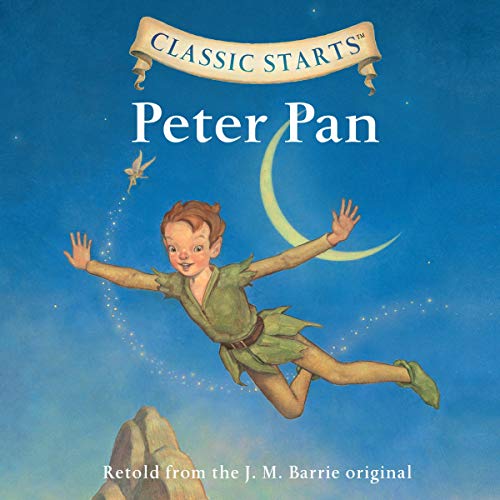
The arrival of Peter Pan disrupts the equilibrium of the Darling household. Mrs. Darling begins to encounter the name "Peter" repeatedly, written in "bolder letters than any other word" within her children’s minds. When questioned, Wendy insists Peter is not a stranger, leading Mrs. Darling to a fleeting, repressed recollection. She recalls a story from her own youth about "a boy who kept children company so that they would not be scared," yet she dismisses the possibility of his existence, reasoning that if he were real, he "would be grown up just like me."
Mr. Darling, dismissive of his wife's concerns, attributes the entire matter to "some nonsense put into their heads by that no-good nanny." He confidently predicts that the situation "will all blow over." The narrative concludes with a grim irony, noting that these dismissive remarks are "what are sometimes referred to as famous last words," signaling that the disruption brought by Peter Pan is far from over and that the boundaries between the children's imaginative Neverland and their domestic reality are about to collapse.
Deep Learning with ListenLeap


