
[The Survival Journey of Orphaned Otter Cubs: Challenges and Care at Wild Instinct]-[Otter Pups Take Their First Swim | BBC Earth]
📋 Summary
The Fragile Beginnings of Orphaned Otter Cubs
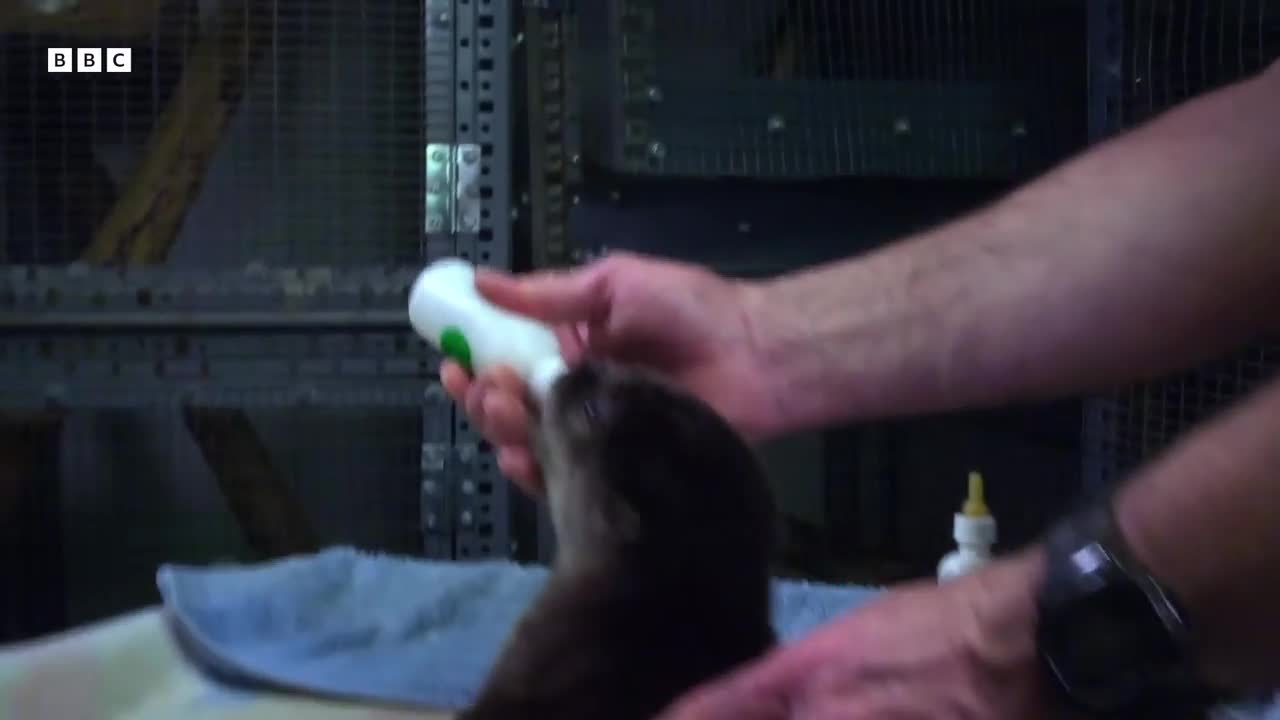
When the orphaned otter cubs arrived at the Wild Instinct wildlife rehab center, their condition was dire. Having been "abandoned by their mothers," the cubs were described as "weak, defenseless," and in such a precarious state that they "would not have survived the night" without immediate intervention. The center’s primary objective was to stabilize them by providing nutrition that would "mirror their wild diet," utilizing a combination of "chopped fish and milk formula."
The Medical Uncertainties and Future Prospects
Center manager Mark faces significant concerns regarding the physical health of the weakest cub. Upon arrival, the cub presented with a "bad leg," specifically an "injured the joint on his right rear leg." The clinical prognosis remains grim, as Mark admits, "we're not quite sure whether it's gonna heal enough for him to be released or not."
Even more concerning is the fact that the cub has sustained secondary injuries, including a "slight injury to the joint" on the other leg, leading Mark to conclude that "even the good leg is not necessarily a good leg." This health crisis places the center in a difficult position regarding the animal's future. The contingency plan is to "find a zoo" for the cub if he cannot be "released back into the wild." However, the outcome could be tragic; Mark notes that "if we're unable to find a zoo, then he may have to be euthanized." To maintain professional boundaries and ensure the animals remain wild, Mark adheres to a strict policy to "keep any attachment to a minimum" by refusing to name any of the animals in his care.
The Challenges of Early Survival Skills: Swimming
At eight weeks old, the cubs reached a critical developmental stage: learning to swim. Despite their aquatic nature, Mark observes that "baby otters don't really like water," making it his responsibility to teach them that "water isn't something to be afraid of." To mimic natural maternal behavior, Mark uses "soothing calls to reassure them" and persistently places them back into the water whenever they attempt to flee, mirroring how a mother otter would guide her young.
Biological Constraints and Surrogate Care
The swimming lessons are necessarily brief due to a specific "surprising quirk of otter biology." Because the cubs' coats do not become "waterproof until they're 12 weeks old," extended exposure to water poses a significant risk of "hypothermia." Mark acts as a surrogate mother, compensating for the lack of natural grooming. He explains that in the wild, cubs would "be rolling around in the grass and the dirt" to dry off, a behavior he replicates by using "towels to kind of help us out a little bit." By limiting the cubs to "short dips," Mark ensures they avoid becoming "cold and waterlogged," successfully bridging the gap between their current vulnerability and the natural survival skills they will eventually need to master.
Deep Learning with ListenLeap


