Hi, listeners.
Welcome back to KnowPriors.
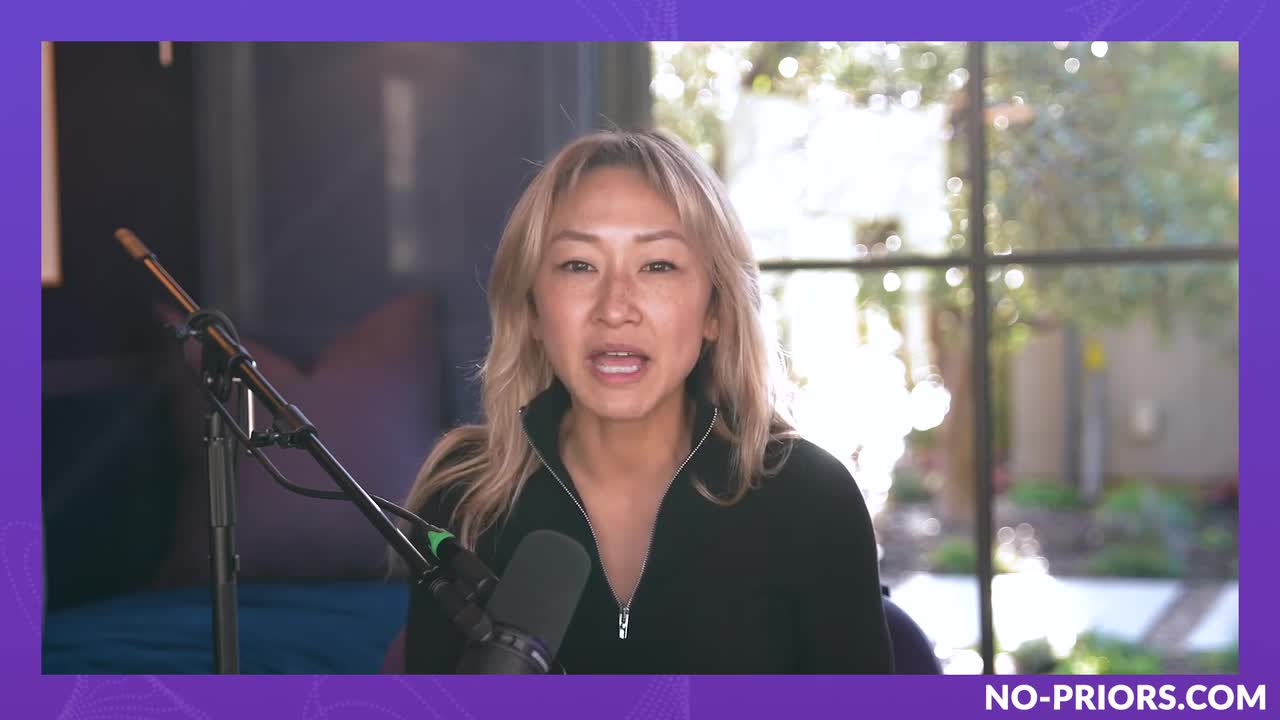
Today I'm here with Madi Stanisic, the co-founder and CEO of Eleven Labs, which was founded to change the way we interact with each other and with computers with voice.
Over three short years, they've skyrocketed to more than 300 million in run rate.
Madi and I talk about the future of voice education, customer experience and the other applications of this voice, as well as how to build a multi-segment from self-serve to enterprise and combined research and product company.
Welcome Mari.
Sarah, thanks for having me.
And thank you for doing this at 7 in the morning.
Our pleasure.
Thank you for doing that at 7 in the morning.
It's great we got to finally do this together.
I think a lot of our listeners will have used or played with Eleven at some point.
But for everybody else can you just reintroduce the company?
Definitely.
At Eleven Labs we are solving how humans and technology interact, how you can create seamlessly with that technology.
What this means in practice is we build foundational audio models, so models in a space to help you create speech that sounds human, understand speech in a much better way or orchestrate all those components to make it interactive, and then build products on top of that foundational models and you have our creative product, which is a platform for helping you with narrations for audiobooks, with voiceovers for ads or movies or dubs of those movies to other languages, and our agents platform product, which is effectively an offering to help you elevate customer experience, build an agent for personal ai education, new ways of immersive, immersive media.
But all is kind of under under light with that mission of solving how we can interact with technology on our terms in a better way.
You started the company in 2022.
That's right.
And you've had amazing like rocket ship growth since then.
I'm sure it's felt up and down different ways.
I want to ask you about that.
Can you give a sense of what the scale of the company is today?
So we've grown to 350 people globally.
We started from Europe.
We started as a remote company and are still remote first, but have hubs around the world, with London being the biggest, New York being second biggest Warsaw, San Francisco and now Tokyo and one in Brazil.
We are at 300 million in ARR, which is roughly 50-50 between self-serve so a lot of subscription and creators using our creative platform and then approaching 50 on the enterprise side using our agents platform work.
And that's on the sales-led, classic sales-led side.
And we serve more than 5 million monthly actives on that creative side of the work.
And then on the enterprise side, we have a few thousand customers, from Fortune 500s to some of the fastest growing startups, think this is such a you're an amazing founder.
But i also think it's such an interesting company because it is um, very unintuitive to, i think, many people and investors in particular.
I don't know if you face this at the beginning, but i remember there in 2022, there's a, there's a class of companies that allow creation in some way.
When we look at your like first business beyond the research itself, uh and i would put 11 and mid journey and suno and hajian in this category and i think there's like, this overall sense of like.
Who really wants to do this?
Um, what was your initial read of like?
How many people want to make voices, or what made you believe that was going to be much broader than Like?
If I look at dubbing, for example, it's not a huge market.
I think for SPs, which is as you mentioned, it's very tricky to do both the product and the research.
I'm in a lucky position that my co-founder and I have known each other for 15 years.
I think he's the smartest person I know and has been able to create a lot of that research work, to be able to create that foundation, to then elevate that experience.
But both of us are from Poland originally, and the original belief came from Poland.
It's a very peculiar thing, but if you watch a movie in Polish language, a foreign movie, in Polish language, all the voices, whether it's a male voice or a female voice, are narrated with one single character, so you have like a flat delivery for everything in the movie.
A terrible experience.
It is terrible experience and it's still like, if you grow up, that as soon as you learn english you're like switch out and you don't want to watch content in this way.
And it's crazy that it still happens until today in this way for a majority of content.
Combining that and I worked with Palantir.
My co-founder, worked at Google.
We knew that that will change in the future and that all the information will be available globally.
And then as we started digging further, we realized... In every language in a high quality way.
Exactly.
And the big thing was like, instead of having it just translated, could you have the original voice, original emotions, original intonation carried across?
So like imagine having this podcast but say people could switch it over to Spanish and they still hear Sara, they still hear Matti, and the same voice, the same delivery, which is kind of exactly what we did with Lex back when he interviewed Narendra Modi, and you could kind of immerse yourself in that story a lot better.
So that was the original kind of insight.
And we then started digging further, which is that just so much of the technology we interact with will change.
Whether this is how you create, it's still relatively tricky to bring voice alive.
You need to go through the expensive process of hiring a voice talent, having a studio space, having expensive tooling to then actually adjust it.
The tooling isn't intuitive to be able to do this.
So, like all, that creation process will and should change to make it easier for new people with keenness to bring that to life.
Then a lot of the technology wasn't possible for you to be able to recreate a specific voice or be able to create that in that high quality way.
And then, of course, as we dived into further and shifted away from the static piece, the whole interactive piece is still crazy in the way it functions, where most of us have seen this technological evolution over the last decades.
But you still will spend most of your time on the keyboard.
You will look at the screen and that interface feels broken.
It should be where you can communicate with the devices through speech, through the most natural interface.
There is one that kind of started when humanity started.
And we realized we want to solve that.
And I think now fast forward from 2022.
I feel like Many people will carry that belief too.
That voice is the interface of the future.
As you think about the devices around us, whether it's smartphones, whether it's computers, whether it's robots, speech will be one of the key ones.
But I think 2022, it wasn't.
And as you think about the market for the creative side, or for that interactive side, it was very clear it will be a huge huge, huge one.
So even when you think about just the research part of your business, and then you have products for at least two different markets and then you have this larger mission.
A lot has changed in the last five or 10 years, but it used to be like a very strongly held traditional belief of like one must do one thing well in a startup and there's no other path.
Like you're treating this like an interaction company, a platform company.
How did you think about sequencing like the research and the product effort?
Does that make sense?
Or like thinking about new markets?
And maybe wrapped up in that question too, is just like where are we in quality on on voice as well?
Because if, if i, i would sort of claim like, if the models are not good enough for certain use cases at all like uh, kind of makes sense, do product, And I think that's right.
It's almost exactly like when we started.
Originally, what we did was try to actually use existing models that were in the market and optimize them, for our first use case was actually starting with a combination of narration and dubbing, and then, on the creative side, we realized pretty quickly that the models that existed just produced such a robotic and not good speech that people didn't want to listen to it.
And that's where my co-founder's genius came in, where he was able to assemble the team and and do a lot of the research himself to actually create new version of creating that work.
But like to your question, I think that the way we are kind of organized internally and how we think about sequencing a lot of that was looking at the first problem and then creating effectively a lab around that problem which is like a combination of mighty researchers engineers, operators to go after that problem.
And the first problem was the problem of voice.
So how can we recreate that the voice?
And, like you say, it needs to have that research expertise to be able to do that.
Well, so we started with effectively, a voice lab, which was that mission of can we narrate the work in in in better way?
There was a combination of roughly five people that were that were doing that work and then sequence the research first and then build a simple layer on top of that work to allow people to use that work and then kind of expand it from there with a holistic suite for creating a full audio book and then creating a full movie narration or movie dub.
And then we move to the next problem, which is realization that okay, we have solved the voice, great for making content sound human.
The first problem for that to be useful, for us to interact with the technology, you need to solve how you bring the knowledge on demand into that.
So we effectively started.
Then the second team, which was a second lab, an agent lab effectively, which was a team that would combine researchers, engineers and operators once more, which would try to fix okay, we have text to speech.
How do they now combine this with LLAMs and speech-to-text and orchestrate all those components together while integrating that with other systems to make it easier?
And then similarly, you kind of expand from looking just at the voice layer into how those systems work together.
And here too you need the research expertise to do that in a low latency way, efficient way, accurate way.
But at the same time there's that product layer that starts forming, that it's not only the orchestration that matters.
It's also the integrations of how you link up to the legacy systems, how you build functions around it or how you deploy that in production and test monitor, evaluate over time.
Do you feel like you were creating new use cases when you built the tools?
Do people know that they wanted to do this already?
Because one argument like that I remember hearing was like ah, like you know, enterprises don't know what to do with voice, how many people really want to do it, and then you're serving essentially like, perhaps the like creator-publisher side of your business.
Yeah.
It's definitely a combination of like initiatives that we believe will happen in the world and then like response to a lot of that.
Like, as I think back we you know of course the internal voice lab or agents lab, then kind of that kickstarted so many of the other labs in response to the problems.
We started a music lab because people wanted to create music with 11 labs.
It was a fully licensed model where People wanted to use and create speech, but they wanted to add music in a simple way.
We wanted to deliver that.
And then of course that kind of came together through how do we combine music audio, sounds we are now integrating partner models from image and video into that suite is how could you combine all of that in one?
And all of that was in response to the market saying us like hey, we would love this.
And then you will have completely different use cases, even in that space.
Let's say, dabbing.
Dabbing is a use case that We didn't feel there was like a big push for that, but we knew that in the ideal world in the future you will be able to have that content delivered naturally around the languages still carrying that.
And I still think actually this market will be immense because it's not going to be only the static delivery in movies, but if you travel around the world and want to communicate in real time, like the full Babelfish idea from Hedgehiker's Guide to the Galaxy, this will happen.
It will be like the biggest, like the whole, breaking down language barriers, that are, the barriers to communication, to creation, like all of that will break.
And that will be like the foundational real-time dabbing concept. super excited about that part.
And similarly, on the agent side, you are like some obvious things that of course customers that we work with or partners will want to integrate, which is, want integrations with xyz systems, but then there are like other parts that might not be as easy to predict of, as you interact with technology of course want to understand what's happening, but you also want to understand how the things are being said and bring that into default, which would be something we try to prioritize on our side.
So then the people, when they actually interact with the technology, they realize oh, expressive thing is actually so so much more enjoyable and beneficial and helpful.
So I want to ask a question about this, which relates to quality.
You know, I work with a series of companies where we're selling a product to the buyers, who are generally not machine learning scientists, right.
And even the scientific community does not have the full suite of evals and benchmarks to understand every domain well,
It's a well-known problem.
But I imagine for a lot of your customers, it's not like they know how to choose good voice.
So how do you deal with that problem?
Hey, I make a clone and like that sounds like me and I believe in.
I'm going to try all of these different options, or you know actually, are you teaching people to do eval?
It's a great question because I think there are two big problems.
One is how do you benchmark the general space in audio where, like you say, it's so dependent on the specific voice?
Let alone if you are training it to interactive, then it's even more tricky.
And then the second piece, which is, as you are working on a specific use case, how you select a voice.
So I'll take the second front first, which is we have like a voice sommelier effectively.
As we work with enterprises, we deploy that person to work with them and help them navigate.
That person is like a voice coach, has an incredible voice themselves and uh, and now we have like a team under that person that like will partner to help you find what's the right branding.
Yeah, and now you have like the celebrity marketplace, and now we have a celebrity marketplace to like help you even get that iconic talent in there, like sir michael caine.
That piece was important because, of course, the voice will depend on the use case that you are trying to build, the language.
All of that will will have an impact of what's the right voice for your customer base.
So we have effectively a a a voice person helping those companies, and some companies will be very opinionated on what they want, so they will sometimes selected themselves, sometimes give us a brief of hey, we want a voice that sounds professional neutral, is calming.
We recently had a company one of the biggest European companies that wanted that, gave us a brief, which is very original, that they wanted as robotic voice as possible.
Okay.
Just counterintuitive.
And you're like, we can't do that anymore.
Almost, but we were like trying to go backwards of like, how do we do that?
But I think we got a good result.
But recently we had a company in Japan where Japan and Korea, where they wanted to serve different voices depending on the customer that's calling in.
They have an older population and a very younger population.
The younger one they wanted, like one of the famous voices in the market.
That's very excitable and happy.
And for the older one, they wanted like a calm, slow speaking one.
We help a lot with that.
So that's on the voice piece.
And I do think it's going to be a big, important one.
It's like a personalized choice and then it can even be dynamic in a customer.
Yes okay, exactly exactly.
And then maybe in the future it's like going to be like a fully depending on your interaction, you will have a voice created as we understand the preferences of what people want.
So you know like, let's say, you're in the evening and you are tired and you want a slightly different or maybe not, maybe that's like the best uh, a focus time that you have like a voice, that's that's giving that energy, and probably it's a different when you wake up and gives you the morning news of what's happening or what's the weather.
So like, all of those could be different.
Yesterday we had a dinner with some of our partners and one of them.
The first thing they said is like hey, I have a new request for you.
I want a New York voice with a Long Island accent, which I never knew is a thing, and it's supposedly a thing.
Yeah.
So we have that.
And then on the first piece, I think it's unsolved problem still, where I think you have good benchmarks, of course, in LLMs.
I think in image space, they are pretty good.
In voice space you have of course the speech quality, but then so much of whether you like or not the speech depends on the voice that just if you compare model A to model B and you serve them different voices, even if the quality is very different, the voice itself can just make that sort of difference.
We've seen this, I don't know if you know, artificial analysis, benchmarks.
I think they're pretty good.
Just switching the voice makes such a big impact.
That's so interesting.
Yeah, and I wonder if, as you said, this is the most dominant interaction mode we've had for millennia of all of human history.
Right?
I'm biased in self-serving, but I think so.
We're just very sensitive to it.
And I think people are going to be very sensitive to their own personalization as well.
I think there's also a third piece which maybe it's not directly to your note, but we've also realized that you have.
So you have the benchmarks you have like.
How do I find the right voice for my audience?
But even the understanding of how you describe audio data is still lagging in the industry.
Like when we initially started, we of course went into the traditional players for them to help us label not only what was said so like transcription, but also how it was said like what are the emotions?
Use accent.
And most people just weren't able to do that work effectively, because you kind of need to hear and have like a little bit of a skillset of like how would I describe this specific delivery?
So we needed to create that ourselves.
So I think that is that piece as well of like how do you effectively interpret the data of audio in a more qualitative basis?
That's yeah, tricky.
You talk about what's happening on uh, the agent platform side, like what is challenging for you know, businesses or even creators that are trying to build agents and what the what maybe, what these surprising or high traction use cases are.
I think everybody's kind of aware of the idea of like, agent-based customer support, but i imagine you're doing many things beyond that.
Yeah, so exactly,
Customer support is probably the one that's like kicking off the quickest.
And that's the one that like we see overtaken so many use cases.
But as far as I work with Cisco or Twilio or Telus Digital, all of them are kind of elevating that to a high extent.
I think the second exciting piece within that domain which is happening is the shift from effectively a reactive customer support.
I have a problem.
I'm reaching out the customer support into more of like a proactive part of the experience customer support.
So, to make it explicit, We work with the biggest e-commerce shop in India Misho, where they started working on the customer support side, where I want a refund.
I want to see the tracking of the package to actually having an agent be a front part of the experience.
So if you go to the website You have the widget, you can engage it for voice and you can ask it.
Hey, can you help me navigate to item X, item Y, or can you explain what's the right thing for me to give up for a gift for this period of time?
And then it will actually help you based on your questions, based on what is on the offer.
Show you those items, navigate to the right parts of the piece, maybe go all the way through the checkout.
And I think this will be a phenomenal thing of like elevating the full experience where that's more of an assistant across the whole thing.
We got kicked off our work with square that enables all the businesses to do that work.
Exactly the same pattern started with voice ordering uh, how can now this be part of the full discovery experience too, where you get items shown to you.
You can have a lot more explanation, which i think will be a phenomenal piece where where's uh?
Effectively from the beginning to the end.
That's one category.
The second one is the wider shift from static to immersive media, where there's just so much incredible stories in IP that today exist in effectively one way of delivery.
And now you'll be able to interact with that content in a completely new way.
We uh, i think one of the incredible use cases was working with epic games.
We worked with them on bringing the voice of dar vader and dar vader into fortnite, where Millions of players could interact with Darth Vader life in the game, where you had like a full experience of Darth Vader in a new way.
And I think this will be a theme across, whether it's talking to a book, talking to the character that you like, to the whole space shifting.
And then I think the one that I'm most excited about for the world and for the shift is going to be education, where you will just be able to have like effectively, a personal tutor on your headphone.
It could like actually study something in an amazing way.
I'll give you like two quick examples.
One is uh, we recently worked with chesscom.
I'm a huge fan of chess.
Okay great, so you can learn chess, but you can have hikaru nakamura or magnus carlsen be your, your teacher of how you deliver that cool, which is amazing.
Or even Bottice Sisters, or it's like all the platform of different players that engaged with that, which I think is great.
And then maybe a last one, which is a masterclass we worked with to shift from.
You can, of course, have the content go through step-by-step, but you can also have like an interactive experience.
And the best example of that was working with Chris Voss, the FBI negotiator, one of the top negotiators, who has a masterclass lesson, but then you can actually call him and have a practice negotiation, which is crazy.
Yeah.
Got to get that hostage out.
We'll definitely try it.
Yeah um, can i add one more?
I think the one on one, last one which combines all of them together, which i, which i realized just recently, is uh, which was crazy.
So recently i went to uh, to ukraine, where we are working with ministry of transformation, where they are effectively creating a first agent government and the crazy thing is they have all of those government government okay, So they want to like re-change of how they run all the ministries.
And it sounds like a big ambitious goal and lofty, No, I think the baseline is here.
So actually, I'm by that immediately.
And the crazy thing is, I think they are so ahead in actually doing that.
And I think there are two concrete things there.
One, they kind of combine all those use cases.
We are looking into how they can have effectively customer support of government, whether it's asking about benefits or employment, about the process of how you leave the country.
All of that be run through effectively a digital app.
Then two, how we can have proactive way of informing citizens of things that might be happening.
But then having education system that also run through like this personal tutoring experience.
And all of that is happening.
So that was incredible to see.
In a sense, amazing thing was that the way they've done it.
So they have the digital transformation piece, but they have engineering leaders in each of the ministries that lead those efforts and then bring them back to that one central piece.
So that is like incredible to see and and also proud to be able to be working with with them on that shift.
But despite everything that's happening, they're like so that's amazing, that's really encouraging.
Um, can i ask you a business model question here?
Because, looking at the strategic landscape um, actually i have many questions here.
Um, one of the observations i'd have is, if i look at one of these like rich voice and action asian experiences, it's a lot of uh, let's say, fortune 500, global 2000 leaders who listen to the pod.
Uh, they I think a lot of them are going to buy the idea of like.
I want this amazing automatic like real time available 24 seven, every language experience for my customer.
That's, and high quality.
The ways I might get there include working with a Palantir or a large consulting firm, working with Eleven or a like platform technology company or like an OpenAI or something right.
Let's talk about that. or working with a sort of more use case oriented company like Sierra, right?
How do you think about how people are making that decision or how they should make that decision?
So my past is also in Palantir, so I started exactly from that side.
And we do blend a lot of the forward-deployed engineering inside of the company too.
As I think about the kind of our offering and the customer is making that choice.
If you're looking just as like one pointed solution and only that one, then likely we aren't the best choice.
If you are looking to deploy that across a plethora of different experiences.
So I'll be at customer support, but then you also want internal training and you might want to elevate your sales part and actually increase the top line with new experiences of how you engage customers beyond that kind of reactive piece.
Then it's a great platform to build.
And then we effectively, as we engage with customers, combine that platform work with our engineering resources to help those companies deploy on that.
Or which we also see increasingly in Fortune 500s G2000s, where they will want to build parts of the things themselves, because they already have a lot of the investments in that platform, while then engage us on some of the new ones and combine those.
And I think that our model and the way it's different to a lot of the use case specific ones is that our platform is relatively open, where you can use pieces of that platform and not all of them for those different use cases.
Palantir, of course, or some of the consulting companies, will have a lot more resources to go in the wider digital transformation journey.
In our case, it's like very specific conversational agents.
Like if you are looking for new interface with customers, that's the best way.
And companies like Sierra phenomenal, of course, on how they are thinking about the specific pointed use case.
And then maybe the other piece is like as we think about our work, depending on how you are, what you are optimizing for.
So we have a lot of international partners.
If you have like a wider geographic user base great, that's what we optimize for.
Our voices, our languages, our support for integrations internationally are just so much broader.
There's frequently a piece that you will look into, depending on your exact scope.
This will be.
This will be a big factor, but i would summarize that if you are looking for a solution across a set of different use cases, that you want our engineering help and deploy that, then we are the right solution and probably the best solution.
I want to talk a little bit about maybe like OpenAI and the foundation LLM, foundation model companies.
One of the reasons a lot and I called this podcast no priors is because we're like okay, people are making a lot of assumptions all the time about how the market is going to work.
And.
Lo and behold, like many of those assumptions end up being nonsense, actually.
And you can't, you have to very much decide your own narrative at this point in time.
I think.
Correct me if I'm wrong.
Like in 2022 and 23, you probably heard a lot of people say, like Google can do this and OpenAI can do this.
And like, why do you get to persist working on voice anyway as a general capability?
What's the answer?
That also adds another element to a couple of the other previous questions, whether it's agents' work, whether it's the creative work.
To deploy the value in those work, you need a very strong product layer.
You need the integrations.
You need to help people deploy the work, which is the most common piece.
But our superpower and our focus for a long time was building the foundational models to actually make that experience seamless.
And as I think about the companies in the market, they will optimized for a lot of other things.
And that will be the differentiator in our case, where we will make the whole experience, especially with voice seamless human, controllable in a much better way.
And so fundamentally, you would argue that the labs just aren't going to focus on this and haven't exactly.
So i think most of those companies and that's the thing about the long term, it's going to be incredible research, an incredible product that meets customers where they are and work backwards from there.
I don't think that the labs will focus on building that product layer that's so important.
But i think that you know part of the question that you're asking is like how uh, or and and why they haven't done even the research part to the quality that that we've been able to here.
I'm also biased, but we are happily beating them on benchmarks with text-to-speech or speech-to-text or the orchestration mechanisms, And I give credit to my co-founder and the team that they've been able to do it.
It's just mighty researchers just continuing their work.
But I think the main part that I think is different in Audiospace is that you don't need the scale as much as you need the architectural breakthroughs, the model breakthroughs, to really make a dent.
And we've been able to do that a couple of times.
And I think the number of people doesn't matter, but the people that you do does.
We think there's maybe 50 to 100 researchers in audio space that could do it.
We think we have... probably 10 of them in the company that are some of the best ones.
And I think this obsession of just those people working across and then actually giving the full focus on the company, on making them actually work on that and bringing their work to production, seeing the users interact back, was so important.
So that's the that's, i think, how we, how we been able to create models um, better than some of the the top companies out there.
But you know, the truth is it's like, to large extent, is why they weren't able to do it is also like an interesting we don't know.
It's like it's a, it's a, it's uh, they are like.
They have such an incredible time there too.
How do you think at the same time about open source models?
Anyone you ask in a company, I think, will say that same.
And that's like a narrative we think about.
In the long term, models will commoditize, or the differences between will be negligible.
For some use cases, they will still matter.
For most, like the most use cases, they won't.
And they'll be broadly available and partially open.
They will be broadly available, exactly.
And we don't know where that is, whether it's two years, three years, four years.
But it's going to happen at some stage.
Then, of course, you will have a fine tuning layer that will matter a lot on top of those models.
But the base models, I think, will get pretty good.
And that's why, for us, the product piece is so important from the company perspective, but also from the value perspective, because if you have a model, that's great, but to actually connect your business logic and knowledge, to be able to have the right interface for creating an ad for your work or a completely new material,
That's a very different exercise.
But open source models are getting, if I split into two, like more of that async content narration.
I think narration is pretty much.
Open source is great.
Commercial models are great.
Differences are getting smaller on the out-of-the-box quality.
What most of the models haven't figured out, and I think we were, is how to make them controllable.
So that's kind of the narration piece.
I think the whole interaction piece of how you orchestrate the components together, whether that's cascaded speech-to-text or length-to-speech approach, or whether in the future it's a fused approach where you train them together.
I think this is good for customer support or customer experience, but it's still away from conversation like we have and passing that Turing test.
So I think this is still a at least a year, like within a year.
And then you will have like real time dubbing kind of variation of like real time translation conversation.
And I think that's maybe like more two years, within two years away.
You know a very uncomfortable belief that I I feel comfortable having this belief but I think is uncommon in the market right now.
Is that actually most advantages in technology, like they could last you a year or they could last you 10, but they're not like infinitely defensible?
And if you think about that from a model quality perspective or a product perspective, they allow you to like serve the customer better and build momentum and build scale for some period of time.
And actually, that's really powerful over time, right?
But it's not like a clean forever answer.
And so I think that makes, I don't know, business people and investors uncomfortable.
And I mean, it's very true as well.
And CEOs.
I mean, the way you think about it, research is head start.
This gives us, we can give advantage to the customer earlier and it's six, 12 months of advantage.
That is also a way for us to build a right product layer for you to get best of that research.
Frequently we do that in parallel, so the moment the research is out there, you have the product because we know our initiatives, we know what the product is.
That's right.
So you have research product in pile that extends that.
But the kind of the thing that will really give that long-term value is the ecosystem that you create around, whether that's the brand and distribution, whether that's the collection of voices.
You can have the collection of integrations.
You can build the workflows that you can build.
Like I think that's, That's the way we kind of sequence that in our mind that research product ecosystem that we built and research, all of this is a head start and being able to like accelerate the future a little bit closer.
I think that's a really powerful insight, especially if, you know, the research and the research team and the company team believe that as well internally. it's it's it's i think the piece that we i was like interesting for us is um and i think this is like the the big questions for all companies that the research and product is do you wait for a research or do you do like a product change uh or even not only research product companies like do you wait for someone else to do the research because the timeline for that isn't clear is it three months six months twelve months you don't know exactly what it will do which is the hard choice of like do i invest into product layer or do i just wait more for the research so like in our case we internally let all the product teams, the research initiatives, so we can parallelize that work.
But we don't hold them that if a product team thinks we should deliver value to the customer by doing something different, they can.
And rough rule of thumb is like three months.
If we think it's going to be longer than three months, we would probably build it.
If it's less than that, we probably won't.
Can you talk about some of the research that you're doing now and then how you think about like, the cadence of delivery and what's worth working on?
We have now a number of different initiatives across the audio space and there are kind of two big buckets and roughly they will relate to that creative and agent side.
On the creative side, What this means, we did text-to-speech models that are controllable.
We then added a speech-to-text model that transcribes in a high accurate way, but across a lot of resource languages as well, so covering almost 100 languages.
Then we created a music model, a fully licensed music model.
And as you think about the future, it's how those models will also interact with some of the visual space.
So that's a lot of effort in how you can get the best of audio and then potentially combine that with existing video that you have to really have the best delivery.
And then on the agent side, it's of course how you optimize the real-time speech-to-text.
Real-time text-to-speech.
We just released our speech-to-text model Scribev2, which is under 150 milliseconds, 935 accuracy across the top 30 languages.
On Flourish
And it's only top 30 here because we serve so many others, but most of the people don't.
So it's beating all the models on benchmarks.
But, as you think about the future, it's also the orchestration piece of how you bring speech to text, LLM and text-to-speech.
We'll be releasing over the next couple of months a new orchestration mechanism that will lower the end-to-end part, we think, in a great way.
But second thing, which is what is so hard, is it's not going to only allow you to combine those pieces, but add also the emotional context of the conversation.
So you can actually respond with the model and we think in more expressive and a better way.
And in the future, and something we're investing is parallelizing a speech-to-speech, more fused approach as well.
And, of course, depending on the use case, if you are like enterprise reliable use case.
The cascaded approach is the approach for the next year to- Has more structure yeah.
More structure, you have more- uh visibility into each of the steps it's reliable you can i'll call tools if you're feeling more expressive and can hallucinate speech to speech might be the choice and maybe over time you'll see them kind of go one over over another depending on their on the industry but that's like a huge investment on our side which is where of the foundation of all the platform and and the main part that we are continually investing in is is kind of platform different models that combine the best of audio with some of the best of the other modalities together i want to take our last few minutes and ask you a few questions about just the future that i think you'll have a really good point of view on given you think about voice and audio all the time What do you think of AI companions?
I think they will be a big thing and exist in a big way.
Not something I'm personally excited about or something that we spend much time on, but I think the whole line of what's a assistant companion character that you enjoy as part of experience will kind of blurry and blend to a large extent.
They can be very common, but you're not like enthusiastic personally about it.
I'm more excited about like more of the Jarvis version of that, or like more of like I have a super assistant.
Versus the social version.
Versus the social version.
That's like...
I think it just would be like such an incredible unlock.
And it's also like, it's something blending in that personal life context.
I would love to start the day and like someone that understands me and like start and tell me what's like relevant to me and open the blinds.
And like tell me about the weather and the sunshine and play music straight away.
It's going to happen.
It's going to happen.
That's what I'm excited for.
I think the companion use cases will mention solving loneliness and that part.
I think That's one way.
Maybe there are different ways of engaging people back.
I do think there will be an interesting future, even if you think about education, where you will have superpower with learning from AI tutors.
But I think on the flip side of that, and I think this will... That's my personal take.
You will have education a good percent of time spent with AI tutors, but then explicit percent of time spent without any technology.
Human to human.
So you can kind of learn that part too.
Yeah, I think this is the correct model, both in terms of like emotional guidance and coaching and, you know, uh guardrails right as well as like peer-to-peer yeah um exactly what do you think about um dictation or what happens in terms of how we like control uh technology that isn't necessarily personified as well or does it just all become personified i think not all personified i think like sam you know communicating with an oven and home probably will like stay pretty static and or code i might just yeah exactly like you didn't probably need that much of like additional emotional input But I think it's going to be a huge part where, in a way, what I hope will happen is you will have the ability to stay more immersed in the real life with the devices going back into the pocket, back into some version of attached element, assuming that's in the right setting.
And that kind of acts on your behalf.
And in many ways, like let's say dictation, it's, as Karpati says, decade of agents, let's call it decade. then you'll have a decade of robots.
If you are interacting with robots, of course, voice will be the input and the output as one of the key interfaces.
So you will need that dictation as a huge part.
But similarly think the robot's going to be personified.
Yeah yeah 100 100 yeah no, like yeah, i think i think most of the use cases will be personified.
Okay, last one, what's like one thing that you've seen already exist today or, if you project out a few years, will change about how we interact with content.
Maybe it's like personalized voice content or um, just something people are going to do with with ai voice that they don't do today or that not everybody knows about.
I think this still the biggest one that hasn't yet kicked into that the system is like how education will be done.
I think this goal like, i think, learning with ai will, with voice where you, it's like on your headphone or in a speaker.
It's just going to be such a big thing where you have like, your own teacher on demand and who understands you, very personified and kind of delivers the right content through your life.
I think this will be one of the biggest use cases.
And I don't think it happened yet.
I think we see, of course, some of the commercial partners, but like schools universities, how that's deployed in a safeguarded way, in a way that like, supports the other part of the education, the social part of education.
I think all of that will evolve.
And maybe there's a cool version of that where you have, like Richard Feynman or Albert Einstein deliver those lecture notes or other teachers that you love.
It would be sick.
That's a great note to end on.
Thanks for doing this, Mati.
Thanks so much.
Find us on Twitter at NoPriorsPod.
Subscribe to our YouTube channel if you want to see our faces.
Follow the show on Apple Podcasts, Spotify, or wherever you listen.
That way you get a new episode every week.
And sign up for emails or find transcripts for every episode at no-priors.com.