
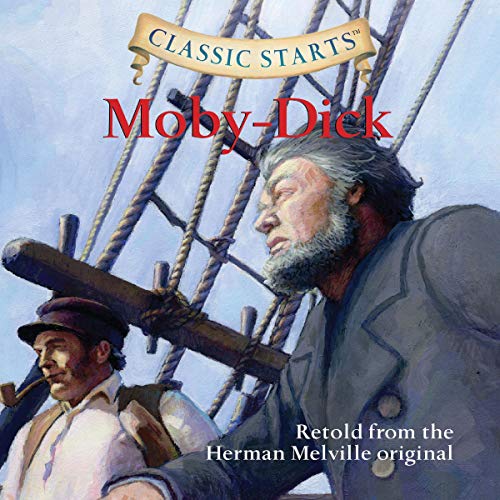
[The Encounter with the Samuel Enderby: Ahab’s Obsession and the Anatomy of a Scar]-[Moby-Dick - Part 17]
📋 Summary
The Convergence of Fates: Ahab and the Samuel Enderby
The Pursuit of the White Whale
As the Pequod reaches the waters south of Singapore, the narrative shifts into a heightened state of anticipation. Ahab is convinced that this region serves as a primary "feeding ground" for the white whale. For the narrator, the routine of the "whaler" has become second nature; he describes his transformation into someone who reacts with the "instincts of someone who had had years at sea." Despite the thrill of the "action and the adventure," the inherent peril of the hunt remains constant, with the crew frequently finding their "tiny boats... trapped between two massive whales," requiring the steady intervention of Starbuck to survive.
A Mirror of Tragedy
The tension escalates when the Pequod encounters an English ship, the Samuel Enderby. The meeting is marked by a somber revelation: the English captain lacks an arm, replaced by a limb made of "whale bone." Upon seeing this, Ahab’s reaction is visceral and immediate. He is desperate to confirm his suspicion: "The whale took your arm?" The Englishman’s confirmation—"Aye... just as the whale took your leg"—establishes a haunting parallel between the two men, bonding them through the shared trauma of their encounters with Moby Dick.
The Anatomy of the Attack
The English captain recounts his harrowing experience, describing the whale’s "giant white head and wrinkled brow" and the "old harpoons stuck into his side." Ahab’s obsession is palpable as he whispers, "Those were mine," asserting his proprietary claim over the beast. The captain details the chaotic mechanics of the attack: the whale biting a "fast line," the subsequent capsizing of their "tiny boat," and the gruesome reality of being torn by the very harpoons embedded in the whale’s flesh. This serves as a grim reminder of the physical cost of the hunt, further punctuated by the ship’s surgeon, who explains the necessity of amputation.
Ahab’s Impatience and the Rejection of Caution
Throughout the narrative, Ahab’s singular focus is revealed. He grows "impatient" with the surgeon’s medical anecdotes, caring nothing for the captain’s recovery or the surgeon’s scientific claim that "a whale cannot digest anything large." To Ahab, the most critical piece of information is whether the Englishman pursued the whale further. When the captain admits, "We didn't even try," Ahab is left "astonished." The Englishman’s pragmatic decision—"I've lost one limb. That's enough"—stands in stark contrast to Ahab’s relentless, self-destructive drive.
The Physical Toll of Obsession
Upon returning to the Pequod, the physical toll of Ahab's agitation becomes evident. He realizes his "ivory leg" has been damaged by his own erratic movements—the result of his "thumping and rushing about" during the conversation. Driven by a frantic need to remain mobile for the hunt, he orders the carpenter to craft a new leg from "whale bone." This final act of the chapter underscores the cycle of the novel: Ahab is a man who, even when his own body fails him, is incapable of pausing. He seeks to replace his broken prosthesis, signaling that his pursuit of Moby Dick is not merely a goal, but a permanent, escalating state of existence.

Deep Learning with ListenLeap


