
[The Minoan Pithos: A Window into Ancient Labor, Trade, and Daily Life]-[Minoan Pithos, Palace of Minos, Knossos]
📋 Summary
The Minoan Pithos: A Window into Ancient Labor, Trade, and Daily Life
In the crowded halls of the British Museum, a massive ceramic vessel from the Minoan palace of Knossos stands as a profound testament to the second millennium BCE. While historians often focus on "elite objects" intended for royalty, this vessel—a pithos—offers a rare and intimate glimpse into the lives of the everyday workers who powered the Aegean economy.
The Human Touch: Evidence of Labor
Standing four feet tall and weighing a ton, this utilitarian object is far more than a storage bin. The most striking features are the decorative patterns that adorn its surface. Upon close inspection, these patterns reveal the "actual fingerprints" of the makers. The top ridge and the secondary diagonal lines are impressed with clay-wet indentations, suggesting a collaboration between different hands.
Experts speculate that we are seeing the work of both adults and children. Given contemporary evidence that children were involved in the textile industry, it is highly plausible that they also assisted in the potting process 3500 years ago. These marks serve as a poignant, tangible connection to the individuals who shaped the clay.
The Palatial Economy: Storage and Trade
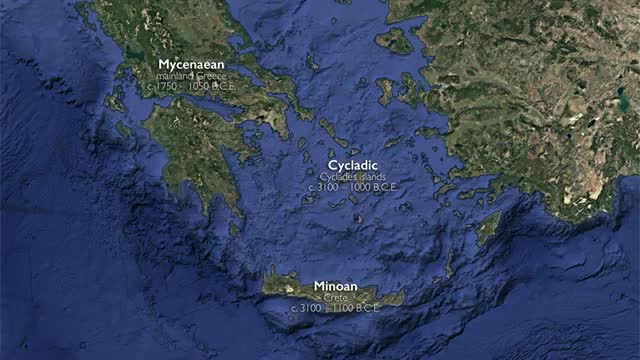
Found in the "magazines"—the long, skinny storage rooms of the Palace of Knossos—these vessels were essential for managing staple commodities. Whether storing olive oil, wine, figs, or grain, the pithos was a critical component of the Mycenaean world. These items, frequently mentioned in "Linear B tablets," highlight how the palace functioned as a central gathering point for goods.
The vessel’s design directly facilitated this trade. The presence of "big loop handles" suggests that the pots were designed to be secured to boats or wheeled vehicles for transport. The structural necessity of these ropes is so significant that the decoration of the pot itself serves as a "reminder of the use of the object."
A "Dictionary of Rope" and Technical Sophistication
One of the most fascinating aspects of the pot is its intricate rope-motif decoration. The maker took the time to "incise it to reveal the weave of the rope," and remarkably, the types of rope depicted differ across the pot’s surface—from the "widest belly" to the base. This differentiation suggests that the representation was intentional, perhaps even a "dictionary of rope" that underscored the importance of textile tools in Minoan society.
Constructed using the "coil method," where snakes of clay were stacked and smoothed, the pot demonstrates advanced manufacturing techniques. The presence of "paddle marks" and evidence of a mechanism similar to a "lazy Susan" indicate that the artisans had developed sophisticated ways to rotate and finish such monumental pieces.
Functional Beauty
The pot’s design is a balance of utility and aesthetics. The "very thick" lip at the top likely served a vital function: accommodating heavy leather or cloth covers, secured by strong ropes, to protect the valuable contents within.
Ultimately, this vessel challenges us to reconsider the status of utilitarian objects. In a society where "trade was central and enormously sophisticated," the Minoans did not simply create storage containers; they elevated them. By transforming a mundane storage vessel into a work of art featuring "undulating rope lines" and human impressions, they left behind a monument that demands our respect. This pithos remains an incredible artifact, bridging the gap between the monumental scale of the palace and the human hands that built it.

Deep Learning with ListenLeap


