
[Navigating Citizenship: Max’s Unconventional Path to American History]-[Max’s Co-Workers Try to Help Her Study | 2 Broke Girls]
📋 Summary
The Burrito-Fueled Path to Citizenship
In this segment, the narrative centers on Max’s reluctant but necessary journey to pass an American history test for her citizenship requirements. Caroline, ever the optimist, attempts to structure Max’s study habits, leading to a comedic clash between traditional academic preparation and Max’s cynical, street-smart worldview.
The Burden of History and Identity
Max approaches the concept of American history with a mixture of irreverence and detachment. When discussing her study materials, she jokes, "on behalf of all white people, I would like to apologize for everything ever," highlighting her desire to bypass the gravity of historical trauma. Her friend Khan adds a layer of cultural friction, noting that Korea had its "past stolen by the Japanese," which further underscores the contrasting perspectives the characters bring to the table. Max’s skepticism is palpable; she questions if "babies are automatically citizens," revealing a profound disconnect from the civic processes she is now forced to engage with.
The Mechanics of Study: Flashcards and Burritos
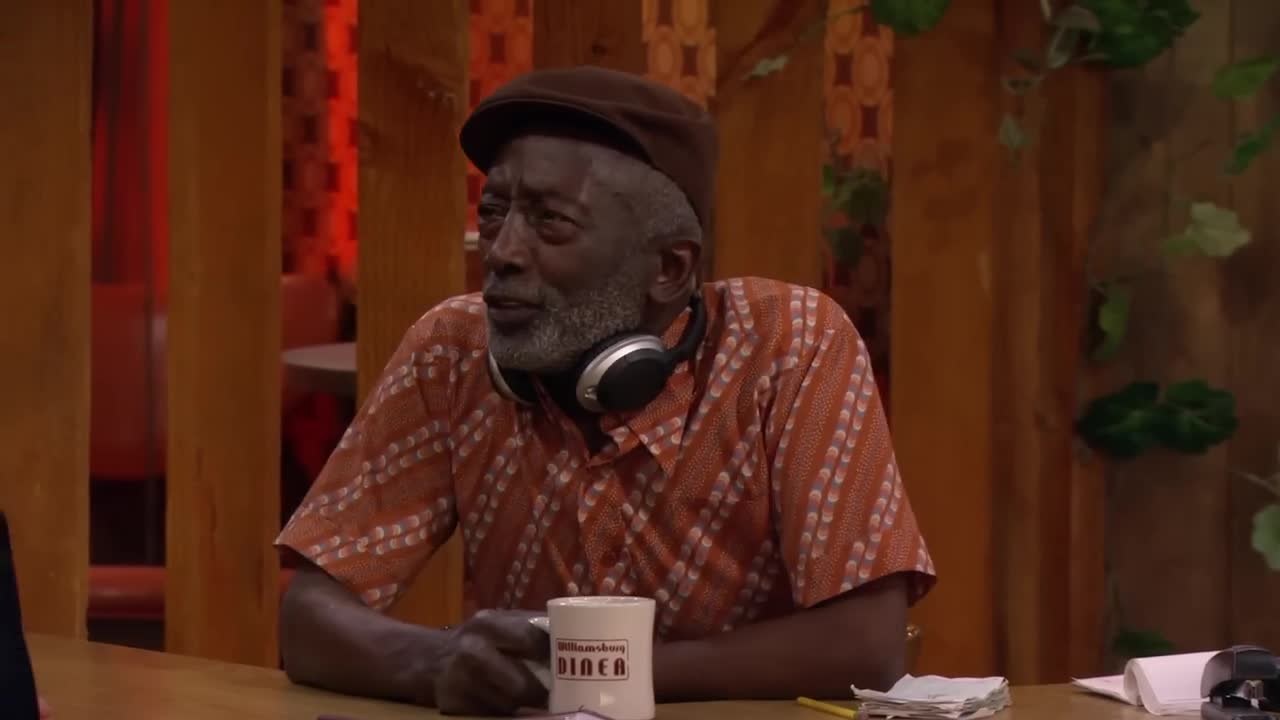
Caroline attempts to gamify the learning process by integrating study sessions into the workplace. She enforces a system where Max must answer questions from "color-coordinated" flashcards, "subdivided by president," every time she approaches the service window. This leads to friction with Oleg, who prefers his own, less academic style of quizzing.
Max’s difficulty with the material is not necessarily due to a lack of intelligence, but rather a lack of engagement. When Caroline asks about the amendment that guarantees a "woman's right to... vote," Max is genuinely surprised, jokingly asking if that meant "besides for American Idol." This dialogue perfectly captures the show’s tone: using humor to mask a lack of formal education while simultaneously highlighting the absurdity of the test questions.
Memory, Compromise, and the 'Great' Struggle
Max’s struggle with retention is framed through her own self-deprecating humor. She claims her memory "doesn't jog" because she has "smoked so much pot, it's in one of those hospitals learning to walk again." Despite this, she shows flashes of brilliance when she accidentally identifies Philadelphia as the city where the Constitution was written, though she immediately undermines it by linking the city to "cheesesteaks" rather than historical significance.
When confronted with the "Great Compromise," Max deflects with a jab at her living situation, asking if it refers to "you moving in with me?" Caroline remains steadfast, explaining that it "created the two houses of Congress." This back-and-forth illustrates the core dynamic of their relationship: Caroline provides the structure and the academic roadmap, while Max provides the grounded, often weary reality check.
The Public Bathroom Phobia and the Road to 'Hope'
The episode concludes with a physical journey that mirrors Max’s internal one. As they travel through Rhode Island, Max expresses a visceral fear of public restrooms on buses, stating, "I will use a public bathroom. I will use a public bus. But I will not use the public bathroom on a public bus." This serves as a metaphor for her general discomfort with societal institutions and expectations.
As they approach their destination of "Hope," Rhode Island, Max reflects on her own lack of prospects, noting that she was born "just outside help" and that there is "no hope for me." Yet, despite her cynicism and her desperate need to find a restroom, she remains engaged enough to keep the flashcards nearby. The contrast between her "solid D" academic performance and her sharp, witty observations suggests that while she may not embrace the formal process of becoming a citizen, she is undeniably navigating the complexities of the American experience on her own terms.
Deep Learning with ListenLeap


