
[The Art of Silhouette: Cecile McLaurin-Salvant on Shaping Characters and Music]-[Make a Cut-Out with Cécile McLorin Salvant]
📋 Summary
Exploring the Silhouette: Cecile McLaurin-Salvant’s Creative Philosophy
In this insightful discussion, acclaimed jazz singer and visual artist Cecile McLaurin-Salvant offers a window into her creative process, emphasizing the power of simplicity in both visual art and music. By focusing on the "silhouette" and the concept of "theme and variations," she bridges the gap between different artistic mediums.
The Assignment: Finding the Human Form
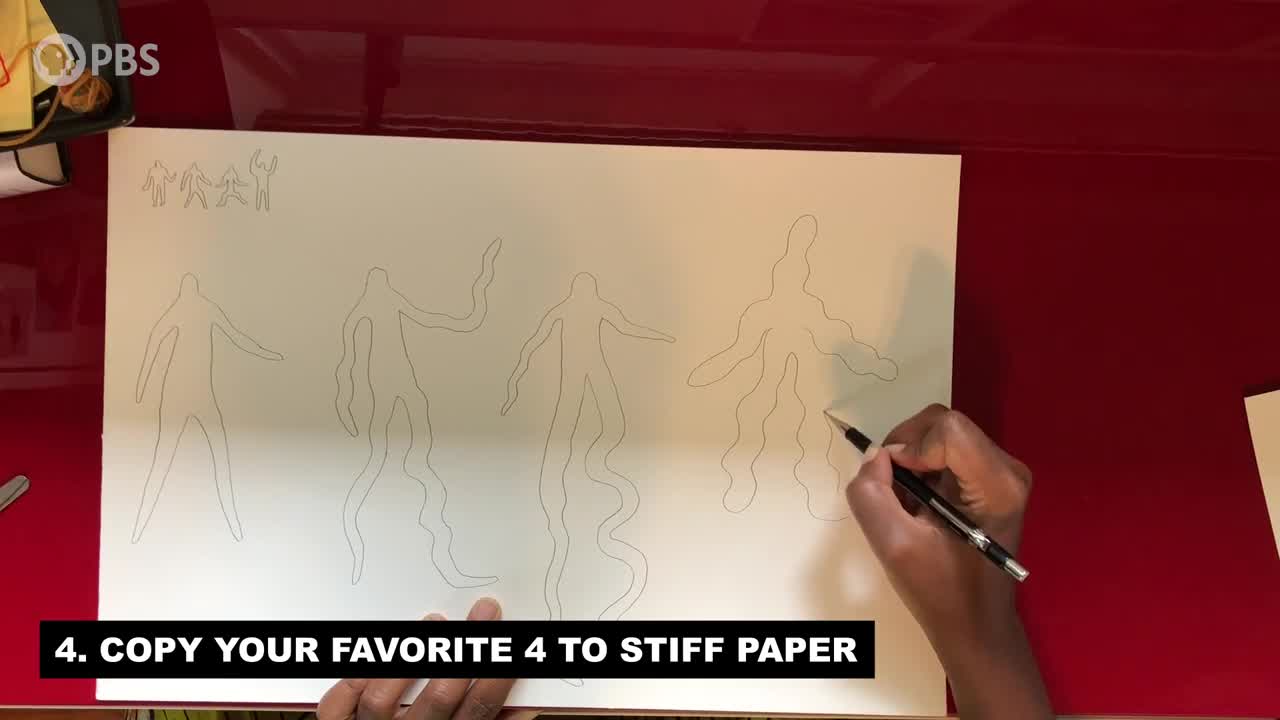
McLaurin-Salvant introduces a practical artistic exercise: drawing simple outlines of the human body. She encourages creators to "play with the limbs and the proportions" until they find a form that resonates. By transferring these drawings onto stiff materials like cereal box cardboard and cutting them out, the artist treats these figures as "halfway between a drawing and a sculpture." This tactile process allows the creator to move beyond mere lines, creating a physical presence that captures a specific "mood" and set of "feelings" through minimal detail.
The Recurring Character: Embracing the Graphic
When discussing her visual work, McLaurin-Salvant notes her attraction to "really graphic things." She frequently returns to specific archetypes—often "bald, fat women" rendered as silhouettes. She compares these to stick figures, noting that they are effective because they convey clarity without the need for "shading" or extraneous lines. Despite her initial shyness about labeling herself a "visual artist," she admits that this is what she does "most of the day," finding the internet and social media to be a "safe haven" for sharing her creative explorations.
Marrying Music and Visuals: The Ogress
Her project Ogress serves as a pinnacle of her multidisciplinary approach. Described as a "musical fairy tale," it is the first time she has fully "married both my drawings and my music together." The narrative was born from her recurring sketches of an "invisible woman," proving that her music is often written in "direct influence of drawings and ideas of shapes of people" that she encounters in her subconscious.
Jazz as Theme and Variations
McLaurin-Salvant draws a profound parallel between her visual art and her jazz performance. She defines jazz as a "music of theme and variations," where a performer can take a song and "improvise variations on that song" until it becomes an "abstract, unrecognizable mess." She applies this logic to her cutouts, asking, "If the song is the person and my variation on it is the flower or the butterfly?" This conceptual framework allows her to explore how exaggerating proportions or shrinking them down changes the audience's perception of the subject.
Reflecting on Connection
In the current climate, McLaurin-Salvant finds her work reflecting on the concept of "social distancing." Her silhouettes, often placed at specific distances from one another, mirror the "weird dance" of human interaction. Whether through the physical spacing of her cutouts or the rhythmic pauses in her music, she continues to explore the tension of human connection, proving that even with simple lines and minimal shading, an artist can evoke complex social realities.
Deep Learning with ListenLeap


