
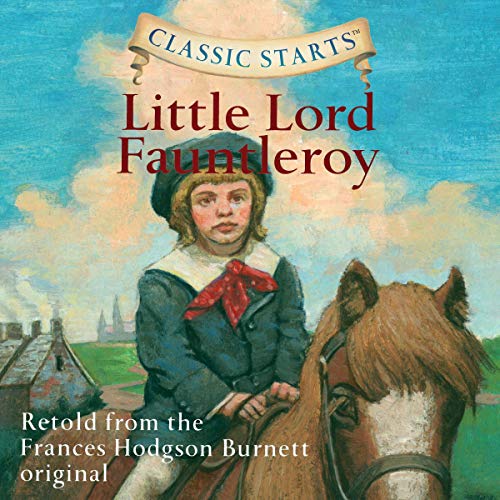
[The Sunday Church Service: A Turning Point in Lord Fauntleroy’s Influence]-[Little Lord Fauntleroy - Part 08]
📋 Summary
The Sunday Church Service: A Turning Point in Lord Fauntleroy’s Influence
The Public Spectacle and Social Recognition
The narrative of Chapter 7 centers on a pivotal Sunday morning where the Earl of Dorincourt decides to attend church, accompanied by his grandson, Cedric. This event serves as a significant social barometer for the village. The townspeople, having heard stories of the "little Lord Fauntleroy" and his compassionate intervention for Higgins, gather in anticipation. The scene is marked by a shift in public perception toward Mrs. Errol, Cedric's mother. As she approaches the church, the villagers demonstrate their respect through curtsies and bows, finally acknowledging her status as the mother of the young Lord. This public display of reverence highlights the community's emotional investment in the boy's story and their recognition of the dignity Mrs. Errol possesses, despite the Earl's unfounded hatred toward her.
Cedric’s Unassuming Grace
Upon the arrival of the carriage, the contrast between the Earl and Cedric becomes apparent. Cedric, described as a boy "dressed in black velvet," acts with natural chivalry, helping his grandfather out of the carriage. As the crowd bows to them, Cedric’s humble nature shines through. When the Earl commands him to "take off your cap" because the people are bowing to him, Cedric is genuinely surprised, exclaiming, "To me?" His reaction—whipping off his cap to reveal "bright blonde curls" and bowing back to the crowd—underscores his lack of arrogance. He remains an innocent figure who does not yet fully grasp the weight of his title, viewing the villagers' respect as a communal interaction rather than a demand of his rank.
The Earl’s Internal Transformation
Inside the church, the dynamic between the three central characters is observed through the lens of the Earl. Seated in the "cushioned and curtained pew," the Earl experiences a moment of introspection. He observes his grandson’s singing, noting that the boy's voice was "like a bird's," a sound he finds surprisingly pleasant. Simultaneously, he watches Mrs. Errol across the room. For the first time, he acknowledges her "pretty face" and the striking resemblance between her eyes and Cedric’s, both possessing the same "warm, deep color brown." This observation suggests a softening of the Earl’s hardened heart as he begins to see his family not as adversaries, but as individuals with shared traits and humanity.
The Encounter with Higgins: Redefining the Earl’s Image
The most telling moment of the chapter occurs after the service when the Earl and Cedric encounter Higgins, a tenant who had previously benefited from Cedric’s advocacy. Higgins, clearly anxious, attempts to thank the Earl, but Cedric deflects the credit, insisting, "It was my grandfather who did it" and claiming the Earl is "always being good to everybody." The irony is palpable, as Higgins knows the Earl is "never good to anybody" and is notoriously indifferent to children.
However, the Earl seizes this opportunity to manipulate his public image through his grandson’s innocent perception. With a "grim smile," he tells Higgins, "You people have been wrong about me. Lord Fauntleroy understands me. When you want honest information about me, just ask him." By leveraging Cedric’s pure-hearted belief in his goodness, the Earl successfully crafts a new public narrative. As the carriage rolls away, the Earl’s "grim smile" reveals his satisfaction; he is pleased not necessarily because he has changed, but because he has found a way to be perceived as a benevolent figure through the reflected light of his grandson’s integrity.
Deep Learning with ListenLeap


