
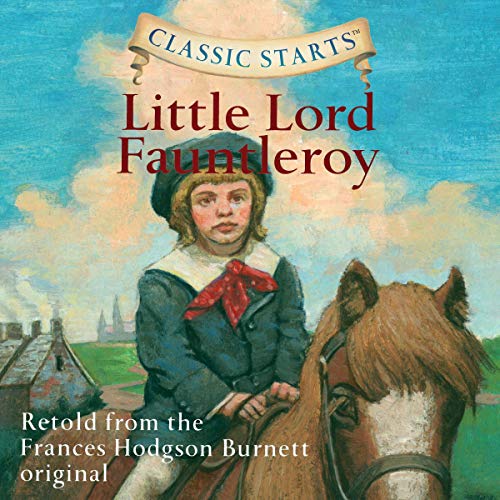
[The Arrival at Court Lodge: Navigating Separation and Prejudice]-[Little Lord Fauntleroy - Part 05]
📋 Summary
The Arrival at Court Lodge: Navigating Separation and Prejudice
The Emotional Toll of Separation
As Cedric and his mother, Mrs. Errol, arrive in England, the narrative centers on the deep emotional divide created by the Earl. Cedric’s grief is profound, necessitating Mr. Havisham’s intervention to ensure the mother and son remain in close proximity. Despite the pain of impending separation, Mrs. Errol remains steadfast in her maternal duty, shielding her son from the harsh reality that his grandfather is the architect of their distance. She tells Cedric, "My house is not very far from the castle," and insists he will love the new place, masking her own agony. Her decision to keep the "strange reason" for their separation a secret reveals a noble desire to protect Cedric’s innocence, as she believes it "wouldn't make sense to him that anyone could hate me."
The Arrival at Court Lodge
Upon reaching Court Lodge at night, the atmosphere is heavy with the scrutiny of servants who have heard "all sorts of rumors" regarding the Earl’s "bad temper" and his disdain for Mrs. Errol. Cedric, displaying a natural independence, handles his own coat and expresses genuine warmth for their new, "very pretty" home. However, Mrs. Errol’s true feelings emerge when she asks Mr. Havisham if Cedric can stay with her that night. In a moment of quiet dignity, she makes a bold request: she wishes to refuse the Earl’s money. She asserts, "I must accept the house... but I have a little money of my own... and I would rather not take his." Her motivation is rooted in self-respect; she questions, "Why should I accept gifts from the man who hates me so much that he takes away my own child?"
The Earl’s Prejudices and Misconceptions
Back at the castle, the Earl’s character is defined by his physical infirmity—his "gout" and "bad foot"—and his aggressive, cynical worldview. When Mr. Havisham updates him on the arrivals, the Earl’s immediate reaction is one of prejudice, labeling American children as "rude little beggars." He is dismissive of the mother, showing no interest in her well-being, and is clearly irritated by the idea of her independence.
When Mr. Havisham relays Mrs. Errol’s refusal of the money, the Earl misinterprets it as a calculated ploy, snarling, "She wants to make me see her. She thinks I shall admire her spirit." He insists on forcing the money upon her, demonstrating his need for control and his inability to fathom a motive that isn't rooted in manipulation. He further accuses her of having "poisoned his [Cedric's] mind" against him, a claim Mr. Havisham flatly refutes.
The Unspoken Truth
The climax of the discussion between the Earl and Mr. Havisham reveals the irony of the situation. Mr. Havisham clarifies that the boy is "ready to believe that you are the most loving of grandparents." The Earl is stunned to learn that Mrs. Errol has not uttered "a word" of criticism against him. This leaves the Earl to grapple with the reality that his grandson holds him in high regard, despite the Earl's own bitterness. As the chapter closes, the Earl is left in silence, his "fierce old eyes" betraying a man unsettled by the moral integrity of the woman he so despises, while Cedric remains blissfully unaware of the "strange reason" behind his grandfather's coldness.
Deep Learning with ListenLeap


