Hi, it's Alexa Ybel from New York Times Cooking.
We've got tons of easy weeknight recipes, and today I'm making my five ingredient creamy miso pasta.
You just take your starchy pasta water, whisk it together with a little bit of miso and butter until it's creamy.
Add your noodles and a little bit of cheese.
Mmm. It's like a grown -up box of mac and cheese that feels like a restaurant -quality dish.
New York Times Cooking has you covered with easy dishes for busy weeknights.
You can find more at nytcooking .com.
Hey everyone, it's Anna.
Before we start the show today, I want to share a fun update with you.
We've decided to offer a little something extra for New York Times subscribers who are also fans of the Modern Love column.
Starting very soon, in addition to our regular episodes of the show, which we'll keep publishing every Wednesday, New York Times subscribers will also get the latest Modern Love essay, read aloud, in our podcast feed every Friday.
this is something you've been reaching out and asking us for and we've been listening to you so this is our way of saying thanks for listening to us.
Okay on with the show.
From the New York Times, I'm Anna Martin, this is Modern Love.
As you probably know, our show is inspired by the Modern Love column where it's all about the personal essay.
But today we're talking about how poetry can also help us express our messiest feelings.
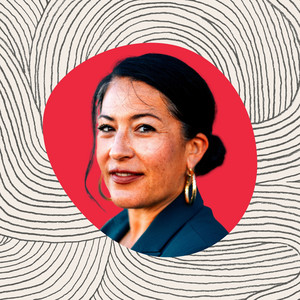
My guest today is America's official poet, our Poet Laureate Ada Limón.
During her time in the job, which comes to an end this month, Limón has shown us Poems aren't just words we read in a quiet room somewhere.
One of her big projects was having poems installed on picnic tables in several national parks.
So this summer you could be eating a sandwich on the shores of Cape Cod, enjoying a poem by Mary Oliver.
Or if you're going to the California redwoods or the Smoky Mountains, you can find poems there too.
And I have to tell you this — because it's out of this world, literally — Lemone wrote a poem that's engraved inside a NASA spacecraft that's on its way to Jupiter.
She spoke with me from her home in Sonoma, California, and it was clear that if her term wasn't ending, she would just keep spreading poetry all over the place as a way to soothe the turmoil she sees in the present moment.
I would put them everywhere without littering, of course.
This might sound like a cheesy thing to say, but I think we'd all be better off if we encountered poetry on a regular basis, because it reminds us to feel they were not supposed to numb out, that the weeping and the rage and the grief leads to feeling alive.
Limon's work as poet laureate has been vast and far reaching, but I wanted to talk to her about something much more intimate— being a writer in love.
When we come back, Ada Limon tells me why poems about love are often the scariest for her to write.
And she reads a modern love essay about a writer who catches feelings for a very sexy poet and can barely get herself to write at all.
Stay with us. I'm Dane Brugler.
I cover the NFL draft for the Athletic.
Spending the whole year working on a draft guide.
I'm looking at thousands of players, putting together hundreds of full scouting reports.
All the nitty -gritty details.
The testing data. The stats.
But extensive background research as well.
Every journey is a little bit different.
I'm on the phone with a lot of these guys.
Hey when did you start playing football?
What other sports did you play?
Tell me about your family.
You know, learning more about these guys as people.
Our draft guide picked up the name The Beast because of the crazy amount of information that's included.
I have no idea how to quantify the hours I've spent putting it together.
I've been covering this year's draft since last year's draft. There is a lot in the beast that you simply can't find anywhere else.
This is the kind of in -depth, unique journalism you get from The Athletic and The New York Times.
You can subscribe at nytimes .com slash subscribe.
Ada Limón, welcome to Modern Love.
Thank you so much for having me.
It's such a pleasure to be here.
So I love that the essay you chose to read today is about crushing on a hot poet.
Sometimes it happens.
Sometimes it happens.
I was going to say, have you found it easy to fall in love with other writers?
Oh yes, I think one of the reasons I love this essay was because I think going to a writer's residency or being around other artists in general, there's something that so visceral about that experience.
I was talking to my husband earlier this morning about this essay, and we were joking about how it's sort of unlike any other experience of writing residency or an artist residency.
It's partly because people sit down.
Whereas you might be at a bar in Brooklyn and people make small talk, oh, what do you do what do you know I'm gonna do this I did that way at an artist residency what often happens is that people sit down next to each other and say what are you working on and someone says oh, you know, I just lost my Stepmother and I'm working on This novel that's all about what it is to lose someone of cancer at a young age and loss and how it makes you more impermanent and permanent in the world at the same time.
And this is like your first conversation with the person?
Right. And then that person says, oh I'm working on sculptures of the body that deal with the male torso and the vulnerability of the heart chakra.
I'm just making this all up.
No, I love it. I feel like I'm there.
And meanwhile, you know, you're having drinks, you're having, you know, intellectually stimulating conversation.
and you start at this moment of vulnerable rawness that you just don't have in other places.
So I think it's very easy.
I've watched people fall in love.
I've watched primarily great crushes happen.
Oh my god, I can only imagine.
I'm a big fan of crushes.
I think crushes are good for people, even though they can be torturous.
This essay has a pretty epic crush.
Is there anything else you want to say to to tee up the essay before we you read it for us?
No, I think I'll just add that I Really related to the idea of Crushes or desire as a way out of writing Great, we're gonna talk about that.
Yes, I think that as a writer and Anyone who makes things and creates things understands procrastination.
And I think that there is a level in which sometimes we distract ourselves in order to prevent us from maybe finishing a project.
Cannot wait to hear you speak on that.
Ada, whenever you are ready, I would love for you to read this essay.
Okay. An empty heart is one that can be filled, by Lily King.
I was thirty -one before I got my heart broken.
It was Spring, and I had quit my job and driven across country to an artist colony in New England, the kind of place that provides you with a cabin in the woods that is not within sight of any of the other cabins.
My residency was for eight weeks.
I hoped to finish my first novel there.
The poet arrived a week after I did.
He was too skinny, but his eyes were very blue.
My first joke with the poet was about Lolita.
We were sitting at dinner, and another writer was waxing on about the novel.
The poet and I both said that the disturbing pedophilia canceled out the luscious prose, and we could not worship it the way we would like.
Actually, we may have just caught eyes not having to explain.
Love means never having to explain the misogynistic pedophilia of Lolita.
And the other writer fought back, so the poet held up his napkin as a screen between the Lolita fans and us.
Everyone laughed. I swooned.
A few nights later, we watched short films made by other residents.
There were no seats left, so we stood in the back.
He was just behind me, breathing into my hair, our bodies seeming to speak to each other in the dark.
When it was over, with hardly a word, we got into my car and drove out of town.
We ended up in a small village that had been transported back to 1969 by a film crew, with thick wooden signs for the soda shop and beauty parlor, and a huge advertisement for old -fashioned men's shoes painted onto a brick building.
On the village green was a gazebo.
We weren't sure if it was real or for the movie.
We climbed its steps and played with cards that I had found in my glove compartment.
On the way home, he pressed his lips to my neck.
The memory of it made my stomach flip all night long.
The spring unfurled like the fat ferns along the road to my cabin.
May turned to June.
I had grown up in New England and so had the poet.
The humid heat at noon, the cold rains on the roof, his accent, his humor, and his hands on my skin all felt like a home I had nearly forgotten.
He was writing poems about bees, sex poems with pollen and stamens and pistols, bees sexing their flowers, sexing their queen, jelly and nectar and death in midair.
He'd read them to me in his truck in the parking lot of the lake where we swam.
Later he wrote a poem about that, too.
How the water turned our arms to amber.
We fooled around in his cabin, careful to time it right so the guy delivering lunch to the doorstep wouldn't catch us.
I came away giddy, barely able to walk in a straight line.
I fell for him so fast, and as if through space.
No planet in sight." He had said, or at least I thought he had said, that he and his girlfriend in New York had broken up, but later, he said they were taking a break.
Which was not at all the same thing and not at all like my recent breakup with a man in California which had been clean and permanent.
He began saying that our strong physical connection was too intense, maybe even unnatural.
He said as if trying to translate his concern into fiction writer language, I would understand that our connection might be like an unreliable narrator.
Stay away from him, my mother said to me when we spoke on the phone.
You're there to write, so write.
I had been revising the same short chapter for weeks.
The stress I felt at the colony had begun to transform the place for me, from writer's retreat to fitness camp.
To keep all the anxiety at bay, I embraced a brutal workout regimen, running a twelve -mile loop, swimming across the lake, and playing tennis in the late afternoon.
This athletic schedule didn't leave me much time to write.
The poet left a week before I did.
We said goodbye in the parking lot.
He got into his truck, and as I leaned in the window, he touched his chest and said, You are deep in here.
I tried to believe this was the way a poet says I love you, but I know it was more like the way someone who is not in love dodges those words at the moment they are expected.
After that, I wanted to leave too.
Finally, I did. My sister in Massachusetts took me in.
She lived in a carriage house with her boyfriend, who had a friend who got me a job waiting tables at a fancy restaurant in Cambridge.
In August, the poet came to visit, but he stayed with friends in Boston.
We drove out to Walden Pond three days in a row.
We talked and swam and pretended our arms were still amber, but they were not.
On the last of those days, he dropped me off at the Senoko station on Memorial Drive where I had left my bike that morning.
It was over. There were chrysanthemums planted along one edge of the parking lot and every time I drove past those flowers that fall, I would sob and wail in my car.
I was crying in public, too, crying as I wrote in my journal at Dunkin Donuts, crying as I put the heavy napkins and silverware on the tables at the fancy restaurant, crying as I biked home across the river at midnight.
But I marveled too.
I marveled at the feeling of being heartbroken.
I had loved and lost plenty of times.
Most of the time, really, because I seemed to fall for men who couldn't love me back.
But I had never let myself feel it.
I numbed up, moved on.
But this time, perhaps because it had happened so fast, I didn't numb up.
And I found this feeling, even through my tears, interesting.
I ran on the paths along the Charles River, and I thought, this is what people and books and movies are talking about when they talk about losing love.
People's hearts break, and it feels like this.
Because it feels like someone has beaten you up with brass knuckles.
But it also felt, at the same time, like the universe was welcoming me in.
I was heartbroken, but I felt less alone than I had in a long while.
In November I met a man I liked.
He asked me out, then canceled on the morning of our first date saying on my sister's machine that he had to leave town unexpectedly.
He wrote me a letter saying he would be back before New Year's.
The letter was postmarked New Mexico.
He said I could write him there, at his aunt's, but I didn't.
I wrote him off. Another man who wasn't ready, I thought.
Not even ready for a first date.
The poet came back on a cold night.
We walked my sister's dog.
He played me a video of his father, who was mentally ill, that he had recorded that day.
I watched and felt terrible for him.
When I walked into his truck that night, there was a defeated, restless charge between us, and I punched him in the stomach, lightly.
But he looked alarmed by something he saw in me, perhaps everything I wanted that he couldn't give.
A week later, the man in New Mexico came back east. We had our first date and many more.
and I married him. My heart was ready for him.
For his kindness and honesty.
His easy, steady love for me.
For that kind of love, the mutual kind.
My heart was open because I had finally let it break.
Thank you for that.
While it's fresh in your mind, what are your first reactions, your first thoughts?
What is this essay bringing up for you?
There's so many things that I love about this poem about this essay.
Bit of a Freudian slip.
Yes. I really love how when the world makes us vulnerable, whether it's through loss or some kind of transformational event, it opens us up to the world again, if we let it.
If we let it. Every time I've been hurt, I rage against it, I deny it, and then eventually, I soften and soften, and it feels like, oh, right!
This is the world I'm supposed to be living in, the world where I am paying attention.
the world where I feel connected, where I feel, the world where I feel.
And I think when we're in that state of receiving, we are more connected and more human, especially as artists but really for all of us.
More with Ada Limón in just a moment.
We'll be right back.
you're talking about rage as a knee jerk kind of instinct when something doesn't go our Can you give me advice on that softening, because it's really difficult to do.
Yeah. I mean, I can only speak from my personal experience but I think the first thing you have to do is feel it.
I think you have to feel the rage.
Sometimes I have to write, I write in my journal every single day and sometimes I have to write terrible things.
Really rageful, horrible poems, really rageful, horrible things I wish for people, and I think there is a level in which, if we embrace that kind of anger, we can recognize that there's some insanity in it, and that it also is not always telling you the truth.
I think we have to feel that rage because I think on the other side of that rage is grief.
Even in this wonderful essay, that's where she's crying all the time.
I think the rage is actually protecting us and it's safer than grief.
I love the scene in the essay where the author, Lily King, is running by the river and she's feeling heartbroken, but she's also feeling so connected to humanity because of it.
She's like, oh my gosh, this is it.
This is it. but I remember feeling that way in my first, my first heartbreak there was such a pain in it and also like a, wow, I've arrived people since the dawn of time have been feeling so sad like me.
That is the moment where I felt tapped into like the whole history is going to sound insane but of like human feeling and it was in a moment of sadness and in a moment of loss and I guess I wonder like, is it easier to access that kind of connectedness in a moment moment of pain, I wonder.
Through grief. Yeah.
And I think that's a really astute point because I think that oftentimes poetry does that.
It's that we write poems about grief and about pain more often than we do about gratitude and joy and contentedness.
And partly because I think that when we're happy, we're not driven to the page.
Yeah. T endeavors. And when we're heartbroken, there's this, oh my gosh, we need to write about this.
We need to, it's also a way of clinging to it, right?
There's that great meditation, which I find very useful, which is just recognizing that every single one of us will die.
The human experience of being born and dying is not exceptional.
We will all have that.
And when I think about that, I can then widen my appreciation for this time in my body, this time on the planet.
And I think heartbreak makes you feel that way.
I think there's a level in which like I remember exactly where I was when I realized that, oh, everyone's gonna die I was on the New York City subway.
my stepmother had just died about a month earlier, and I was looking at all these faces and I thought, oh, I'm sure half the people here have already lost someone dear to them.
And then they still are going to work, and some people have packed their lunches.
Like what? They got up at 5 a .m. and they packed their lunches?
And even though their mother's dead, They're still doing that?
They're combing their hair.
They're putting mascara on.
Of course. I was weeping.
I was like, this is incredible.
Like, how, how brave. Yeah.
How courageous to go on in the world when your heart is broken or you've lost the person that you love the most. You know?
This is life. Of course it happened on the New York City subway.
These moments always happen, right?
How old were you when that happened?
I'm curious, just like when was this?
34. Another thing that I'm curious about that you said before you read this essay was you resonate with the experience of distracting yourself from work through love or through crushes.
Is there a moment that you're able to share where the stuff of life got in the way ...
Yeah, I mean, I think that one of the, I mean, I love love.
It's one of my favorite topics.
I can talk about love all the time.
I also think it can serve as this way to not be in the self.
Yeah. I remember my first writing residency.
It was right after September 11th, and I went out to Cape Cod to the Fine Arts Work Center in Provincetown.
And I remember getting advice from this wonderful poet, Marie Howe, who said, have a wonderful time.
Try not to fall in love with anyone because it'll just distract you.
And of course, day one, I was like, I'm kind of interested in this person.
And it was true. She was completely right, but I did write at the same time.
And I do feel like I got a lot of beautiful work done, but I don't know if it's beautiful.
It was probably pretty sloppy at the time, but I do think there's something about artists that's like, how did we get out of this moment that isn't through the page?
And we kind of look around and go, oh.
Oh, what can we do here?
We used to have this phrase that we used when I lived in Brooklyn with my dear girlfriends who are still my closest best friends, if we were going through a hard time, let's say we were going through something with our parents or we were going through something with our work, or we would say, you know what?
I think I need a shiny object.
And the shiny object would be a crush.
Yeah, I'm needing a lot of those things days.
We even had, in texts we would say SO, possible SO.
SO signing. Yeah, and so I really believe in the power of a crush to bring us out sometimes, just to give us a little fun thing to think about, that's not the agony of our own failure.
I have to circle back just because I have to know what happened to this writing retreat or this retreat crush.
Did you ultimately confess your feelings?
Was it a thing that you kept inside?
What was the deal with that crush?
Oh, no, yeah. No, we ended up dating until the residency was over.
Oh, wow. Okay, so it's very similar to this essay, really?
Okay, and you were able to write through it as much as you, I mean, did you find it distracting in the way that Lily King outlines and in the way your poet friend warned you about?
Yeah, I think that it was a friendship too.
So I think that it was different.
And I don't think it had the level of extreme desire that has that is in this essay where you can almost feel that sort of obsession.
So it allowed for a little bit more space to think.
When the retreat came to an end, was it sort of like, and this crush will remain here and we will go our separate ways?
Or was it like, with Lily King, in this essay, there's a multiple sort of stutter stops in in terms of the end, what was your experience?
We wrote letters. Oh my gosh, of course you did.
We love letters, your poets love letters.
We just, it's the best thing.
Write us a letter, we're like, oh.
Well I was gonna say it makes me think of, the Lilly King talks about the poetry of the poet, the object of her desire in the essay, and he's writing those sex poems about bees and pollen and it's a bit sounding cliche to me.
It's like, you know, birds and the bees, you know, it tells all this time.
I guess I wonder like when you are writing love poems or love letters, I don't know.
Like how do you write a good one?
How do you write one that sticks?
Yeah. I do think that the hardest poems I've ever written have been love poems. And I think there's a risk to it.
If you write a love poem to someone you are in love with at the moment, there is this fear, right, that, oh my God, I am emitting this love.
What if, God forbid, right, something happens and then someday I'm gonna have to read this poem and think, that doesn't exist anymore.
How do you keep yourself in the moment then when you're writing a love poem that you want to resonate to someone you're in love with now?
Yeah. I mean, I've written lots of love poems was to my husband, and I just have to go with the joy of it and really trying to get that love right and not to be hokey about it, right?
I want the love poem to be really for him.
That's how I stay in the moment is I really focus on him and how can I make it like this is us.
It's not love with a capital L.
It's our love, which is with a little lowercase love that is daily and needy and beautiful in its own way.
It's epic in its own way, but it's not...
...shouting on a mountaintop.
It's whispering, and it's the breeze in the curtains.
As opposed to the storms. Yeah.
I mean this is really making me think of one of my favorite poems of yours.
It's called Love Poem with Apologies for My Appearance.
I actually marked that.
Really? I marked that for you.
Oh, can you read it?
Yes. I love this one.
It resonates with this essay too because of the moment where she talks about, it's a different, the different kind of love, the mutual love at the very end when she marries her husband.
And this is very much for Lucas, my husband.
Love poem with apologies for my appearance.
Sometimes, I think you get the worst of me.
The much -loved, loose forest green sweatpants.
The long, braless days.
Hair knotted and uncivilized, a shadowed brow where the devilish thoughts threw their hoofed dance on the brain.
I'd like to say this means I love you.
The stained white cotton t -shirt, the tears, pistachio shells, the mess of orange peels on my desk.
But it's different than that.
I move in this house with you the way I move in my mind, unencumbered by beauty's cage.
I do like I do in the tall grass, more animal -me than much else.
I'm wrong. It is that I love you, but it's more that when you say it back, Lights out a cold wind through curtains.
For maybe the first time in my life, I believe it.
I love that a love poem can have stained sweatpants in it.
It feels so deeply real.
Thank you. How does your husband Lucas react to a poem like this?
So often he'll be you know this became a true story which was I would do all of these events and dress up and you know wear these suits and dresses and you know get your hair done and your nails done you know the whole the whole thing that you do for all of this crowd and he would see these pictures of me on Facebook or on Instagram and say wow you look really beautiful out there.
And I sort of had this moment where I thought, oh, he hasn't seen that me.
You know, he gets the writer me and he loved it.
He loves his poem. You said that love poems are the hardest to write, maybe the scariest to write.
There's so much at stake, but it sounds like you're not as interested in writing safe poems right now.
Is that fair to say?
I think that's true.
I think that's true.
And I think that trying to write towards a happiness or towards gratitude or, you know, I think it's really hard. It is easier to plummet into the bottomless pit of despair.
And it is easier to write poems from there.
It is harder or to choose life.
You know? It is harder to say, I am going to fling my body back into the uncertain tornado of the world.
Like this is, I'm gonna do it again.
Here I go. Here I go again.
Do I hear birds, beautiful birds in your background?
That is so nice. The rain just stops, so the birds are coming in.
Oh, there's a metaphor there, a poet could plumb.
Yeah, yeah. Ada Limón, thank you so much for this conversation.
Thank you, thank you.
It's a real pleasure to talk to you.
As Poet Laureate, Ada Limón edited a collection called You Are Here, Poetry in the Natural World.
We'll link to it in our show notes.
Limón also has a new book called Startlement, new and selected poems coming out in September.
Today's essayist, Lilly King, is a celebrated fiction writer whose latest novel is called Heart the Lover.
It's out in October.
This episode was produced by Riva Goldberg.
It was edited by Gianna Palmer and our executive producer Jen Pooyant.
Production management by Christina Josef.
The modern love theme music is by Dan Powell.
Original music in this episode by Alicia Beitiup, Marian Lizano, Pat McCusker, Dan Powell, Roman Nemisto, and Carroll Savaro.
This episode is mixed by Sonia Herrero with studio support for Mattie Masiello and Nick Pittman.
Special thanks to Mahima Chobani, Nell Gologli and Jeffrey Miranda.
And to our video team Brooke Minters, Felice Lyon, Michael Cordero, and Sawyer Roque.
The Modern Love column is edited by Daniel Jones.
Mia Lee is the editor of Modern Love Projects.
If you want to submit an essay or a tiny love story to the New York Times, we have the instructions in our show notes.
I'm Anna Martin. Thanks for listening.