
[Mastering Airport English: A Comprehensive Travel Vocabulary Guide]-[Learn English at the AIRPORT ✈️ Vietnam to Seoul 🇻🇳🇰🇷 Comprehensible Input]
📋 Summary
Navigating the Airport: A Practical English Language Guide
Traveling through an international airport provides a perfect context for learning essential, real-world English. This guide breaks down the journey from arrival to takeoff, utilizing key terminology used by native speakers in travel scenarios.
1. Checking In and Luggage Terminology
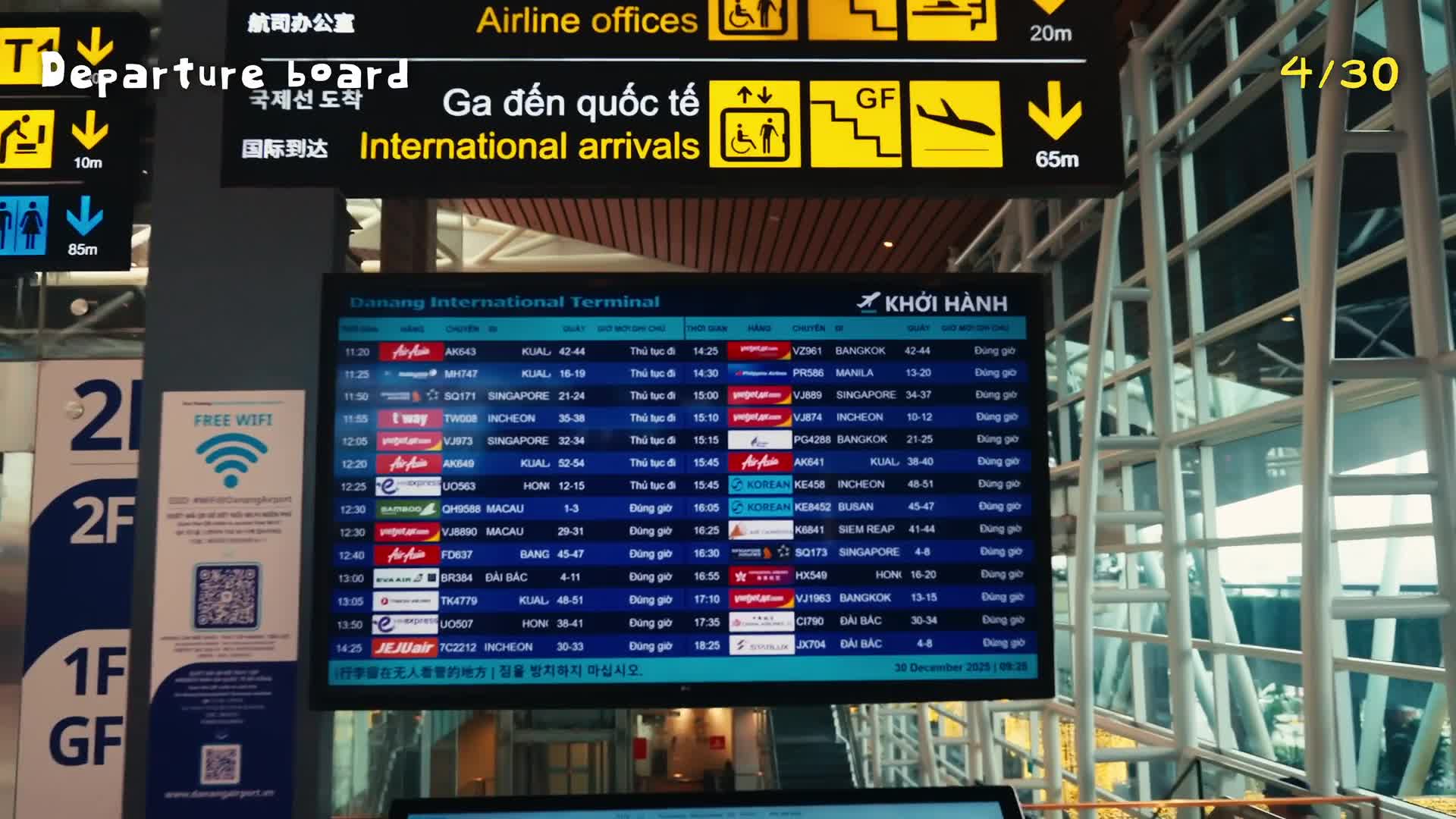
Upon entering the airport, the first point of contact is the departure board, which displays critical flight information and times. A departure signifies the act of leaving a place, while an arrival marks the moment you reach your destination.
When managing your belongings, it is important to distinguish between luggage—the collective term for all your bags—and specific types of baggage. You will often be required to use a check-in desk to weigh your suitcases on a conveyor belt. It is vital to differentiate between checked baggage, which is stored beneath the plane and collected upon landing, and carry-on baggage, which you are permitted to bring into the cabin with you.
2. Navigating Security Procedures
One of the most standardized airport processes is to go through security. This involves walking through metal detectors and placing personal items into blue trays for scanning. You may be asked to remove items such as shoes or jackets. Once you have successfully completed this process, you have officially finished your security check and are free to proceed to your boarding gate.
3. The Airport Lounge Experience
Before boarding, many travelers spend time in a VIP lounge (sometimes humorously referred to as a "Very Important People" lounge). This environment is rich with everyday vocabulary. Key items you might encounter include mugs, glasses, wine glasses, straws, and drink cans. Food items such as watermelon, dragon fruits, guava, and passion fruits are common, alongside kitchen appliances like a toaster for bread. Understanding these terms helps in navigating social spaces within the terminal.
4. Boarding and Flight Status
As you approach the gate, monitor the departures screen for updates. If the status is boarding, it is time to proceed to the plane. A flight marked as on time will depart as scheduled, whereas a status of delayed in yellow indicates the flight is running behind. To reach your gate, you may use an escalator, and once at the gate, you can utilize a bench equipped with plugs to charge your mobile devices.
5. Inside the Aircraft
Once you board the plane, your location is defined by your seat type: a window seat (adjacent to the window) or an aisle seat (adjacent to the middle walkway). Looking out, you can see the wing of the plane, which provides the lift necessary for flight.
Before the plane begins to take off, you must lower your tray table for safety. During the final moments on the tarmac, you might observe an aircraft marshaller signaling to the pilots. As the engines thrust, the aircraft prepares to leave the ground, officially beginning your journey.
Conclusion: Learning Naturally
This airport walkthrough highlights how English is used in natural, everyday situations. By focusing on situational vocabulary—from checking luggage to understanding flight status updates—learners can build the confidence needed for international travel. Immersing oneself in native-speaker content, such as the resources found on platforms like Sprout, allows students to pick up language nuances just as they acquired their first language, tracking progress toward fluency in a natural, efficient manner.

Deep Learning with ListenLeap


