
[The Pathos of Laocoon: Masterpiece of the Vatican Belvedere]-[Laocoön and His Sons]
📋 Summary
The Laocoon and His Sons: A Study in Hellenistic Agony
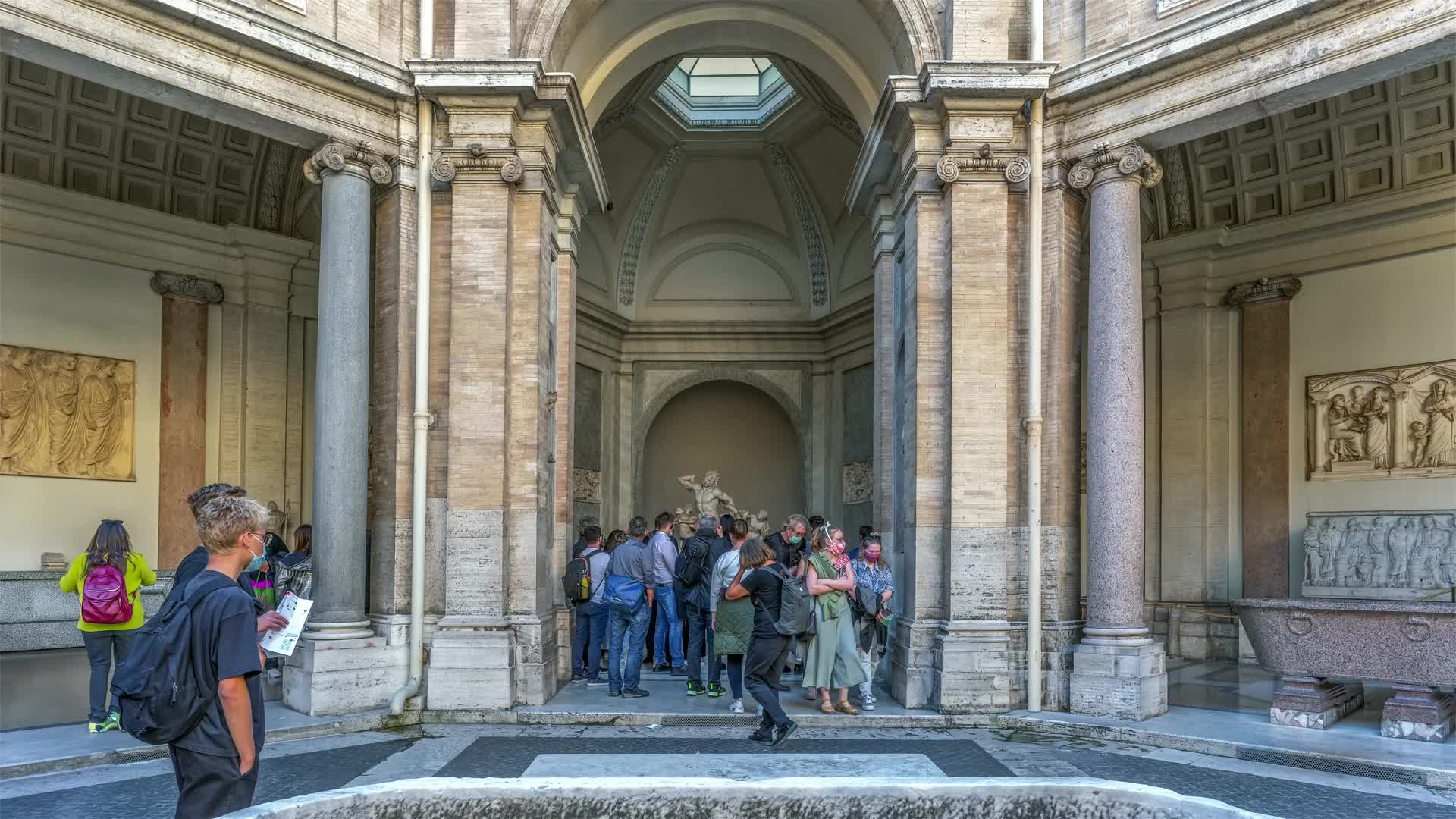
Standing within the Belvedere Courtyard at the Vatican, one is confronted by the profound emotional intensity of the Laocoon and His Sons. Unlike the idealized, noble restraint found in sculptures like the Apollo Belvedere, the Laocoon represents a radical departure into the realm of pathos and raw human suffering. This sculpture captures a figure "writhing in pain," serving as a definitive example of the late stage of ancient Greek art known as the Hellenistic period.
The Mythological Narrative
The sculpture depicts a harrowing scene from the Trojan War tradition. Laocoon, a Trojan priest, attempted to warn his countrymen against bringing the Greeks' wooden horse into the city. His defiance angered the gods Poseidon and Athena, who sent "sea serpents" to execute him and his sons while he was in the midst of a sacrifice. The resulting composition shows the figures "intertwined" with these snakes, creating a dynamic, complex form that emphasizes their struggle against an inevitable, divine demise.
Historical Significance and Discovery
The discovery of the Laocoon in 1506 was a landmark moment in art history. It was immediately identified as the sculpture described by the Roman historian Pliny, who claimed to have seen it in the palace of the Emperor Titus. Despite a slight discrepancy—Pliny suggested it was carved from a "single block of marble," whereas the actual piece consists of six—scholars remain confident in the attribution. Its discovery was so significant that Pope Julius II acted immediately to acquire it for the Vatican collection, even calling upon the great Michelangelo to witness its unearthing.
Influence and Hellenistic Style
The impact of this piece on Renaissance art cannot be overstated. Michelangelo’s work on the Sistine Chapel ceiling, particularly the ignudi, reflects the "incredibly complex pose" and muscular tension found in the Laocoon. The sculpture embodies the transition from classical restraint to the "newfound freedom and expressiveness" of the Hellenistic era. Much like the Nike of Samothrace or the figures on the Great Altar of Zeus at Pergamon, the Laocoon is designed to "move out into the space of the viewer," demanding an empathetic response to its energy and movement.
Roman Commission and Artistic Reality
While the subject matter is Greek, the sculpture is likely a product of Roman patronage. Created by three artists from Rhodes who traveled to Italy, it represents the intersection where "Greek and Roman art are basically one and the same." The piece was commissioned for the "highest level of power in the ancient world," signifying the Roman elite's obsession with Greek aesthetics.
Challenging Our Perception of Antiquity
Finally, the experience of viewing the Laocoon today is filtered through a modern lens that often misinterprets ancient art. We view the statue as "white marble," yet it was originally painted in "bright colors." These pigments were not merely decorative; they provided narrative context. For instance, historians analyzing "traces of paint in the eyes" have suggested that Laocoon was intended to be depicted as blinded by the serpents' bites. This realization reminds us that our current appreciation of the Belvedere Courtyard—a space where Renaissance architecture houses the remnants of ancient imperial grandeur—is a layered experience, connecting us across millennia to the power and tragedy of the ancient world.

Deep Learning with ListenLeap


