
[The Legend of Kiranmala: A Tale of Resilience, Deception, and Redemption]-[Kiranmala: The tale of the princess who conquered Magic Mountain - Malay Bera]
📋 Summary
The Legend of Kiranmala: A Tale of Resilience, Deception, and Redemption
The Tragic Separation and the Brahman’s Blessing
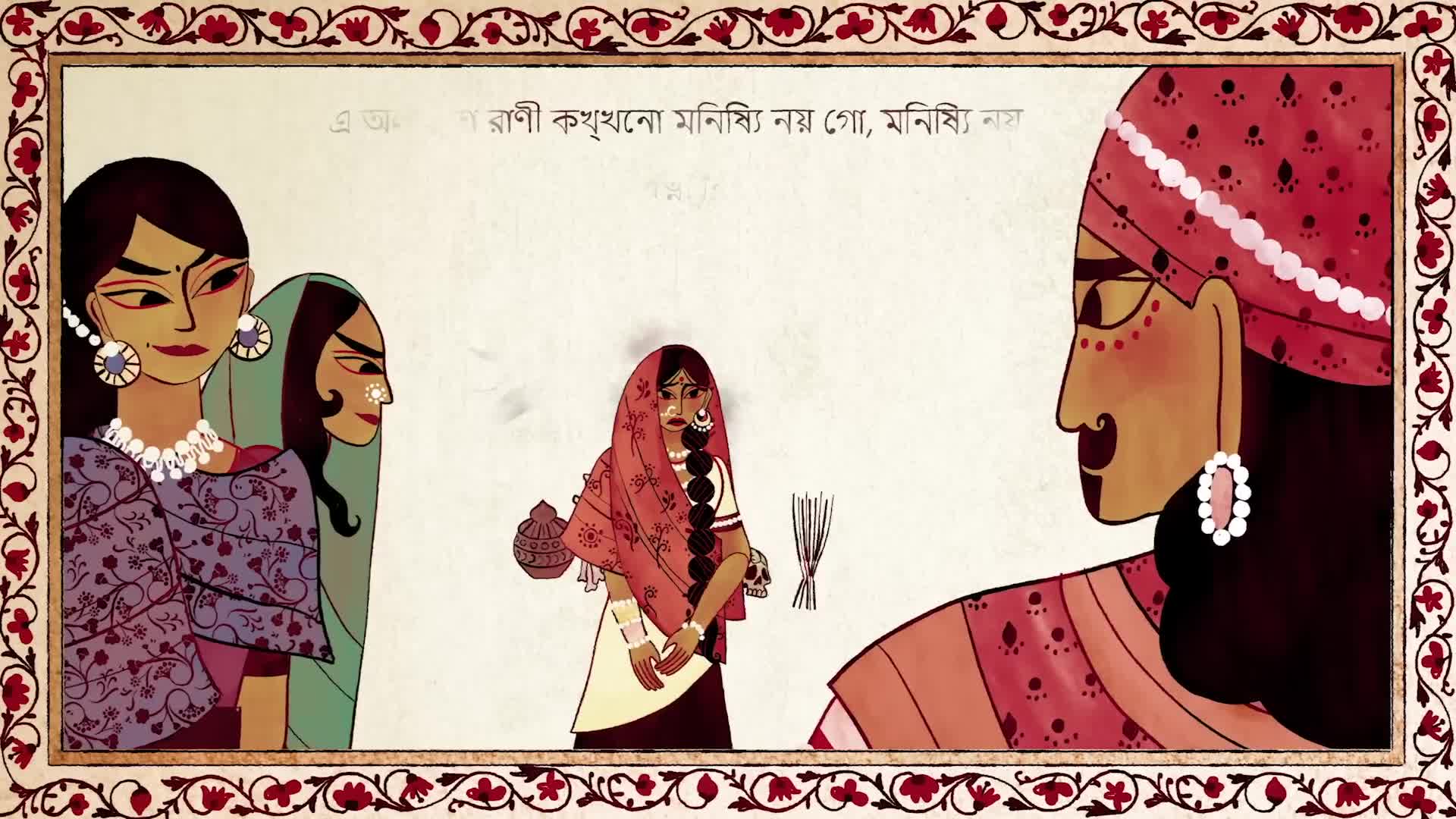
The story begins with a queen suffering from a harrowing ordeal: her children were stolen at birth and replaced with "unhuman items" by her jealous sisters. Accused of "witchcraft and demon sorcery," the queen is banished by a king who, though loving, is "easily swayed." The infants, saved from the river by a holy Brahman, are raised as "mysterious blessings" named Orun, Borun, and Kiranmala. Even in their youth, they were "extraordinary," with Kiranmala standing out as "wise and skilled beyond her years."
The Quest for the Magic Mountain
After the Brahman’s passing, the siblings build an exquisite home, which eventually attracts the attention of a wandering, regretful king. A holy man later reveals the existence of a "Magic Mountain," urging them to seek their "most meaningful treasures." However, he warns that "only a true hero could complete the journey."
When Orun and Borun depart, their fates are signaled by the destruction of their weapons—Orun’s sword "rusted" and Borun’s bow "splintered," confirming an "awful fate" had befallen them. Kiranmala, refusing to succumb to despair, chooses to take up the mantle. Despite lacking formal training, she possesses a spirit that runs with the "speed of wind and boldness of fire."
The Heroic Ascent and the Trial of Silence
Scaling the "Magic Mountain" required dodging "lightning bolts" and navigating a landscape littered with "blasted statues"—the grim remains of those who failed before her. Upon reaching the peak, she faces a "cacophonous chorus" of "malicious monsters" and wild animals. They "menaced, snapped, [and] lobbed vicious threats," attempting to break her resolve.
Kiranmala’s victory lies in her emotional discipline; she "stilled her mind and kept her gaze fixed ahead." By refusing to respond to the "deafening din," she reaches the golden bird, the guardian of the quest. Following the bird’s instructions, she strikes a gong and sprinkles "pearly waters" across the land, successfully reviving her brothers and proving her status as a "worthy hero."
The Revelation and Family Reunion
The climax of the tale occurs when the king visits the siblings again. The "golden bird" becomes the instrument of truth, confronting the king for his past ignorance. When the king complains about being served "inedible jewels," the bird delivers a cutting retort: "if humans couldn't eat gold, rubies and pearls, how could they give birth to kittens, puppies and dolls?"
This confrontation forces the king to realize he was the victim of an "ugly trick." The golden bird "unraveled the story of their separation," finally exposing the jealousy of the queen’s sisters. Kiranmala’s journey concludes with a dual purpose: she has saved her brothers and is now determined to "clear her mother's name and fully reunite their family." This myth serves as a poignant reminder of how stories help us "better understand the past" and find justice in the face of deception.

Deep Learning with ListenLeap


