
[Journey Into the Abyss: A Descent into the Volcano]-[Journey to the Center of the Earth - Part 10]
📋 Summary
Journey Into the Abyss: A Descent into the Volcano
The Magnificent Ascent and the Crater's Edge
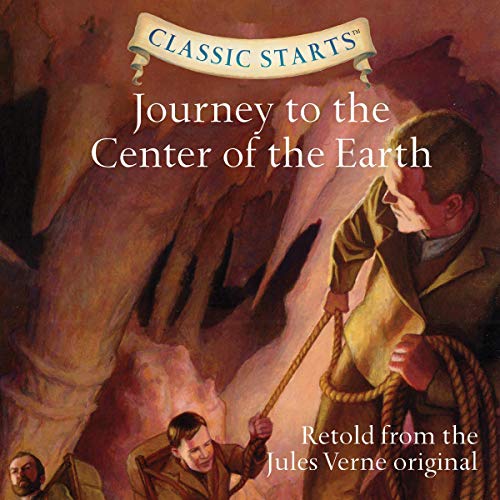
The narrative begins with a breathtaking realization of scale. At 5,000 feet above the ground, the narrator describes a world where "endless rows of glaciers" and the vast ocean create a view so magnificent it feels as though "the whole world was below me." Despite the freezing temperatures, the beauty of the landscape provides a sense of wonder. However, this quiet contemplation is short-lived as Uncle Lidenbrock, driven by an unwavering sense of purpose, commands the party to the crater. Even the physical reality of the crater—an 800-foot-wide opening plunging 2,000 feet deep—does not deter them. Equipped with strong ropes and determination, the group makes their descent, marking the transition from the surface world to the mysterious interior of the earth.
Finding Proof: The Legacy of Arne Sagnuson
Upon reaching the floor of the crater, the atmosphere shifts from awe to scientific discovery. While the narrator finds himself "surprisingly calm," the Uncle is restless, driven by a frantic need to validate their expedition. The turning point occurs when the Uncle discovers ancient writing on the crater wall: "Arne Sagnuson, look, he was here." This discovery of the same "runes" found in Sagnuson’s note serves as the definitive confirmation that their path is correct. It is a moment of historical validation that anchors their dangerous mission in the reality of a predecessor’s footsteps.
The Shadow of June 28th
Nature itself becomes a guide for the expedition. Facing three distinct tunnels, the group is paralyzed by the uncertainty of which path to take. The note they possess indicates that at the end of June, the sun would cast a shadow over the entrance of the correct tunnel. A gray, sunless sky initially stalls their progress, forcing them into a state of anxious waiting. Finally, on June 28th, the "glorious rays" of the sun return. As the shadow lands precisely above one of the tunnel entrances, the Uncle’s joy is palpable—he almost "clapped his hands" in triumph, signaling that "the real journey began."
Descent into Geological Time
As the trio enters the tunnel, the physical nature of the expedition intensifies. The narrator reflects on the difficulty of the descent, describing it as "climbing down a chimney." This segment of the journey is not merely a physical trek; it is a temporal one. As they descend, the narrator observes the rock formations, noting, "The farther we went down, the older the rock was. It was as if we were moving back through the ages." This profound observation highlights the unique intersection of geology and exploration in the story.
The Resolve to Continue
Before fully committing to the depths, the narrator experiences a moment of profound hesitation, reflecting on his "little Robin" and her smile. This humanizes the stakes of the mission, contrasting the cold, hard rock of the earth's interior with the warmth of the life he left behind. Ultimately, the trio moves forward, relying on teamwork and Hans’s steady guidance. When they reach a temporary bottom, Hans points out another tunnel, signaling that the path forward remains open. The chapter concludes with a moment of rare consensus: the need for food and rest. As they settle in, the reader is left with the sense that while they have reached one milestone, the true mysteries of the center of the earth are only just beginning to unfold.

Deep Learning with ListenLeap


