
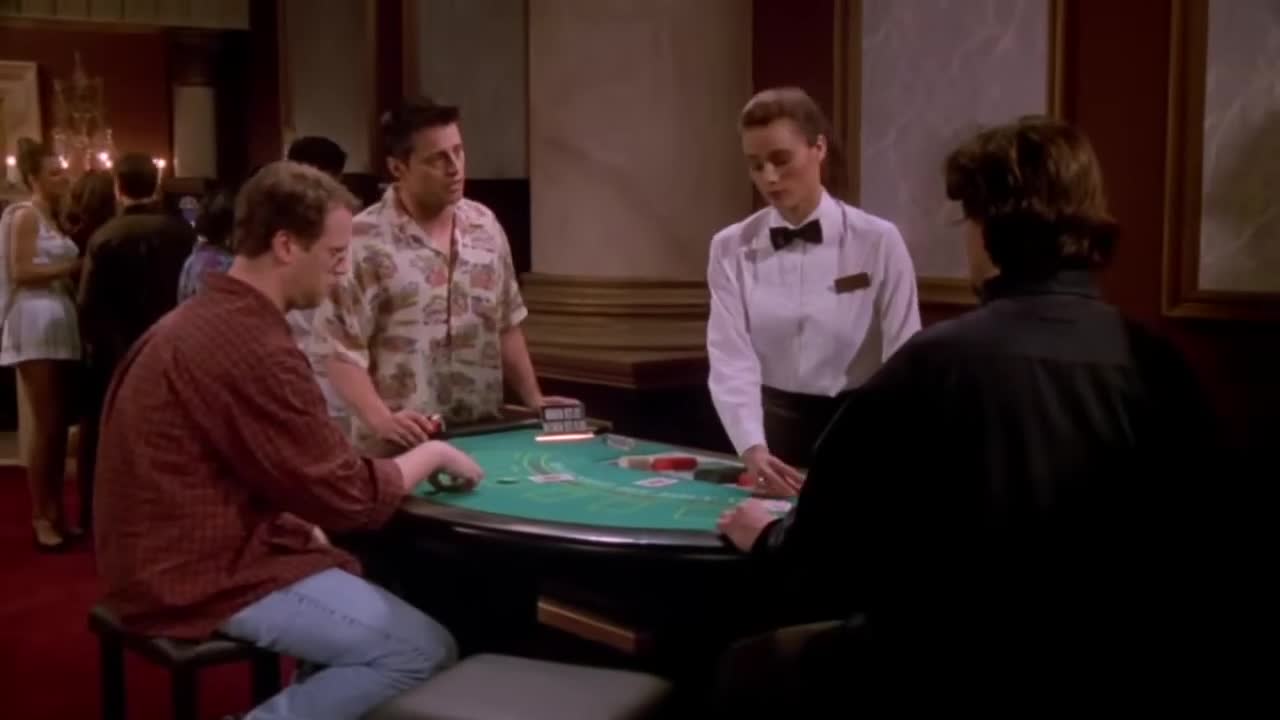
[The Quest for the Hand Twin: A Case of Mistaken Identity and Absurdity]-[Joey and Phoebe Try to Hustle a Vegas Casino | Friends]
📋 Summary
The Quest for the Hand Twin: A Case of Mistaken Identity and Absurdity
The Escalation of a Petty Dispute
The narrative begins with a seemingly mundane conflict over a gaming machine, where a character is embroiled in a dispute over a "quarter." What starts as a simple disagreement over ownership quickly spirals into chaos. The situation is exacerbated by bizarre accusations, with one party claiming, "She sells drugs to kids," a desperate attempt to manipulate the authority figure present. This chaotic interaction highlights the absurd lengths to which individuals will go to assert ownership, even when the stakes are as trivial as a single coin.
The Entrance of Regina Phalange
Amidst the tension, a new persona emerges: "Regina Phalange." Introducing herself as a "businesswoman in town on business," she utilizes a classic trope of corporate sophistication to deflect attention from the ongoing drama. Her insistence on showing a business card and her feigned confusion about leaving her "Filofax" in "conference room B" serves as a comedic distraction. This performance art is not merely a quirk; it is a calculated social maneuver designed to insert herself into the environment and exert influence over the unfolding events.
The Obsession with Identical Hands
The core conflict of this narrative shifts from the petty dispute to a surreal obsession with physical symmetry. One character becomes fixated on the fact that two gentlemen have the "exact same hands," describing them as "identical." This obsession reaches a fever pitch when the protagonist attempts to validate this bizarre observation by seeking external confirmation, asking, "May I ask you a question as an impartial person at this table?"
The desire to monetize this physical anomaly is clear, as the character asks, "Wouldn't you pay good money to see these identical hands showcased in some type of a entertainment venue?" This reflects a desperate, almost manic need to find significance in a triviality. The reaction to this persistent solicitation is one of extreme frustration, with the target of the obsession threatening, "If you leave now, I will chop off my hand and give it to you," illustrating the psychological toll of being subjected to such relentless, nonsensical badgering.
Identity Fluidity and Social Disruption
The dialogue serves as a study in identity fluidity. When confronted by authority, the character simply pivots, stating, "No, you threw out Phoebe. I'm Regina Phalange." This rejection of previous actions through the adoption of a new moniker demonstrates a complete disregard for social norms. The scene concludes with a desperate plea for connection—"I'm your hand twin"—which is met with total rejection. The narrative captures a moment of social friction where one individual’s commitment to a bizarre reality clashes violently with the refusal of others to participate in the charade. The resulting tension underscores the futility of seeking validation for personal obsessions in public spaces.

Deep Learning with ListenLeap


