
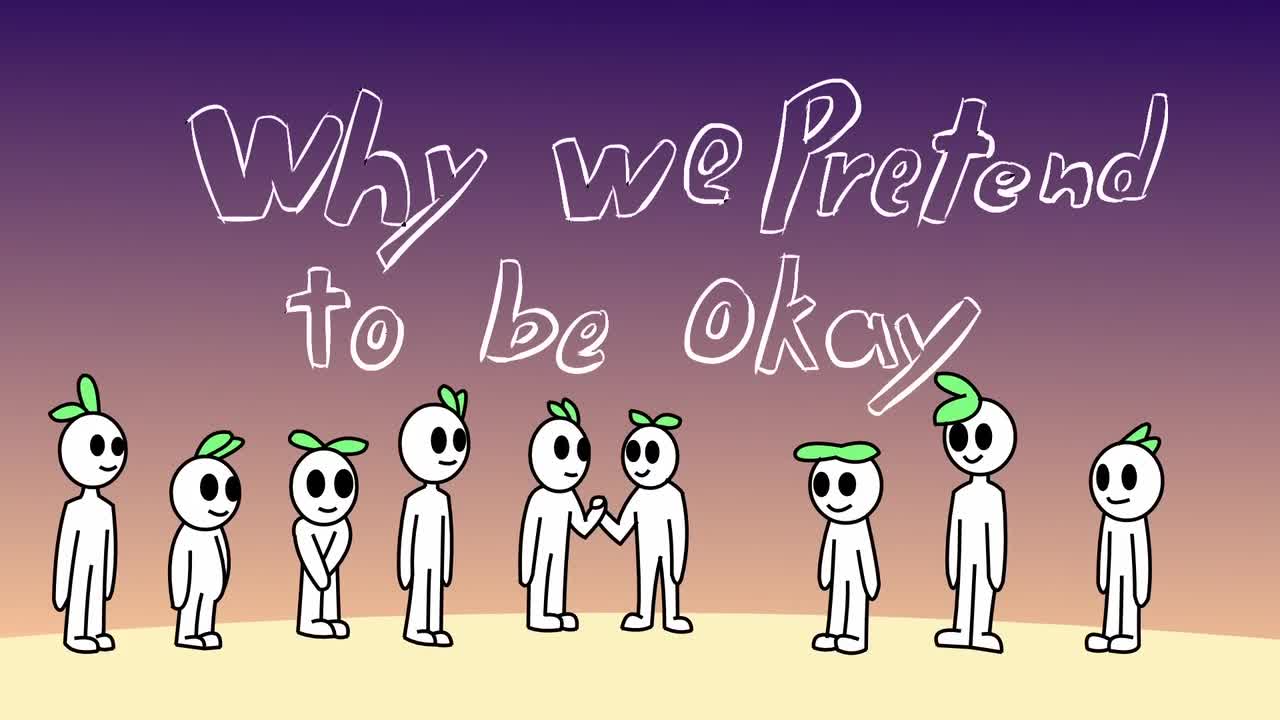
[The Hidden Cost of 'I'm Fine': Understanding the Psychology of Pretending]-[If You See This Video… It’s a Sign You’re Not Okay]
📋 Summary
The Burden of Performing: Why We Pretend to Be Okay
In our daily interactions, the phrase "I'm fine" has become a reflexive social script. We smile, we "get things done," and we project an image of stability while internally experiencing exhaustion or being "quietly overwhelmed." This podcast transcript explores the psychological mechanisms behind this performance, arguing that while it may feel like a necessary survival skill, it carries a significant hidden cost to our mental well-being.
The Psychology of the 'Strong One'
For many, pretending is not an act of malice or simple dishonesty; it is a "coping strategy." The transcript notes that individuals who grew up having to be the "strong one" often internalize the idea that "emotions slow things down" and that "vulnerability makes people uncomfortable."
Consequently, the nervous system shifts its primary question from "How do I feel?" to "What do I need to do to get through today?" This leads to a state where being "okay" is treated as a "role, not a feeling." By maintaining a "low maintenance" exterior, individuals seek to remain safe, effectively suppressing their internal reality to function in their environment.
The Hidden Cost of Emotional Suppression
When "pretending becomes your default," the consequences become manifest. The podcast emphasizes that "emotions don't disappear when you ignore them"; instead, they remain dormant, waiting to resurface. This suppression manifests in several ways:
- Emotional Crashes: Sudden, intense breakdowns when finally alone.
- Irritability: Reacting disproportionately to small stressors.
- Disconnection: A growing distance from loved ones.
- Self-Alienation: A profound sense of not knowing one's own emotional state.
Furthermore, the habit of "minimizing your pain" under the guise of gratitude or fear of being a "burden" does not alleviate the struggle; it only makes the experience of suffering "lonelier."
Why We Seek Safety in Performance
For those who have been "dismissed, misunderstood or hurt" in the past, the brain learns that revealing one's true state is not safe. This leads to a pattern of:
- Intellectualizing: Turning sadness into a logical problem rather than an emotional experience.
- Self-Reliance: Handling everything alone instead of "asking for support."
- Pushing Through: Prioritizing productivity over necessary "resting."
While onlookers might mistake these behaviors for "resilience," the internal reality is that of "carrying a weight no one else can see."
Moving Toward Authenticity: Small Steps
Breaking the cycle of performance does not require an immediate, radical overhaul of one's social life. The transcript suggests that "being real doesn't mean telling everyone everything." Instead, change starts with small, internal shifts:
- Self-Validation: Admitting to oneself, "I'm not okay today," and acknowledging that this is "allowed."
- Reframing Language: Replacing the reflexive "I'm fine" with more accurate descriptions, such as "I'm a bit overwhelmed."
- Sitting with Feelings: Practicing the ability to feel emotions "without immediately fixing" them.
Ultimately, the most courageous act is "stopping the performance when you're by yourself."
Conclusion: Worthiness Beyond Strength
The closing message of the podcast is a reminder of intrinsic worth. "You don't have to be okay to be worthy," nor do you "owe the world constant strength." The version of you that learned to pretend was simply "trying to survive." Moving forward, the goal is to shift from merely "getting through the day" to allowing oneself the grace to exist without the pressure of a constant, performative facade. Being "lovable" does not require being okay, and your feelings are valid regardless of whether you have a "good reason" for them.
Deep Learning with ListenLeap


