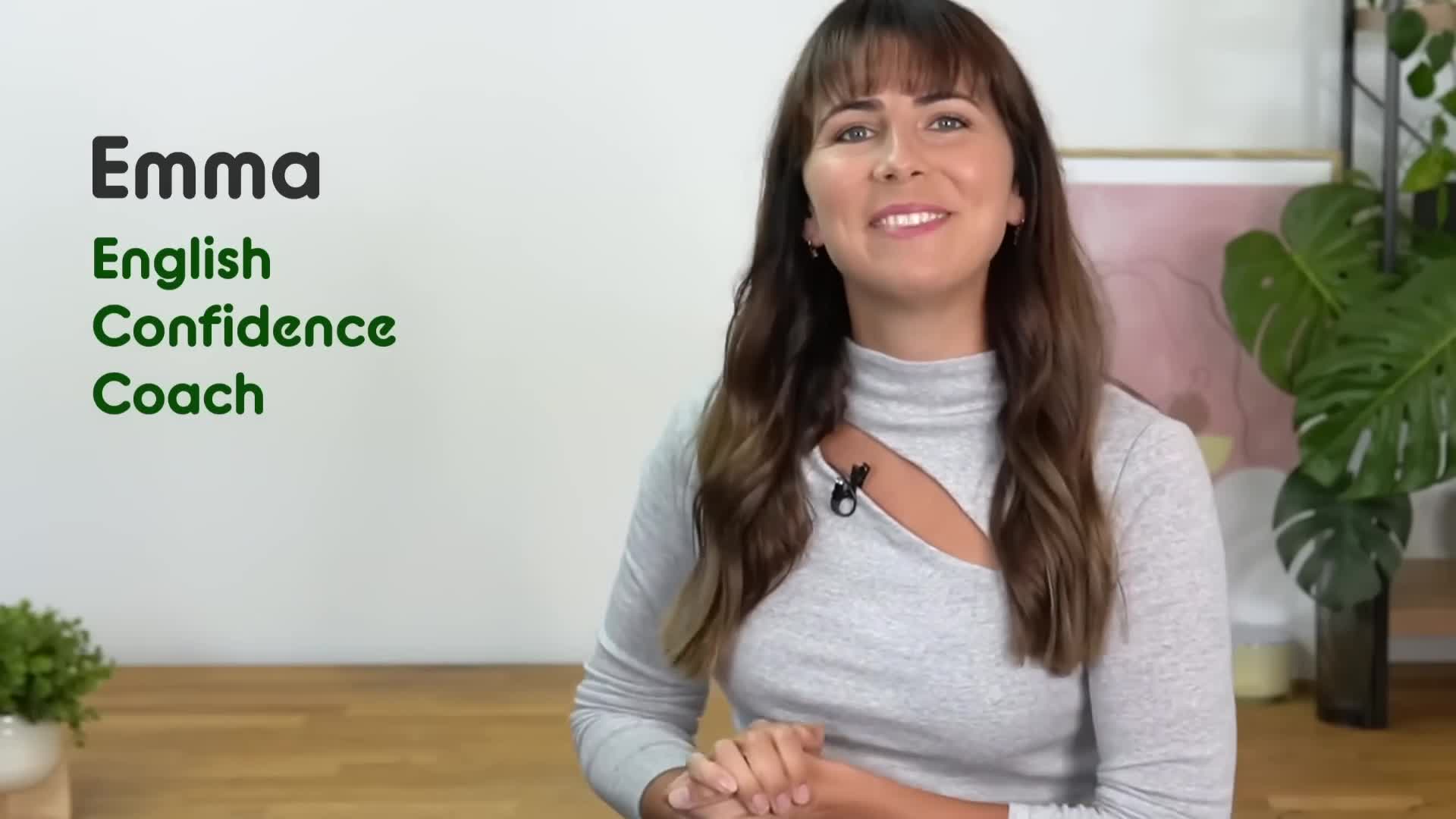
Well hey there I'm Emma from mmmEnglish and I have an extremely useful lesson for you today.
I'm going to teach you all the different ways that native English speakers use, like in everyday conversations.
And if you're thinking about using like as a verb well, that's one way, but I've got five extra ways that you can use like to help you sound more natural and more fluent as you're speaking in English.
So like let's get into the lesson.
Like is often used as an adjective and when it is, it means the same as similar.
To be like, to look like, to feel like, to taste like or to smell like.
This dish looks like it's savoury but it smells like dessert.
In this context, we're using like as an adjective to compare two things.
It's five degrees today but it feels like minus five.
Feels similar to minus five degrees but it's not actually minus five.
Watch out for this one though because there are a couple of different meanings for feel like.
Feel like can mean want.
I feel like an ice cream.
No.
I mean an ice cream.
I want an ice cream.
I want to eat an ice cream because it's hot.
And feel like can also mean think.
Feel like this is a bad idea.
So another way to say that is to say I think this is a bad idea.
I've got a feeling I feel like this is a bad idea.
Like can be an adverb as well, and using like as an adverb is going to help you to sound super natural when you speak.
It's really commonly used by native speakers in informal situations.
So as an adverb, like is a synonym for about, around or approximately.
I spoke to her like ten minutes ago.
So here the meaning of like is about.
I spoke to her about ten minutes ago.
He spent like a month in Colorado.
He spent approximately a month in Colorado or around a month.
Notice that like is always used before an amount when it's an adverb like ten minutes or one month, and it's not just time, it can be used before any number.
It only costs like twenty bucks.
There are like ten left in the jar.
Do you feel like your English speaking skills are holding you back?
Others aren't really seeing you for who you really are.
Anytime I had to talk with natives, I was just so unconfident because I was afraid of making mistakes all the time.
Most of the time I read in English and I understand, I watch the videos with the subtitles, but in that moment to speak, I feel afraid, I feel shame.
It's time to break free from those negative feelings and find your English voice with Hey Lady.
We understand the challenges that women face on their English journey and that's why we're growing a supportive community of women who are working towards the same goal.
Speaking English with confidence and ease from when I joined to today is that chance to talk with people without fear of judgment.
When we see each other, we're so happy and we have the opportunity to get to know new people all the time.
I mean, it's really amazing.
For me it's really like a dream come true actually.
Join Hey Lady today and start living your best life in English.
To find out more and get access to a free conversation pack, look for the link down in the description below.
Also use like as a linking word.
So linking words help to connect ideas in sentences in both written and spoken English, and because, as a result, they're all linking words and they're really useful in English sentences.
And like can be a linking word as well.
My nephews love playing on toys with wheels like scooters, bikes and skateboards.
I love old-fashioned names like Arthur and Iris.
So in this context, like means for example or for instance.
Just keep it in mind that like is commonly used in informal spoken English.
In a more formal context or when you're writing, it's much better to use, for example, or for instance, but in spoken informal English like
Very casual, very natural.
Now this is where the fun begins.
We're going to talk about some of the newer ways to use like.
Some people out there.
They might argue or they might disagree with me about what I'm about to say or what I'm about to teach.
They might say that like is not proper English when it's used in this way, in the way that I'm about to teach you, but If a significant number of English speakers around the world are using the language in this way in their everyday conversations, then I think that it is worth learning about and it is worth understanding.
And can you really say that something is not proper English when so many people around the world are using it this way?
I don't think so.
We can use like to retell stories and to report what someone else has said, and when it's used in this way, it's called the quotative like, because we're quoting what someone else said or what someone else felt or implied.
My boss was like I need the report in an hour and I was like are you kidding me?
That's not enough time.
When I say my boss was like or I was like, it's really similar to saying she said or I said in reported speech.
Really similar, but not quite the same.
When used in this way, like is less precise than reported speech, but it's also much more expressive, because I would never say, are you kidding me?
To my boss.
I would never actually say that, but I would think it or maybe I wish that I had said it at the time and it makes for a much better story when you're retelling it to someone else.
When we use like, instead of say or tell or ask, we can retell not only what someone else said, but also what they were thinking or they were feeling at the time.
So it's quite useful and it makes for really great storytelling.
The things that you didn't actually say, but maybe you wish you had, or a feeling that you had at the time when something happened.
These can all be expressed with like in this way, and we can even use like to reenact facial expressions and gestures, and that's why it can be so expressive and such a great and useful tool when you're retelling stories.
So, for example, if I'm retelling a story, I might say something like My neighbour was telling me how someone keeps stealing all the lemons off their tree.
And then Shah walked over with a couple of lemons in his hand and he was like hey, check out these lemons.
And I was like.
So this quotative like is only really used in casual spoken English.
So make sure if you're writing someone else's words or you're telling a story in written English, you stick with the regular reporting verbs and reported speech.
Remember I recently made a lesson about reported speech, you can watch it right up there.
Last but not least, we can use like as a filler word, and a filler word or it's also called a discourse marker.
They're used to connect or to organise our thoughts or even to express a certain attitude while we're speaking.
They allow us to think about what we want to say next without interrupting or disrupting the flow of conversation, so they're really useful.
They help our speech to sound more natural and less robotic, and they also help other people who are listening to you in a conversation know that you haven't finished talking yet, that you're still going.
Filler words like just actually and even they're useful and of course like as well.
They're all filler words and, even though it's best to avoid filler words if you can, they're also extremely useful in conversations to help you hold your thought while you think about what to say next.
It's like if you have to do work or like do housework and clean your room, It's like stuff like that.
I'm saying like quite a lot there because I'm trying to think about what I want to say next, and using like as a filler word can be really fun, especially if you try and copy a bit of the intonation of some of the more famous examples of like being used in this way.
If you've ever seen the movie Clueless, you'll know exactly what I'm talking about.
It's one of my favourite movies.
I said RSVP because it was a sit down dinner.
But people came that like did not RSVP.
So I was like totally bugging.
We just heard like as a filler word.
People came that like, didn't RSVP.
Now the sentence would make perfect sense without the word like in it, but she's using like as a way of adding dramatic pause, or it exaggerates the information that's following.
It's like if I said Clueless is like my all-time favourite movie.
Like just helps me to illustrate how much I love it.
It flows and it sounds really natural.
It's definitely not perfect English and it's not needed in any way, but it's very much a part of naturally spoken English.
What are you going to do about it?
Now adding a few likes to your spoken English is going to help you to sound more confident and more fluent in English, so make sure you're listening out for the way that native English speakers use like as they speak, and start thinking about how it's being used.
What type of word is it?
What function does it have in that sentence and see if you can start using like in some of these different ways.
Play around with it a little bit, have some fun.
I hope you liked the lesson.
Don't forget to like it and subscribe to the channel.
I will see you again next week with another lesson.
Bye for now!