You're listening to Brains On, where we're serious about being curious.
Brains On is supported in part by a grant from the National Science Foundation.
Welcome to the Brains On Laver Kitchen.
This is where we cook all sorts of fabulous foods like my all-time favorite, cottage cheese and mint, jello, goulash.
Whoa, Molly, that sounds...
Delicious! Ah! No way, Molly.
No way, Rachel! Just Gangadol!
Friendly never heard of the mid-jump in wrestling monster-turned-dance instructor!
Oh, Gangadol, you scared us.
What were you doing in the pantry?
Getting ingredients for expert cereal salad!
Expired cereal salad? What?
Gangadol have megaloccurrence cereal, thunder crisp cereal, and Gangadol's favorite, bavaria bun cereal.
Mixed together, the crunchy sweet, slightly stale salad.
But Gangadol, these cereals are pretty old.
Yeah, these bavaria buns were best by last December?
Yes, but for food in pantry, expiration date, not so important.
Like when people say, don't wear same underwear two days in a row.
It's just a suggestion!
Here! Have a taste! Um...
Okay. Okay, I mean, I guess I'll try it.
Oh, you know, it's not too bad.
I guess you're right. Gangadol usually writes, it's still delicious, like eating history!
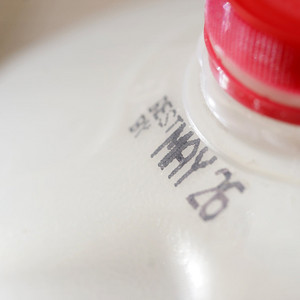
Oh, no, no, no, no, no, no, no, no, no, no, no, no, no, no, no, no, no, no, no, no, no, no, no, no, no, no, no, no, no, no, no, no, no, no, no, no, no, no, no, no, no, no, no, no, no, no, no, no, no, no, no, no, no, no, no, no, no, no, no, no, no, no, no, no, no, no, no, no, no, no, no, no, no, no, no, no, no, no, no, no, no, no, no, no, no, no, no, no, no, no, no, no, no, no, no, no, no, no, no, no, no, no, no, no, no, no, no, no, no, no But they're not, they're expiration dates To expire means to go bad or spoil, so the expiration date is the day or month when the food is past its prime Some say things like sell by best before packed on and June 2024 And they're designed to help us figure out whether food is fresh and okay to eat So Rachel you wrote into us with a question about this, right?
Yeah, I wanted to know how do people choose expiration dates for food?
Great question. So what made you think of it?
So I watched this video on TED Ed and it said that for food in cupboards the expiration dates didn't really matter.
Hmm Just like Gungador said.
Yeah. So how seriously do you take expiration dates at home?
Um, for milk, we sniff it or look inside on when it's rotten, we throw it out and For like nature bars or anything, we let it slide.
Okay. So what have you eaten food that is past the expiration date?
Oh, yeah, honestly, it kind of tastes the same.
Hmm. So you were fine like the Gernolavirus like, you know, tastes pretty much the same.
Yeah. So when you the milk is bad, how can you tell it's bad?
So say you sniff it. What does it smell like?
It smells sour, but that usually doesn't happen.
Okay, so like it's okay until you smell that bad smell.
Yeah, very good. Well, yes, those expiration dates can be a little confusing.
It's hard to know which ones to listen to.
So a lot of our listeners have questions about them too.
Hi, my name is Ethan and I'm from Powhatan, Virginia.
My question is, how do people know when to say something is expired?
Hi, my name is Aditya and I live in big, rapid Michigan.
My question is, why do foods expire?
Those are excellent food EQs.
Agreed. Let's start with Aditya's question about what makes food go bad in the first place.
It all has to do with bacteria and fungi.
Vacteria and fungi are teeny weiny living things that you can't see without a microscope, but they're everywhere.
They're in the water we drink, the air we breathe, all over our bodies.
And lots of them are actually helpful.
In fact, there's good bacteria or fungi and lots of the food we eat.
Like yogurt. Yogurt is filled with good bacteria that give it that tasty tang.
And when we eat them, those bacteria help keep our guts healthy.
Sour, crowd, kimchi and kombucha have good bacteria too.
There's also fungi in the foods we eat like yeast in our bread.
That's fungi. And don't forget mushrooms.
Mushrooms are fungi too.
But there's also bad bacteria and fungi out there that could make us sick.
And when this stuff gets in or on our food, that's when we call the food spoiled.
This can make food mushy, sticky, smelly, or covered colorful, fuzzy mold.
Lucky for us, there are a bunch of ways to stop bad bacteria and fungi from spoiling our food.
One of the best ways to keep those food rotters at bay is to keep food cold.
In cold temperatures, bacteria and fungi can't grow as fast.
It's like they're hit with a slow motion ray.
So it takes much longer for them to spread and ruin your food.
That's why we have refrigerators and freezers.
Another way we can keep food from spoiling is by pickling things.
Pickled foods can last years because salt and vinegar make food very acidic.
Bacteria and fungi don't like acid, so pickle your produce to make it last.
And then there's dry. Dry foods like raisins don't spoil easily because bacteria and fungi need water to grow.
So if you want to keep food fresh, try drying it out, pickling it or keeping it cold.
There are other ways to preserve food, but these are some of the most common.
And it's important to do because spoiled food doesn't taste good and can make us sick.
Which is why expiration dates are important.
They help keep us safe and let us know when food is at is freshest.
Which brings us to Ethan's question.
How do people know when to say something is expired?
Honestly, it'd be pretty handy if food could just tell us when it's gone bad.
Funny you should say that because we asked our listeners to invent alarm sounds that rotten foods might make when they're past their prime.
Here's what they came up with.
Hi, my name is Madison and I'm from Los Angeles and my expiration sound is Daddy, I am spoiled.
Hi, my name is Elliot, I'm from Houston, Texas and if my food went spoiled, I would have a contraption that would go on the food.
And if you put your hand near it, it would go like beep.
And if it's not spoiled, it would be like ding.
It was jubo and if I had a food expiration alarm, then it would be an alarm that said, don't eat me, don't eat me and had an alarm sound over and over again until you turned it off.
Those are some fantastic food alarms, Rachel.
What sound do you think food should make when it goes bad?
Maybe something like a siren?
Kill me here, your siren impression.
BAM, BAM, we're rotten and spoiled.
BAM, BAM, BAM. Hmm, I love it.
Well, food doesn't usually talk or make alarm sounds, but there are other ways foods can tell us they've gone bad.
Like what? When it comes to matters of food safety and the heart, I like to turn to my oldest confidant, TV.
Let's watch. Parents, it's dinner time.
Do you know where your foods are?
They could be in your cupboard, fridge or pantry, going bad.
Take a listen to this little snack story to learn the signs of expired food.
I used to be a bag of bread, hanging out in the fridge alone.
But now, I'm a bag of bread with friends.
So what if they wear leather jackets, sunglasses at night, and smell kind of stinky?
They're stylish stinkers, and they're my friends.
They're not just one of those bad crowds I've been warned about.
Hey, bread? How you doing?
Eggs. I'm doing great, really great.
I was just here saying to myself, I'm sure glad I haven't fallen in with a bad crowd.
Oh, bad. It's the thing, buddy boy, we're not bad, we're rotten.
What? Yeah, it's hard to tell with eggs.
One way to know is by putting in water.
If I sink in fresh cold water, I'm good.
Eggs haven't seen the bottom of a pool in years.
Ew. It's not just eggs. Not you too, steak.
Yeah, I'm bad to the tea-bone.
You can tell because I'm sticky, tacky, and slimy.
I just thought you had a clammy hand shake.
You've all gone bad. We've gone bad.
You're just as bad as we are, bread.
Me? No, I'm fresh from the top of my cross to the bottom of my crumb.
Really? Then what's that spot of mold doing there?
No! How could I have missed this many signs?
I mean, who wears sunglasses at night anyway?
Yeah. Oh, you could have just used the smell test.
The smell test? You know.
Use your nose. When there's a query, it boots like meat or dairy.
I'm still good or too scary.
Take a sniff. Take a sniff.
Take a sniff. Take a big old whimp and head the smell and wonder before you blend her take us.
Trust your snows. I know best.
Better yet I know's best.
And here's a cheesy tale to help improve it.
Gertie got the goo to greet the girly, grabbed the grubby goo to.
Gertie kinked the cork and so low as she got it just right for you.
And when grilled, she got moody, took a whiff and thus sent through me.
Because Gertie's grubby goo does smell like super duper booty.
Take a sniff. Take a sniff.
Take a big old whiff and head the smell and wonder before you blend her take us.
Sniff. You're saying smelling food is one way to see if it's good or not?
Yes. The nose knows. And my little buddy, aew stink.
No. Eh, whatever. Hey, rotten food.
Let's go stink up the back of the fridge.
Last one there's a rotten.
Whoops. Sery eggs. So there you have it.
Who knew the nose was so good at identifying food spoilage?
There are many signs that food has gone bad.
If you smell some funk in your food, don't eat it.
Yeah, the nose is a powerful food funk detector.
But this is important. Sometimes food goes bad without smelling foul at all.
There are certain bad bacteria that leave no smell and can make you very sick.
You often find these on produce like fruits and vegetables and also on meats.
That's why it's important to always wash your fruits and veggies and make sure you fully cook your meat.
We'll dive into more rules on food safety in a second.
But first, let's switch from the nose to the ears because it's time for the...
Shhh. Mr. Saa. You ready, Rachel?
Yes. Here it is. What do you think?
I think it's like plates dropping and rolling around.
Okay, plates dropping and rolling around.
What is the scenario that your managing replays might be dropping and rolling on a table on the floor?
What's happening? Like maybe like bowling.
Oh. They're rolling the bowls on the floor.
Okay, we're bowling with plates.
Yeah. I love that idea. Sounds potentially dangerous.
Mm-hmm. I like it. I like it.
I like it. Well, we're going to hear it again.
Get another chance to guess.
And hear the answer after the credits.
So, stick around. Hi, Brains on Besties.
We're composing an episode about stringed instruments and how they all make unique sounds.
From ukuleles, sitars, to violins, and guitars.
For this episode, we want you to send us your own version of the Brains on Theme Song.
You know, don't, don't, don't, don't, don't, don't, don't, don't, don't, don't, don't, don't, don't, don't, don't, don't, don't, don't, don't, don't, don't, don't, don't, don't, don't, don't, don't, don't, don't, don't, don't, don't, don't, don't, don't, don't, don't, don't, don't, don't, don't, don't, don't, don't, don't, don't, don't, don't, don't, don't, don't, don't, don't, don't, don't, don't, don't, don't, don't, don't, don't, don't, don't, don't, don't, don't, don't, don't, don't, don't, don't, don't, don't Bum!
Ooh, I love it. So, you also play Viola and piano.
Yeah. Which instrument do you think would be better suited for your cover?
Hmm, the piano. Okay, I love it.
Or maybe you could record yourself tweaking both piano and then Viola.
And all Rachel band. Yeah.
That would be great. Well listeners, we want to hear from you.
Please make a recording of the Brains on Theme Song and send it to us at Brainson.org-slash-contact.
While you're there, you can send us mystery sounds, drawings, and questions.
Like this one. My question is, why do bees make a buzzing sound?
Again, that's Brainson.org-slash-contact.
Keep listening. Brains, brains, brains.
You're listening to Brainson.
I'm Rachel. And I'm Molly.
And today we're talking about food expiration dates, which help us figure out if food is fresh and safe to eat.
Food spoils some bacteria and fungi grow like, whoa.
It's important to stay away from rotten food because it won't taste good and it can make you sick.
But luckily, there are lots of ways to tell if food has gone bad.
Rotten eggs float, bread grows mold, and meat gets sticky, tacky and slimy.
And there's the sniff test.
If your food smells yucky, steer clear.
There's also a list of helpful guidelines from scientists for how long different types of foods typically stay fresh in the fridge or freezer.
We'll put a link to it in our show notes.
So if there are lots of ways to tell a food has gone bad, why do we have expiration dates?
It's a long and storied story.
We do know a history buff and host of Forevergo, the hilarious history podcast for the whole family.
Available wherever you listen to podcasts.
Tizai! Hi Molly. Hi, Rachel.
We're so glad you're here.
Only two. I'm a big time food fan.
We've done a bunch of food themed episodes on Forevergo.
We've got episodes on the history of mac and cheese, chewing gum, ice cream flavors.
Don't forget the one about sandwiches.
We tasted some pretty wild historical sandwiches for that episode.
Yeah, sandwich loaf forever.
And food expiration dates are a favorite topic of mine.
Did you know expiration dates have only been around for about 50 years?
My grandparents grew up without them.
What? Yeah, that's because for a long time throughout history, the way we got our food was really different than how most of us get it now.
People lived much closer to where their food came from.
Most people either grew their food themselves or got it from farms.
People might have also hunted wild animals like rabbits or deer or gone to a small market.
But bottom line, people often knew where their food was coming from.
So they usually knew how old their food was.
Precisely. Take, for example, this imaginary farmer from Ohio in 1824.
This was before electricity in home, so no refrigerators.
Time to put some grub on the table.
First up, the root cellar.
For some taters from the garden.
A root cellar is like a basement room that's always kind of cold and dark.
Since refrigerators didn't exist, they helped keep foods like potatoes and carrots fresh.
Next up, salted pork. Saltine is another way to preserve food.
People used to put tons of salt on their meat to make it last longer, like jerky.
The saltine dries stuff out, which makes it hard for bacteria and fungi to grow.
And for the finishing touches on this delectable dinner, fresh tomatoes from the garden.
Let's go pluck them from the vine.
To modders, fresh off the vine, sound divine.
But as time went on, more and more people moved away from farms to cities.
And they started to lose track of where their food was coming from.
At the same time, refrigerators were invented and preservatives entered the picture.
Preservatives are chemicals that can be added to food to keep them fresher longer.
Together, refrigerators and preservatives made it possible for companies to freeze and package more types of food and make it last.
For the first time, food could travel across the country and even the world and stay fresh.
And this made it possible for people to get their food from big grocery stores like the ones we have today.
Which brings us to the early 1970s.
So in the early 1970s, bell bottoms were in, and so was activism.
People were protesting a lot, demanding equal rights for all people and marching to save the planet.
And they were also demanding more information about their food.
Like this imaginary shopper in Los Angeles in 1972.
Hmm, should I have chicken for dinner?
Oh, how fresh is this stuff?
The meat looks a bit grey.
Ugh. Or maybe some rice?
Wow, this box is way back on the shelf.
How long has it been sitting here?
People didn't know where their food came from or how long it had been on the shelf.
So store owners and food manufacturers around the world started adding expiration dates to food packaging.
And things haven't changed much since.
But here's the thing about expiration dates.
In the US, there aren't any laws or rules companies need to follow.
That's partly why you could see all kinds of different messages from best buy to use before.
And get this, foods aren't even required to have expiration dates.
And these dates are not always based on food safety science.
The only food that's always tested to see how long it will last is baby formula.
Lots of other expiration dates are based on something called shelf life studies, where researchers test each food to figure out how long it stays good.
We look at all different factors from how food smells and tastes over time to how much bacteria grows in it.
But even with all of this research, it's tough to perfectly predict how long every food will stay good.
So most expiration dates are just best guesses.
Which means we often throw perfectly good food away because we think expiration dates are always right when they're not.
Actually, about 20% of food waste in the US happens because people aren't sure whether to take expiration dates seriously.
So next time you go to throw away some bread or cereal because it's past its best buy date, wait!
Check the handy dandy food storage safety chart we've got in the show notes.
And if you're still not sure, use your schnauz.
Or take a close look because it might still be good.
Speaking of expired cereal, I kinda want to try Gungadour's expired cereal salad.
Did somebody say expired cereal salad?
Expiration dates are usually guesses that help us figure out if food is fresh and safe to eat.
There aren't any official food expiration date rules, so it's good to think of them as guidelines or suggestions.
And they were invented because a lot of people no longer live near farms or where food is produced.
So they help us determine how long item might have been sitting on a shelf or in the refrigerated section of the grocery store.
And remember, our senses are powerful.
They can help us determine if something is still good to eat.
That's it for this episode of Brains on.
This episode was written by Rosie Dupont and Aaron Woldeslossi.
It was produced by Molly Bloom.
Our editors are Stan and Todd and Shaila Farzon.
Fact checking by Nico Gonzalez Whistler.
We had engineering help from Derek Ramirez, Rich Ells, and Brian Federick with Sound Design by Rachel Breese.
Original theme music by Mark Sanchez.
We had production help from the Brains on Universe team.
Anna Goldfield, Nico Gonzalez Whistler, Ruby Guthrie, Lauren Humpert, Joshua Ray, Mark Sanchez, Charlotte Traver, Anna Weggel, and Adam Woldeslossi.
Beth Perlman is our executive producer and the executive's in charge of APM Studios are Chandra Cavatti and Joanne Griffith.
Special thanks to Jooyoung Park and Young Six-Yong.
Brains on is a nonprofit public radio program.
There are lots of ways to support the show.
Subscribe to Brains on Universe on YouTube where you can watch animated versions of some of your favorite episodes or head to BrainsOn.org.
While you're there, you can send us mystery sounds, drawings, and questions.
Okay, Rachel, are you ready to hear the mystery sound again?
Yes! Let's hear it. What do you think?
I think now I've kind of changed my mind.
I think they're putting down the plates on a table and then maybe rolling something else.
Oh, very good. So maybe like setting the table?
Excellent. What do you think they could be rolling?
Maybe sauce bottles. Oh, yeah, they're like here.
Like pass the soy sauce.
You're like sure, and then like you roll it across the table.
Yeah. Perfect. That seems like a very innovative way to pass a bottle of sauce.
I love it. Should we hear the answer?
Yeah. Okay, here it is. Hi, my name is Ellison.
That was the sound of me putting plates on a table.
Oh! Excellent work! You got it!
Yay! How do you feel? It feels good.
Excellent work. Do you usually get the mystery sound right when you listen?
No. Oh, this is a special day.
Now it's time for the brains honor roll.
These are the kids who keep the show going with their questions ideas, mystery sounds, drawings, and high fives.
Max and Catherine from Cherry Hill, New Jersey, Alexander from Mattoon, Illinois, Michael from New Orleans, Najee from Richmond, Alex from Port Hope, Ontario, Ulrich from Columbia, Bronson from Salt Lake City, state and from New Braunfills, Texas, William from Bristol, UK, Taba from Washington, DC, Indy from Alabama, Paul from Marley to Massachusetts, Sabine from Millbanks, Alacoda, Calder from Jacksonville, Florida, Lyla from Cincinnati, Vivienne from Maplewood, Minnesota, Stella from Bristol, UK, Maya from Ottawa, Malcolm from New Haven, Connecticut, Amit from Milwaukee, Andrew from Berkeley, California, Marlow from San and Selma, California, Jack and Maggie from Sumamish, Washington, Rhodes from Henderson, Nevada, Owen from Marley, North Carolina, Julian from Mexico City, Finley and Brooke from Los Gatos, California, Aikley from Remar, Minnesota, Blakely from Brewer, Maine, Max and Teddy from Nashville, Ramona from Portland, Maine, Ryan from Los Angeles, Charlotte and Michael from Wisconsin, Dashall from New York City, Poppy from San Francisco, Claire from Naperville, Illinois, Eleanor from Hotto, Texas, Aria from San Francisco, Yuna from Dusseldorf, Germany, Anna from Palo Alto, California, Azalea from Las Vegas, Arlo from Bellport, New York, Hugo from Marley, North Carolina, Ava from Middletown, New Jersey, Delilah from Valliejo, California, Will from Bartow, Florida, Madison from Los Angeles, Aria from Upland, California, Clara from Grand Prairie, Alberta, Adama from Washington, DC, Grayson, Eleanor from Winchester, Virginia, Lucía from C.Side, California, Sahana from Seattle, Anthony from Manifee, California, Teo from Shelburne, Vermont, Amelia from Temecula, California, Amelia from Lomalinda, California, Aldo from Charlotte, North Carolina, Natalie from Springfield, New Jersey, John from Kansas, Bryce from Watchula, Florida, Amazing from Madison, Wisconsin, Rowe from Vancouver, and Leora from Toronto.
We'll be back next week with an episode all about Antarctica.
Thanks for listening.