Support for NPR and the following message come from Bolland Branch.
For the coziest bed this fall, start with Bolland Branch's organic cotton sheets.
To get 15% off and free shipping on your first set of sheets, visit BollandBranch.com and use code NPR.
Exclusion supply, see site for details.
This is Planet Money from NPR.
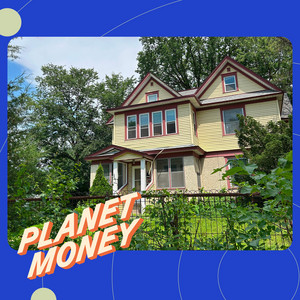
Real Estate developer Cody Fisher and I are standing facing a big old house.
We're at the intersection of Mini Ha Ha Avenue and 36th Street in South Minneapolis.
The house has got brown stucco and yellow siding.
To me, it looks, I don't know, like a big house with yellow siding on a corner lot.
To Cody, this looks like a great place to build.
Mini Ha Ha is, it's a busier street with dedicated bike lanes, high frequency transit.
When you say high frequency transit, I picture something amazing, but you're just talking about buses, right?
Yes, yeah, I am, that's the advocate in me.
Yeah, Cody seems to be one of those relentlessly optimistic types.
They're buses, amazing.
He used to work at nonprofits on issues like food security and hunger.
Cody also worked for Chicago Public Schools, he got an MBA.
And now, Cody is, optimistically of course, trying to fix one of the country's toughest policy problems.
Housing. Housing. As you're probably aware, we're living through a massive housing shortage and that's driving up home prices all over the country.
If you want to solve a housing shortage, advocates and economists and experts agree, we need to build more housing.
Build an abundance of housing.
And Cody, this is his mission.
Cody started a company called Footprint Development and it only builds energy efficient carbon smart housing.
This is what gets Cody up in the morning.
He wants to build a lot of this kind of housing.
And that is why he's managed to get the development rights for the corner lot on Mini Ha Ha Avenue and 36th Street.
He plans to take down that one yellow house in order to put up much more housing in the same space.
So we have a four story, 32 unit mixed use building plan for here.
Four story, 32 units. 32 units.
Okay. Yes. Yeah. So it'll be a mix of studios, one bed and two bed units.
These small to mid size apartment buildings that Cody wants to build, they don't get built much these days.
Because of that, they have this special name, the missing middle.
It's called the missing middle because we get a lot of single family homes in North America.
We get a lot of huge 100 plus unit apartment buildings.
And for many decades, we haven't been getting that missing middle housing scale.
Missing middle buildings are considered this really important potential fix for the housing crisis because, you know, think about it, on this lot, you could have one house with yellow siding, but it could also fit something the size of Cody's proposed apartment building with room for 32 people or couples or families.
Minneapolis called for all kinds of new housing, including missing middle buildings, when it passed one of the most ambitious housing plans in the nation a few years back.
And so last September, Cody got the main approval he needed for his plan to replace that yellow house.
The vote was in fact unanimous.
But then, before he could like drink champagne out of his hard hat or whatever, a problem popped up that was so big that a ton of new construction in Minneapolis was forced to stop, including Cody's unanimously approved apartment building.
So it was actually the same day that I got the approvals and within an hour that I got that news.
So I didn't celebrate. I actually was it was devastating.
It went from soaring high and feeling good to, you know, getting a gut punch and wondering what the future of the project was.
From one day to the next, a city that thought it was on its way to solving a housing crisis was no longer building the new homes it needed.
Hello, I'm welcome to Planet Money.
I'm Amanda Oronchik. And I'm Kenny Malone.
When Minneapolis passed its big plan, it became a kind of testing ground for lots of new ideas about how to fix housing, housing experts and advocates from all across the country were looking on to see, will these new policies actually work?
And if so, could Minneapolis be a model for other cities?
Today on the show, the story of Minneapolis's big housing experiment will tell it through two buildings and the fight to get them built.
The Constitution, our founding document says a lot about how our country has evolved and who we want to be, but it's not set in stone.
So for the next month, we'll be digging into the history behind some of its most pivotal amendments.
Listen to We the People on the Throughline podcast from NPR.
Okay, so tell me if this sounds like you.
You love NPR's podcasts.
You wish they weren't interrupted by sponsor breaks like this one.
And you want to support NPR's mission of creating a more informed public.
If this does sound like you, then it's time to sign up for perks across more than 20 podcasts with the NPR Plus bundle.
Learn more at plus.npr.org.
When Cody Fisher was thinking about how to get into this fix the housing crisis real estate stuff, he tried to find other developers who were also interested in building green housing.
But he kept running into dead ends.
I couldn't find anybody that was doing stuff the way that I would want to do it, which is energy efficient, low carbon and smaller scale.
And so I just didn't think there was a career there for me.
And then in 2018, Cody gets word of something that changes his mind and puts him all in on building climate friendly middle sized departments.
He hears that Minneapolis is working on some set of bold new housing policies and they're all part of a city plan called Minneapolis 2040, which sounds like an Olympics bid, but no.
So what the Minneapolis 2040 plan did was lay out exactly how big you can build what shape it can take, you know, what the city wants in all these different areas.
And what does the city wants and how do they plan to get it?
Well, for that, we went to Nick Erickson, he's a housing policy expert who works with developers in Minnesota.
The first thing I asked Nick when we met up was, could he show me a copy of the Minneapolis plan?
We did not assume that he would hear that and think, could you print a copy of the Minneapolis plan?
The printer on the last 15 pages, 20 pages, got jammed and stopped working.
It's a massive document.
So you broke the printer?
Broke the printer. Yeah.
It is more than 1200 pages.
So that would be the equivalent of probably war and peace or lay miss.
I mean, it's a large document.
It's actually longer than war and peace and Nick.
Nick talks about the Minneapolis plan as though when it was published, it entered the canon of great works.
It didn't just say this is what we're going to do and why it was very clear saying this is the roadmap of how we're going to get there.
The plan was a big deal for a lot of reasons, but there was one thing in particular that really made headlines.
Minneapolis became the first major city in the nation to get rid of single family zoning.
It got rid of zoning that stipulates you can only have housing for one family on this lot.
That's it. Right. So one way to think about what is happening here is that if you do live in a bucolic family neighborhood with lovely historic homes, well, any of those houses could now theoretically be turned into a duplex or a triplex or in some places even like a middle sized apartment building.
And Minneapolis eased up on all kinds of other rules and regulations too.
They basically gave developers a path towards quick and easy approvals all for this one big goal, right?
To build, to increase the supply of housing.
Now this plan, it is huge.
It includes policies to address racial justice and climate change to increase housing density.
It has big goals. And at the same time, as Nick points out, what is remarkable is how specific the plan gets.
So you've got these neighborhood maps that you could probably zoom in if you had reading glasses on and find your block in the city.
Yeah, like for example, if you look at the maps and pick a block, it'll say on this block, we want new construction that's between two and six stories tall.
But on this other block downtown, we want new construction to be at least 10 stories tall.
And so broadly what Minneapolis is up to with this approach is an idea that became popular in the mid 2010s.
You know, you may have heard about this before, but instead of people being nimbies about new developments, not in my backyard, people need to become yimbies.
Like yes, build things in my backyard.
We asked Nick to show us an example of a new building that could only have come into existence because of the city's plan.
If you need to adjust the seat, feel free.
Thank you. So we are driving down a commercial main street.
We pass a car mechanic, some breweries, a coffee shop, and then we take a turn onto a residential street.
Here's the building we're going to see right here, this blue and white one.
Now in our tale of two buildings, this building came first.
It's a brand new four-story apartment building, their rentals, and they just went on the market in March.
And for Nick, this is a perfect example of the kind of new missing middle housing that Minneapolis says it wants.
This building has 23 apartments and it replaced a small single family house that was built back in the 1970s.
Really, you know, highlights this neighborhood infill project where you're taking what's probably a home or two and turning it into several more units here.
Now Nick said infill there, which is essentially the housing world's term for adding housing by repurposing land in the city as opposed to the sprawl version, where you're building brand new subdivisions further and further outside of the city on undeveloped land.
This only exists because you can do something beyond a single family home in this neighborhood.
This blue and white building not only has solar panels and draft-free triple-pane windows, but it also has some fun amenities we walked up and looked inside.
You have a pet washing station.
There is a pet washing station.
This is the most millennial building I ever have seen.
It is. And they've got a bike room and a pet washing station.
And I think that somebody's vinyl collection over there couldn't quite make out if it was a good vinyl collection or not.
Hope so. No, no, no, look, this blue and white building, it is exactly the kind of project that the city theoretically paved the way for.
It's increasing the density check, it's energy efficient check, it's near public transit check.
And of course, that meant that it got built with zero problems and no controversy at all.
Yeah, no. No. It turned into a messy fight.
The neighbors hated it.
They did not like the idea of an apartment building going up on their block.
We were standing outside the building when our tour guide, Nick, gestures for me to look at something.
I do want to show you this real quick.
Yeah. He points out a sign staked in the yard of the house right next door.
So this is emblematic of the housing policy discussion.
They're the sign that says, neighbors sacrificing for developers pocketbooks.
So this is the least catchy slogan I've ever seen.
It is a tiny little sign.
It is on the gray single family home right next to this brand new apartment.
And it's facing the apartment.
This is what we call Minnesota passive aggressive.
That's just how we do things here.
We'll put a passive aggressive lawn sign up that our neighbors have to look at.
This sign is a leftover from a fight that sounds like it got aggressive.
Yes, regular aggressive.
Regular normal aggressive.
Because what happened here is a kind of fight that we have gotten used to seeing whenever a bigger development is proposed in a residential neighborhood.
Our final discussion item this evening is item number 12.
When the blue and white building was proposed, there was an online meeting of the city's planning commission and people from pretty much every house on the block showed up.
This is just a ill conceived place to put this property.
And I totally object to it.
They said the building is going to ruin the cute residential street.
If the apartment building was built, we would only see a wall.
That would bring congestion.
He is providing no parking.
And it would cost them money.
What it's going to do to our property values in proximity to that is not fair.
If you are happy living in your residential neighborhood.
Yeah, many of these things would be a drag, but also kind of classic NIMBY situation here.
Now that proposal for the blue and white apartment building, it actually came from a developer you've already met.
Cody Fisher, the relentlessly optimistic developer from the very beginning of our story.
Because of all the pushback from the neighbors, the planning commission initially rejected his proposal, which Cody found totally baffling.
We followed the design requirements that the city had to the T.
And so it was supposed to be kind of a rubber stamp approval.
Like, that's what was supposed to happen.
Yeah, the city had basically told him to propose this kind of missing middle building when they passed that ambitious housing policy.
And then when the neighbors said they didn't like the building, the city's planning commission was like, yeah, you know what?
No, you're not allowed to build it.
Right. So we ran this particular situation past a housing policy journalist whose work I really like.
Yeah, my name is Jerusalem Demses.
I'm a staff writer at The Atlantic.
Jerusalem has reported on this housing situation in Minneapolis and in other places.
And she's got a book coming out called On the Housing Crisis, Land Development Democracy.
And our observation about what Cody ran into is this is a tricky thing about the way government works at a local level.
Right. You know, there are these things that we say we want, that we idealize like civic engagement and people having a voice.
But when it comes down to the need to build more housing, which is more of a big collective need, it tends to be that the preferences of just a few people, you know, like the neighbors, can get in the way of that.
I'm not saying the people on that local block don't deserve a say.
They do. But they're not the only ones affected by these decisions.
Jerusalem's saying, think about the people who would like to live in this neighborhood.
Like, say there's someone who's about to move to Minneapolis for a job, but they can't find a place to live.
That person also has a stake in whether this apartment building goes up or not.
But they are probably not showing up to the city planning commission and saying that they want the building into the microphone there.
And so Jerusalem says that local governments are in a way not asking the right questions when they hold these public meetings about proposed development.
Like, they tend to be like, the mic is open.
So immediate neighbors, what do you guys think about this new building?
We've created institutions at the local level where you ask people, hey, do you want things to stay the same?
Or do you want things to change in some unknown way?
And of course, people are like, no, don't change how things are.
I feel pretty happy with the current way my neighborhood looks and I'm scared of what that change might look like.
Instead, Jerusalem says that the starting point should be there's a housing crisis.
We have to build 10,000 new homes over the next 10 years.
Where do you want that to go?
The question is not yes or no to this new building.
It's where do you want it to go because it's going to have to happen.
According to some estimates, we need about 5 million new homes nationwide.
Now, obviously Cody's blue and white building eventually did get built with a pet washing station, of course.
But he had to hire a lawyer and lobbyists and he also had some environmental groups on his side.
And he managed to win that fight.
But clearly, if any new development can be derailed by angry neighbors, that is an enormous weakness of Minneapolis' ambitious plan to fix a housing shortage.
The other building in the story, the apartment building that Cody still has planned for the corner of Minnehaha and 36th Street, where there is currently that big old yellow house, that building got stuck in a much bigger and much more intractable fight.
A fight that teaches us something about trying to fix not just Minneapolis' housing crisis, but the whole country's.
That's after the break.
Waylon, how much do you think it would cost to buy one of those big digital billboards in Times Square to promote our show?
The indicator from Planet Money in big lights.
In this economy? I mean, you're probably right, but this question is the exact kind of thing that we find answers to on our show.
We take one big economic idea, make it understandable and, you know, even fun.
That's the indicator from Planet Money and NPR.
It's easy to get caught up in life on Earth.
It's being human, but we're just one species on one planet in a whole universe.
Come get out of your head and explore that universe with us with fun, fascinating stories of science and discovery.
Listen now to the Shorewave podcast from NPR.
Honest human stories. That is what we do at NPR and we do it for you.
Keep listening. Okay, so we promised you a tale of two buildings.
The first one, the missing middle apartment building with the pet washing station.
That got built after a protracted expensive fight.
But our story's second building, it still has not been built.
So my building has four floors on it.
So we are back at the old yellow house at the corner of Mini Ha Ha in 36 and we're here with the real estate developer Cody Fisher again.
And in theory, the yellow house on that lot should not still be standing.
Like Cody was planning to have it deconstructed already.
And we are saying deconstructed instead of demolished because Cody, who's trying to build new housing in the most environmentally sound way that he can.
Now he doesn't just knock down the buildings he's replacing.
It's much more painstaking than that.
So taking it apart, board by board, piece by piece.
Basically what you're left with is, you know, a concrete basement hole filled with sheet rock.
Pretty much everything else gets diverted from the landfill.
That way a lot of the materials get recycled or reused instead of ending up in the trash.
But ironically, Cody's very green apartment buildings were not allowed to go forward, ostensibly for environmental reasons.
Here's what happened. A group of environmentalists sued the city over its big plan, saying that the whole plan should have gone through an environmental review.
You know, the same way a lot of major new developments would.
Right. So like not suing Cody's project or another project, the entire plan.
And what they were arguing is that the plan would increase housing density in a way that could be harmful for the city's water and air and ecosystem.
Then last September, the judge who was considering the case agreed that the city needed to do an environmental review and imposed a temporary injunction that brought a lot of new development to a halt.
It was a massive curveball.
At that time, we were working towards starting construction in April of 2024.
And then the city was like, no, we can't issue permits completely on hold indefinitely.
The journalist Jerusalem Demses says this particular fight is rooted in big generational differences.
She says, you know, older people like Gen X and baby boomers, they often see development as bad.
And to be fair, they picture very disruptive events that happened in the past.
You know, they picture neighborhoods being displaced, highways plowing through open land, paradise being paved over for parking lots.
In the past, environmentalism meant green spaces.
It meant what you need to do is be a conservationist in your own right.
It means that you buy an old home and you fix it up.
And that's your sense of what environmentalism is.
That's very different than what I think is happening right now, which is for people like me, you know, if you're born after 1980, how you've been taught about the environment is almost entirely about climate change.
Specifically fighting climate change by reducing carbon emissions.
And cities appear to do that best in dense places where people live all packed together.
There are a lot of efficiencies, you know, like people live in smaller spaces, which means they use less energy to heat and cool their homes.
They use public transit more.
And if they do have cars, they tend to drive shorter distances.
Minneapolis isn't the only place where plans to increase the density of housing are being challenged.
There have been similar lawsuits in Los Angeles and D.C.
and San Francisco and other cities.
Jerusalem says to her, all of this shows that there are limits to what a city government can do.
To me, I think the best way to make these decisions is to move a lot of the decision making process to the state level and say, we're going to set clear standards and rules for what kinds of housing can be built where.
And state government swooping in is what ended up happening in Minneapolis.
Eventually, the Minnesota legislature came to a decision.
They limited the legal challenges that a comprehensive city plan can face.
And a few months ago in May, a giant bill with that detail tucked into it was signed by someone whose name you've probably heard a lot recently, Minnesota Governor Tim Walz.
Immediately after he was put on the presidential ticket, he and Vice President Kamala Harris were dubbed the first ever YIMBY ticket.
And Jerusalem says that there are a bunch of states now trying to step into the housing policy discussion, kind of like what happened in Minnesota.
You're seeing this in Colorado, in California, in Washington state, in Arizona, in Texas.
I mean, a lot of states are realizing that you cannot leave this in the hands of local governments.
Not because they're bad people, but because it's actually too big of a problem for them to solve.
Her big point is that this housing shortage we're experiencing is not just a local issue.
But too often, we try to treat it like a local issue.
For Cody Fisher, the developer who's trying to replace the big old yellow house with an apartment building, he is now finally able to get started on his project again.
But with development, the approvals is just step one of 100.
Again, there is no time or desire, I guess, to drink celebratory champagne out of his hard hat.
Absolutely not. No. It would be gross.
It would be sweaty, sweaty, sweaty champagne.
But look, there was no time because Cody had to get financing lined up and get a whole lot of people lined up, too.
He's reaching out to his architect and structural engineer and mechanical engineer and asking if they can be free like right now.
There's no time to dwell on the delays he's faced.
He needs to plow ahead. I think this is just the work.
Very optimistic. Tough to imagine why after all the setbacks, I know.
But I think we're there.
Cody now, optimistically, expects to start building on that corner lot in March 2025, a year behind schedule.
Today's episode was produced by Emma Piesli and Sophia Shukina.
This episode was, in fact, her idea and built on her research.
It was edited by Molly Messick, engineered by James Willits and fact-checked by Sierra Juarez.
Alex Goldmark is our executive producer.
If you are like our newsletter writer, Greg Grzalski, and you heard this episode and could only think, I wonder what else there is to know about Governor Tim Walz's economic record?
You can read about it in the Planet Money newsletter.
You can also read about JD Vance's economic record there.
Also, while you're there, please subscribe, npr.org, slash Planet Money newsletter.
Thank you this week to Tushar console at Pew and Mavity, the executive director of the Minnesota Housing Partnership.
The Beastarling and Daniel Cabot at the Federal Reserve Bank of Minneapolis, Realtor Andrea Voracek, and new homeowners Charlie and Hannah.
I'm Amanda Oronchik. And I'm Kenny Malone.
This is NPR. Thanks for listening.
The candidates for November are set.
I know Donald Trump's tight.
Between now and election day.
We are not going back. A campaign season unfolding faster.
Kamala Harris is not getting a promotion.
Then any in recent history.
Make America great again.
Follow it all with new episodes every weekday on the NPR Politics podcast.
I just don't want to leave a mess.
On bullseye, the great Dan Akroy talks about the Blues Brothers, Ghostbusters, and his very detailed plans about how he will spend his afterlife.
I think I'm going to roam in a few places.
Yes. I'm going to manifest in Rome.
All that and more on the Bullseye podcast from Maximumfund.org and NPR.