
[Mastering the Art of Asking Permission in English]-[How to Ask For Permission in English: CAN, COULD, MAY, DO YOU MIND?]
📋 Summary
Mastering the Art of Asking Permission in English
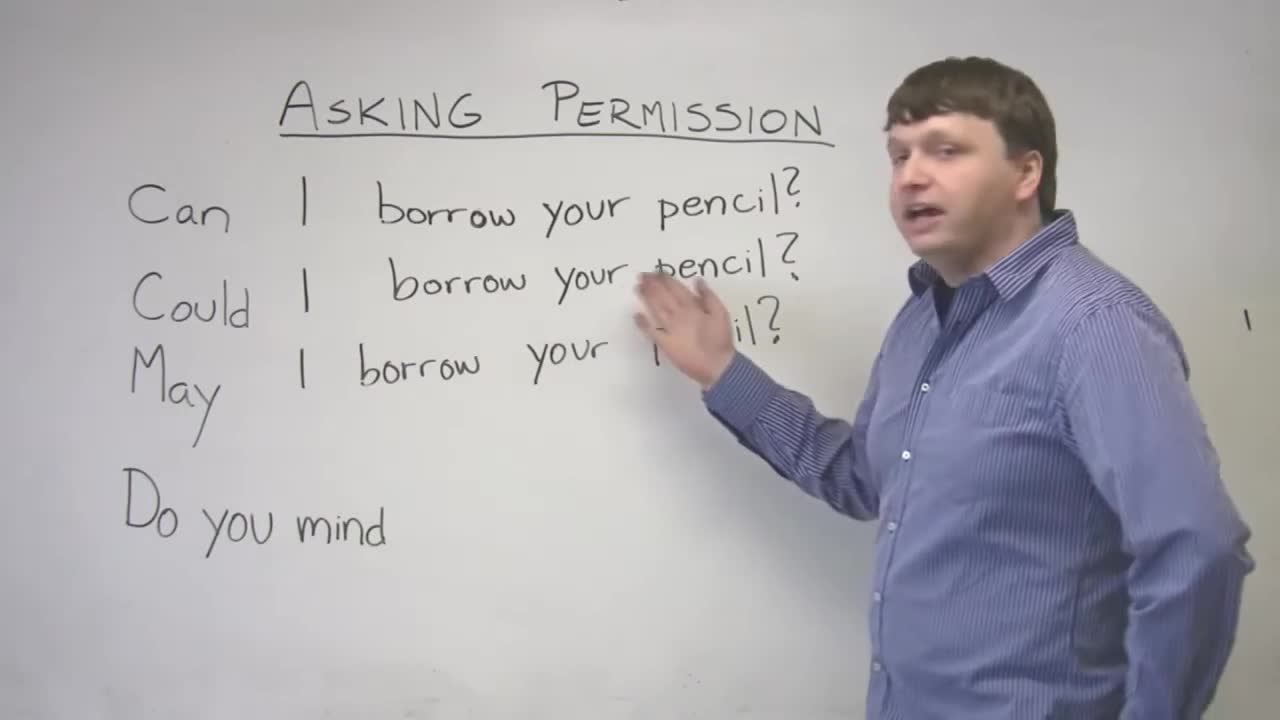
Asking for permission is a fundamental aspect of daily communication. As Alex from engVid explains, choosing the right phrasing is not just about grammar; it is about navigating the nuances of politeness, formality, and social context. When requesting something—such as the classic example, "borrowing a pencil"—the choice between can, could, may, and do you mind significantly alters the speaker's intent and the listener's perception.
The Spectrum of Requesting: Can, Could, and May
These three auxiliary verbs form the backbone of permission-seeking in English. Their usage is dictated by the speaker's relationship with the listener, the urgency of the situation, and the desired level of formality.
1. The Directness of "Can"
When you use "Can I borrow your pencil?", you are employing the most direct and informal option. Alex notes that can often sounds "very urgent." It can sometimes feel less like a genuine question and more like a "formality," implying that the speaker expects the listener to provide the item regardless. It lacks the hedging found in more polite structures.
2. The Flexibility of "Could"
"Could I borrow your pencil?" acts as a middle ground. By using could, the speaker leaves "some room for possibility." It acknowledges that the listener might have a valid reason to refuse, such as needing the pencil themselves. This phrasing is generally safer and more polite than can in standard social interactions.
3. The Formality of "May"
"May I borrow your pencil?" represents the pinnacle of formal English. It is recognized as the "most polite way of asking someone for permission." While it is the standard for formal settings, Alex highlights that "tone counts." Even with formal vocabulary, the way the sentence is delivered can shift the overall impact of the request.
The Special Case: "Do You Mind"
The phrase "Do you mind if I borrow your pencil?" is a unique category that goes beyond standard politeness. Alex describes this as being "even more polite than may."
When to use "Do you mind?"
This phrase is specifically reserved for situations where you suspect your request might be "inconveniencing someone." While can focuses on the speaker's desire to obtain the object, do you mind focuses on the listener's comfort. It signals, "I hope I'm not causing you too much trouble."
The Logic of the Response
One of the most confusing aspects for English learners is how to respond to a "Do you mind?" question.
- "No" means "Yes": If someone asks, "Do you mind if I borrow your pencil?" and you respond with "No," you are actually saying, "No, I don't mind," which grants the person permission to take the pencil.
- "Yes" means "No": Conversely, if you respond with "Yes," you are indicating that you do mind, meaning you have a problem with the request and will not be granting permission.
Conclusion: Context is King
Ultimately, the art of asking permission is a balancing act. Before you speak, consider the "formality, the necessity, and the politeness" required for the situation. Whether you are in a casual setting needing an item quickly or in a formal environment where social etiquette is paramount, selecting the right verb will ensure your request is received exactly as intended.
Deep Learning with ListenLeap


