You're listening to Brain Zone, where we're serious about being curious.
Brain Zone is supported in part by a grant from the National Science Foundation.
Mm -hmm. I love tipi.
Tipi is for me. Molly, do you have any toilet paper?
All the bathrooms in Brain Zone HQ are out.
Yeah, sorry about that.
I needed to use all of it.
What?! You needed to use all of the toilet paper?
Yeah, for my new favorite activity.
Going to the bathroom?
Decorating toilet paper.
Oh. Okay. It's so fun and it makes every visit to the loo a potty party.
I'm so happy for you.
Can I have a roll? I really have to go.
Sure. Pick one that feels exciting to you.
I've got tie -dye, camouflage, rainbow.
Oh, and I do custom toilet paper portraiture.
Just give me whatever.
No, no. You have to pick.
I want you to have a perfectly personalized potty experience.
Oh, fine. Um, I'll take this one.
Great choice. Wait.
Does every sheet have Gungador's face on it?
Oh, no, no, no, no, no, no.
Um, how about this one?
The garden variety.
Oh, that's perfect for you, Rosie Rose.
There's a hand -drawn flower on every sheet.
And it's scented, too.
Give it a whiff. Mmm.
I'll take it. Here you go.
Thanks. Oh, and that reminds me, I'm headed to a toilet paper crafting conference later today, and I need someone to guest host an episode for me.
Would you be up for it?
Oh, yeah. What episode?
How is paper made? Oh, my gosh, that's perfect.
I'm obsessed with paper.
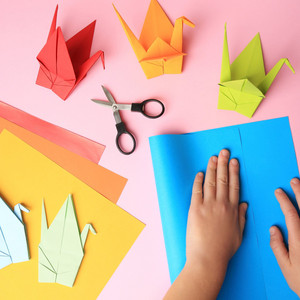
Oragami, paper mache.
Maybe even toilet paper.
Who knows? I can't wait to guest host Molly.
But first, I just got to try this super special Made with Love toilet paper.
Love it. Love you. Gotta go.
You're listening to Brains On from APM Studios.
I'm Rosie Dupont. Since Molly Bloom is away, I have the honor of guest hosting with Aria from Acton, Massachusetts.
Hi, Aria. Hi, Rosie.
So today's episode is about how paper is made.
We've gotten a lot of questions about it over the years.
How is paper made? How is paper made from trees?
How is paper made? How is paper made out of wood?
How is paper made, and how can we prevent more trees from being cut down?
Big thank you to Gabe, Harriet, Faye, Xiaofeng, Cassie and Ashlyn for sending in your questions.
And I got to say, it makes sense that people are curious about paper because paper is all around us.
There's printer paper and pizza boxes.
Toilet paper and wrapping paper.
Sandpaper. Dipers. Books.
Wallpaper. Receipts.
And even money, honey.
Aria, what kinds of activities do you use paper for at school?
Sometimes in books, for writing stuff down.
Like journals? Yeah.
To use it in art class.
Art class. Like I like making crafts a lot.
Like what kind of crafts?
Maybe sometimes I do origami.
You can do origami?
Yeah. What does that look like?
It's like folded pieces of paper come to 3D sometimes.
That's so cool. And what kind of 3D shapes are you building?
I can make like a swan.
Whoa. Yeah. I can do a little bit of like a ninja star that can make rabbits, cats, boxes.
That's awesome. I love that you're so crafty.
And so do you count paper planes as part of origami?
Yes, I do. Because origami is basically when you fold paper to make an object.
And you fold paper to make a paper airplane.
So, yeah. Yeah. That's so cool.
And how far has your best paper plane flown?
I don't know. I did this like really cool trick.
So it was like my brother made one and I made one.
And then you know how like you can open the paper airplane?
Mm -hmm. So we stuffed another paper airplane in it.
What? Wait, how does that work?
I don't know. But it was like, it was really cool.
So then you threw it and they would do like a circle in the air and like it would just fall.
It was really cool.
So they would like spread apart.
Wait, the two planes would separate from each other?
They would like separate and then they would go like and like maybe wind down one circle and then they would fall.
That's really, really cool.
Yeah. You're making me want to go out and try origami.
Yeah. So can you name for me the things that are made out of paper that you touched today?
Notebooks. Books. Like regular pieces of paper.
Paper towels. Tissue papers.
I think that's pretty much it.
Yeah. I mean, that's pretty similar to me.
I'd say I also it was definitely like tissue, coffee filter, pages of it.
Like, you know, a pamphlet I got in the mail.
Yeah. Yeah. A box of like for crackers because I love crackers.
And I have to say a lot of toilet paper.
Oh, yeah. You know what?
We touch it all the time and we often don't even remember that it's paper.
True. So there is all this different stuff made from paper.
But what's paper itself made out of?
It's made from plants.
Cellulose, to be exact.
The stuff that makes plants stiff and strong.
You know how when you bite into a stick of celery, it's all stringy inside?
Well, that stringy stuff is made up of cellulose.
And here's a fun fact.
You can make paper out of celery.
Whoa, cool. Yeah. You can make paper out of almost any plant.
Seaweed? Mm -hmm. Bananas.
The peels, yeah. And cotton and linen, that's what dollar bills are made of.
And some toilet paper is made of bamboo.
For real. Just ask Molly.
But today, most of the paper in the world comes from wood.
And wood comes from trees.
Let's imagine a tree.
I'm picturing... It's an oak and it's super tall and it's covered in rough bark.
And it's got all these acorns.
What kind of tree are you picturing, Aria?
A cherry tree. Mm, what does it look like?
It's all pretty in spring with its pink and white flowers waiting to be bloomed into cherries.
Oh, it sounds so pretty.
I love cherry trees.
Yeah. And both of our trees are very, very strong.
And unlike celery, snapping a tree trunk in half is not so easy.
That's because the cellulose in trees is super strong.
Way stronger than celery.
Trees need to be tough so they don't tip over in the wind.
But that's not all.
Trees, they have to grow very stiff, woody stems and branches to hold their leaves up to the sky so they can get sunlight, so they can produce food for themselves.
That's Dr. Sanford Smith.
I just go by Sandy, and I work at Penn State University where I'm a teaching professor, in forestry, the art and science of tending forests.
Sandy knows a lot about trees and how they get turned into paper.
And he says inside trees there are tons of cellulose cells.
Cellars have a teeny building blocks that make up every plant and animal.
And just like our mussels are made up of tiny muscle cells, tree wood is made up of tiny cellulose cells.
And there's thousands upon thousands of them, millions of them in any stem of a tree or branch.
And they're all stuck together with a special kind of glue called lignin.
And these cellulose cells are really important for the tree.
They're hollow inside and they carry water and food up and down the trunk like pipes.
So the trunk of a tree is actually millions upon millions of tiny little pipelines going up.
To make paper, you take all these pipe -shaped cellulose cells and pull them apart into tiny fibers.
And then those fibers get turned into paper.
But how does it all work?
Well, let's imagine for a minute that we're a tiny cellulose cell.
One minute, we're helping move water up and down inside a tree.
I just love being a little cellulose cell.
In the next minute the tree has been cut down and sent to a paper mill.
Forest floor, here I come!
The tree's branches get cut off and the trunk is loaded onto a truck that heads to a paper mill.
And then, when it gets there, the trunk is debarked.
De -barking is when you rub the bark off the tree trunk in a tumbling machine.
Woohoo! What a ride!
Next, the tree is chopped into wood chips and loaded into a big tank called a digester.
Here's tree expert Sandy again.
The digester has lots of chemicals in it and is heated up with steam to very high temperatures and those chips break down and get very soft.
Remember how Sandy said the cellulose cells and trees are stuck together with a natural glue called lignin?
Well, when you cook the wood chips, the lignin glue separates from the cellulose cells.
And that lignin is dissolved and taken away and most of that lignin goes into the power plant of the mill.
They burden that to create energy.
As the wood chips cook, the cellulose cells fall apart into little strands of fiber.
And what you're left with is a soupy liquid called pulp, which is made of liquid and lots of little cellulose fibers.
The cellulose fibers and pulp are very tiny, thinner than human hair.
And the pulp soup, it's mostly liquid.
Scrub -a -dub -dub, cellulose in a tub.
So there's a lot of liquid to get rid of, and they do that in...
The Paper Machine! Sandy says these machines are huge.
So paper machines are really a series of machines that are all joined together and they're longer than a football field.
They're huge. And at the wet end of the paper machine, that's where you're putting in the wet fiber.
It goes in there and it starts going across a screen, a large screen like a house screen, and it spreads out.
And these big screens filled with pulp start moving fast, about 70 miles an hour.
They run through a bunch of different rollers and heaters.
By the time the screens filled with pulp reach the other end of the paper machine, the cellulose fibers in the pulp have been dried out and pressed flat into...
The whole process is going so fast, and these rolls of paper come out at the end and they're huge, they're huge.
They're several tons of thickness.
These rolls of paper get cut up or shipped out to be turned into other paper products.
And that little cellulose fiber is off on a new adventure!
Ta -ta for now, I hope I become an envelope full of surprises.
Or maybe a paper doll with a killer wardrobe.
I want to be a paper snowflake.
Have fun, fiber friend!
There are so many ways to play with paper that I haven't even thought of yet.
Listeners, we asked you to send us pictures of paper creations you've made, and you sent us a ton of amazing things.
We've posted pictures of your work on our Brains On Universe social media channels.
Ask your parents to show you.
Okay, we're going to talk more about paper in a bit, but first, it's time for the...
All right, Aria. Are you ready for the mystery sound?
Yes. Great! Okay, great.
Here it is. Hey, Aria.
What do you think it is?
I think it might be someone stapling something.
Amazing. Do you want to hear it one more time?
Yes, please. Hmm. Has your answer changed, or is it the same?
No, I think it's the same.
Okay, so stapling paper.
Yeah. Okay, great. Well, we will hear the answer after the credits at the end of the show.
We're making an episode all about Jupiter, the biggest planet in our solar system.
And it got us wondering, if planets had personalities, what would they be like?
And what would their nicknames be?
Maybe Jupiter would be super tough and go by Jupigurr, or Mercury would be tiny and spunky and go by Minimark.
If you could give a nickname to any planet in our solar system, what would it be and why?
What do you think, Aria?
Hmm, maybe... I would name Saturn.
Mm -hmm. The diamond ring planet.
Because Saturn already has a ring around it.
Mmm. And why not add a diamond?
That's so cute. I love it.
That's such a good nickname.
Thank you. Well, listeners, record your planet nickname and send it to us at brainson .org slash contact.
While you're there, send us your mystery sounds, drawings, and questions.
Like this one. What happens in your body when you get sick?
You can find answers to questions like these on the Moment of Um podcast, a short dose of facts and fun every weekday.
Find Moment of Um and more at brainson .org.
So keep listening. Brains On Universe is a family of podcasts for kids and their adults.
Since you're a fan of Brains On, we know you'll love the other shows in our universe.
Come on, let's explore.
Brains On! I'm their biggest fan.
I also love Forever Ago, a fun history podcast for the whole family.
Listen, I will play you Forever Ago now.
You will love. Homing pigeons were a speedy way to deliver messages to military bases.
Some pigeons could fly hundreds of miles in a single day, zipping through the air as fast as 60 miles per hour.
That's so fast for such a tiny bird.
These pigeons delivered life -saving messages throughout the war.
Zorp! Where did the signal go?
Must find Forever Ago now!
Listen to Forever Ago, wherever you get your podcasts.
Brains On! You're listening to Brains On.
I'm Aria. And I'm Rosie.
And today, we're talking about paper and how it's made.
We learned that paper is made out of cellulose, the stuff that makes plants stiff and strong.
In the United States, most paper is made out of trees.
But in other parts of the world, they don't have as many trees.
So what do they do?
We spoke with Sri Ramaswamy.
He's a professor in Bioproducts and Biosystems Engineering at the University of Minnesota.
He knows all about things made from renewable resources.
These are things in nature that can be replaced if we use them, like trees.
He says in other parts of the world, when they don't have a lot of trees, they use the plants they do have a lot of.
Bamboo is a resource that is available in some parts of the world.
So places in Asia, it is an option.
The alternative, similar to bamboo, in South America, they actually use sugarcane bagasse, which is a residue after you take out the sugar from sugarcane.
And that can be also used in making paper.
Whoa. Sugarcane paper, sweet.
And what's cool about that sugarcane paper is that it's made from materials left over after you turn sugarcane into sugar crystals.
So it's stuff that otherwise would have been trash or burned for energy.
But instead, it's paper.
Very earth friendly.
Exactly. But even in the United States, the paper industry is good about replanting new trees after they cut old ones down.
And tree size, paper that isn't recycled, can easily break down and become part of nature again.
Unlike many other materials that we use, many of the plastics that we use, for example, paper is actually is coming from a renewable resource and it is recyclable.
It's reusable. So from that point of view, I don't think one has to feel that, oh, I'm using paper as I'm actually affecting the environment in a negative way.
Right. At least in the US.
Good morning. Rosie, want to hear a cool fact?
Is kale an excellent source of dietary fiber?
Of course. In the United States, we recycle over 60 % of all paper in around 90 % of all cardboard.
Go us. We rock. I remember the first time I was recycled like it was yesterday.
Who said that? I think it was that old birthday party hat on the ground.
Party hat, construction paper, postcard from beautiful downtown Boise, Idaho.
I've been a lot of different things, but at the end of the day, it's all the same.
I'm paper. My name is Crumple Stiltskin.
Crumple for short. Unlike my life, which has been so, so long.
Oh, so you've been recycled.
We'd love to hear about it.
Yeah, I've recycled paper all my life, but I've never gotten to hear what happens from a piece of paper's point of view.
This is neat. Neat?
You think being turned into an endless array of papers and paper -related products, including one time a postcard for Boise, AKA the City of Trees, is neat?
Yeah. Great. Because it is neat.
Very neat. I'm truly blessed.
Truly. So how does it work?
Well, Rosie, you ever make chocolate chip cookies from scratch on a cold winter day?
Yeah, is a recycling paper like that?
Not at all. You see, when you drop that paper in a bin with all your other recyclables, it sets off on a journey that is both long and winding.
Not unlike the Boise River from which Scenic Boise gets its name.
By the way, did I mention I was once recycled into a postcard for beautiful Boise, Idaho?
Yes, you did. Several times.
You never forget your first recycle!
Anyway, it all starts when the used paper is taken to a place called a materials recovery facility.
Ah, I get giddy just thinking about it.
We get to ride this fun little conveyor belt, and plastic and paper and metals all get sorted by machines.
Sometimes, workers pick out all the small stuff that shouldn't be in there.
One time, I saw a toilet seat in the mix.
That's definitely not a recyclable.
I know. So why? So after everything is sorted, then what happens?
Well, Rosie, us paperpieces are weighed and packed and shipped off to our next destination.
Another paper mill.
Do you believe it? You probably can, because it's very believable.
It is. The paper mill.
Oh, boy. As people from Boise would say, this is where the magic happens.
At the paper mill, I mean, not Boise.
The magic happens there too, but it's much more of a community -built feeling of belonging.
At the paper mill, the magic is turning old paper into new.
That's pretty impressive too.
Tell me, Crumple, how exactly do they take all those different kinds of paper with different colors and inks and make them new again?
First, we're shredded into little pieces.
Then they dump water and chemicals on those pieces to turn them into soupy pulp.
Stuff like staples and paperclips and tapey tape get filtered out.
Then more chemicals and air bubbles.
They help get rid of all the inks.
So basically, the old used paper gets turned back into a pulp?
Just like how trees are turned into a pulp to make new paper?
Yep -as. And once you have your pulp, all you have to do is make it into a sheet, flatten it, and dry it.
Then it's ready to be something new.
Like a carrier for coffee cups, a pamphlet, or if you're lucky, a postcard showing off the many scenic forest surroundings the city of Boise has to offer.
It's what every scrap of paper dreams of.
But I'm afraid my recycling days are almost over.
Don't worry, Mr. Old Paper Guy.
We'll still be sure to recycle you after this.
It's not that. It's just at some point, the fibers in recycled paper are just too worn out to be reused, and my fibers are old.
Most paper can be recycled five to seven times, and this birthday hat is my seventh recycle.
I'm not sure if I've got an eighth one in me, but you know what?
You said you believe in me.
Uh, we did? That's good enough for me.
Now give it a shot.
Throw me in that recycling bin.
Let's see if old Krimpl has one more life left in him.
This one's for Boise.
Paper is made from something found in plants called cellulose.
In the U .S., we use trees to make paper, but other countries use things like bamboo.
We turn the plants into pulp and then machines dry it and make paper.
When we recycle a piece of paper, it's turned back into pulp and made into paper again.
And that's it for this episode of Brains On.
This episode was written by...
Rosie Dupont and...
Sandin Totten It was edited by...
Shayla Farzon Engineering help from Gary O 'Keeffe and Jim Sullivan with sound design by...
Rachel Breeze And fact checking by...
Jess Miller Original theme music by...
Mark Sanchez We had production help from the rest of the Brains On Universe team.
Molly Bloom Anna Goldfield Mico Gonzales -Wistler Ruby Guthrie Lauren Humphord Joshua Ray Mark Sanchez Charlotte Traver Anna Weigel And...
Aron Waldeselassie Beth Perlman is our executive producer, and executives in charge of APM Studios are Chandra Kavati and Joanne Griffith.
Special thanks to Sandipan Sarma and Urchana Upadhyay.
Brains On is a non -profit public radio program.
There are lots of ways to support the show.
Subscribe to Brains On Universe on YouTube, where you can watch animated versions of some of your favorite episodes.
Or head to brainson .org.
While you're there, you can send us mystery sounds, drawings and questions.
Okay, Arya. Are you ready to listen to the mystery sound again?
Yup. Alright, here it is.
Okay, so you said it was stapling paper before.
Is that still your same guess?
No, because now I kind of feel like people...
it's like... footsteps kind of walking.
Oh. I just really don't know.
Do you want to hear it one last time?
Yes, please. Yes. Mm -hmm.
Here it comes. No, it's definitely stapling paper.
I can hear the paper getting stapled together, and I can hear them moving it.
Okay. Fantastic guess.
Let's hear the reveal.
Okay. My name is Ellie, and I live in Monroe, Louisiana, and that was the sound of me cutting paper.
Cutting paper! So close.
So stapling paper is almost like cutting paper, because you're still punching holes in paper.
Yeah. I think you definitely get partial credit.
Okay. Cutting paper.
It must be with one of those zig -style scissors.
They have designs on them, and when you cut paper with them, it makes that kind of sound.
Mm -hmm. They almost look like the scissors themselves look like alligators with tape.
Yeah, yeah, those are cool.
Now it's time for the brains honor roll.
These are the incredible kids who keep the show going with their questions, ideas, mystery sounds, drawings, and high fives.
Mike, Ethan, and Abby from Jackson Heights, New York.
Benny from Dublin, Ohio.
Lilith from Lexington, Kentucky.
Lucas from London, England.
Judah from Columbia, Maryland.
Colt from Olath, Kansas.
Elon from Sydney, Australia.
Michaela from Oak Park, Illinois.
Declan from Wisconsin.
Henry and Arlo from Littleton, Colorado.
Iggy from Delmar, New York.
Jing Yi from Oakville, Ontario.
Oliver from Gifu, Japan.
Felix from Las Vegas.
Dom from Langhorne, Pennsylvania.
Alan from Grand Rapids, Michigan.
Val from San Diego, California.
Alexander from Cambridge, Massachusetts.
Isla from Toronto. Chinmaya from San Carlos, California.
Martha Lucia from San Leandro, California.
Josh from Elk Mound, Wisconsin.
Harlow from South Bronx, New York.
Cakes from Wellington, New Zealand.
Noah from New Mexico.
Aria from Sydney, Australia.
Benny from Montclair, New Jersey.
Charles from La Canada, Flint Ridge, California.
Rili from Bedford, Massachusetts.
Jacob and Owen from Denver.
Elliott and Theo from Calgary, Alberta.
Aziz and Rafik from West Hartford, Connecticut.
Mona from Toronto. Hudson from Merrick, New York.
Emily from Three Rivera, Michigan.
Sophie from Winnipeg, Manitoba.
Darcy from Butterham, Australia.
Anayi Sinemaya from Waterloo, Ontario.
Olive and Ellie from Austin, Texas.
Holly from Phoenix, Arizona.
Talia and Asher from Austin, Texas.
Jensen and Etta from Coon Rapids, Minnesota.
Eleanor and Luke from Dallas, Texas.
Will from Nina, Wisconsin.
Ian and Leany from Charlotte, North Carolina.
Zj from Champaign, Illinois.
Erin from Vancouver.
Marshall from Virginia Beach.
Sariah from Bedford, New Hampshire.
Eliza from Hershey, Pennsylvania.
Jeram and Jolie from Eden Prairie, Minnesota.
Abigail and Josephine from Amherst, New York.
Oakland from Sandy, Utah.
Lucci from Upton, Massachusetts.
Robert from Murrieta, California.
Jonah from Edmund, Oklahoma.
Kevin and Amy from Fullerton, California.
Clover from Freeport, Maine.
Teddy from Los Angeles.
And Wallace from Calgary, Alberta.
We'll be back next week with an episode all about Down Syndrome.
Thanks for listening!