
[The Survival Sprint: A Marmot's Race Against Winter]-[Himalayan Marmots Battle for Survival in Winter | Mountains: Life Above The Clouds | BBC Earth]
📋 Summary
The High-Altitude Awakening
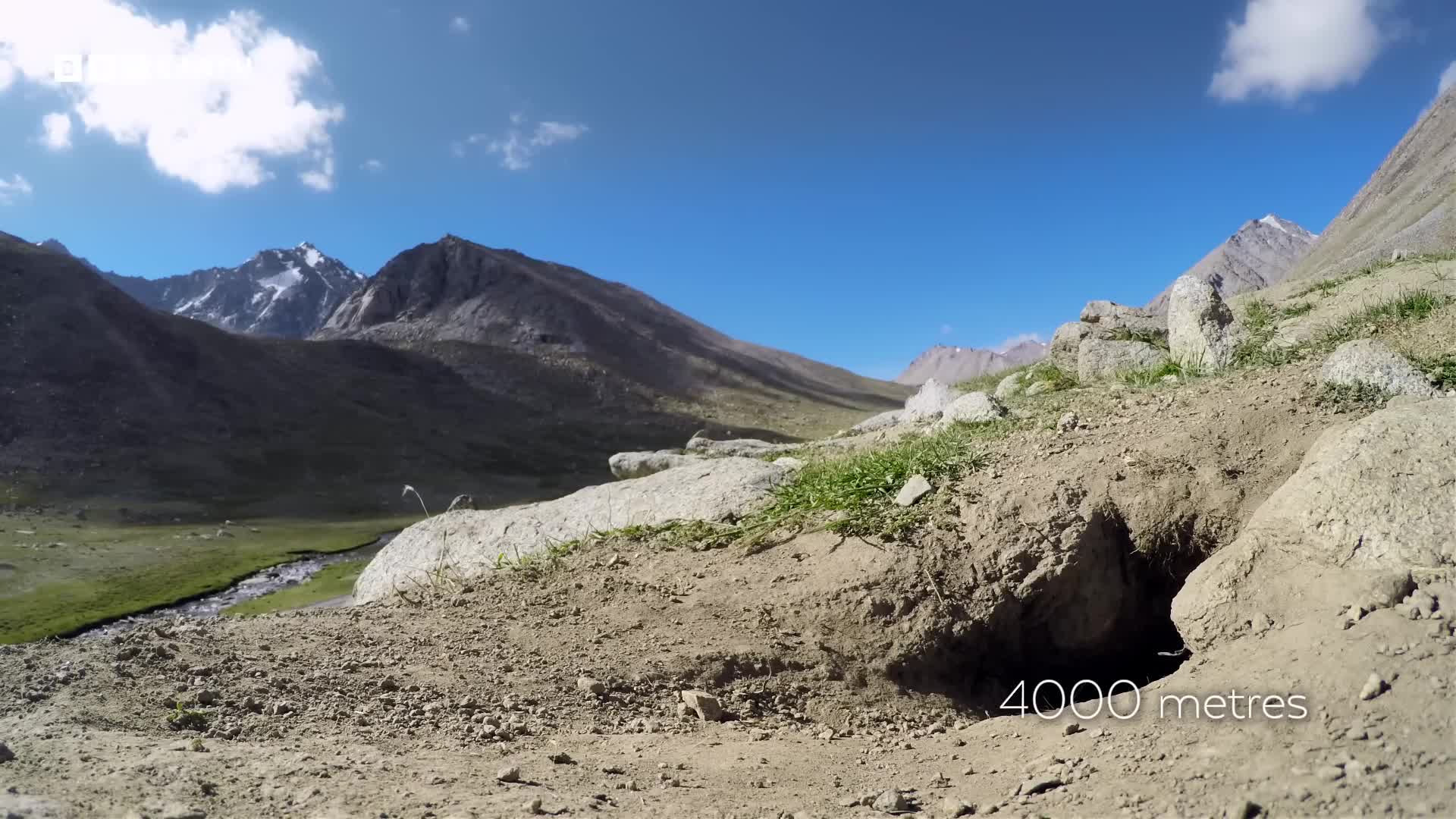
At an elevation of 4,000 meters on the slopes of Lasjok Mountain, a new life begins. A tiny marmot emerges from his burrow, taking his "first ever glimpse of the outside world." This moment is not merely a beginning; it is the start of a high-stakes race for survival. The environment is harsh, and the window for growth is exceptionally narrow. The marmot faces a daunting biological imperative: he must "triple his weight in the next 12 weeks." This rapid growth is non-negotiable because, in this extreme ecosystem, winter is not just a season; it is an eight-month-long test of endurance. To survive this period, he must "build big fat reserves" to sustain himself during his long hibernation.
The Competitive Landscape
Survival is rarely a solitary endeavor, and for this young marmot, the challenge is compounded by the presence of "50 other marmots living here." The struggle for resources is intense, as they all face the "same challenge" of preparing for the winter. The act of "securing a patch of grass" becomes a battleground. The podcast describes the social dynamics of these creatures, noting that disputes often begin with a "ritual pose," which serves as a precursor to physical confrontation. When the "rulebook gets thrown out," the reality of the social hierarchy becomes clear; only those who can defend their territory will secure the nutrition necessary for their survival.
Living Under the Shadow of Predators
Even if the marmot succeeds in gathering enough food, the environment remains inherently lethal. The slopes of Lasjok Mountain are not a sanctuary but a hunting ground. The marmot is constantly "on everyone's menu," facing threats from formidable predators including the "Tibetan fox," the "Himalayan brown bear," and the "golden eagles." This constant threat of predation creates a profound psychological and physical burden. As the narrative poignantly observes, "it's hard to concentrate on eating when you might get eaten yourself." This hyper-vigilance is a necessary trade-off; every bite of grass consumed is a calculated risk taken under the watchful eyes of predators.
Conclusion: The Cost of Survival
The story of this young marmot is a testament to the brutal efficiency of nature. His life is defined by a singular, relentless focus: weight gain through constant consumption while navigating intense competition and avoiding lethal predation. The transition from his first day above ground to the onset of hibernation is a narrow corridor of time where failure means death. By the time the snows arrive, his ability to successfully "hibernate for eight months" will be the ultimate measure of his success in these initial 12 weeks of struggle.

Deep Learning with ListenLeap


