
[The Repatriation of Hope: Hale Woodruff’s Amistad Murals and the Legacy of Talladega College]-[Hale Woodruff, The Repatriation of the Freed Captives]
📋 Summary
The Resonant Legacy of Hale Woodruff’s Amistad Murals
Standing within the William Harvey Museum of Art at Talladega College, one is immediately confronted by the profound historical weight of Hale Woodruff’s masterpieces. Among these, the third canvas in the Amistad series serves as a poignant visual narrative, documenting the repatriation of those who survived the harrowing transatlantic crossing. This series, commissioned for the college library, does not merely illustrate a historical event; it chronicles the foundational spirit of Talladega College and its interconnectedness with other regional institutions.
The Narrative of Return and Resilience
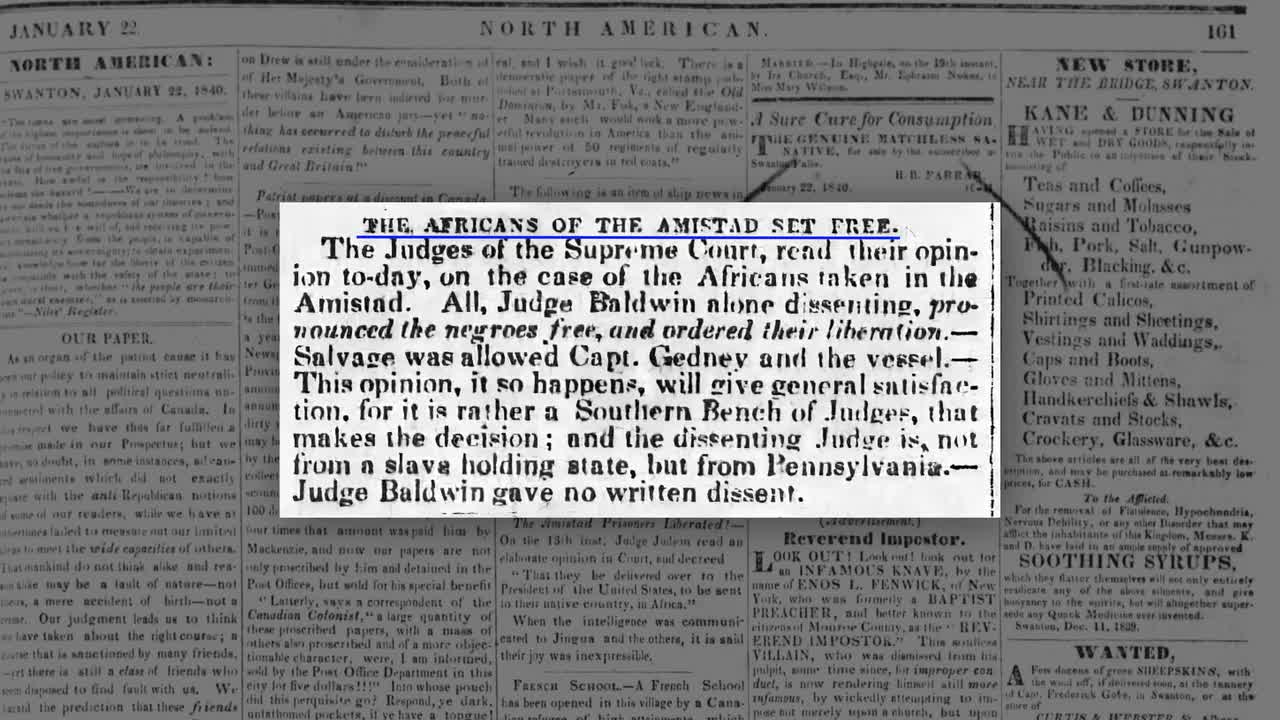
The painting captures the moment of homecoming for the survivors of the Amistad—the slave ship that carried 49 men and four children into the horrors of enslavement. Following their liberation by the United States Supreme Court, the subjects in Woodruff’s work are depicted returning to Africa. Central to this composition is Sinque, portrayed not just as a survivor, but as a "leader" and "teacher." He is accompanied by missionaries, symbolizing a collaborative effort to "empower the Mende people."
Woodruff masterfully employs artistic elements to convey emotional liberation. A gentleman in a "red vest kneeling" serves as a focal point, representing a soul "freed from this mental and emotional torment." The canvas is bathed in the imagery of "sky and clouds and birds," providing a serene backdrop that contrasts sharply with the "cycle of violence" inherent in the transatlantic trade. By including both "white figures and black figures" working toward a "common purpose," Woodruff emphasizes the necessity of collective action in the pursuit of justice.
Bridging Continents and Building Societies
Woodruff’s work is fundamentally a "story of hope and optimism." The inclusion of specific details, such as the "bird of paradise" at the far end of the canvas, signals a transition from trauma to restoration. The artist suggests that the healing of "tremendous violence and warfare on both sides of the Atlantic" requires a sustained commitment to knowledge. The returning Africans brought with them "books to build libraries" and "places of learning," ensuring that their legacy would transcend their personal survival.
This repatriation is framed as a catalyst for institutional growth. The mural marks the "beginning of the establishment of the institutions" commonly referred to as the AMA (American Missionary Association) schools. This network, which includes Fisk University, Berea College, Hampton University, and Tougaloo, forms an intellectual and human rights lineage that connects various activists across time.
Talladega College as a Living Memorial
The murals at Talladega are unique in their scope and intent. They serve as a bridge between the 1839 Amistad incident and the mid-20th-century civil rights movement, exemplified by figures like Adam Beidel, a "fierce human rights activist" who engaged in "conversation with Dr. King" and later served as president of Tougaloo.
Ultimately, the vision of Buell Gallagher and George Crawford was to ensure that Talladega College stood as a "memorial to all of them." By visually depicting the history of its founding, the college preserves a legacy that refuses to view these institutions as "one-offs." Instead, Woodruff’s murals insist that these colleges are vital, interconnected nodes in a broader history of human rights, education, and the relentless pursuit of freedom. Through this art, the "dignity of the returning Africans" is forever woven into the fabric of the academic institutions they helped inspire.
Deep Learning with ListenLeap


