
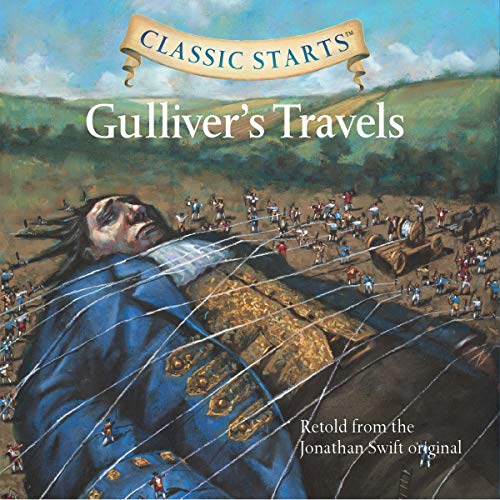
[The Mirror of Reason: Gulliver’s Reflections on Humanity and the Houyhnhnm Ideal]-[Gulliver's Travels - Part 21]
📋 Summary
The Philosophical Clash Between Humanity and Houyhnhnm Reason
In this pivotal chapter, the narrator engages in an intellectual exchange with his Houyhnhnm master, an interaction that serves as a profound critique of human civilization. The dialogue begins with the narrator detailing his origins in England and his profession as a "surgeon," a role intended to "cure the sick and injured." However, as he recounts his recent voyage and the mutiny that led to his displacement, the narrative shifts from personal history to a sociological analysis of human nature.
The Incomprehensibility of Human Vice
The narrator’s master, a creature defined by pure reason, struggles to grasp the concept of human depravity. When explaining the mutiny, the narrator describes his former crew as "desperate fellows" driven by "theft, robbery, forgery and treason." The master is baffled by these behaviors, finding the underlying motivations—"power and riches" fueled by "greed and envy"—entirely alien. The author notes that concepts such as "power, government, war, law and punishment" do not even exist in the Houyhnhnm language, highlighting the fundamental disconnect between a society governed by reason and one driven by human ambition.
The Horror of Organized Conflict
The most intense friction occurs when the narrator attempts to explain the mechanics of war. He describes "cannons, muskets, pistols, bullets, swords, battles, sieges and sea fights," painting a vivid picture of human cruelty where "ships sunk with a thousand men killed on each side." The master’s reaction is one of visceral disturbance; he finds it significantly more abhorrent that creatures "pretending to possess reason" are capable of such organized slaughter than the naturally "ugly nature" of the Yahoos. This segment serves as a scathing indictment of human progress, suggesting that our intellect is often used to facilitate destruction rather than to foster peace.
The Transformation of Self-Perception
These dialogues have a transformative effect on the narrator. As the master observes that the narrator resembles the Yahoos in both "features of my body and in the manner of our minds," the narrator begins to internalize this perspective. The "virtues of those excellent Houyhnhnms" act as a mirror, exposing the narrator to a "thousand faults in myself of which I had no awareness before."
This realization leads to a profound psychological shift: the narrator develops a "total hatred of all falsehood and disguise." His exposure to the Houyhnhnm way of life creates a deep-seated alienation from his own kind. By the end of the chapter, the narrator’s admiration for the Houyhnhnms is so absolute that he resolves "never to return to humankind," preferring the company of these rational creatures over the corrupt society from which he came. Despite his desire to remain, he acknowledges that "fortune," his "constant enemy," will likely prevent this idyllic life from becoming his permanent reality.

Deep Learning with ListenLeap


