
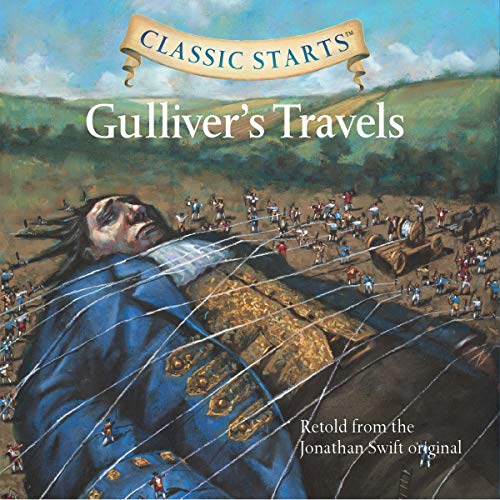
[Gulliver's Departure from Blefuscu and His Return to England]-[Gulliver's Travels - Part 06]
📋 Summary
The Discovery of the Vessel
The narrative begins with a "lucky accident" that changes the protagonist's fate. While exploring the northeast end of the island of Blefuscu, the author spots an object in the sea that resembles an "overturned" rowboat. Recognizing it as a potential means of escape, he petitions the monarch of Blefuscu for assistance, requesting "twenty of the tallest ships" and "three thousand of his seamen." The recovery operation is a collaborative effort; the author swims out to the vessel, coordinates with the seamen to fasten "cords" to the boat, and eventually maneuvers it onto the sand once the tide recedes. Finding the boat to be only "slightly damaged," he secures the emperor’s permission and the necessary materials to repair it, viewing this discovery as "good fortune" that would facilitate his return to his "native country."
Diplomatic Tensions and the Choice of Departure
During the restoration of the boat, the protagonist faces significant political pressure. A delegation from Lilliput arrives, brandishing a "copy of the articles drawn up against" him and demanding his return, labeling him a "traitor." They urge the Emperor of Blefuscu to send him back "bound hand and foot" to maintain peace between the two nations. Despite the diplomatic strain, the Emperor of Blefuscu remains resolute, denying the Lilliputian request and offering the author his "full protection." The author, demonstrating a sense of integrity, declines to stay, stating that he would "rather risk myself in the ocean than be a cause of fighting between two great rulers."
The Construction of the Vessel and Supplies
Preparation for the voyage is a massive undertaking involving "five hundred of his majesty's workmen." To make the boat seaworthy, the author fashions "two sails" by quilting "thirteen sheets of their strongest linen," uses a "great stone" as an anchor, and cuts down "some of their largest trees" to create masts and oars. Before his departure on September 24, 1701, the emperor provides generous supplies, including food, water, "purses of gold coins," and a "life-size picture of himself." Additionally, the author takes "six cows and two bulls" with the intention of continuing the breed in England.
The Journey Home and Final Reflections
Two days into his voyage, the author spots a ship flying "English colors." Upon catching up to the vessel—a merchant ship returning from Japan—the author’s "heart leaped." Initially, the captain is skeptical, believing the author to be "mad" when he recounts his extraordinary tale. However, the captain’s doubt vanishes when shown the "cows and bulls" and the "emperor of Blefuscu's picture," which leaves him "truly amazed." The author eventually arrives home in April 1702. Despite reuniting with his wife and family, his "desire to travel" proves irrepressible, setting the stage for his future wanderings, as he confesses that he could not remain at home for more than two months before the call of the sea beckoned him once more.

Deep Learning with ListenLeap


