
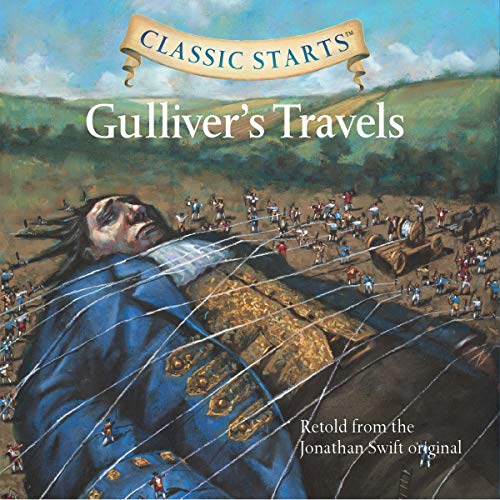
[The Giant's Dilemma: Diplomatic Tensions and the Egg War of Lilliput]-[Gulliver's Travels - Part 04]
📋 Summary
The Geopolitics of Lilliput: A Giant’s Perspective
Exploration of Mildeno
Upon gaining his freedom, the narrator is granted permission to visit Mildeno, the capital of Lilliput. The city is described as a marvel of miniature engineering, surrounded by a wall "two and a half feet tall and at least eleven inches wide," reinforced with towers. The narrator navigates the city with extreme caution, stepping over the western gate and moving sideways through the main streets to avoid harming the inhabitants. The center of the city houses the Emperor's Palace, an intricate complex of courts that the narrator finds difficult to fully explore due to his massive scale.
The Absurd Origins of the Blefuscu-Lilliput Conflict
The political stability of the realm is threatened by a long-standing conflict with the island of Blefuscu, a war that has persisted for "nearly seven years." The narrator learns from the emperor's secretary that this massive loss of life stems from a trivial theological and cultural dispute: "the issue of eggs." Historically, citizens were required to break eggs at the larger end, but a decree changed this to the smaller end following an accidental injury to the emperor’s grandfather. This mandate sparked "six rebellions," the loss of royal lives, and the death of "11000 people" who refused to conform. This division provided a sanctuary for rebels in Blefuscu, turning a domestic disagreement into a bloody international war.
The Strategic Intervention
As Blefuscu prepared to invade Lilliput with a fleet of "fifty men-of-war" and numerous transport ships, the emperor solicited the narrator's assistance. Demonstrating ingenuity, the narrator constructed makeshift tools using "bars of iron" (the size of knitting needles) and "strongest cable" (as thick as thread). He waded into the sea, protected by his "glasses" to shield his eyes from the "several thousand arrows" fired by the terrified Blefuscutians. With the hooks secured, he successfully pulled the entire enemy fleet to the royal port of Lilliput, effectively neutralizing the invasion force.
Moral Conflict and Political Fallout
Following the victory, the emperor’s ambitions grew significantly, as he envisioned using the narrator to "reduce all of Blefuscu into a mere province" and force the population to "break the smaller part of the egg." The narrator, however, refused to be an "instrument of bringing a free and brave people into slavery." This moral stance created a rift with the emperor, leading to a secret "plot" among malicious ministers to ensure the narrator's ruin.
The Aftermath of Peace
Three weeks later, ambassadors from Blefuscu arrived with "humble offerings of peace." Despite the emperor's desire for total subjugation, the resulting treaty was favorable to Lilliput. The Blefuscutian ambassadors, aware of the narrator's restraint, expressed their gratitude and invited him to visit their kingdom. While the emperor granted permission for the visit, his demeanor was "very cold," signaling the beginning of the narrator's precarious standing in the Lilliputian court. This chapter illustrates the high cost of integrity when dealing with the absolute, often capricious, desires of a prince.

Deep Learning with ListenLeap


