This is Roundtable.
You're listening to Roundtable with my self, Hei Yang.
I'm joined by Yuxuan and Yuxuan in the studio.
Coming up, we're celebrating a fantastic leap towards inclusivity, or inclusivity rather, in the film industry.
China's latest blockbusters are now equipped with audio descriptions, making the magic of movies accessible to visually impaired viewers.
So whether you're sighted or visually impaired, get ready to experience the summer's hottest blockbusters in a whole new way.
And anger is a normal emotion.
But if you're getting angry too often or staying mad too long, it could spell trouble for your health.
Curious about the science behind this and how you can manage your anger better?
Stay with us as we explore this topic in -depth.
Our podcast listeners can find us at Roundtable China on Apple Podcast, Xiao Yuzhou, Spotify, and all major international platforms.
If you have a question that you'd like us to answer in a future show, whether it be about something that happened in the news or something you've been wandering about, you could email us a voice memo to ezfmroundtable at foxmail .com.
Now let's move on to the next topic of discussion today.
Lights, camera, audio.
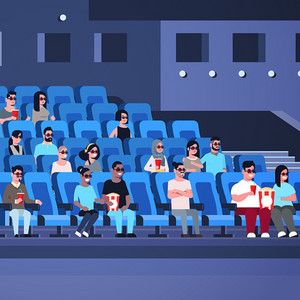
China's movies are breaking barriers for visually impaired moviegoers.
The silver screen is coming alive through sound as the country's blockbusters roll out with audio descriptions.
Imagine experiencing heart -pounding action scenes, breathtaking vistas, and side -splitting comedies all vividly painted through words.
As someone who works in radio and audio, I can't help but point out, isn't that just like an audio drama?
Echoes of Kuleang. But the thing is, these are already established movies that have done superbly well in the box office already and now there's another version of it.
Oh my gosh, I love the way the metaphor you mentioned comparing this special type of movie with audio dramas.
Something you can just close your eyes and imagine this scene with.
And now, such services obviously is provided for visually impaired movie lovers as well.
There are several high -profile films including the fantasy action blockbuster The Traveler or Yi Ren Ju Sian.
And the comedy drama that we were discussing quite a big amount of called Successor, Drava Wa, have been released, well not only as motion pictures alone, but also with audio descriptions.
So we call it the barrier -free version of these movies such as The Traveler is now available in 74 theaters across major cities in China, such as Beijing, Shanghai and Chengdu.
And similarly, Successor was also released with a barrier -free version on its premiere day.
So the term barrier -free movie refers to, well, movies equipped with audio descriptions.
So like someone narrating the scenes, the actions for the viewers or whoever that's listening through a headset provided by the cinema.
And it's just like a separate soundtrack that's pre -recorded and described for all the viewers in the cinema.
And I think that's just pretty amazing.
Yeah. And also for me, of course, it's kind of hard to imagine that how you can imagine a picture or a scene that you have never seen or you have no idea what that is just by listening to the description.
So of course, this is gonna be really hard, but at least we are seeing that more and more movies.
Because before I know that there are some charity or public welfare organizations or publishers are doing these things.
But these are just some kind of old movies and they buy this copyright from these organizers.
And now we are seeing that new movies, they are also releasing this version of movies.
So I think it is a good trend, at least.
And certainly we're seeing more cinemas are providing this kind of a second edition of the same blockbuster that is being raved about by so many people who are enjoying it right now and now you can just make it more inclusive with those living with visual impairment to enjoy in almost the same time
as the rest of us. So how are these movies being received by its target viewers?
I mean, so far these measurements have been proven to be helpful for many of the viewers who have visual impairments.
So according to the reports, individuals like Li Zhujian, who is blind, have expressed that these films enable him to engage more fully in social interactions and discussions, reducing feeling of isolation.
And apparently this sense of reducing the feeling of being left alone or being casted out from normal viewing groups is shared by other individuals such as Zhang Han Yuan, who has partial visual impairment.
And this individual noted that the barrier -free films facilitate social participation and help reduce the fear for him for being a burden to others.
I think that sounds quite complicated to me because for these people, they deserve such a right to sit in cinema as all the rest of the viewers.
And I'm just glad that it's happening right now in cinemas that such services are being provided because I remember back in the days, radials were one source to providing such services to all listeners.
And I remember listening to movies being described to me just on radio channels.
And these days, it's also in cinemas as well, apparently.
Can I also just ask a question?
This might be getting into the nitty gritty of these movies.
And I suppose it's impossible for a sighted person to be in the shoes of a visually impaired person 100%.
But let's try our best.
And also, I suppose, yes, not wanting to burden anyone, that is something we can all relate to.
But also, folks just want to be treated like everybody else and don't want to be treated like, oh, you're somebody special in some way.
So I think there are a lot of intricacies and a lot of empathy that is needed here to design features, products, experiences that better fit the needs of those actually in need.
And so with these movies, when you watch it as a regular movie, it could be so many things happening in a split second visually.
But trying to describe that verbally, we all know sometimes words are abundant.
And it's just really difficult to do it in a really concise manner, but also capture the emotional weight of a scene.
So just trying to sort of imagine how this production for the specific type of movie, it's no easy feat.
And I wonder if you guys know anything about how it's being produced to fit this purpose?
The production process of these barrier -free films is absolutely very hard.
And I saw that some interviews online, according to Cai Yu, a 26 -year -old PhD at the Communication University of China, and also a volunteer of Avershining Cinema Project, who produces barrier -free films.
So for example, to explain the color red, they would often use the words sun and heat to describe the kind of feelings that you can feel, rather than just tell you this is a color red.
So a two -hour film often takes volunteers a week to write and narration, and four hours to actually record in the studio.
So basically, the whole process is longer.
And then when these people who like to watch it with sight impairment, they will listen to it during the movie when maybe the characters are not saying anything or it is just a B -roll without any lines.
So I think that it will be a fully packed movie for these people in need.
And sometimes, I think this echoes with what you shared earlier, He Yang, that it is hard for these narrators to really resonate with the viewer's experience in detail, explaining in detail of what is going on, such as simple as color, like Yuzhu mentioned earlier.
I remember when I was voicing for an audio drama the year before, I was playing a role of a blind girl learning how to do makeup.
And in that scenario, my teacher, who is also blind, but she had a bit of vision when she was very young, so she knows color and she was trying to describe everything to me.
And to my role, by me, I mean my role, and she was saying that this is the gold eyeshadow.
And imagine the color of gold as the feeling of warmth when you get exposed with sunshine in the summer, plus the summer breeze and all that.
I was like, oh my gosh, this is something that's so hard to explain to people.
And imagine doing this as a professional job and recording such descriptions in such a piled up and limited time that's as short as one or two hours of film.
So I do have a lot of respect for these people, and apparently this is still like a growing industry in China as well.
It's not really that big yet.
But I think it started way before this summer.
And also I read about this Guangming yin yun, which could be translated into Guangming cinema that's launched in 2017 and led by the Communication University of China in collaboration with industry leaders.
So apparently making such a movie requires the collaboration of various parties.
And the aim is just simply to make movies more accessible by adding audio descriptions and narrate visual elements.
And it's just like I feel like there's a lot that we can do, but we're already starting, which is a good sign.
And also, what you just said just sort of took my mind elsewhere.
I remember a while ago there was this piece of news reported by CGTN about creating the barrier free version of video games for folks as well.
And just considering how big the video game industry is and so many young people instead of watching movies, listening to music or going through short videos or whatnot, video game is like a huge part of it.
So just trying to translate more of these like visual products or visual form of entertainment into this type of barrier free option, that is definitely one huge area that thankfully we're seeing more people paying attention to, although we know that's far from enough.
But what is this necessity for similar endeavors?
Do you see this as something that must happen in society?
Of course, you know, from all of these examples that we listed, we can totally see that no matter it's the film, the video games, audio description can be a way to help people with visual impairments understand the movie, the thing, the entertainment, and maybe even to better understand the society.
They are using these kind of cultural element to be connected with the whole society that what we are all experiencing, right?
So also barrier free films are an important source for them to have that kind of spiritual and cultural life.
And according to the data released by the China Braille Library, over 92 % of visually impaired users have installed audio and video apps on their phones, with 36 % of visually impaired users spending more than one hour per day on these apps and 30 % spending more than two hours per day.
And in some way, the barrier free films are a significant marker of these kind of equality and shared cultural life between people with and without disabilities.
I totally agree with you, Shen, here.
Just imagine this. When we are watching imported movies from abroad in other languages other than Chinese, there are Chinese subtitles, right?
And similarly, I think creating such audio descriptions for visually impaired viewers is the same if we deserve to read subtitles as we understand the movie better.
So do they to listen to the description and enhance their movie viewing experiences.
So I think one day there should be no need to create, say, special accessible films, but rather just normalize the idea of accessibility in movie producing as well.
And that's like a big goal that we're heading right now.
This reminds me of like nowadays you see, let's say you're watching the Beijing 6 o 'clock news, and you see this specialist that is portraying Braille in sign language.
And that is sort of the de facto setting in many countries.
So having these movies in, well, this is not necessarily in Braille, but in the barrier free form, I think we also need to look at the production cost.
And at the moment, it's still very much a charity endeavor.
And is it possible to become a business endeavor?
If not, then how can this be sort of arranged for it to expand and for it to become something that is more of a everyday thing instead of a niche effort?
And I think these are definitely further directions that the discussion could go.
Do you guys have some thoughts about this?
Yes, first of all, I think we can see that China's official development plan, the government's 14th five year plan in recent years also emphasizes widening accessibility for people with disabilities, including the expansion of barrier free services and streaming platforms such as Tencent Video and Yoku
are also setting to launch barrier free channels offering audio descriptions for numerous films and TV series.
We can see the platform of Tencent.
It will gradually roll out accessible versions of over 600 classic films and TV shows.
And also, yes, in recent years, we can see there are issues with the number of films and copyright.
So with more operators, I mean, film operators to collaborate with all of these organizations to make these barrier free versions available is also a crucial step that we need to take.
Right. And this topic reminds me of an age old saying the true measure of any society can be found in how it treats its most vulnerable members.
And in China, we have approximately 17 million people who are living with visual impairment.
And you don't necessarily hear these folks online, but they do exist.
And the spotlight is shown on, well, one of their entertainment options.
Well, at least one more at this moment.
And we're bringing that to your attention.
Coming up, anger is bad for your health and more ways than you think.
And we're going to talk about physical health this time.
Don't go anywhere. We've got all the answers coming up.
Stay tuned. Looking for passion?
How about fiery debate?
Want to hear about current events in China from different perspectives?
Then tune in to Roundtable, where East meets West and understanding is the goal.
Here's the hour of Roundtable with myself.
Hi, young I am joined by you, Shan and you should in the studio.
Now let's talk about something we all experience.
Anger is more than just a mental state.
It's a full body experience.
Recent studies reveal that anger can damage your heart, impair your brain and disrupt your gut.
Anger or rage is a normal emotion.
Who hasn't felt their blood boil when a driver cuts them off or when you are sitting through a seemingly endless meeting on an empty stomach?
Somebody's getting a little hangry.
But here's the catch, frequent or prolonged anger can lead to serious health issues.
And it's not just mental.
We're talking physical.
So what effect of anger on physical health is worth our attention today?
So according to a study in the Journal of the American Heart Association in May, anger's effects on the heart are closely connected.
And it found that anger can raise the risk of heart attacks because it impairs the functioning of blood vessels.
Researchers examined the impact of three different emotions on the heart, anger, anxiety and sadness by letting the participants feel the respective emotions.
And those in the angry group had worse blood flow than those in the others.
And their blood vessels didn't delay as much.
And therefore, scientists speculate if one frequently gets angry, causing long -term damage to blood vessels, it will increase the risk of heart disease.
And also, studies suggest that anger may affect many other parts of our body as well, like your digestion or even your brain.
Tell me more about that.
How does it affect the brain or the digestion?
So the guts and... Wow, OK.
So, you know, having really sound and smooth bowel movement, I don't want to go any further.
No pun intended, is really important to your physical health.
Yeah. I mean, getting to the guts is kind of disruptive in so many ways as I am.
Well, personally, I am fearful of getting anger these days, like two emotions so aligned together, like every time after I get angry, I could feel that, you know, this whole reaction has changed.
And now I kind of see why since the digestion system and the gut is, you know, influenced as well, because when people became angry, obviously, the body produces numerous proteins and hormones that increase inflammation in the body and chronic inflammation can raise your risks of many diseases.
And like the body's sympathetic nerve system or fight or flight system is also activated, which shunts blood away from the gut to major muscles.
And this is according to Stephen Lupe, director of behavioral medicine at the Cleveland Clinic's Department of, well, I can't even pronounce that whole name of the department, it's like such a long name.
But in the meantime, according to Dr.
Lupe, this kind of slowdown movement in the GI tract, which can lead to problems like constipation and, you know, all the kind of long term chronic issues that's so hard to solve afterwards.
All right. And anger can trigger the body to release stress hormones into the bloodstream, high levels of stress hormones can damage nerve cells in the brain, prefrontal cortex and the hippocampus.
And that damage in the prefrontal cortex can affect decision making, attention and executive functions.
And that's all very, very bad for you.
But can I just quickly ask you guys, because I'm just being all cards on the table, completely honest.
OK, anger, having this emotion is normal.
And why does it feel so good sometimes lashing out?
I know I'm not supposed to do so, but that's also an honest reaction.
And now I know lashing out isn't good for you.
But why? So, first of all, we can feel that we are giving out all of our temper.
Right. And that absolutely will feel good.
And aggression can provide a temporary outlet for pent up frustration and anger, bringing short term relief and happiness and then trigger the release of dopamine.
And in this way, you may feel a little bit better.
And I would say, you know, just don't hold it when you are feeling angry.
Just let it out. You need to release your anger or maybe some kind of hormones in your body and then it could be because I was thinking if you are holding it for too long, all of these, you know, effects will come to you.
It may help alleviating negative emotions, but I mean, sometimes in face of issues that we can't solve, even after unleashing all that anger and aggressiveness, I mean, why do we still have to release it in the first place?
Well, letting it out often leads to negative consequences and it's not a healthy long term strategy for managing emotions or conflicts, especially if it involves somebody else.
Right. Because I would encourage you to shut your eyes unless you're driving right now about, you know, the last time you felt angry and does it involve another person?
And lashing out might not always be the best decision.
But if you have some pent up anger and then just pick a date, you know, I know there are services as such in New York City like the you can just pay a certain amount of money, go into this specific venue and smash everything out.
Oh my. Wow. I'm trying to also have that.
Yeah, we have it here, too, right.
But that ain't all good because we told you anger, you know, it has a detrimental effect on physical health as well.
So there are still ways to keep your anger from doing too much damage.
And could you guys offer some techniques to anger management?
Of course, practice meditation, mindfulness to increase your self -awareness and emotional regulation is very important.
But still, I have to say, managing anger from within maybe a more long term approach.
But releasing anger is actually very important.
This is why we see you mentioned these anger release rooms where you can shout, scream, smash and break things as you please.
It's also appearing in recent days.
So, yeah, maybe choose both.
Well, in my opinion, I prefer physical exercises where, you know, just any sort of mindfulness or meditation that just bring you to the state where you can just try to adjust yourself instead of unleashing all that anger out.
Yeah, there are different approaches for sure.
And I kind of am more prone to advocate for this one.
When you realize you can't stop the waves, but you can learn to surf and maybe riding the waves could be a little bit better.
And that's it for today's roundtable.
We'll see you next time.