
[The Experiential Lens: Kathryn Bigelow’s Pioneering Use of POV and Motion]-[The Director Who Revolutionized The POV Shot]
📋 Summary
The Experiential Lens: Kathryn Bigelow’s Pioneering Use of POV and Motion
Kathryn Bigelow has long been recognized as a "virtuoso of action cinematography," and her 1991 film Point Break serves as a masterclass in immersive filmmaking. By dissecting a specific chase sequence, we can uncover how Bigelow revolutionized the way audiences experience action through formal cinematographic techniques, particularly her innovative use of the point-of-view (POV) shot and camera movement.
The Psychology of the Camera
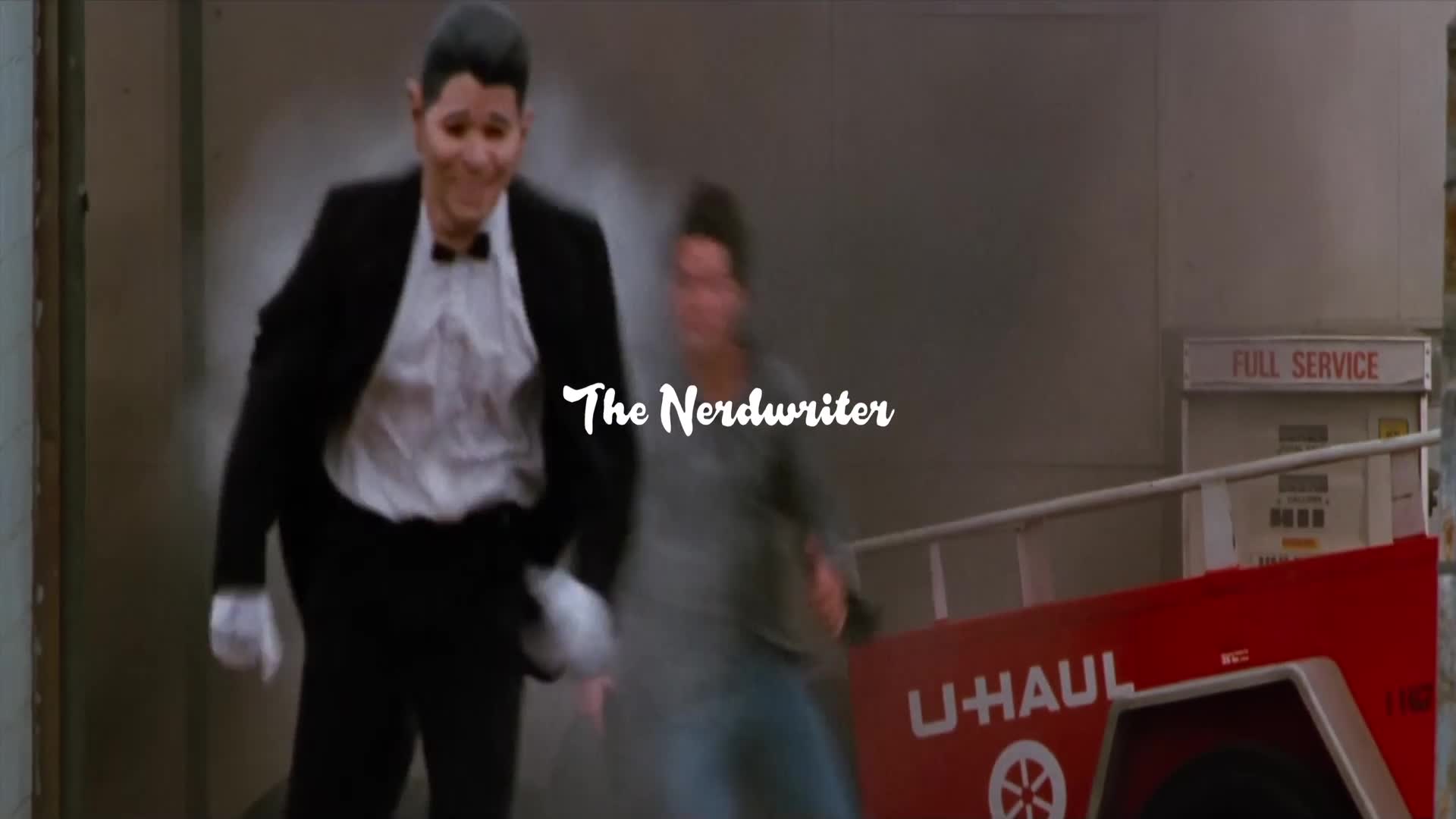
One of the most fascinating aspects of the Point Break chase is a brief, "blink and you'll miss it" moment where the camera pauses before panning to follow Keanu Reeves. This half-second hesitation acts as a "moment of subjectivity," suggesting that the camera itself is a sentient participant in the scene. While many shots in the film are "objective and impersonal," Bigelow frequently utilizes the "formal language of POV" to blur the line between the observer and the action. By mimicking the natural "turn of a head" through handheld whip pans, Bigelow creates a visceral sense of immediacy that places the viewer directly into the physical reality of the characters.
Technical Innovation: The PogoCam
To achieve this level of immersion, Bigelow and her team had to overcome the physical limitations of 1991 technology. Since traditional 35mm cameras were too bulky for fast-paced sequences, they engineered the "PogoCam"—a 35mm camera mounted on a stick with a gyro stabilizer. This rig allowed cameraman J. Michael Miro to "run at the same speed as the actors" through narrow corridors and crowded alleys. This technical ingenuity was essential to Bigelow’s goal: to "put the audience in as close to an experiential situation as possible," allowing viewers to "feel the velocity" of the sprinting characters.
The Ride: Environment and Lenses
Bigelow’s approach to action is akin to a theme park attraction. She explicitly drew inspiration from Disneyland's Mr. Toad's Wild Ride, aiming to make the viewer feel as though they are "careening recklessly" through a maze of obstacles. This is achieved not just through camera movement, but through lens selection: a "wide-angle lens" makes a moving image appear faster, an effect that is "accentuated when you're running in tight spaces." By treating the environment as a complex obstacle course, Bigelow transforms a standard chase into an experiential ride.
From Point Break to Strange Days
Bigelow’s obsession with the "experiential power of POV shots" reached its zenith in her subsequent film, Strange Days. Centered around the "SQUID" (Superconducting Quantum Interference Device)—a technology that allows users to experience others' memories—the film is shot almost entirely in POV. To film the opening three-minute long-take, Bigelow collaborated with James Cameron to develop an even lighter eight-pound camera. This commitment to technical evolution paved the way for modern cinematic language.
The Enduring Legacy
While modern technology—such as GoPros and lightweight action cameras—has made POV cinematography ubiquitous, the influence of Bigelow's early work remains undeniable. Films like Inception, the Jason Bourne series, and Hardcore Henry owe a significant "debt to the pioneering work of Kathryn Bigelow." Even 33 years later, the Point Break chase remains as exciting and effective as the day it was released. Bigelow’s vision proved that the future of entertainment lies in the ability to bridge the gap between the screen and the viewer, potentially pointing toward a future where all media is experienced through the immersive lens of POV.
Deep Learning with ListenLeap


