
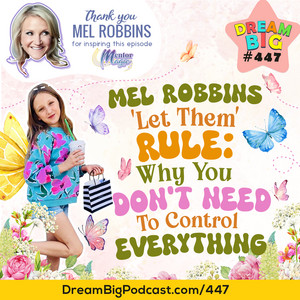
[Mastering the 'Let Them' Theory: How to Stop Chasing Inclusion and Become a Leader of Your Own Adventure]-[DB 447: Mel Robbins’ ‘Let Them’ Rule: Why You Don’t Need to Control Everything.]
📋 Summary
The Power of the 'Let Them' Theory
In episode 447 of the Dream Big Podcast, host Sophia Cartman introduces a transformative mindset tool known as the "Let Them Theory," originally conceptualized by Mel Robbins. This philosophy serves as a powerful antidote to the common, painful experience of being left out by friends or social groups.
Understanding the 'Let Them' Mindset
Being excluded—whether it’s a group of friends whispering, a party you weren't invited to, or a club formed without you—often triggers feelings of frustration, unfairness, and personal rejection. Cartman emphasizes that the immediate reaction is often to wonder, "Did I do something wrong?" or "How can I make them include me?"
However, the core of the "Let Them" theory is a radical shift in perspective. Instead of wasting precious emotional energy trying to change others' minds or feeling bad about their choices, you simply "let them." As Cartman puts it: "If they don't want to invite you, let them. If they want to form their own group, let them." By adopting this mantra, you reclaim your power and detach your self-worth from the validation of others.
Transitioning from Passive Participant to Active Leader
Cartman argues that the "Let Them" rule is not about sitting at home feeling sad; it is about becoming a "leader of your own adventure." When you stop waiting for an invitation from those who don't prioritize you, you create space to:
- Plan your own events: Focus on activities that bring you joy.
- Cultivate new connections: Seek out friends who genuinely value and include you.
- Lead by example: People are "naturally drawn to leaders." By pursuing your own interests and starting new clubs, you may find that those who previously excluded you eventually want to join your group. In such cases, Cartman suggests being the bigger person and letting them in with kindness.
Distinguishing Boundaries from Exclusion
It is crucial to clarify that "Let Them" is not a passive acceptance of mistreatment. Cartman explicitly warns that it does not mean "letting people be mean to you."
- Stop wasting energy: The theory applies to things you cannot control, like someone’s choice to exclude you.
- Set firm boundaries: If someone is "purposely excluding you, teasing you, or making you feel bad," that is unacceptable. In these instances, you should "stand up for yourself" and "walk alone away from people who do not appreciate you." You have the right to demand respect and protect your own happiness.
Practical Application: Daily Empowerment
Cartman encourages listeners to apply this theory to all aspects of life. Whether others doubt your abilities or judge your dreams, the response remains the same: "Let them." Your dreams belong to you, not to those who fail to see your potential.
By choosing to "stop chasing people and start being true to yourself," you naturally attract the right kind of support. The challenge to every "Big Dreamer" is simple: the next time you feel left out, do not waste energy on the behavior of others. Instead, refocus that energy on what makes you happy, lean into your own goals, and acknowledge that you possess "unlimited potential." As Cartman concludes, your dreams are not optional—they are essential, and the best way to realize them is to live with passion and take massive action.
Deep Learning with ListenLeap


