You're listening to Roundtable with myself, He Young.
I'm joined by Steve Hatherly and Yushan in the studio.
Coming up, bras are no longer. about shaping the female body for someone else's eyes.
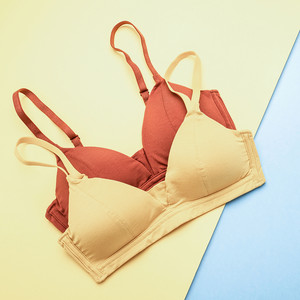
In recent years, Chinese female shoppers have shifted toward wire-free Easy Fit bras that prioritize comfort, health, and self-expression.
So what's behind this booming comfort first trend and what does it mean for traditional brands struggling to keep up?
Our podcast listeners can find us at Roundtable China on Apple Podcast. on your mind, whether it's the world of pop culture, technology, or something that touches your heart, we are here to chat.
Drop us a line at roundtablepodcast.qq.com or go big and send us a voice memo.
We'd love to hear your voice. Now let's move on to the next topic discussion today.
Remember the days when bras were all about curves, cleavage, and looking good for perhaps someone else?
In recent years, female consumers themselves are rewriting that narrative.
Across China, women have embraced wire-free no-size bras. that feel like a gentle hug rather than a tight squeeze today female underwear is about feeling good loving yourself and sharing online and also shopping online without the stress of trying on a dozen of sizes.
Yushan, what are the most notable shifts within China's female undergarment industry these days?
I think when, well, especially younger female customers, when they think about buying underwear or let's call it lingerie in a more, say, elegant way, we think about how it's going to complement our comfortness, instead of how much of a curvy shape we are trying to reveal or rather how much sexiness that it's incorporated in the fact that we're purchasing broad, that belongs to the older school. way of marketing that's kind of starting in China back in the 1980s when many international brands and domestic ones were introduced starting with Hong Kong SAR, helping to establish a relatively mature domestic lingerie market in China,
And back in that time, the bras were kind of marketed with keywords like lifty or sexy and providing max support.
But nowadays, we're just focusing back on self-exploration embracing your natural body shape instead of trying to bund it up to reach to an ideal shape.
That's what's up right now with the trend of purchasing bra for the majority of the female customers.
It seems like it's a trend in the clothing industry overall, doesn't it?
Where people are now... prioritizing comfort a lot of the time over fashion.
And there's a line where hopefully you can hit both, right?
But it seems like it's a trend in the entire clothing industry.
Yeah, it's really interesting also. how do you just find sexy?
Also, sexy for whom? And this is an interesting sort of path.
Like, personally, I think I've taken a journey on as well and it was just fascinating how feminism, how marketing, how a lot of these outside forces has an impact on I'll just say for the feet on the female mind because today if you ask me what sexy to me, is comfort, confidence, and self-care.
But if you asked a guy, then he might have a very different definition to that.
And also, what was really interesting, I remember talking on this show years ago when Victoria's Secret was still quite popular and it's surprising just in a few years time that brand is the brand image has completely changed and is no longer seen as Well, you've seen the really negative review that's been shrouding over that brand now and I know it's trying to sort of shed that off and to rebuild its image.
But at the time we talked about it on Roundtable, maybe seven, eight years ago.
And I remember giving a speech about... Wearing that kind of undergarment to be a boost in self-confidence.
And now when I look back, I feel completely different about that because at the time, you know, remember the Victoria's Secret hosting big shows annually.
Those kind of things. And then to me, as a very young woman, I sort of bought in that ideal and of the body image.
And subconsciously, I remember thinking that okay, that's what is beautiful, right?
And I did not critique that at all. And I even internalized it in my brain saying that, Trying to work towards a body image like that is what would give me confidence what was sexy and what's healthy at the same time.
But now my thoughts have completely changed.
Now I realize I don't need to adhere to any body image ideal whatsoever.
You're born this way and I feel good about this way and therefore I'm confident and I feel good and I don't need any push up broad to make me feel better. zero size no no size comfort and just making you feel good in your own skin woman that is the new sexy that I've defined for myself.
There are watchdogs in place to help. protect people of that too.
It was in Europe recently, there were fashion companies that released and the models were deemed too thin."
So the advertisements were pulled, and they were deemed too thin by the advertisement watchdogs.
It's a shift now, isn't it, from the way things used to be? in America is kind of very similar to what's happening here in China as well.
It's a big one. It's $23 billion and it's going to grow at almost 7%. over the next five years or so.
But the markets being driven by consumer preferences and the fact that they're really changing.
There's a rising demand for functionality and style.
People are gravitating towards podcasts. premium brands that offer that comfort and that quality and the aesthetic appeal.
And also there's another big shift that emphasizes inclusivity and sustainable practice.
Inclusivity meaning not one size fits all because everybody has a different type of body.
And the sustainable practice, well, we've seen that across various industries, haven't we, where consumers are expecting their products to be environmentally friendly.
There's a shift here in this. market too.
Yeah and sorry to go on this because I kind of feel really strongly about this.
Like when we talk about women wearing their bra or their undergarment, I used to naively, and that's just how innocent I am, I guess, think about that this is female issue it's about me and wearing my stuff just like when I'm wearing clothes and then that's what I'm think about and what suits me how I feel that's supposed to be the top priority here.
Until you grow older and I realize, oh, how innocent you are.
There's this other element of this. Why do you think the bras were designed the way they used to? is to appeal to the male gaze.
And then you grow older and you're, oh, of course, but what What kind of social construct is that to judge or in a way it's objectifying women in a way that even when she's picking the most intimate clothing item,
She wears possibly every day if you're a grown woman.
And that's being thought with the male gaze in mind.
That's that. product is being designed has been designed for decades if not hundreds of years with the male gaze in consideration and now Just kicking that to the curb.
Wash it down the toilet drain right now.
See? Let's talk about the revolutionary no size bra.
When we say no size, it's not one size fits all.
But there are. Like these broad sizes, but it doesn't require you, lady, to... uh try them on like each one themselves you sort of know your weight and then you're good to go like tell us about this revolutionary item that's taking over the market I define no-size bras as something like a crop tank top in a way.
It's not really... as say perfectly shaped based on your own unique body type but more like Just down to just a few choices, just like buying a T-shirt.
It has small size, medium size. large size and the sizes are based on your body weight.
For example, the brand that I usually go for, they define medium size as fitting for female customers that surround 45 to 55 kilograms of body weight and large size is 55 to 65 kilograms, etc., so that's how they are measuring size for bras nowadays similar to t-shirt or whatever um ready to go say um clothes And also buying, say, a no size bra, it's meant to make it less fuzzy, like you have to like how it was done say for our mom's generation have to go to offline stores and try that on in order to avoid all the fuss of exchanging once the size is wrong, the no size bra like wearing, say,
A sports bra, in a way, it kind of unifies the fact that yeah you have to pick a very particular size in order to feel comfortable in it but it's rather it's just there as long as you feel fit and that your body is comfortable in it, then it's ready to go.
So that's the biggest, shifting idea for the no size bras to allow customers to buy bras as easily as ready to wear clothes.
And it's bringing a lot of, say, convenience for female customers as well.
It reduced the dependence on physical fitting rooms.
It enables brands to achieve higher online sales volume by just reducing their offline lingerie number of stores that they're establishing.
So that's all new shifts going on with this one simple design. as easy to understand as no size bras.
Yeah. And I've always thought, that the bra section in the department stores would be irreplaceable.
After all, you had to try things on to find that perfect fit.
But with what you just said, Yushan, then you kind of know and you don't necessarily need to try it on every time before purchasing the product.
But with innovations like the no-size bras, the relevance and also the prevalence of e-commerce which allows free returns i realize you know, how wrong I was that you had to go to these physical stores for these things anymore.
How have new undergarment brands successfully shifted online and what marketing and sales strategies have fueled their rapid growth these days?
Well, online native brands are kind of the go to for a lot of us nowadays.
We buy, say, our lingerie or underwear from Red Note, from social media platforms or whatever online. channels that does e-commerce and these brands they are skilled at using social media and just whatever inviting celebrities to help recommend some of their products and just building recognition among younger customers just via online platforms.
And in turn, some of these leading online native brands, this is what I found particularly fascinating they are now expanding their sales by switching channels from online to offline this is a new trend here a lot of the online native brands that we used to believe that they're just merely online are going back offline to attract, say, mall visitors, just random say, more goers where they happen to see the brand offline and go in, even though their major customers remain online.
So the brands that typically would have been only offline before have gone online. to take advantage of things like social media, influencer collaborations, things like that.
And then you had the online brands, specifically online, that are now creating these brick and mortar stores to take advantage.
Yeah, I mean, two things can exist at the same time and help each other.
They don't cannibalize each other, per se.
They're more of an assistant. Yes, indeed.
And also what's kind of interesting as we investigate further into how these brands have developed their business.
Yes, you guys are absolutely right. There's this blurring of online, offline kind of thing.
And also even I realized for some of these really well-known no-size-comfort bras, often pioneered by Chinese homegrown brands, they decided to open the offline store and they've also come up with more options that might um how should i say this cater to personal needs based on their functions yes those kind of things and that's that's maybe where the future of the market is going.
Yeah, I'm really impressed by how these online brands, they're coming up with a whole variety of different types of bras say girls undergoing puberty or moms during breastfeeding and all these examples are just shaping the future of say female lingerie market into a more practical stage I'll say.
Yes, indeed. And I do find it to be really interesting when we're looking into this market because... in the past like you would not talk about this in the open and Women don't feel comfortable talking about it.
And I think for men listening to this, well, it doesn't really concern them as consumers.
But for... But if you have a female partner, then maybe it involves you a little bit.
But it's really something that's changed in society, I feel that there are these shifts in public perception and attitude. the fact that we can discuss this and the fact that this is a very lucrative market when people don't talk about it every woman or every other woman It has to buy this thing for most of her life after puberty.
You know, when you were chatting earlier, I had this song in my head. playing nonstop called Victoria is made up by a man.
Like, yeah, I think it's like Some pop culture that was raised on.
Yeah, that sounds like a 1980s advertisement, doesn't it?
Yeah, no, it's because... It's based on fact because Victoria's Secret is actually made by a male group of CEOs and leadership.
And now we've heard what they've done to the models and their brand.
I can't imagine that type of advertisement forever. being successful in 2025.
That's my point. That is the case. I remember earlier on when I first learned how to choose bra the best shaped ones are usually the most uncomfortable ones let's say but nowadays it's the whole trend is changing we talked about unisex clothes like baggy t-shirts that make female um consumers feel comfortable in it apparently it's now expanding to the bras too so what about the um Well, with both old and new brands in play, what about the older players in this industry?
Where is it heading? This is kind of an interesting point, isn't it?
Because you have your long time well-established brands that have been around for for decades right but then you've got the new players and the old brands have their advantage of being well established, right?
Everybody knows who they are. But one of the challenges that they face is the adaptation to online channels. if they don't really fully embrace e-commerce, because that's a shift that's happening in multiple industries, right?
If you don't embrace that shift, then you're really alienating a large percentage of your potential customers.
So figuring out how to leverage that online ability with their brick and mortar stores is a real challenge for some of the older brands.
At the end of the day, the bras more than fabric and straps is about how women feel in our own skin.
The shift from wired restriction to comfort and self-love is more than a market trend.
It's a reflection of women embracing our own power. shaping the market and voting with our wallets and with that it brings us to the end of today's show thank you so much steve hatherly and yushan for joining the discussion You can find us on Apple Podcasts at Roundtable China.
I'm Ha Young. We'll see you next time.