
[The Brutal Reality of Survival: Penguin Parenting in the Antarctic]-[The Challenges Of Raising Penguin Chicks | 20 Years of Planet Earth | BBC Earth]
📋 Summary
The Fragile Beginnings of Antarctic Life
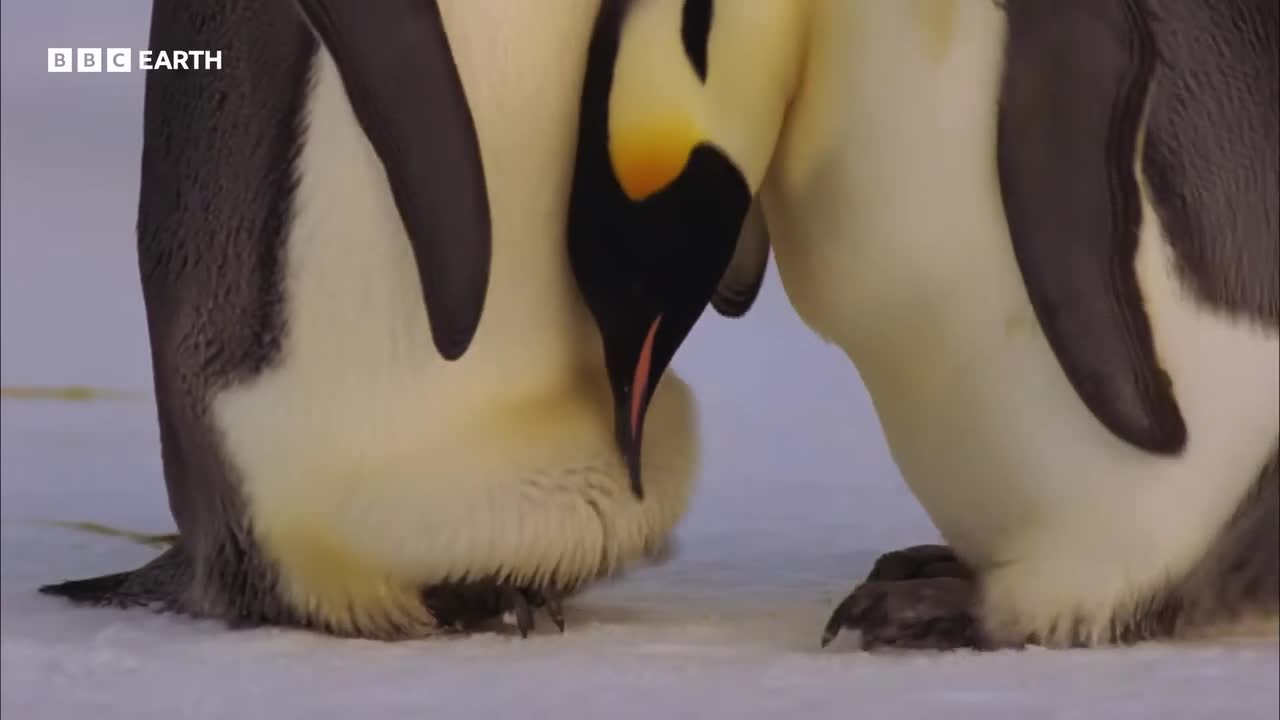
The survival of emperor penguin chicks in the Antarctic is a harrowing journey defined by extreme environmental pressures. As the text describes, a "group of chicks has got lost in the blizzard," highlighting the immediate danger posed by the landscape. The process of parental transition is delicate; as the mother returns, she is "keen to start parenting," yet the father, who has been "caring for all winter," must undergo the nerve-wracking process of transferring the chick. This moment is fraught with peril, as the narrator notes that "in these temperatures, it could freeze in seconds," emphasizing that the male must carefully "let go" to ensure the survival of the offspring.
Growth and the Perils of Orphanhood
Once reunited, the chicks thrive on a "diet of fish and squid," growing rapidly. However, not all chicks are guaranteed a stable upbringing. The narrative shifts to the tragic reality of those whose "mother has not returned to claim it." These orphans exist in a desperate state, attempting to integrate into a society where resources and maternal care are fiercely guarded. The desperation is palpable as orphans search for new families, often encountering females who already have a "chick of her own."
The Tragedy of Competing Instincts
Perhaps the most heart-wrenching aspect of penguin life is the phenomenon of "over-parenting." Penguins who have suffered the loss of their own offspring are driven by an overwhelming biological impulse to adopt. The text explains that the "parenting instinct is so strong that they will compete with one another to adopt any chick they find." Unfortunately, these "squabbles" often lead to catastrophic outcomes, where the "poor chick is trampled to death." This illustrates the grim reality that even an excess of care can be fatal in the harsh Antarctic environment.
Survival Through Collective Resilience
For the chicks that remain under the protection of their biological parents, survival is a learned behavior. They must quickly master "survival skills," the most critical of which is the ability to "huddle together for warmth." This behavior mirrors the tactics used by their fathers during the "depths of winter," proving that communal heat is essential for endurance.
A Legacy of Hardship and Victory
As the season progresses toward early summer, the survivors are "surprisingly well-developed" and prepared to face the world. The text concludes by framing their survival not as a matter of luck, but as a result of the "extraordinary hardships endured by their parents." These parents are characterized as champions who "battled with the Antarctic winter and won." Ultimately, the chicks that make it through their first year represent the triumph of life over the most unforgiving conditions on Earth, a testament to the resilience required to survive in the Antarctic wilderness.
Deep Learning with ListenLeap


