
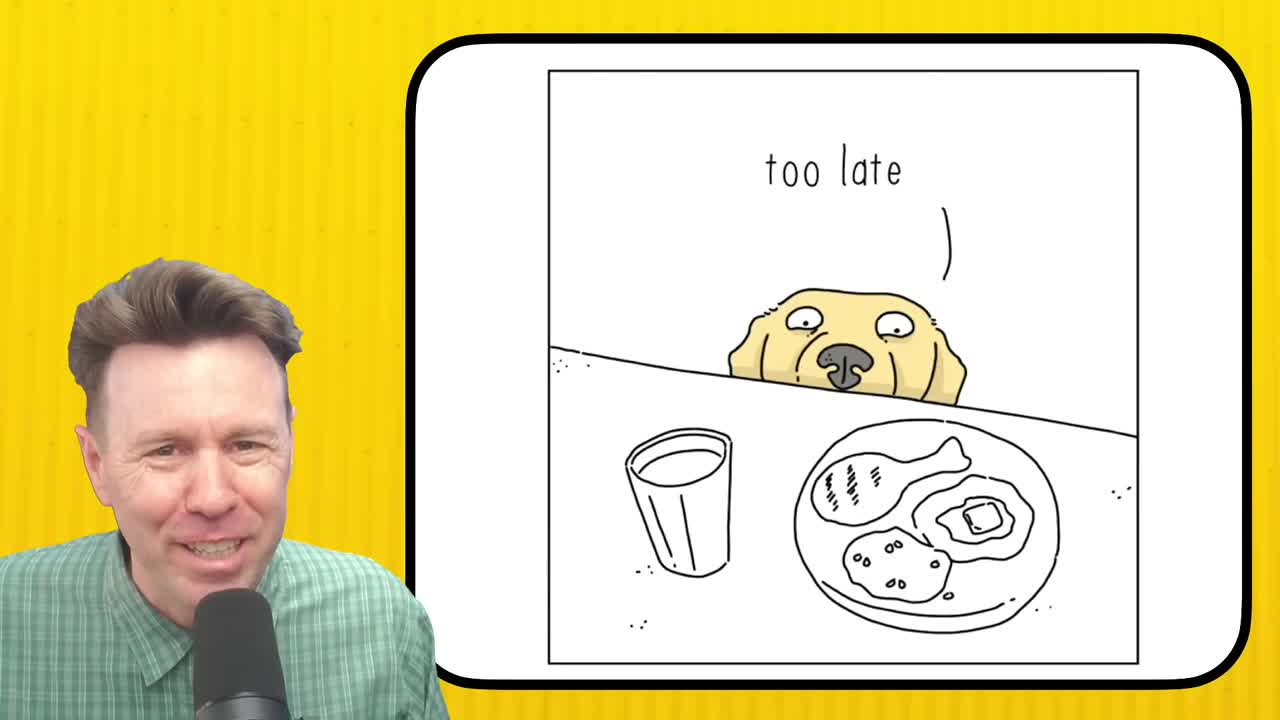
[Casual English Expressions and Motivational Insights]-[Casual English Practice w⧸COMICS: Not so Funny?]
📋 Summary
Exploring Casual English and Life Philosophies
This podcast episode offers a lighthearted and casual exploration of English phrases, humor, and motivational wisdom. Through a series of skits and repetitive exercises, the host demonstrates how to use common idioms and expressions in everyday conversation.
Common Idioms and Conversational Phrases
- "Don't even think about it": This phrase is used to signal that someone is aware of another person's intentions. The dialogue highlights a playful scenario where one person says, "I already thought about it," and "I'm still thinking about it," showing how these phrases can be used in a stubborn or humorous back-and-forth.
- "Ignorance and Apathy": The host uses a classic joke to distinguish between these two concepts: "What's the difference between ignorance and apathy? I don't know and I don't care." This serves as a practical lesson on how to express a lack of knowledge combined with a lack of interest using the phrase, "I don't know and I don't care."
- Stating Needs and Complaints: Through a scene about a gas stove, the host teaches the phrase, "Why should I have to...?" This is paired with a lesson on synonyms for being "stubborn," including "headstrong," "adamant," "pig-headed," and "defiant," describing people who "will not give in to the other person."
Humor and Cultural References
- Absurdist Humor: The host shares a quirky anecdote about a glass filled with "tater tots" (small, crispy potato chunks similar to hash browns) to illustrate how humor can stem from confusion and subverting expectations.
- "Back in my day": The episode touches on the trope of the "grumpy old man" complaining about "damn lazy kids." This section introduces the phrase "back in my day," which is used to contrast the current generation with the speaker's youth, providing a clear example of how to frame nostalgic or critical remarks about the past.
Motivational Philosophy: Keep Moving Forward
In a shift from humor to inspiration, the host emphasizes the importance of persistence in learning.
- The Concept of Progress: The host suggests that "some days you take no steps," or you might even "slide back a little." However, the core message is that "your steps forward add up" over time.
- Overcoming Setbacks: A "slide back"—defined here as a "reversal" or a period of laziness—is framed as a natural part of the process. The host encourages listeners with the mantra: "If you fall down seven times, get up eight times."
By consistently applying these "steps forward," the host reassures listeners that they can "overcome any slide back" and eventually "become a fluent English speaker." The episode concludes with a reminder to focus on steady, incremental growth, encouraging the audience to "keep moving forward" one step at a time.
Deep Learning with ListenLeap
✓
Listen Sentence by Sentence
✓
AI Q&A
✓
Word Favorites



🎯Key Sentences
1
Don't even think about it.
2
I don't know and I don't care.
3
Sometimes I can think of things on the spot.
4
Do you smell that?
5
I think someone left the gas on.
📝Key Phrases
1
Don't even think about it
2
I can't think of a good example on the spot
3
Why should I have to?
4
I just got comfortable
5
Give in to the other person
📖 Transcript
How about a little bit of variety today?
Fun and casual.
We just got some funny stuff.
Hopefully it's funny.
I don't know.
Let's see.
ListenLeap Brings You Into Real Context Learning
🎨
Interesting Content
🌍
Real Materials
📱
Listen Anytime