
[The Therapeutic Power of Virtual Reality: From Overcoming Phobias to Building Empathy]-[Can VR treat fears and phobias?]
📋 Summary
The Therapeutic Power of Virtual Reality: From Overcoming Phobias to Building Empathy
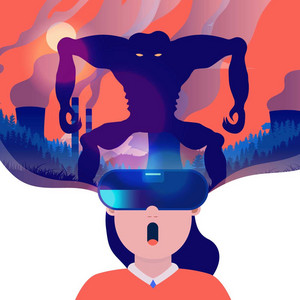
Virtual Reality (VR) is increasingly becoming more than just a tool for gaming; it is evolving into a transformative medium for psychological therapy and social rehabilitation. By utilizing the "intense" nature of immersive headsets, scientists and therapists are finding innovative ways to help individuals face their fears and develop empathy.
Overcoming Phobias through Simulation
One of the most practical applications of VR is treating phobias, such as "acrophobia" (the fear of heights). Companies like Oxford VR have developed systems that allow users to confront their fears within the safety of their own homes.
As Professor Daniel Freeman of Oxford University explains, VR works because it triggers "habitual reactions"—the typical, ingrained ways our brains respond to stimuli. Even though a user is "consciously aware it's a simulation" (a pretend copy of the real thing), the brain is tricked into reacting as if the situation were real. This allows patients to "drop their defences," a process of relaxing and lowering psychological barriers. Because the user knows they are in a safe environment, they gain the confidence to face challenges, such as climbing virtual buildings, without the risk of actual physical harm.
Virtual Embodiment: A Tool for Social Rehabilitation
Beyond individual phobias, VR is being used to address complex social issues like domestic violence. In Barcelona, neuroscientist Mavi Sanchez-Vives leads a project called "Virtual Embodiment." This approach involves placing convicted offenders into a VR environment where they experience life from the perspective of their victims.
By providing a "first person" perspective—viewing an event directly through the eyes of someone else—the simulation forces offenders to experience the abuse they once inflicted upon others. This "novel" (new and original) experience is often uncomfortable, yet it is essential for those who lack empathy. By seeing things from another's point of view, these individuals can better understand the impact of their actions.
Conclusion
Whether it is helping someone overcome a debilitating fear of heights or challenging the behavior of violent offenders, VR is proving to be a powerful therapeutic tool. By creating immersive, simulated environments, researchers are helping people navigate their psychological challenges in ways that were previously impossible. As technology continues to advance, the potential for VR to reshape mental health care and promote social understanding remains vast.
Deep Learning with ListenLeap


