Discussion keeps the world's turning.
This is Round Table. Cool down and power up.
Discover why China's young crowd is hooked on healthy, herbal waters this summer and dive into the billions, yawn, beverage boom with us.
And we're on a mission of starting your week with a motivational kick.
Our motivational Monday offerings will get you ready to tackle the week.
Hi everybody, I'm Ha Young and this is Round Table coming to you live from Beijing.
For today's program, I'm joined by you should and Steve Hatherley in the studio.
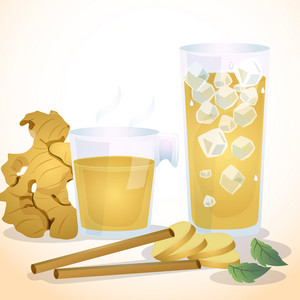
First on a day's show. This summer, young people are sipping on a new wave of refreshing and nutritious drinks, including red bean and quake seed water, Logan water, Tangurine peel water, and of course, the classic Chinese health choice, red date and goji berry water.
These healthy, herbal waters are making quite a splash.
A recent report reveals that the market for these nutritious beverages is projected to soar past 10 billion yuan or 1.4 billion US dollars by 2028.
So what is going on here?
What are the popular beverages that have been in the spotlight this summer?
So these sound very much like health remedies, the kind of thing that are, I think grandparents would like to drink, but nowadays they're also very popular among young people right now.
So these drinks are based on China's traditional dietary therapy culture.
It contains some ingredients like wu hui yang just said, red beans, goji berry red date, which are both traditional food and also materials with certain medical values.
Love those red dates. I put them in rice when I make rice at home.
You put the red dates in there to make it a little bit sweeter and it makes the apartment smell so good when the rice is cooking too.
That's a very versatile little, what is that?
Is it a fruit? It's not a vegetable, right?
It's a seeded something or other.
Yeah. They're kind of like, are they considered as a fruit?
Or like a snack? It's one of those confusing things.
But biologically it is a fruit of this certain tree.
It's got a seed in it. Anyway, help.
Anyway, can we just nerd out a little bit?
But the kind of date that you guys have been talking about is mainly jujubes.
It's not the date dates actually.
Oh, those are different.
Yeah, they're different.
Once yadzah, once like the kind of, that we usually eat.
So actually that's like really nerding out and getting into the linguistics.
That is not important. Sorry guys.
But it's really interesting that you should actually refer to like, grandma and grandpa would prefer these things when actually they're really big this summer.
How popular are they? Yeah.
So more and more brands are coming to the market attracting a lot of consumers because of their cool taste and the healthy concept and also these drinks can be found in both supermarkets like they're ready to drink bottled ones and also in some fresh made beverage stores like the bubble tea stores.
They're also making these and you know, many money are in this market.
The Tianjan.com industry info provider reported that the Chinese style nutritious drink market size reached 450 million yuan.
That's about 63 million US dollars in 2023.
Up by astonishing 350% here on.
Whoa. 350% increase in 12 months.
Yes. Something big is happening here in the beverage industry, right?
And I'm guessing that we're just about to learn that there are more and more companies than getting involved in the making and distribution of these beverages too.
Yeah. And also as I mentioned that compared to our grandparents, young people are loving it.
So this website also reveals that young people aged 18 to 36 accounts for nearly 70% of all consumers of such drinks and 55% of consumers are in first year cities like Beijing and Shanghai.
So the biggest five cities in China and it is interesting.
While I can kind of resonate more with grandma and grandpa on this and I'm not insinuating anything of them, but I am a bit of a cheap skate in the sense that I'm not going to waste my hard earned money on some flavored water.
I'm just going to drink my regular hot water and maybe I'll put it in a hot water bottle or a flask to carry around.
And in that way, I'm being environmentally friendly, not creating more use plastic and throw them away.
And also I'm not paying extra for this kind of stuff.
I remember on a previous show, you should was sort of advertising to everybody how amazing it is to have these ice cups.
Oh yes. Yeah. And I made the same argument.
Ain't going to spend extra money on that.
But I want to check with you guys.
Do you see like, you know, it's valid that young people like this and instead of old people.
The bottled beverage industry has always been a big industry.
So I don't think it's a market shift in terms of all of a sudden people are buying bottled beverages at grocery stores or convenience stores.
It seems to me that the shift here is in what's included in the ingredients in these beverages.
Whereas before you might find a lot of sugary flavored drinks.
Yes. But nowadays young people seem to be headed in a healthier direction, more conscious about the money that they're spending maybe, but that's not really included in this I'm guessing.
Just more so on the health benefits of what they're consuming drink wise.
The thing is that the market has always been there, right?
You know, these kind of sweet, maybe soda drinks and beverages are always there.
And right now, I think there is a trend on young people.
Or basically all the beverage brands, they're getting less sweet.
So in this way, if you want this drink to be flavorable and then both less sweet, then then I think Chinese traditional medicine or adding something into it is a good choice.
Yeah. And these ingredients that you were talking about before the red dates and the other ones, these are very well known here in China to be really good for you.
So beverage makers, I mean, look at that statistic.
150% increase in a year, beverage makers are obviously very aware of the shift in the market trend.
And it's now something that young people are preferring, less sugar, perhaps less of a sweeter flavor and something that's going to benefit their health.
Yes. Yeah. And less sugar is something I wonder if it's a global trend or not, but for Chinese people who travel to different countries and sometimes we're astonished by how sweet or the tolerance level of sweetness it is in different countries.
Yeah, right. When I went to the US, I thought I'll just, my tooth are going to decay after a month.
It's so sweet. Oh, getting a coffee in Canada from the very popular brand, Tim Horton, so many people where I'm from in Nova Scotia, they drink a double, double, which means two cream and two sugar in just a medium sized cup of coffee.
I always thought that was the normal flavor.
I left Canada for a year and I went back and immediately ordered that.
I thought I was drinking directly from a sugar cane.
It was unbelievably sweet.
Yeah. And I like you guys to talk a little bit more about Chinese people's perception towards sweetness or more about the Chinese traditional Chinese medicine, like how the perception towards TCM actually affects how we choose the beverages we drink, the food we eat, and all these different aspects in life.
And you can even argue that maybe this is not directly connected to TCM, but people in this country we have an idea of what it might be.
It is reflected in our beverage, a flavor choices.
I think one thing that relates to it is the increased health awareness.
People are caring more about their health or something that they taken into.
So as health consciousness rises, more young people are focusing on maybe wellness and aiming to improve their physical condition and prevent illnesses and through daily dietary habits.
And their demand for these beverages has also been there.
And if these Chinese styled teas or herbal teas, herbal water are both tasty and have health benefits, it's I think reasonable that they will eagerly flock to them.
And the awareness I think in this way leads to the growing demand.
We can see according to reports on Gen Z nutrition consumption trends released by the domestic media outlet Xinhua net, the average annual expenditure on health and wellness per urban resident exceeds 1000 yuan.
That's about 140 US dollars with young consumers aged 18 to 35 accounting for a significant 84% of this spending.
So right, more and more people are caring about their own health and spending more money on keeping healthy.
Hmm, similar trend in the United States, I was looking at Yahoo Finance earlier today.
And they were talking about energy drink companies and the shift in their trend as well.
I'm not sure about here in really healthy energy.
Well, see that's the thing.
Energy drinks are not known for their health benefits, right?
Other than giving you that energy boost, but they're really high in caffeine and often really high in sugar as well.
But the trend is that energy drink companies have been, of course, targeting younger demographics like teenagers and young adults and students, really aggressive advertising campaigns.
And they're always associated with an active lifestyle.
But now they've expanded their product lines to include a lot of healthier drinks, a lot of plant-based options as a matter of fact.
And what they're trying to do is appeal to this new generation of health conscious consumers.
And it's the rising popularity of functional beverages is what they attribute that to.
Functional beverages?
What could that be? Functional beverages like they serve a purpose.
They also talk about adaptogen drink.
Have you ever heard that term before?
No. So that's a beverage that's infused with plant extracts, things like sparkling sodas or teas or kombucha.
Was kombucha a big trend here?
And some trendy restaurants you would see that on the menu.
Yeah, it was a huge boom in the West for a period of time.
I remember buying a bottle of kombucha tea.
I was hearing about it in the news.
It was all the rage, right?
And I just thought it would taste like lemonade or something.
Oh my goodness, what a strong flavor that is.
I had it with a chicken sandwich and I thought, oops, I think I need to add some sugar or something.
But anyway, the trend here with energy drinks is they're headed in that plant-based direction.
Okay. So, that's a good reaction where they're recognizing that young people want a healthier alternative.
Right. And I'm wondering if this craze in China could translate to American markets.
For example, what I said earlier in the lead, red bean and coiques seed waters or coiques seed in Chinese is urine.
And that has traditionally, and I don't know why.
It's just been associated with very healthy foods.
And it's supposed to take some of the shiitsi, the wet, yes, that the moist out of your body.
And when you're, because in TCM, traditional Chinese medicine, we want a holistic and balanced system in the body.
And apparently, urine helps you in that regard.
And long-in water, that's long-in or Guiyuan.
And that's this little fruit that you can have fresh or dried.
And it's being seen as a really great natural sweetener.
And well, you see it in Chinese cooking everywhere.
And also, now you see it in water.
So I'm wondering, you know, if these things can be marketed as the next super food and migrate overseas.
It may be, but it would be a new thing.
For example, ginseng, ginseng beverages are quite well known here in parts of Asia.
But that's such a foreign concept, I think, that it would be new.
But I mean, I think, you know, that expression strike while the iron's hot with this trend in the markets happening here and in the West.
I think it's, I think it's time for those types of beverages to become popular.
But I think, you know, these ideas are, I think it's naturally blended into our daily lives right now because all of these beverages, I think, ingredients are common to see.
And then people are, I think, have an idea that, okay, even, I mean, this is something that I would like to drink.
It's not like, and it is part of TCM.
So more and more people are getting into the area of, you know, know the TCM and take TCM.
And more brands are also getting into innovation, getting new styles or ways of using these TCM.
I saw that many hospitals and companies have introduced various herbal tea products in the way that they produce the one that we talked about before, sour plum soup.
That is something that we would like to drink in summer.
It's sweet and sour. And also hair nourishing drinks.
What is that? Hair nourishing drinks?
Yes. I think most of them will have gingering nids.
And then it is, it means that it's good for like hair growing hair.
Yes. How are you going to market that to the younger crowd?
Don't mention hair. And move your feet.
On a beverage label. Oh, I see.
Yeah. And that's a whole big market because everybody wants, nobody wants to be bold.
So in Africa, I'm so selling point.
And also ways lost tea. Sure.
It is popular now and then.
Let's go back to the topic of sugar for one sec.
Because I think, you know, for me personally, I saw a documentary about sugar a few years ago and all of a sudden I became obsessed with sugar, not wanting to eat it is my point.
And I didn't know that sugar is everywhere around us all the time.
And there's a big shift in the beverage industry away from sugar.
Do you know how much sugar we should be?
This is a little off topic.
But do you know how much sugar we should be consuming a day?
As little as possible. Yeah, right.
Well, this is from the American Heart Association.
And they say that men should consume no more than 90 spoons.
That's 36 grams of added sugar per day.
Okay. So per 24 hours, women should consume no more than 60 spoons or 25 grams.
Again, that's from the American Heart Association website.
But if you look at a can of cola, the very famous red company, you know how many grams of sugar are in one can of that?
139 grams. Oh, that's more than your daily recommended.
And take in one particular can.
And that's from their website, by the way, I went to their website to find out that information.
And then there's a lot of beverages too that we assume don't have sugar, but have a lot of sugar.
Coconut water, for example, isn't that really healthy?
Well, it depends on the brand and it depends on how much added sugar they put in there.
Coconut water has some natural sugars in it.
But depending on the company, they might add sugar to that as well.
So you really have to pay attention to the labels.
But my point here is people are now really paying attention to labels and they want less sugar in their diet.
And I think that's why we're seeing, you know, TCM, the traditional Chinese medicine additives into the beverages because it's just a healthy choice.
Another big issue, I suppose, we're stepping on here that is a lot of people have questions about what exactly goes into these beverages.
And we talk about all these amazing flavors, but is it actually the extracts from these fresh fruits and vegetables or however ingredient it is being put in there or is it just flavor right?
And that's something that I think a lot of people are questioning because we have more awareness towards health these days.
I think that's why lemonade was such a popular beverage from a long time ago and still is these days because you can physically cut the lemon yourself and put it in there so you know exactly what's going inside your drink.
Lemonade popular here in China too, right?
Yeah, of course. And mostly we can see it eating a lot of restaurants, especially in hot pot restaurants and barbecue restaurants because it is just so, I would say, refreshing when you're drinking it and you can get off all of these greasiness after eating so much meat and all you'll.
And then I think lemonade is a common offering in these restaurants.
Right. What is it about the lemon fruit and drinks that people love so much?
You can count it in America.
It's almost nostalgic in a sense because you've seen it in the movies maybe where children will set up a little lemonade stand in the summertime and in their front yard and sell one cup for 10 cents or something like that.
I think I did that when I was a child as well.
So lemonade in Western culture, beverage culture somehow has this rich history.
I don't know why necessarily that is but it's always remained a really popular drink in the summertime.
One thing that I was thinking is that lemon is very easy to preserve or keep.
I mean, even you cut it into slices, it will just be fresh in your fridge.
But when you're just using it, it can add a little bit of flavor into your water because back then I think I also have the habit of adding one or two slices of lemon into my water just to get some a little bit of flavor when I was drinking it.
A little acidity. Yes. The hot pot restaurants, that lemon water is for drinking, not for your fingers, right?
No. Okay. Have you ever eaten at an Indian restaurant before?
No. You can't look for it.
Because it's your hands to grab food.
Oh my gosh, it's so stupid.
So I ate so much Indian food when I was in high school but always at my friend's house, right?
His family was Indian and such incredible food and his father was an amazing cook.
But I had never been to an Indian restaurant before.
When you go to an Indian restaurant, maybe not all, but this one had a little dish of water with lemon slices in it.
And I thought it was for drinking.
So I picked it up and I'm, that's very refreshing.
My friend looked at me and said, what are you doing?
I said, why? He said, that's for dipping your fingers in there when your fingers get like reason on them to clean your fingers.
And I thought it was a cool beverage.
So there you go. That's my Indian restaurant tip.
Next time. Next time you go, the lemon water is for cleaning your fingers, not for drinking.
Well, as a bona fide Beijinger and also proud northerner of China, I don't remember growing up with lemon because we don't grow lemon in this part of the country.
Ah, it doesn't grow naturally.
No. And I remember it was maybe in middle school when it was the first time one day my mom saw the supermarket's sales lemon and then got a couple and brought it home.
And I think it really takes sort of the availability of these things to, and also maybe some increased disposable income for one to want to buy this little fruit that doesn't fill you up.
Doesn't naturally grow in this geography.
So therefore, you know, not nor is it a staple food.
It will, it's more like garnish or something very much of supplementary ingredient in your waters to have.
So, yeah, I think it took some getting used to.
And now look at the northern part of China.
Lemon drinks are ubiquitous everywhere drinks, especially summertime.
And gradually it's grown on us this idea that, oh, this orange colored fruit is really refreshing and it's a wonderful companion for your summer drinks.
Yeah. Another factor is that lemon-nade are mostly very affordable, you know.
It is one of the key factors for lemon drinks to enter the mass market, I would say, you know, the price and quality are good or maybe just it just, it's used for everybody.
You can just drink it as plain water and you will want to have a second cup maybe.
And because we can see the company, I mean, Nishia ice cream and tea and ice cream and tea beverage company, it actually sells basically one billion cups of iced lemon water a year.
That's according to this website of this company.
He's pushing the ice cups again.
I mean, it is so popular that everybody maybe can get one fast in an ice cup company by a chance.
Yeah, obviously very popular.
Other interesting trends just very quickly in the beverage industry in North America.
This is from Nielsen IQ.
69% of consumers stated that sustainability is more important to them than it was in the past couple of years.
Therefore trends in the beverage industry are reflecting that as well.
Consumers are looking for sustainable packaging.
They're looking for low carbon shipping with the products that they buy or efficiency in machinery when packaging.
These are things that we don't think about normally with the beverage industry, but those things are popping up as well.
Yes, and those things are definitely a trend that's popping up here in China as well.
We've seen that for beverage companies recently, a few of them have talked about promoting digital, intelligent and green transformation and green transformation is all about making their packaging more environmentally sustainable.
And also, this is a fast growing market as we see according to people's daily data from the National Bureau of Statistics show that the retail sales of beverage products in this country reached more than 156 billion yuan or 22 billion US dollars in just the first half of this year.
So it's a big market we're talking about.