
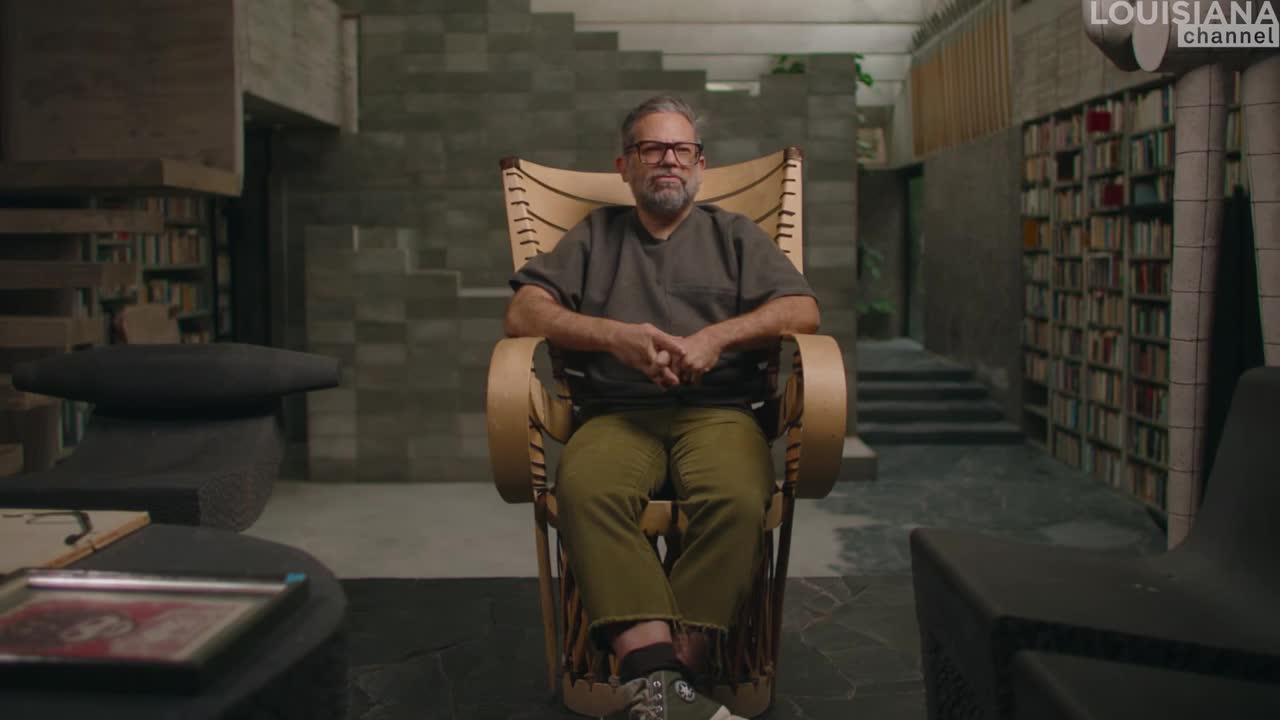
[The Art of Action: Overcoming Paralysis and the Power of Imitation]-[Artist Pedro Reyes shares advice: "Do first, theorize after."]
📋 Summary
Breaking the Cycle of Critical Paralysis
The creative process is often hindered by an excess of intellectual preparation. The speaker highlights a common phenomenon among students and emerging artists: "critical paralysis." This state occurs when individuals become so absorbed in the research phase that the act of overthinking begins to "inhibit your creativity." Instead of engaging with the physical medium, aspiring creators often fall into the trap of analyzing their work into stagnation. The speaker reflects on their own journey, noting that the tendency to engage in "too much thinking" prevents the actualization of ideas. The remedy is a shift in methodology: "do first, theorize after." By prioritizing physical interaction—taking a "pencil" or a "piece of clay"—an artist can bypass the mental blocks that prevent progress.
The Misunderstood Value of Copying
Another significant barrier to artistic growth is the fear of imitation. Many creators are hesitant to draw inspiration from existing works for fear of being derivative. However, the speaker challenges this notion, asserting that one "should not be afraid to copy." This is not an endorsement of plagiarism, but rather an acknowledgment of the evolutionary nature of creativity. The act of copying serves as a foundational step; as the speaker notes, "in the end, it will turn out to be something different to what you were copying." The transformation occurs through the creator’s unique perspective and application.
The Continuity of Artistic Expression
The philosophy presented here is rooted in the idea of creative lineage. The speaker posits that "art cannot be produced in the void without using art from the past." This perspective frames historical influence not as a limitation, but as an essential component of the creative ecosystem. By learning from the masters and incorporating those elements into one’s own practice, the artist engages in a dialogue with history. The ultimate goal is to focus on the trajectory of the work rather than its origin. As the speaker poignantly summarizes, "it's not where you take it from, but where you take it to." This shift in focus empowers artists to embrace their influences, act decisively, and allow their personal voice to emerge through the process of doing.
Deep Learning with ListenLeap


