
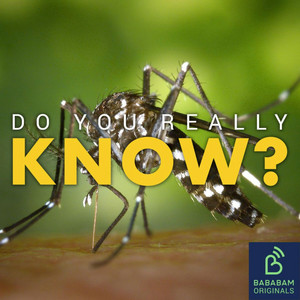
[The Ecological Role and Biological Reality of Mosquitoes: More Than Just a Summer Nuisance]-[Are mosquitoes good for anything?]
📋 Summary
The Biological Reality of Mosquitoes: Why They Bite
Mosquitoes are a ubiquitous part of the summer experience, often viewed merely as an irritating pest that leaves us "scratching away the resulting bites." However, understanding their biology reveals why they are such persistent annoyances. According to the podcast, only female mosquitoes bite humans. This is because they "require blood in order to produce eggs." In contrast, male mosquitoes are described as "hopelessly bad at finding humans" and lack the "specialised stylet" necessary to pierce human skin.
Furthermore, the podcast highlights that human vulnerability to these insects is not random. An individual's "genetic makeup affects your body odour," which determines how attractive they are to mosquitoes. This explains why certain people are targeted more frequently than others, even when occupying the same environment.
The Mechanics of the Bite and the Itch
The reason we often fail to swat a mosquito before it escapes lies in their sophisticated biological equipment. Mosquitoes utilize "two pumps": one to draw blood and another to inject saliva. This saliva serves a dual purpose, acting as both an "anaesthetic and an anticoagulant." The anaesthetic property is why "you often don't feel the bite," while the irritation caused by the foreign saliva is what triggers the subsequent, persistent itching.
Global Health Implications
While the podcast notes that the UK currently experiences no "mosquito-borne diseases," the situation is drastically different on a global scale. Mosquitoes are vectors for severe illnesses, including "chikungunya, dengue fever and yellow fever." Most alarmingly, the World Health Organization reports that malaria, spread by these insects, was responsible for "nearly 600,000 deaths across 83 countries in 2023," underscoring the significant public health threat they pose.
The Ecological Paradox: Are Mosquitoes Good for Anything?
Despite their status as a nuisance, the podcast addresses the complex question of whether we should eradicate them. The answer is nuanced, as mosquitoes serve vital functions in "biodiversity." They contribute to the ecosystem by "pollinating flowers" and serving as a foundational food source for "swallows, bats and many other birds."
Perhaps most surprisingly, mosquito larvae perform an environmental service by cleaning up aquatic habitats. By feeding on "organic matter," they help improve water quality in ponds.
Practical Mitigation Strategies
Because complete eradication is not a simple or ecologically sound solution, the podcast offers practical advice for managing the nuisance at home. To minimize encounters, experts recommend:
- Wearing "long trousers and socks."
- Utilizing "lemon eucalyptus and deet repellent."
- Eliminating "stagnant water" in gardens to prevent breeding grounds.
By balancing an understanding of their ecological importance with proactive personal protection, we can better navigate the summer months alongside these persistent, yet biologically essential, creatures.
Deep Learning with ListenLeap


