
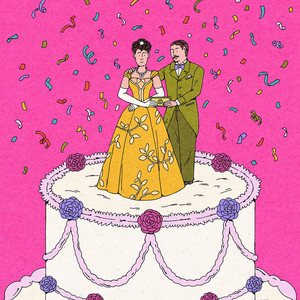
[The Economics of Love: How 'Dollar Princesses' Saved the British Aristocracy]-[How American heiresses became Dollar Princesses]
📋 Summary
The Transatlantic Marriage Market: An Economic Analysis of the 'Dollar Princesses'
In the late 19th century, a unique economic phenomenon emerged that bridged the Atlantic Ocean: the marriage of wealthy American heiresses to British aristocrats. This period, often romanticized in dramas like Downton Abbey, was driven less by fairy-tale romance and more by cold, hard economic necessity. Economists like Mark Taylor and historians like Kristen Richardson have analyzed this era, categorizing these women as "Dollar Princesses"—a term representing a strategic, if unconventional, capital injection into a decaying aristocratic system.
The Economic Disruption: Why the Aristocracy Needed Cash
At the heart of this trend was the collapse of the traditional British agricultural economy. During the late 1800s, the British aristocracy, a "very exclusive club" of landowners, faced a severe financial crisis. As Mark Taylor explains, the culprit was an influx of cheap agricultural products from the United States. Thanks to the invention of the "steel plow" and the expansion of railways and steamships, American farmers could flood the British market with low-cost grain.
This caused British crop prices to "tank," leaving tenant farmers unable to pay rent. Consequently, aristocratic families—whose wealth was tied to vast estates—found themselves "strapped for cash." They struggled to maintain their massive country homes, which required exorbitant upkeep. As Taylor notes, the aristocracy was essentially "impecunious," facing a dire need for liquidity to prevent their estates from falling into "ruin."
The Supply Side: New Money and the Pursuit of Status
While the British provided the demand for capital, the United States provided the supply. A new class of "nouveau riche" families—who made their fortunes in "railroads, minerals, and horse breeding"—faced a significant social barrier. Despite their immense wealth, they were frequently "shunned by American high society," which remained the exclusive domain of established "old money" families.
For the daughters of these new-money families, marriage was viewed as their "only career path." Historian Kristen Richardson notes that social status was a necessity for survival; without a successful marriage, a woman was often seen as a "drain on family resources." Thus, the "debutante ball" became the primary marketplace for brokering these alliances. By marrying into the British aristocracy, these families could purchase the one thing their money couldn't buy in America: social prestige.
The Prototype: The Jerome-Marlborough Union
Jenny Jerome is widely considered the pioneer of this trend. Her marriage to the son of the Duke of Marlborough in 1874 served as a blueprint for future unions. The negotiation of her dowry was intense, highlighting the transactional nature of these marriages. The Duke, who had a "son with a gambling problem" and a "palace with 14 acres of roof," was desperate for the Jerome family's wealth.
Mark Taylor estimates that Jenny’s dowry was worth approximately "seven and a half million dollars in today's money." This influx of capital helped maintain the Marlborough estate and effectively saved the family from financial collapse. This union, which also produced Winston Churchill, proved that American wealth could effectively revitalize British nobility.
Conclusion: A Transatlantic Wealth Transfer
Between Jenny Jerome’s marriage and the outbreak of World War I, approximately 500 American women married European aristocrats, with dowries totaling more than "four billion dollars" in modern currency. This massive movement of wealth prompted public outcry in the U.S., where some critics viewed the brides as a "mineral deposit" being exported, even suggesting "export tariffs" on the women.
This era of transactional marriage finally dissolved with the onset of World War I, which fundamentally changed the economic and social roles available to women. As the labor market shifted and societal norms evolved, women were no longer required to be mere assets in a marriage market. They gained the agency to pursue their own livelihoods, and eventually, the freedom to marry for love rather than economic survival.

Deep Learning with ListenLeap


