
[The Amazing Horseshoe Crab: Ancient Survivors and Modern Medical Heroes]-[The Amazing Horseshoe Crab (Advanced Program)]
📋 Summary
The Amazing Horseshoe Crab: A Vital Medical Link
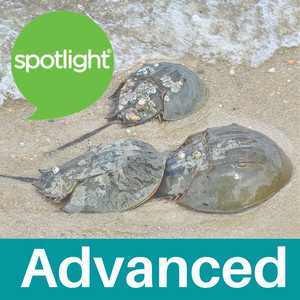
The horseshoe crab is a creature that seems to emerge from a prehistoric past. Described as having a "long tail and nine eyes," this ancient animal has remained largely unchanged for approximately "450 million years." While they are often overlooked as they bury their eggs in the sand, these creatures play an indispensable role in modern medicine. Their unique physiology makes them a cornerstone of global health, yet this dependence has placed their own survival at risk.
The Life-Saving Power of Blue Blood
The medical importance of the horseshoe crab lies in its "blue blood." This blood contains a specialized chemical known as "limulus amabokite lysate" or "LAL." The discovery of LAL by scientists "Fred Bang and Jack Levin" in 1965 revolutionized medical testing. LAL is critical because it reacts specifically to "gram-negative bacteria," a type of microorganism that is notoriously difficult to eliminate. Unlike other bacteria, gram-negative bacteria "resist normal cleaning methods" and can survive high-heat environments. Before the LAL test, medical companies relied on testing vaccines and medicines on rabbits, a process that was both inefficient and often inaccurate. Today, the LAL test is the global standard for ensuring that medications are free from dangerous bacterial contamination.
The Cost of Harvesting
Despite the lifesaving utility of LAL, the process of harvesting blood from these crabs has sparked significant environmental concern. Medical companies capture thousands of horseshoe crabs, transport them to laboratories, and extract roughly "a third of the animal's blood" before releasing them back into the ocean. While the practice was initially assumed to be harmless, recent research suggests otherwise. Scientist "Winn Watson" points out that the stress of the laboratory, combined with improper handling—such as failing to keep the crabs in cool, aquatic environments—leads to "permanent damage." Studies indicate that many harvested crabs suffer from reduced reproductive success, and nearly a third perish shortly after their release. As Barbara Brummer of the Nature Conservancy notes, humanity’s dependence on such an "ancient creature" is staggering, yet this reliance may be pushing the species toward extinction.
A Sustainable Future: Moving Beyond Blood
There is a glimmer of hope for the future of horseshoe crabs through scientific innovation. In 2000, scientist "Dingjie Ling" developed a new testing method derived from "horseshoe crab genes." This synthetic alternative can identify gram-negative bacteria without requiring the harvest of live animals. This method has already proven its worth; for instance, the medical company "Lonza" utilized this synthetic approach during the development of their COVID-19 vaccine in partnership with Moderna.
While some industry stakeholders remain hesitant to transition away from traditional LAL testing due to financial interests or skepticism regarding new technologies, the benefits of synthetic testing are clear. It requires "less effort than fishing for thousands of crabs" and offers a path toward conservation. If these synthetic methods become the industry standard, the horseshoe crab may finally be able to return to its natural life on the ocean floor, living in peace as it has for hundreds of millions of years, no longer exploited for its blood.

Deep Learning with ListenLeap


