
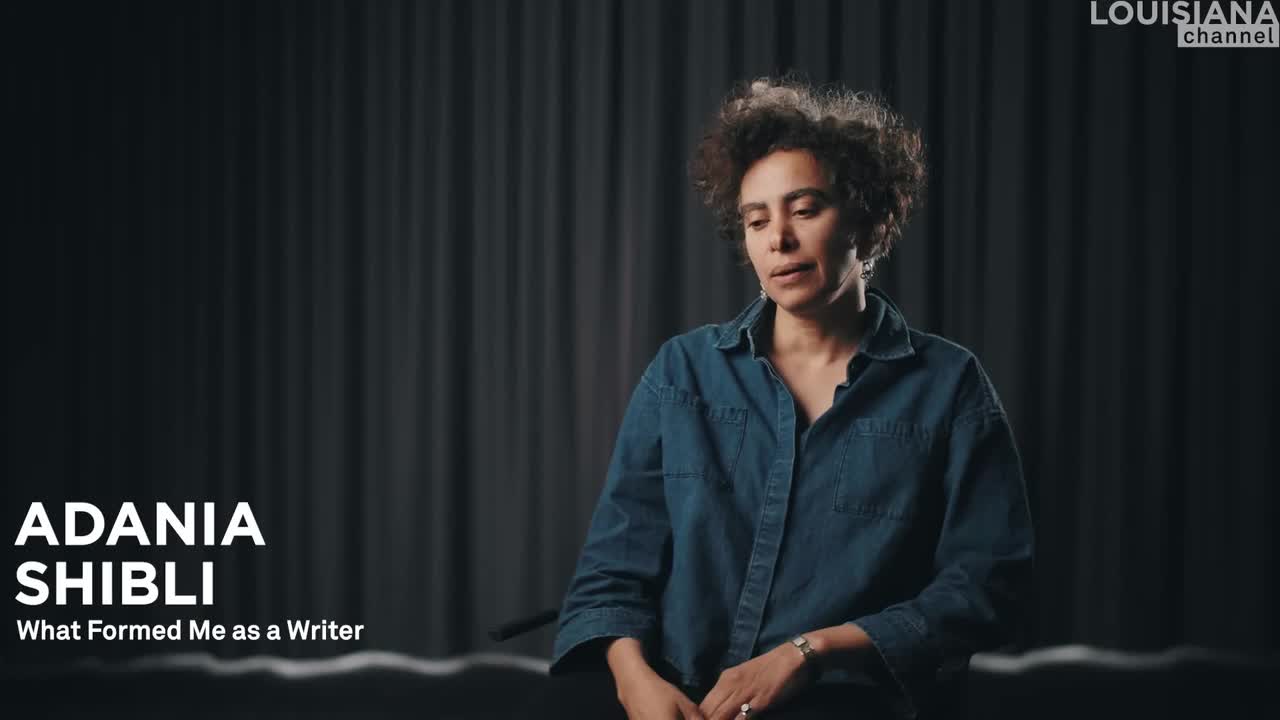
[The Architecture of Fiction: Writing as Play, Resistance, and Inherited Silence]-[Adania Shibli: What Formed Me As a Writer]
📋 Summary
The Architecture of Fiction: Writing as Play, Resistance, and Inherited Silence
The Genesis of a Writer: Writing as an Extension of Reading
For the speaker, the act of writing was never a solitary endeavor distinct from the world of books; rather, it was an intrinsic part of childhood existence. Growing up surrounded by literature, the speaker describes learning to read and write as a holistic practice. As a lonely child who preferred solitude, the speaker found in books a "companion of the act of reading." This early immersion was not passive; it was a process of "writing while reading," where the narratives of books would "haunt" the speaker, leading to the creation of stories that continued beyond the final page. This childhood habit solidified into a lifelong commitment, transforming the act of writing into a fundamental lens through which to engage with reality.
The Serious Game: Play as a Tool for Maneuvering Reality
The speaker emphasizes that writing is a form of "serious playing"—a "committed" and "sincere" endeavor. This concept of play served as a vital cognitive tool, influenced later in life by Bertolt Brecht’s The Five Difficulties. Brecht suggested that "playing and being cunning" are essential strategies to counter tyranny and fascism. As a child, the speaker intuitively utilized this "game of fiction" to navigate difficult social encounters. By renaming people in their life after characters from books and assigning them new roles, the speaker was able to "move away from reality" and maneuver through conflict. This creative transformation of the environment was not mere escapism; it was an act of "joy and inspiration," a way to transcend the "limits of reality" when physical objects for play were absent.
Inherited Silences and the Power of Literature
A profound layer of the speaker’s literary development stems from the shadow of the 1948 Nakba. The speaker’s parents, who were teenagers during this period, were unable to narrate their trauma, leaving a void where words should have been. This "impossibility of narration" defined the household atmosphere. Literature, particularly European classics like Tolstoy’s War and Peace, provided a way to soothe this difficulty. The speaker notes the fascination of how a "faraway landscape" in a book could come so close, allowing for an exploration of the human condition without the intimidation of having to narrate one’s own inaccessible history.
The "Not Yet": Literature as a Rite of Passage
Perhaps the most compelling aspect of the speaker’s library was the presence of "off-limit" books—Palestinian authors like Ghassan Kanafani and Emil Habibi. When asked why these books were restricted, the family’s response was simply, "Not yet." This mysterious threshold transformed reading from a mere "act of entertainment" into a "dangerous act"—something the reader must "grow to be able to carry."
This concept of the "not yet" is central to the speaker's philosophy. It is not an act of censorship but an "act of prolonged thinking." When the speaker finally gained access to these works, they realized that writers like Kanafani were not just documenting the Palestinian experience but addressing the "existential question of how we are in the world." By "playing with language," these authors demonstrated how to transcend the "conditions of oppression." Ultimately, the speaker concludes that the value of literature lies not in the narrative content itself, but in "what it does to you as a reader," proving that the most profound insights are often those we must wait to grow into.

Deep Learning with ListenLeap


