
[Finding Purpose Beyond the Uniform: The Healing Power of Service]-[A Damn Good Shipmate]
📋 Summary
Finding Purpose Beyond the Uniform: The Healing Power of Service
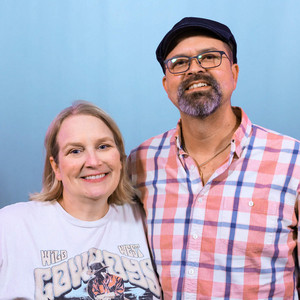
Transitioning from military service to civilian life is often a profound challenge, characterized by a loss of community, identity, and structure. In this episode of the StoryCorps podcast, Navy veterans Michael Davidson and Windy Barton share their experiences with the organization Team Rubicon, illustrating how continuing to serve others can be a critical bridge to healing.
The Legacy of Duty and Vulnerability
Michael Davidson, a veteran with 23 years of service, traces his sense of duty back to his grandfather, whom he affectionately calls "P-PAW." His grandfather, a World War II veteran, was the primary inspiration for Davidson’s naval career. Beyond professional influence, his grandfather taught him the importance of emotional openness, as he was the first man Davidson saw cry, which "made it okay" to be vulnerable.
Davidson recounts a humorous anecdote about his nickname, "Nub." Throughout his childhood, his grandfather called him this, but upon joining the Navy, Davidson discovered that "NUB" is a Navy acronym for "non-usable body." When confronted, his grandfather jokingly confirmed the definition, telling him, "You kind of have been. Go do something with it." This push served as a catalyst for Davidson to transform his life and seek meaningful service.
Overcoming Isolation and Suicidal Ideation
For many veterans, the transition out of the military creates a vacuum of purpose. Davidson openly admits that after leaving the Navy, he "lost that community and my identity" and felt he had "zero purpose." This struggle was so severe that he experienced "suicidal ideation." Finding a new mission through disaster relief allowed him to shift his focus from the past to the future. Similarly, Windy Barton describes feeling as though she had "let myself wither" after leaving the military to focus on motherhood, missing the adrenaline and camaraderie of "firefighting and emergency response stuff."
The Healing Impact of Disaster Response
Team Rubicon provides veterans with a way to channel their specialized skills into helping those in need. Barton recalls a deployment in Baton Rouge following a flood where she encountered a mother whose home was still filled with water three weeks post-disaster. The immediate impact of their intervention—deploying teams to help clear the home—brought the homeowner to tears of relief. For Barton, this work serves as an "immediate impact" that satisfies the urge to serve.
Rebuilding Together
Davidson reflects on the psychological shift inherent in this work, noting that many veterans have "seen the bad side of a non-natural disaster with war." By using their expertise to help communities "go back together," veterans find a sense of peace that resonates with their "call to their hearts."
Ultimately, the bond between Davidson and Barton highlights the importance of camaraderie. By acknowledging each other as a "damn good shipmate," they reaffirm that despite the difficulties of transitioning, they still have "a lot in the tank" to offer the world. Their story serves as a testament to the idea that even after the uniform is hung up, the commitment to service can remain a powerful, life-saving force.
Deep Learning with ListenLeap


