A quick warning, there are curse words that are unbeaped in today's episode of the show.
If you prefer a beeped version, you can find that at our website, thisamericanlife.org.
This American Life from Ira Glass.
We've been talking here at the radio show recently about a certain genre of movie, which is the making of movie.
A movie about the making of another film, usually a much more famous one.
A classic is Hearts of Darkness, which is a making-of documentary about the film Apocalypse Now, which has footage that the director, Francis Ford Coppola's wife Eleanor, shot at the time the movie was being filmed.
Plus incredibly, these recordings that she made of her husband, without him knowing it, where he's talking about his self-doubt, his despair.
This film is a $20 million disaster.
I'm thinking of shooting myself.
There are candid moments with the actors Dennis Hopper, Lawrence Fishburne, who's 14 years old when they were making that film.
Martin Sheen, who plays the main character, has a heart attack when they're there.
36.
Marlon Brando, the film's most expensive star.
At some point Coppola realizes that Brando has not read the book that the movie is based on Heart of Darkness.
So he does not get who his character is.
He's being paid a million dollars a week.
And all throughout there are hints and glimpses of what's really happening in reality in the place that they're filming this movie.
They're in the Philippines, where a US-supported autocrat is fighting a war against a communist insurgency.
The movie's helicopters are US-made choppers, flown by pilots in the Philippine military who keep getting pulled away.
To go back to the real war,
Wait a second.
Stand by.
We just heard they're taking away five of our helicopters.
Should we do it?
The film Apocalypse Now is about Vietnam, but it's a big mythic version of Vietnam, full of larger-than-life characters.
The making-of film reveals the normal-sized people building this grand cathedral, brick by brick.
You see the ridiculous lanes everybody had to go through to create their pretend war and their fake impossible Vietnam.
Which brings me to today's radio show.
Today's show is a making-of of a different kind.
It's people creating a picture of a place and a war that's happening there.
And that place is Portland, Oregon.
We're going to talk about Portland as a concept, what the city has come to mean in this political moment.
Back in September, you may remember, President Trump declared on Truth Social that he was going to send troops into what he called war-ravaged Portland to protect ICE facilities there that were quote under siege from attack by Antifa.
Portland came to his attention, he said, by chance.
You know that was not on my list Portland but when I watched television last night, this has been going on.
Protesters had actually been outside the ICE facility since June.
But Fox News, the night before, had run a story about Portland.
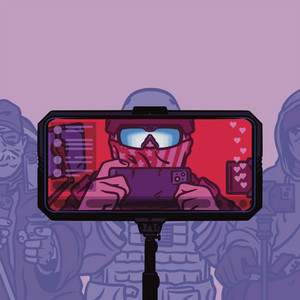
And one thing about Fox's coverage, including that story is that Fox's coverage includes lots of footage of protesters that is not filmed by professional TV news crews but by the real auteurs behind the right wing's idea of what Portland is.
These are right-wing citizen journalists who've been there at the protests, covering them, more than anybody, especially live streamers who were there.
These are people who believe in Trump, believe in ICE, who streamed from the Portland protests saying that their lefty local government was soft on the protesters, letting Antifa run amok.
Live streaming on YouTube and X.
All these people right here are the Antifa of Portland.
All in black.
Really?
Some of the citizen journalists became regular guests on Fox, talking about this.
For people who say that there's not violence going on in front of these facilities, what do you say?
It's a complete lie.
There's lots of violence going on.
I mean, these people are very dangerous, and they're unhinged just the other night.
And a week and a half after the president declared Portland to be war-ravaged and under siege, he invited these streamers to the White House for a roundtable on Antifa.
It was remarkable.
At least three of these courageous journalists have personally been victims of Antifa attacks.
Trump sat at the center of a U-shaped table with about a dozen of these reporters and streamers for an hour and a half.
And flanking Trump at the table on his immediate left and right was the full political and law enforcement firepower of the federal government.
Kristi Noem, head of the Department of Homeland Security, Head of the FBI, Kash Patel.
Attorney General Pam Bondi.
Secretary of State, Marco Rubio.
After the president's opening remarks, Kristi Noem, head of DHS, fresh off the plane from Portland, herself talked directly to the streamers.
I want to thank the new journalists here today for telling their stories and for being able and willing to go to the streets and to cover what's happening here in America.
Many times, the legacy media has looked the other way, refused to tell the stories and how this network of Antifa is just as sophisticated as MS-13, as TDA, as ISIS, as Hezbollah, as Hamas, as all of them.
When the streamers spoke, it was in apocalyptic terms about Antifa, this supposed global network of anti-government anti-fascists.
Streamers talked not just about being personally assaulted by Antifa protesters, but putting their lives on the line every day.
One streamer said that she genuinely believed that if the president had not declared war on Antifa, people at this table would have been killed in Portland.
Here's one of the best-known citizen journalists covering Portland, Nick Sorter.
He's been on Fox a bunch.
Frankly, the cities and police departments are cooperating with Antifa, such as Portland.
It's sickening.
I've seen it firsthand, obviously.
And President Trump, you mentioned that flag.
So remember, you put out a truth right after...
I took this flag from that man that was burning it in the street.
Do you know who he is?
Oh yeah, I know exactly who it is.
So why don't you give it to Pam?
Give it to the Attorney General and let's start prosecutions.
The Attorney General, Pam Bondi, pipes in at that point to say she's already started an investigation.
The purpose of all this?
The point the administration was making with this event was that in Portland, these streamers and citizen journalists were proving that the threat to America from Antifa is real and that a massive nationwide hunt was called for.
And this didn't just mean sending troops into American cities like Portland.
It also meant treating Antifa as a domestic terror organization.
The president had just named it that, and he ordered the National Joint Terrorism Task Force to create a national strategy to investigate and prosecute them with the FBI, the Justice Department and other agencies.
And to go after left-wing groups that he says are funding political violence.
A speaker at this roundtable named some of them like George Soros', Open Society Foundations, organizations who, of course, deny doing any such thing.
Since then, prosecutions are underway.
Just this week, the FBI claimed to have disrupted a bomb plot in Southern California by anti-capitalist, anarchist leftists with a group called the Turtle Island Liberation Front.
To be clear there is no question that there are violent leftist groups in our country, just like there are violent groups on the right.
But there were already laws in place and law enforcement going after them.
That has been one of the FBI's jobs forever.
This is a new kind of crackdown at a new scale targeted only at political violence on the left.
America is a big country.
We all, from the president on down, rely on images and words from other people to understand what's going on elsewhere.
And a vision of Portland.
A movie about Portland is a place that's war-ravaged, a hub for Antifa, ripe for military intervention.
That story, promulgated by these streamers and citizen journalists, amplified on right-wing TV and social media, that story is justification for all these law enforcement policies all over the country today.
Along with another story, of course, the assassination of Charlie Kirk.
We wanted to see Portland for ourselves.
We wanted to see the making of this story about what Portland is.
The reality, the behind the scenes, turns out not just to be very different, but a lot more interesting than the thing that they're filming and the story that they're telling.
Stay with us.
It's word for this American life and the following message come from AT&T.
AT&T believes that hearing a voice can change everything.
Whether it's a favorite podcast, saved voicemail or a call with someone close, familiar voices can bring connection and comfort.
This holiday season, ATT encourages the sharing of voices through a call, a voicemail or a voice note, because every conversation can create lasting connection.
AT&T, connecting changes everything.
Support for This American Life comes from REI Co-op.
Don't be surprised when you're this season's best gift giver.
REI's curated outdoor gear takes the guesswork out of gifting with expert picks they'll actually use.
So you won't be surprised.
But they will.
Give without guessing.
Shop in-store or at REI.com.
This American Life, Act One, Living the American Stream.
Okay, so some basic facts before we head off to Portland.
The way the president has described Portland, it might sound like an entire city under siege.
But I think the first thing we need to clarify in this making of is that the entire conflict between protesters and police, the entire war, is happening on exactly one city block, outside an ICE facility.
Pretty much every day since June, protesters have been there opposing President Trump's immigration policies, like other protests around the country.
The level of violence directed towards ICE is mostly blocking and slowing down their vehicles that are coming in and out, and small scuffles where federal police fire tear gas and pepper balls.
There was one day in June when things flared up and were declared a riot.
Protesters rammed a stop sign through a glass door, hit an ICE agent in the head with a rock.
But that day was kind of a one-off.
What it's been since then on any given day, is anywhere from a half dozen to 200 people with music, chanting bullhorns.
During the daytime it can have a kind of carnival performance art vibe a street salsa class, people in inflatable frog costumes.
There's a guy dressed like Bob Ross with an easel and a palette, doing an oil painting of the ice officers.
But then at night, it can get more confrontational with ICE.
Sometimes protesters have burned American flags, graffitied outside the building, shot fireworks.
And it gets confrontational between the protesters and the streamers who mix it up with them.
Usually they're anywhere between just a few streamers to maybe 30 or so.
It gets really noisy and disruptive.
And people living near the ICE facility complain to police about the noise.
And when the streamers and citizen journalists say that the Portland police have let all this happen, There's truth to that.
They haven't stopped protesters from blocking sidewalks or surrounding and delaying ICE vehicles.
They've allowed them to make noise.
The judge ruled that it was okay.
That was the state of things when one of our producers, Zoe Chase, flew to Portland in October with another producer, Suzanne Gabber.
Here's their story.
When we got there it had been about two weeks after the White House roundtable about Portland and Antifa.
We got there after 10 on a Saturday night, late October.
It was cold and rainy, but there are a lot of people out here wandering up and down the sidewalk.
And it's not grimy protesters dragging furry tails in the mud, dancing to I Will Survive, or whatever.
I was picturing the campy, Antifa Portland protest scene to be at this point.
What we walk into is more like a Trump rally.
U.S.A.
I want you to picture.
This is one long block with an ice facility on one side and a tall apartment building on the other.
Two long sidewalks, a big street in the middle that leads to the old spaghetti factory.
People are swarming both sides of the street, even late at night like this.
There are a bunch of city cops in yellow slickers standing around.
And all these people wandering around with their phones, on long selfie sticks, talking into the phones and talking to each other.
Some of these people, Susan and I recognize from the White House Roundtable or from appearances on Fox.
But mainly, I have no idea what I'm looking at.
So we meet up with this one valuable streamer.
She calls herself an analyst.
Karlyn Borisenko, 128,000 subscribers on YouTube.
And she's just pointing people out to us.
The guy in the mask is a MAGA guy.
The guy with the yellow hat right there is Antifa.
The guy with the flag is Antifa.
Normally, Karlyn's streaming from home.
She's kind of a commentator about the streamers.
She'll have like four different live videos up from four different live streamers and it's like camera one no, camera two.
While walking you through what or who to watch in the videos,
Karlyn's a recovered lefty, now very much on the right.
She considers herself an Antifa expert.
She knows all these right-wing streamers and influencers, so she's a good person to follow around.
Well, J.D.
DeLay is there.
He's got like 1.6 million subscribers on YouTube.
He's in the camo hat.
I also spot Nick Sorter, 1.3 million followers on X. Cam Higbee, 216,000 YouTube subscribers.
They're both at the White House.
So like a lot of people out here, it's kind of like they're just showing what's happening.
And I think a lot of people out here are trying to get the best footage they can, regardless of what side they're on.
And what do they—why?
Do you know what I mean?
Like—
Why?
It's not as though it's not covered.
We're in a reality show right now.
And you can see the reality show from that angle or that angle or down there.
You know, I mean I watch the live streams for hours and hours of time on my YouTube channel when I'm at home.
And it's like you have all these different angles.
You can skip around, see what's good.
It's like, you know what it's like?
It's like the Big Brother house, where you can go in the kitchen or the bedroom just to kind of spy on people.
Same thing, except we're actually in it.
Right.
And it's addictive after a while.
It's like you start, there are characters in this story.
There are people that are here all the time.
So you get kind of like endeared to some of them.
There's a reason so many right-wing streamers are in the same place at the same time, the weekend that we're here.
Since the White House roundtable, more and more of these streamers have been showing up here.
Then recently, the anti-ICE protesters did this thing, which was put up a poster with a bunch of right-wing influencers' faces and handles and real names on it, saying meaning like don't give these guys content that they'll use as propaganda.
The streamers saw that and were like OK well, we're now all going to come at once and we're going to make a lot of videos of you weirdos.
And they're calling it Patriot Weekend.
Some people are just standing around smoking and talking in the rain.
And then these big circles form out of what seems like nowhere, with people pushing and yelling like a playground fight.
With all these other people jostling to film the fight in the middle of the circle, which is a yelling fight, to be clear, usually not a fist fight.
And the people inside the circle are filming themselves, being filmed and streaming that live to their followers.
It's a circle of people and phones in a fight.
I walk up to a group like this, try to push my way inside to see what's in the center.
It looks like a dude in a bulletproof vest streaming a video of himself yelling at a guy with a Captain America shield.
Stolen valor.
We just proved it.
It's disgusting.
You're a liar.
Apparently thousands of people are watching this online right now.
Carlin and I elbow our way into a different crowd, but at the center, nothing's happening.
It seems like some fight has just ended and the streamers who are watching the fight start talking to each other about whatever that fight was about.
It's funny, like, now they're just doing, like, a talk show of what just happened.
And that happens a lot and it's like it's one of those things again.
It's like it's a spectacle, right?
You know there's something going on over here, but then you get to run over there and maybe you get to provoke something over here and you just never know what's going to happen.
You know.
That's why I'm hippie MAGA.
I'm different.
This is another rando chiming in.
He's dressed like the dude from The Big Lebowski in a full robe with beads.
What's hippie MAGA?
Just about trying to connect and I'm trying to make more agreements than trying to win through domination.
Like in a debate, instead of winning the debate by winning the debate, I'm trying to have a conversation.
Okay.
So are you out here talking to people who disagree with you?
Is that your plan?
I do.
I do.
I just talk to whoever, basically.
Yeah.
Got interviewed by the crow earlier over there.
Who's the crow?
I have no idea.
Some internet crow.
Lots of handles flying around that I don't know.
Carlin looks around.
Is there something people are, like, waiting for now?
Like, what is everyone doing here?
You know what I mean?
It's like 1030.
It's really cold and rainy.
Yeah.
Well, you can see something's about to happen over there.
It looks like a whole bunch of people are walking over there.
So I don't know what's about to happen.
Let's go see.
Let's go see.
Uh-oh.
Everyone is just standing around with their phones.
Yeah, because it's like if there's no fight at some point, then there's nothing really to film.
Yeah.
So at some point something has to happen or there's nothing to see.
And you know what I've kind of seen is it's like...
Okay.
Now, there's shame on you.
Okay.
Shame.
Shame.
Pam is a crazy person, and she likes to come and yell at people.
You're not a psychologist.
Now someone comes up and starts scolding Karlyn, an older lady, infamous on X, the MAGA granny.
She went to prison for storming the Capitol on January 6th, but she's flipped and now she's at every anti-Trump event you can think of.
The right-wingers call her Pam Tifa.
I don't even know what you're talking about.
What are you upset about, Pam?
The big streamers can have tens of thousands of people watching them at one time, depending on what's going on.
And they make real money from that, from paid subscribers.
Fans tip them in real time.
One streamer out here tonight, he got into this after streaming Fortnite.
This pays more, he told us, being out here.
Another streamer, Tommy Boy, quit his job in local government.
He says he makes more money streaming.
But most streamers are more like Mike Ross. an out-of-town streamer.
I followed him around for hours.
He says he made money on crypto, so this is a hobby for him, not a job.
Not yet, anyway.
He's a very tall white guy in a big brown sweatshirt with a phone on a tripod so he can film from really high up.
He's a mental health advocate and a disabled veteran.
He goes by Mentally Idaho on X. He's relatively new here, relatively few followers, 6,000.
His vibe is high school football coach.
I flew back this weekend for Patriot weekend and just filming and live streaming and trying to get angles that other people don't get, because I can do this and record what other people can't do.
Yeah, you have like a big fish pole.
You can get up really high.
Plus you're tall.
Yeah, so I kind of do stuff like that.
What do you think of all the chaos?
I just got here, honestly.
But you don't have an answer.
I don't have an answer, you dumb fuck.
Mike said this thing about the way people talk to each other here, how mean and juvenile and graphic and vulgar it is.
It's really like walking around inside social media, like we're in the comments section in real life.
Remember, every person streaming here is not alone.
They have this invisible mob surrounding them, sometimes animating them like a video game avatar.
Mike's chat points him in various directions, saying go here, go there, collaborating and making things happen that turn into content.
While I'm there with Mike, one of the streamers gets arrested, and his wife is really upset.
Mike tells her they're going to get help from the chat.
Say it again?
They said that he might have to pay bail to get out.
Okay.
People want to know how to give money.
So in a minute, we'll walk down to Tommy's chat, and you can talk to both chats about that, okay?
You have a Venmo?
Yeah.
We'll get you set up.
My phone's about to die.
Hang on.
Hang on.
Hang on.
Hang on.
Hang on.
Hang on.
Hang on.
Check this out.
USB-C or Lightning?
C. There you go.
Whoa.
There you go.
There you go.
Breathe.
Do me a favor and take some deep breaths.
Mike sees himself as a helper.
He got into activism around mental health issues after a hospital staff he says medicated him against his will.
He's been diagnosed with PTSD.
Severe complex PTSD comes from a life of trauma.
So ever since I was like, I have borderline personality.
Ever since I was a kid, I've been traumatized.
I've been abused.
I've been picked on.
I've been beaten.
So my whole life and I go become a Marine and learn to stand up for myself, stand up for other people.
You stand up for the weak, for the vulnerable.
So that kind of propelled me into use my abilities and my skills to help people.
A lot of people I talked to out here had oddly similar stories.
Tough childhood and then some life-defining, very American trauma that seemed to explain what they were doing down here.
The war in Afghanistan, the financial crisis, the COVID lockdowns, January 6th.
And each of these people seemed to find an antidote of sorts to those events via the streaming thing.
Recording this real life live action political video game.
Being one of the good guys.
Finding a community of people not just online but in real life but in an online sort of way.
A little audience who cares about what you care about and thinks what you're doing is important.
For example, like with Mike, he's not getting along with his wife right now.
Talks about that openly with his chat.
She doesn't want him here streaming.
She thinks he could get himself into some kind of vigilante violence situation.
Mike is like, that's not me.
And the chat is supportive.
They ask questions.
They talk about their lives.
Mike's reading the comments out loud.
I was spiraling in the drain.
It took a big family push, but I got help.
I'm still here.
Still have some very rough times, but I'm still here.
That's awesome, man.
See, that's in the chat.
Some streamers are very committed to documenting, like Mike.
Some people come here to argue with the other side.
Some are in it for the thrill of it, like a streamer named Mo told me he used to be addicted to meth but now he's addicted to streaming.
Some people are trolls.
They're here to rile the protesters up into doing something that makes them look dumb or violent.
Something fascinating that happens though, when you're watching those guys is lots of times they're trying to prove that the protesters are the cause of the violence.
But in fact, when you look at the footage, often what the footage reveals is exactly the opposite.
It shows clearly that some of the violence would not be happening at all if the streamers weren't there.
Here's an example from the night that we were there.
Before we got there, these guys Ryan and Cam were filming themselves tried to come into this canopy tent.
The protesters set up on the sidewalk as a sort of home base.
A protester in a black helmet with a red anarchist sticker on it steps in front of them.
No fascists allowed in Cam.
No fascists allowed.
Good thing I'm not a fascist.
A protester in a fuzzy skeleton suit glares at them.
I'm getting medical treatment, she says, to the phones looming over her.
What are you getting treated for?
Herpes?
And then, in a sort of I'll huff and I'll puff and I'll blow your house down, move Ryan and some streamers, just bust through the tent as a group to make the point that this is a public sidewalk.
Which it is.
They are correct.
But a guy in shark pajamas is almost knocked to the ground.
As everyone spills out of the tent, all together, you hear the protesters cry, assault.
And Ryan says he got maced and pours water on his face.
Later, Ryan took a leaf blower from the protesters' supplies and moved it down the street.
I asked him about what he was doing.
Like, what's the idea behind what he's even doing?
You took a leaf blower?
Yeah, I grabbed a leaf blower.
And I moved it 50 feet down here.
Okay, so you just moved it.
Oh, I just did it to piss him off.
Yeah, that's what I'm saying.
Ryan's a former Trump campaign guy and a former college football player.
He's big and broad.
Ryan has a track record here.
The Portland police have noted that he reported he'd been attacked by protesters.
He was surrounded by more than 15 of them and then pepper sprayed while on the ground one time.
And the police have also seen him, quote, antagonizing the protesters until assaulted, end quote.
His ex-bio reads, right-wing provocateur.
For example, some guy goes, oh, F you, fascist.
I'm like, oh, seriously?
And I'll walk up in their face and say, what do you want?
And then they'll push me, and I'll push them right back, and they fall to the ground.
That's provocative, and then that leads to violence.
That's one night out of an entire summer, though.
So you don't think, even though you call yourself a provocateur, you don't think you're really provoking them.
With my physical actions, no.
But my presence, yes.
Okay.
Yeah.
And is the point of that?
In order to make them react, so that you can prove your point that they are violent.
It's to prove my point that they think they own the city.
And I do it to take away their narrative that they can do whatever they want.
This is precisely, exactly how many of the streamers and right-wing influencers feel.
That, even if Trump is in office, there's a double standard when it comes to the left and enforcement.
The January 6th protesters were cracked down on and these protesters are not.
So yeah, they might get in a protester's face and taunt them or film them.
If the protester responds with aggression, well, that's just revealing who they are.
It's fair game.
I want to pivot for a moment to say something about the cops.
The cops are a great focus of the streamer's ire.
They think the cops are in league with the protesters.
They call them coptifa.
Say they don't arrest the protesters enough.
The protesters would disagree.
The night we were there, though, everyone agrees was a big turning point.
It seemed the cops were cracking down.
In fact, hours before Suze and I showed up here, 30 of them had descended on the protesters' tent and demanded its removal.
The tent had been cleared before, but not like this.
This time, there was less warning than usual, and there was just so many police.
In general, people said there were a lot more police all of a sudden patrolling everything and issuing citations.
And what made this happen, the streamers will tell you.
A lot of it comes down to this one video, of course, from early October.
A video from Ryan, actually, featuring the most known Fox ubiquitous guy down here, Nick Sorter.
He got into a scuffle with protesters.
He was filming them.
One of them started yelling at him and then pushed him with an umbrella.
Then a crowd formed and he got pushed into this hole.
It's more like a huge dip in the ground covered in grass.
It's called a bioswale.
It's for rain runoff.
Two of the protesters, and Nick, were arrested for disorderly conduct.
Nick spent the night in jail.
Donald Trump texted him, we are behind you 100%.
Basically, keep your head up like he was Tupac.
Nick ended up released and not charged with anything.
Immediately afterward, the Department of Justice, the Civil Rights Division, opened an investigation into quote viewpoint discrimination by the Portland police.
Nick himself has started the process to sue the police department for 10 million, alleging systemic bias against conservatives, saying the department was riddled with antifa.
Six days after the arrest, Nick and the other influencers were at the White House doing that roundtable.
Yes, anding the president's promise to send the National Guard into Portland to police this block, because the police were not.
And that got a ton of coverage on right wing media.
And that's why the streamers think the cops are acting differently tonight.
Some of them, including Mike, the vet from Idaho, think the cops are scared of all this exposure.
All the streamers coming down here, the pressure that's been built from it and Fox News talking about them.
They have to enforce the law and it has to be equal.
It definitely changed things.
But why take Mike's word for it?
Guess who showed up for Patriots weekend?
It's Nick Sorter himself.
He's right here.
What do you think, Nick?
Do you think that stuff like what happened to you changed what the police were doing?
I mean, it sort of... brought nationwide attention to the issue.
Obviously, my intent was to bring nationwide attention to the issue, but not in that manner.
Not in the manner of getting arrested.
Not in the manner of being arrested.
But I was on Laura Ingraham's show, I guess, three hours before I was arrested.
Okay.
The fact that I had just done that hit and it was fresh.
And then I was arrested on that Thursday night and then that whole Friday was just nonstop coverage of the arrest.
Ever since then, I mean, they've pretty much been talking about it in at least one segment of each show every night.
So, I mean, I've done probably six or seven primetime Fox hits since then.
Standing here on this block full of streamers, I just want to point out this is the dream.
Saturation coverage with footage these guys filmed stamped with their handles.
Anyway, after all the attention Nick got for his arrest, including the Department of Justice investigation into the Portland police, it seemed to the streamers that the cops were policing the protesters more strictly, like clearing the tent and everything.
So we asked the police, were the streamers right?
Were they policing differently after Nick's order?
And they responded they were doing more enforcement, but for a different reason.
Quote, Still quoting the police here.
They went on.
The increase in the number of live streamers and personalities in the area contributed to an environment where tension and confrontation escalated.
Many of these individuals were creating content for audiences that reward intensity and conflict, which can sometimes amplify volatile situations.
In other words, the live streamers made the protesters act up and the police cracked down on both of them.
That is definitely not how the streamers interpreted things.
On this night, certainly, they just thought they were winning.
It's after midnight now.
The streamers seem to be on a high.
They've seen the cops clear the protesters' tent.
The cops seem to be listening to them.
They're filled with this we're winning adrenaline.
They want to do something.
So they start this march down the street towards this apartment.
Something like 30-odd people marching with their phones aloft, yelling someone's name.
Chandler!
Chandler!
Chandler!
They open the door to this guy's apartment.
It just opens, which is shocking to see and feels a little scary.
Like, is someone going to get dragged out and beat up in some soccer hooligan-y way?
Chandler!
Chandler!
Chandler!
I find myself next to Chad Caton, the guy in a bulletproof vest who was yelling about stolen valor before.
We're just a few feet back from the apartment door.
He's streaming as we're talking, which is always how it is.
What's going on here?
So Chandler has been operating the Antifa out of here.
They've been running this neighborhood, and these patriots have had enough.
They're taking back their streets, and this has been Chandler's.
This is where they have attacked patriots and ran in here.
This is a safe house, and this is where Antifa hangs out here in Rose City.
A lot of this stuff turns out not to be actual fact, but more like Chad's interpretation of things, which others would strongly disagree with.
But he is speaking the way most streamers and influencers would about Chandler's apartment.
That is Antifa headquarters.
Another streamer, Nick Shirley, runs up to Chad.
Chad catches him and his viewers up with the not exactly true things that he told me.
They're just letting Chandler know that the bullying's done and they're taking back their streets.
This is Rose City headquarters.
It's a storefront because he's a trust fund baby and this is where they have their furry parties and all that.
Really?
I'll just clarify, this is not a storefront.
It's not the headquarters of Rose City Antifa.
Chandler isn't a trust fund baby, and there don't seem to be any furry parties here, actually.
But anyway.
So this is the spot where Antifa, what, they just, their home base down here, basically.
Yeah, this is where they hide.
This is the safe house, known as a safe house.
Right.
At this point, Nick takes over from Chad, narrating for his live stream.
He knows Chandler.
A lot of the people watching his stream know Chandler.
Any regulars who tune into the Portland scene down here know who he is.
He honestly seems like a very normal person when you talk to him and have conversations.
But he has been the most well-known person for being the head of Antifa here in this part of Portland Oregon.
So what are people doing outside his house right now?
Yeah, well, Antifa's kind of been defeated today as they took down his encampment.
So I think people want to see what Chandler had to say and if he was going to do anything about it.
Chandler pokes his head out the door.
He looks like a sleepy, tousled, blonde college kid who just rolled out of bed.
He seems completely unfazed by the mass of shouting people and phones just outside his house.
A few of his friends the protester in the fuzzy skeleton suit, another in a keffiyeh and goggles, a couple in all black are hovering around him.
Chandler stands in the middle of the open door and starts addressing the group of chanting angry excited, victorious people.
It is entirely to the advantage of the powerful to have us, the working class, blame the powerless.
Does that make sense?
It is also very surprising to me to hear this Orson Welles-type voice come out of this young person's mouth.
It is entirely to the advantage of the ruling class to convince you to blame the powerless, to blame the immigrants, to blame the left, to blame the right, to blame the rural farmers, to blame the liberals in the city, to blame the conservatives right.
He's ringed by streamers and phones, some of whom are just filming without comment, but a lot of whom are yelling at each other and teasing him.
Because of the way Chandler talks, the whole thing feels just of another era, as though he's on a literal soapbox and people in bowler hats are on a cobblestone street booing and throwing tomatoes at him.
But it's just phones bobbing everywhere and people narrating and arguing while he's talking.
So when your SNAP benefits run out soon, when you go hungry...
Remember, it is the powerful.
It is not the poor.
It is the Democrats.
It is the Republicans.
It is the ruling class.
It is the rich.
It is the people who... What our economy does, does that make sense?
They own our industry.
They own our fucking housing.
They own the hours of your fucking life.
Thank you, Chandler.
There is no left and right.
There is only rich and poor.
There is only powerful and powerless.
You are among the powerless.
We are among the powerless.
U.S.A.!
U.S.A.!
U.S.A.!
People are starting to get restless, like unsure what to do next, since this Chandler catharsis seems to be getting old.
We are still harboring terrorists after trying to gobble our knobs all night last night.
Eventually, people do start wandering away from Chandler's house.
Carlin is giddy.
Is it fun though?
Yeah, it's a ton of fun.
Aren't you having fun?
Wasn't that fun?
Fun is not the word, but like, you know, I'm looking for something to happen and it was happening.
Yeah, it's an adrenaline rush.
It's like, this doesn't happen every day, right?
Yeah.
I give my business card to the guy who's famous for dressing as a frog at these protests.
He was acting as a bouncer.
The scene at Chandler's ends with a bunch of streamers taking group photos of themselves simultaneously with their phones.
Good job, boys and girls.
You are all good kids.
It's like 30 people.
Then some of them bring their phones close and bid fond farewells to their viewers online.
I'll see you guys tomorrow.
I love you guys.
We won tonight, baby.
We won.
We're doing it right now.
So I'm going to help.
I love you guys.
I'll make a post when I get home.
All the world's a stage and all the men and women merely players.
You can't help feeling like.
This is so performative and absurd that even the menacing moments are just part of a drama they invented to keep whoever's watching on social media entertained.
It's cartoonish.
It's over the top.
And the search for Red Antifa on this block can mean a random ICE protester in a frog costume.
It could mean that person who hit a right-wing influencer with a flagpole and then ran away.
But here's what else the word Antifa now means in America, partly because of the story the streamers are telling about Portland.
There's a great smooshing that's happening now.
Protest means Antifa.
Antifa means violence.
And Antifa is rampant organized networked, well-funded and belongs in the sizzle reel with the much more famous foreign terrorist groups that Americans all know.
Remember DHS head Kristi Noem at the White House roundtable with the streamers.
This network of Antifa is just as sophisticated as MS-13, as TDA, as ISIS, as Hezbollah, as Hamas, as all of them.
So let's go inside the Antifa safe house, see for ourselves and talk to the head of Antifa so-called
After the break, the frog guy gets us in.
Zoe Chase.
Coming up, Chandler's apartment.
Could you be any more excited?
That's in a minute with Chicago Public Radio when our program continues.
Support for This American Life and the following message come from AT&T.
AT&T believes hearing a voice, especially a familiar voice, can change everything.
That's why people love a good podcast or save voicemails from loved ones.
AT&T encourages you to share your voice over the holidays.
Send a voice note, leave a voicemail, or call someone.
That conversation is a chance to say something they'll hear forever.
AT&T, connecting changes everything.
Support for This American Life comes from GoodRx.
The holidays are here, but so is cold and flu season.
Find relief for less with GoodRx.
You could save an average of $53 on flu treatments.
Plus, save on cold medications, decongestants, and more.
Easily compare prescription prices and find discounts up to 80%.
GoodRx is not insurance, but works with or without it and could beat your copay price.
Save on cold and flu prescriptions at GoodRx.com.
This message comes from Capital One.
With no fees or minimums on checking accounts.
It's no wonder the Capital One bank guy is passionate about banking with Capital One.
If he were here, he wouldn't just tell you about no fees or minimums.
He'd also talk about how most Capital One cafes are open seven days a week to assist with your banking needs.
It's pretty much all he talks about, in a good way.
What's in your wallet?
Terms apply.
See CapitalOne.com slash bank.
Capital One N.A., member FDIC.
This is American Life from Ira Glass.
Today's show, The Making Of.
We're taking a look behind the scenes at the people who are creating a story about Portland that's fueling a national crackdown by the FBI, the Justice Department Treasury, the IRS, DHS.
We've arrived at Act 2 of our program, Act 2, Inside the Safe House.
Okay, so where we left off, our producers, Zoe Chase and Suzanne Gabber, were trying to actually meet the so-called leader of Antifa.
We pick up our story a couple nights later outside his door.
We've arrived.
Oh, we're here.
The Antifa safe house.
We're welcomed in, and the first thing we see is this sign that's posted right in front of the door.
Three cameras and the Second Amendment.
That's a lie.
Please, so what does it mean?
It's supposed to imply that there are three cameras and also that I have a gun, but I have neither of those things.
There are no cameras in here, and I don't have a gun.
So why did you put it up?
To dissuade people from walking in and, you know...
Yeah.
Doing weird dumb stuff.
Just a prop, no real guns, like so much else around here.
So Chandler's apartment It both looks like a safe house for a socialist and a dude living alone in his 20s.
Two chairs, one desk, kitchenette.
He offered us tea and measuring cups.
Two bookshelves, science fiction, Dune, Hitchhiker's Guide, Fahrenheit 451, Orwell, Vonnegut.
But also the complete works of Rosa Luxemburg.
The Rise and Fall of Swedish Social Democracy psychology books.
Chandler said he'd been planning to do cognitive behavioral science before he dropped out of college.
My name is Chandler Patey.
I'm a carpenter and I guess I have an apartment that is right next to ICE and I'm an activist and protester and I can't call myself an organizer for this protest, but I do usually organize outside of this event because there's no organization on this one.
Okay, so are you the leader of Antifa?
Unfortunately not, or rather fortunately not, because first of all obviously I mean, that doesn't make any sense.
Antifa is not an organization.
There are organizations that identify themselves as anti-fascist, right?
But there are organizations that identify themselves as socialist or conservative, and they aren't the entirety of that thing.
So it just doesn't make any sense to say that you are the leader of conservatism or that you are the leader of socialism, right?
Because it's an ideology.
You can't be the leader of an ideology.
That doesn't make sense.
I think it's important to be as clear as I can about this question, what is Antifa?
There are organizations with the word Antifa in their name.
Steel City Anti-Fascist League.
Atlanta Anti-Fascists.
One is famously from Portland, Rose City Antifa.
It has a website.
It has a flag.
But the idea that all these different Antifa groups or anarchist groups are connected with a funding stream and leadership.
There's no public evidence that's true.
That was the conclusion of the FBI during the first Trump administration.
Trump's former FBI director famously said there are violent anarchist extremists who identify as Antifa in this country.
But he said it was an ideology, not an organization, that the FBI could target.
Self-radicalized lone actors, he called them.
The current Trump administration, the second one, has obviously gone in a very different direction.
So in this environment you probably wouldn't want to be publicly identified as Antifa or the leader of Antifa right now.
So why are people calling you the leader of Antifa?
Because there's this idiot named Veli Ray who's a streamer.
He's very dumb.
And I tried really hard to be nice to him for a long time.
But he is just like...
He's just so malicious and stupid.
He just makes stuff up to be sensational, you know, and he'll just try and over-dramatize the things that happen, and sometimes that would include vilifying us.
I asked Veli about this and he said he's been filming Chandler for six and a half months and he stands by his claim about him 100.
I'd say Velire is like Chandler's Moriarty, his Lex Luthor, his Joker.
Except Chandler has so many nemeses, it's sort of hard to pick.
Anyway, here's Velire's stream from a few weeks ago.
I'm following Chandler.
Chandler, I love you!
Chandler!
Chandler, don't go!
Chandler!
Someone in Velire's chat posted, you're like Brando in Streetcar Named Desire right now.
Chandler!
Chandler, you just walked in a full circle.
Initially, when Veli Ray came around, Chandler would do the thing that he does.
He'd talk to him, speechifying about political corruption and capitalism, unbidden.
And Chandler says at some point, Veli just started calling him the leader of Antifa.
He started it, and then other people started repeating it because it got them clicks, right?
And then, as that kept happening, and then they found out that I live right here in the so-called Antifa safe house, and then they came up with all sorts of weird fan fiction stories that got more clicks if you just say leader of Antifa in them.
So it didn't matter that it was me.
They just wanted that word.
You were a main character.
You were a main character in the story of the protest.
That's true.
It is easier to like. give a face to something to get more clicks, right?
Yeah.
This is going to sound facetious, but it's not.
Was there anything actually flattering about that?
A little bit.
It was like a joke that my friends and I We all thought it was hilarious at first and then we realized that oh, that's actually not funny anymore.
And so now I actually get mad at my friends or other protesters in general if they...
The other reason to get mad at this joke, of course, is that it seems it'd be dangerous to be called the leader of Antifa by people who have a direct line to the White House and the director of the FBI.
I'm surprised the FBI hasn't been here already.
Or have they?
I mean, they're at ICE sometimes.
I mean, there are people who claim to be FBI at ICE sometimes.
And I have been detained while the FBI was there.
And then they talked to me and asked me, like, so how are you organized?
And like, who's your leader?
Is someone paying you?
Which is all hilarious shit for the FBI to be asking.
Like, are you that?
Are you incompetent?
Are you stupid?
Are you pretending to be stupid?
Or do you think that I'm stupid?
Like, which is it?
They're trying to get you to admit to being the leader of Antifa?
For a while, they would ask everybody basically those same questions, right?
It was just really funny because it's like, obviously, you know we're not being paid.
What are you talking about?
Can't you just look at all of our private information?
And then two alleged FBI agents gave me a brief interview where I didn't really answer any of their questions and just asked them how they feel about capitalism and corporate oligarchy and things, and just disregarded everything they said.
It was pretty funny.
You're playing into what they think is Antifa.
You know, when you go in there to an ICE facility and you're talking to DHS and you're talking about how we need to get rid of rich people.
I say get rid of is not accurate though, right?
Because I'm a democratic socialist.
I like democracy, right?
What we need isn't to just like go to the rich people with a small group of violent Antifa rebels and then like kill them.
That's dumb.
That won't result in lasting change.
What we need is to convince everyone right to This next piece of economic analysis from Chandler is going to play differently to you once I tell you what his father did for a living.
So listen a little closer than you maybe were going to, okay?
Rich people hate us.
They will do everything that they can to consolidate power, right?
They will destroy the United States economy and therefore the global economy, so that they can drive everybody out of business and then buy up fucking all of the shit that people need to sell for the lowest possible price and just keep consolidating power over and, over and over.
Now, Chandler was a kid during the financial crisis of 2008.
And he saw a very particular side of it in his own house.
So my family was...
Started off being kind of wealthy up until... So my dad worked at AIG Merrill Lynch.
That O is the sound of someone thinking Oh, your dad was in the business of mortgage-backed securities that crashed the economy 17 years ago, when you were at a young and impressionable adolescent age.
And now you're a committed socialist.
Oh so and then was like a higher up, like a marketing director or some shit like that, and um, so we had like a pretty big house that like they built and like designed themselves, because my grandpa is a structural engineer, my grandma is in like a designer or like an interior designer or something.
My mom also has a degree in interior design or something, and um, so they're pretty wealthy not like super rich, but like pretty wealthy.
But uh, i don't know if you know, but in in AIG Merrill Lynch was one of the parties mainly responsible for the 2008 financial crisis.
So when that happened, my dad lost everything and then went crazy and became a crippling alcoholic.
And then I just like didn't really see him very much ever again, which was fine, because I never really saw him very much to begin with.
And he was kind of weird.
I'm sorry.
Oh, it's fine.
Just to say, Chandler denies his economic analysis comes from his personal experience.
He says it comes from observations about history.
Fair enough, nonetheless.
Chandler does not like to talk about his family much.
He says he doesn't really keep in touch with them.
He grew up Mormon just outside Portland.
His dad died earlier this year.
He has found a family of sorts here at the ICE facility.
Sorry if that's corny to say.
While we were there for a few hours, people stopped by and changed their clothes, used the bathroom.
Someone gave him $10 for the water bill.
A big wagon of medical supplies was sitting in the middle of the furniture-less living room.
People had dragged it here after the camp was taken down by the cops.
Some helped themselves to beef soup Chandler had on the stove.
Not the vegan, of course, who called it flesh soup.
Chandler found a partner, a romantic partner down here at the protest.
His first significant romantic partner ever, he says.
They came by for a second.
In any case, Chandler has a sign up on his bedroom door that says don't go in my room.
That's fucking weird.
Implying that enough people came by and tried to go in his room that he had to put a sign up.
Also, Chandler is autistic.
He calls himself very, very autistic.
And something that he attributes to his autism is his ability to talk and talk, and talk very calmly to whomever's talking to him.
However, they're talking to him.
Even if, in my opinion, it very much makes him look like the leader of Antifa.
Like our night with the streamers when he gave that press conference of sorts standing in his doorway.
I mean, you coming out was this incredible catharsis.
And they were talking to us like this was like spiking the football.
It was a victory lap.
Like the camp was down and now they were teasing bullying, yelling at the head of Antifa at the Antifa safe house, wildly outnumbering him and making fun of him and his friends.
Yeah.
And why would you give them that content?
The content that I'm giving them is good for me.
Why?
Because, no matter how many people I've failed to convince, it is almost guaranteed that there is at least some people in their audience who responded positively to what I said.
How do you figure?
Because I've seen it.
I go to their comment sections.
I look at their comment sections.
I fucking, especially on Velire's videos.
There were so many of his fucking viewers that actually were on my side.
So like you really think that the commenters on the live streams are turning into democratic socialists some of them.
No, no, no.
That would be crazy.
I would love that.
But no, I can only convince them on one point at a time, right?
Chandler isn't always so above it all.
He admits he takes the bait sometimes and gets aggressive, physically aggressive, which of course gives the streamers exactly what they're looking for, which is footage of the violent Antifa.
He pulled up a video of a fight he definitely participated in with someone named Bean and that provocateur guy Ryan we talked about earlier, and someone else called Right Side Rebel who has long, swishy blonde hair.
And then I get pulled off of Right Side Rebel while Bean is being restrained.
Everybody pulls me off of Right Side Rebel and they let her go and attack Bean again.
And then I restrain Right Side Rebel again.
And then it fizzles out after that, right?
Don't you think... I mean, this is exactly what people are out there to stream.
This is what they want to see.
There was six more... I don't know how many more fights that night, but...
But yeah, afterwards I went and I apologized to Right Side Rebel and you know we like smoothed it over.
I was holding you back.
I apologize if it seemed like I was... Sorry for knocking your phone out of your face.
Like, actually, I apologize.
It was a very heated moment.
You guys just united the country.
Oh, my God.
So there was no reason for us to stay mad at each other.
And then we like kind of We were very friendly with each other and like had another interview with Right Side Rebel afterwards to just like and we're like hugging and stuff, you know, showing that we're our friends.
Now are you friends with right side rebel?
Friends is a strong word, but you know i was like friendly right just again.
So this clip is so easily could be on fox and maybe has been on fox, and um is just, you know, it's like exactly exactly what the administration wants to see in order to carry out their policies.
I absolutely regret this a lot.
I was just so angry at ryan.
It's so small and intimate.
Really, what's happening here?
Yeah.
Yeah.
We know all of these people, well, most of them.
It's so small.
It is really something that it travels up all the way to the White House.
Right.
The point is, these people know each other.
They're in the same cast.
They perform the same play night after night on the same small set.
They're like the dancers in West Side Story coming out dancing together on a city block, then going home to their respective neighborhoods until the next night when they're dancing fighting in front of an audience again.
These conflicts, these pint-sized scraps on a street corner, are not the sort of thing that, in the past, our government has sent the most powerful military in the history of the world to resolve.
They're not the sort of fights that have led to anyone being labeled a domestic terror group a top national security priority.
Maybe there is evidence out there that Antifa deserves that sort of treatment.
But it's not in Portland.
Though I love the smell of napalm in the morning, there's no war here.
Zoe Chase is the producer on our show.
Suzanne Gabber helped to report this story.
In the weeks since they were in Portland in October, things have actually quieted down in front of the ICE facility.
Fewer people out on the street.
Some of the streamers have moved on to other cities and other issues.
When we're winning, We'll be singing.
I get no doubt.
Well, our program was produced today by Nadia Raymond and Suzanne Gabber.
It was edited by Laura Starczewski, Nancy Updike, and me.
The people who put our show together include Fia Benin, Michael Kamade, Ruthie Petito, Catherine Raimondo Stone, Nelson Ryan Rumery, Ike Shreece-Kondaraja, Francis Swanson, Christopher Svetala, Marisa Robertson-Texter and Julie Whitaker.
Our managing editors, Sara Abdurrahman.
Our senior editors, David Kestenbaum.
Our executive editor is Emmanuel Berry.
Special thanks today to Nick Padani, Conrad Wilson, Troy Brinnelson, Lillian Mongeau-Hughes, Faisa Patel and Phil Richard at KCOW.
I've said this before and I'm saying it again right now.
If you sign up as a This American Life partner, you'll help us continue making the show.
Plus, you get bonus episodes.
The one that we just sent out a couple weeks ago and the one that we are about to send out.
I am so proud of.
These are such good episodes.
You also get to listen ad-free and you get an archive of Greatest Hits episodes conveniently right in your podcast feed.
Join at thisamericanlife.org slash lifepartners.
That link is also in the show notes.
Thanks this week to life partner Mike Seaton.
This American Life is delivered to public radio stations by PRX, the Public Radio Exchange.
Thanks as always to our program's co-founder, Mr. Torrey Malatia.
You know hanging around with family for the holidays.
He's been reading children's books to his nephews and nieces.
And he realized something.
Reading Curious George.
The guy with the yellow hat right there is Antifa.
I'm Aaron Glass.
Back next week with more stories of This American Life.
I get no time.
I can't go down