What does it mean to be black in America?
An NPR's Black Stories Black Truths, a collection of stories that's varied, nuanced, and
dynamic as black experiences, you'll hear.
It means everything.
Search NPR Black Stories Black Truths wherever you get your pockets.
This is Planet Money from NPR.
When I reached Journalist Matt Bellany last week, it was in the final 24 hours of an intensely
thought campaign season.
Different factions led by specialized campaign strategists had just spent the better part
of eight months pushing their candidates through a grueling gauntlet of stump speeches, fancy
gallows, bowter outreach events, many of which Matt had himself attended.
Do you ever think of yourself as a kind of campaign reporter?
Oh, all the time.
I am a campaign reporter for the entertainment industry.
Matt used to be the editor of the Hollywood Reporter, these days he hosts a podcast called
The Town.
And yes, the campaigns that we're talking about today, these are the Glitzy Glossy campaigns
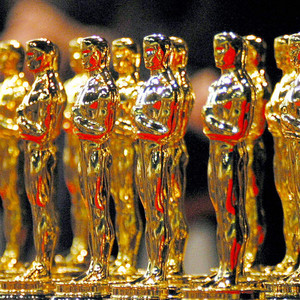
put on by Hollywood movie studios every year in hopes of winning big at the Academy Awards.
And these campaigns come to a head in the weeks leading up to the ceremony.
That's where you start to see people doing desperate things like taking off all their
clothes and floating in a freezing river like Bradley Cooper did for The New York Times
magazine.
Or you see Ryan Gosling climbing the Warner Brothers Water Tower to take a photo for
a trade magazine.
Or you see the border collie from the movie Anatomy of a Fall get treated like a celebrity
and carted around town and brought to charm voters.
That is a campaign strategy.
That says that this time of year, the signs of this massive campaign machinery are all
around us.
Like maybe you saw best actors nominee Emma Stone hosting SNL.
Or maybe you heard her wherever you get your podcasts.
Emma Stone, welcome to Fresh Air.
I love this movie and your performance in it.
Maybe you caught best actor nominee, Killian Murphy of Oppenheimer, profiled on CBS's 60
months, seven months after the movie came out, but perfectly timed to the start of Academy
voting.
2023 was the year the world learned to pronounce Killian, the ancient Irish name.
Or you may have noticed the mysterious words for your consideration, splashed across
movie ads in your local newspaper or on billboards all across Los Angeles.
And maybe you wondered, is it my consideration they're asking for?
No, although it's a nice byproduct, I guess.
The consideration they are asking for is awards voters to consider this movie for awards
voting.
For a long time, I think I have this kind of naive understanding of award shows like
the Oscars.
Like sure, they are maybe a nauseatingly self-aggrandizing celebration of Hollywood.
But at their core, I think I assumed that they were basically meritocratic.
Matt Bellany says no.
When you watch the Oscars, you are watching the end result of an 8-10 month strategic
and very expensive political campaign.
Plain and simple.
Hello and welcome to Plain and Money.
I'm Alexi Horowitz-Gazzy.
Once upon a time, getting a big Oscar nomination or a win could dependably be turned into box
office gold.
But over the past couple decades, the economics of movie making have changed that calculus.
Today on the show, we peek into the Oscars campaign playbook.
Figure out why Hollywood juggernauts are still spending tens of millions of dollars trying
to win Academy Awards.
Support for this podcast and the following message come from Wise, the app that makes managing
your money in different currencies easy.
With Wise, you can send and spend money internationally at the mid-market exchange rate.
No guesswork and no hidden fees.
Learn more about how Wise could work for you at Wise.com.
Support for this podcast and the following message come from Wise, the app that makes
managing your money in different currencies easy.
With Wise, you can send and spend money internationally at the mid-market exchange rate.
No guesswork and no hidden fees.
Learn more about how Wise could work for you at Wise.com.
When voters talk during an elections season, we listen.
We ask questions we follow up and we bring you along to hear what we learned.
Get closer to the issues that people and your vote at the NPR elections have.
Visit npr.org slash elections.
Hats up in this episode.
We mention Amazon, Apple, Disney, Neon films, Netflix and Universal Pictures, all companies
that sponsor NPR or pay to distribute NPR content.
This can be a notoriously secretive part of the entertainment industry.
Give us a sense of how you've come to know what you know when it comes to these Oscars
campaigns.
I have been a journalist covering this industry for more than 15 years before that I was
an entertainment lawyer and in the business and seeing it.
But it is an ecosystem unto itself.
Matt Bellini has spent the past two decades translating the inner workings of Hollywood
for outsiders and insiders alike.
He says the key thing to understand about the Oscars race is that it boils down to convincing
individual people to support your film.
All you're trying to do is get as many votes as you can, solidify your coalition and hopefully
get a victory.
And who exactly is the electorate here?
The electorate ultimately is the 10,000 or so members of the Motion Picture Academy.
These voters are people who've worked in the film industry and who've been invited by
its board to join the Academy.
Matt says that the first phase of the Oscars race, phase one, is all about getting those
voters to nominate your film.
That means targeting specific groups of voters because the Academy's 10,000 or so members
are divided into branches.
Each branch nominates the nominees in their branch.
So editors vote for editors, directors vote for directors, actors vote for actors, except
best picture.
Best picture is voted on by everybody.
So if you are running a campaign, the strategy for phase one is to pick the battles you think
you might be able to win.
Is your client sitting on a potential Best Director Award?
You're going to have to figure out how and where to reach every eligible director in
the Academy to make sure that they have seen your movie.
You'll send them screener links, invite them to star-studded, well-cated in-person screenings.
Then the nominations come out and we enter phase two, where the table has been set and
now you are trying to get people to vote for your candidate to win.
In phase two, Matt explains, every Academy voter is fair game because every voter is now
eligible to vote in every category.
And phase two is all about framing the film with a message.
Something that will make it feel bigger than just a piece of entertainment.
Like you can feel good voting for this movie because it means something.
That's the job of the awards campaigner to take a movie and make it important.
So take this year's front runner, Oppenheimer.
Matt says that film has been sold as...
The big, important Hollywood studio movie that for the good of the business and the good
of the industry, you should vote for this for Best Picture.
They used a quote from a review that said, this is the best movie of the century or something
like that.
We're only a quarter in.
Well, you know, it's an ad.
Compare that to the messaging for the movie Poor Things, whose four-year consideration
ads implore voters to quote, defy expectations.
Kind of an underdog message.
Now, once you have your message, Matt says, the campaigns are then really about using
every ounce of star power and publicity at your disposal to charm Academy voters.
This is why Oscar thirsty celebrities do splashing magazine covers, or well timed
radio interviews, or why they appear at special screenings or talk at Q&As where voters might
be in attendance.
And every chance encounter between the talent and the voters can be incredibly important.
Because sometimes the way people vote can have little to do with the actual film they're
being asked to consider.
For example, the Hollywood Reporter does anonymous polling with individual Academy voters every
year.
It just reveals that people vote for the strangest reasons.
This guy that Hollywood Reporter just did a ballot with.
He says that he voted for Robert Downey Jr.
I'm not kidding, because Downey was nice to him at a party.
Now, if all of this seems like a giant hype machine of recirculating hot air, that is
very much by design.
The Academy Awards were initially conceived in the 1920s in part as a way of flattering
and distracting actors who were flirting with unionization, but also as a way to promote
the industry to the wider world.
For most of the 20th century, it was standard for Hollywood studios to promote their films
and stars for awards, but the amount of money and strategy directed solely with the aim
of winning Oscars was comparatively low.
So to understand how Oscars campaigns transformed into the super expensive, highly competitive
circus we see today.
I want to visit someone who's worked on these campaigns for decades.
Have you been working on any campaigns we might have heard of?
Oppenheimer.
Oh, yeah, I've heard of that.
Tony Angelotti got his start in the 1980s, and since then, he's had a kind of front row
seat to the transformation of Oscars campaigns.
I met him at his office in LA where the walls are covered with framed signed posters from
his different movie campaigns.
Well, in this room, let's see, we're looking at various campaigns that were either winners
or nominated for Best Picture or won a number of things.
Life is beautiful, pulp fiction, frost Nixon, finding Nemo, Ray.
These are all movies I've worked on.
Tony says when he first started, the big studios had viewed Oscars campaigns as a way to
keep the talent happy.
It was just a cost of doing business.
And if you did end up winning or getting nominated for a major category, you could count on
what insiders call the Oscar Bump.
When study found if you won Best Picture in those days, it could mean up to a $12 million
bump at the box office.
But when Tony arrived at a company called Mira Max in the early 1990s, it was already
becoming clear that the company's founders, Bob and Harvey Weinstein were thinking differently
about chasing Oscars.
Yes, the story of how Oscars campaigns blew up is inextricably and unfortunately linked
to disgraced film executive Harvey Weinstein.
How his company used the Oscars to break into the industry.
It was integral to their business plan.
They needed the attention of the awards to make money on these movies.
Bob and Harvey Weinstein's business strategy in the beginning came down to a kind of bet.
It centered on buying and distributing smaller indie movies and foreign films that had
already been made.
These movies might impress film buffs, things like paylay the conqueror or sex lies and
videotape.
But they sometimes didn't do well at the box office.
Still, Mira Max would make a big Oscar push, which went against the prevailing wisdom.
No one's going to take a movie back then that had failed at the box office and campaigned.
Who was going to throw good money after bad, right?
He would do that.
Because as Mira Max discovered early on, if they could campaign aggressively enough to
get Oscar nominations, they could then do a wide release of the film in theaters across
the country and use the nomination buzz to turbocharge ticket sales.
So all of a sudden, if you're getting awards attention for these films, it was easier
for them to get more television sales, airplane sales, international sales, and then came
the ancillary markets like the VHS cassettes, then the DVDs.
It's an endless stream of how a movie could expand on its profit.
By the early 90s, Harvey Weinstein had already started to use the aggressive campaign tactics
and stunts he'd become known for.
For example, as part of the campaign for the movie My Left Foot, the film star, Daniel
De Lewis, testified in Congress in support of the Americans with Disabilities Act.
It was a way to get headlines and maybe align the film with a higher purpose that could
appeal to Academy voters.
And the Oscar goes to Daniel De Lewis and My Left Foot.
Mira Max is bet to use Oscar buzz to turn indie films into box office hits, started
to pay off.
In 1993, they were bought by Disney, and with all that financial firepower, they got more
into the business of actually making films, with a stable of a list talent.
But the campaign season that many see as a turning point where it became clear that Oscar's
campaigns had changed, came in 1999.
That was the year that Mira Max went up against Steven Spielberg's World War II epic,
Saving Private Ryan.
For most of the campaign season, Saving Private Ryan had been seen as the clear frontrunner,
an Oscar winning director telling the story of D-Day.
But just a few months before the Oscars, Mira Max released Shakespeare in Love, this irreverent
romantic comedy about a struggling young William Shakespeare.
Over the next couple months, Saving Private Ryan and Shakespeare in Love waged massive competing
campaigns.
They flooded newspapers and magazines with four-year consideration ads, and made sure their
stars were all over TV.
Tony Angelotti worked on the Shakespeare in Love campaign, and he says winning Best Picture
still felt like this impossible long shot, up until the moment the winner was announced.
Here remembers being in the wings at the 1999 Academy Awards ceremony when Harrison Ford
walked out on stage.
There are five nominated films for Best Picture.
They are.
Harrison Ford announcing the winner seemed like a bad omen, because he'd been the one to
announce Spielberg's previous win for Schindler's list.
Harrison comes up, and I'm 100% sure it's going to be Saving Private Ryan.
100% there wasn't a part of me that thought Shakespeare was going to win.
Harrison is going to give it to Stephen, just like he did on Schindler's.
He reads the envelope and he looks down, he never even lifts his head.
And he says, Shakespeare in Love.
I sort of lost consciousness.
I like my back when against the wall, something had just happened that wasn't meant to happen.
This was alternate reality.
And Tony was not the only one who felt like reality had just shifted.
After the break, a new band of Hollywood outsiders sweeps into town with their sights set on Oscar
gold.
And the campaign circus blows up.
This is my voice.
It can tell you a lot about me, and I'm not changing it for anyone.
In NPR's Black Stories, Black Truths, you'll find a collection of NPR episodes centered
on the Black Experience.
Search NPR Black Stories, Black Truths, wherever you get podcasts.
This election season you can expect to hear a lot of news.
Some of it meaningful, much of it not.
Give the up first podcast 15 minutes, sometimes little less, and we'll help you sort it out.
What's going on around the world and at home?
Three stories, 15 minutes, up first, every day.
Listen every morning, wherever you get your podcasts.
In this country, some truths aren't self-evident.
In NPR's Black Stories, Black Truths, a collection of stories as wide-ranging and real as the
people who tell them, we celebrate the Black Experience for all its soul and richness.
Search NPR Black Stories, Black Truths, wherever you get podcasts.
This is my voice.
I can tell you a lot about me, and I'm not changing it for anyone.
In NPR's Black Stories, Black Truths, you'll find a collection of NPR episodes centered
on Black Experiences.
Search NPR Black Stories, Black Truths, wherever you get your podcasts.
Daryen Woods here.
Commercials use all sorts of tricks to get us to remember their brands.
Surprise, nostalgia, repetition.
In our latest bonus episode, we look at the science behind this.
We're the neuroscientist.
When you're surprised, there's a whole cavalcade of responses in the brain that can help make
the brain more plastic and receptive to whatever information is being processed.
You can check that out now if you're a Planet Money Plus Lister, and if that's you, thank
you so much for your support.
If it's not, it could be.
You could get bonus episodes, sponsor-free listening, and support the work of Planet Money.
Go to plus.npr.org.
Okay, so Miramax's aggressive and successful campaign strategy had set off a kind of arms
race over Oscars.
Miramax and the Weinstein companies took campaigning, and they just turned it into a blood sport.
Entertainment journalist Matt Bellany again.
It was all about winning, and that ethos has informed the past two decades of Oscar campaigning.
Another Hollywood studio started upping their campaign game in order to compete, and many
of the campaign strategists who cut their teeth at Miramax moved on to prominent positions
throughout the industry.
And Matt says that while Oscars' campaigns have gotten even bigger and more expensive
over the last couple decades, many of the revenue streams that made Miramax's Oscar
strategy so profitable have started to disappear.
And the major economic force that's been driving those changes can be boiled down to two
words.
And the biggest thing is that the campaign campaign has been a huge success.
And the biggest success is that the campaign has been a huge success.
And the biggest success is that the campaign has been a huge success.
And the biggest success is that the campaign has been a huge success.
And the biggest success is that the campaign has been a huge success.
And the biggest success is that the campaign has been a huge success.
And the biggest success is that the campaign has been a huge success.
And the biggest success is that the campaign has been a huge success.
And the biggest success is that the campaign has been a huge success.
And the biggest success is that the campaign has been a huge success.
And the biggest success is that the campaign has been a huge success.
And the biggest success is that the campaign has been a huge success.
And the biggest success is that the campaign has been a huge success.
And the biggest success is that the campaign has been a huge success.
And the biggest success is that the campaign has been a huge success.
And the biggest success is that the campaign has been a huge success.
And the biggest success is that the campaign has been a huge success.
And the biggest success is that the campaign has been a huge success.
And the biggest success is that the campaign has been a huge success.
And the biggest success is that the campaign has been a huge success.
And the biggest success is that the campaign has been a huge success.
And the biggest success is that the campaign has been a huge success.
And the biggest success is that the campaign has been a huge success.
And the biggest success is that the campaign has been a huge success.
And the biggest success is that the campaign has been a huge success.
And the biggest success is that the campaign has been a huge success.
And the biggest success is that the campaign has been a huge success.
And the biggest success is that the campaign has been a huge success.
And the biggest success is that the campaign has been a huge success.
And the biggest success is that the campaign has been a huge success.
And the biggest success is that the campaign has been a huge success.
And the biggest success is that the campaign has been a huge success.
And the biggest success is that the campaign has been a huge success.
And the biggest success is that the campaign has been a huge success.
And the biggest success is that the campaign has been a huge success.
And the biggest success is that the campaign has been a huge success.
And the biggest success is that the campaign has been a huge success.
And the biggest success is that the campaign has been a huge success.
And the biggest success is that the campaign has been a huge success.
And the biggest success is that the campaign has been a huge success.
And the biggest success is that the campaign has been a huge success.
And the biggest success is that the campaign has been a huge success.
Keep in mind that Roma's production budget was around $15 million.
Which means Netflix likely spent much more to market the film during the 2019 Academy Award season
than what the film actually cost to make.
You could not walk down the street without seeing a billboard or a bus ad.
They were doing like crazy things with the trades.
Now, as a streaming company, Netflix faced a kind of technical problem
when it came to qualifying for the Oscars.
At the time, the Academy typically required films to open theatrically for at least a week in New York and Los Angeles.
In years past, Netflix had been able to qualify by making deals with some movie theaters.
But they'd gotten a lot of pushback.
And in 2019, they decided to start buying their own movie theaters.
So qualifying became less of a hassle.
And in another example of infrastructure level investment, Netflix decided to basically guarantee
that its four-year consideration ads would be considered by buying up most of the billboards on the Sunset Strip.
Where a huge number of Academy voters, you know, like film executives, actors, writers,
all commute in LA's notorious traffic to get to their offices and film sets.
So if you go down Sunset Boulevard, all the famous gigantic billboards,
most of them are Netflix because they bought them and they used them for their awards campaigns.
Now, some of these moves may sound a little over the top.
But let's take a step back for a moment and think about why Netflix was jumping into the Oscars race.
By offering these big cinematic films from some of the most respected filmmakers in the industry,
Netflix was making a play for market share of the movie business.
On the one hand, they were signaling to the world that their subscribers would no longer need to go to the theatre to experience high cinema.
And on the other hand, they were trying to put streaming companies on equal footing with Hollywood studios in the minds of the film community.
In the end, Roma did pick up 10 nominations and won four best foreign language film and best director,
but they did not win for best picture.
In part, Matt Bellany thinks that's because many Academy voters see Netflix's streaming business as a kind of threat.
For some of these old time Hollywood hardliners, they don't like the fact that Netflix doesn't release movies and theaters.
They just don't like it.
But like it or not, Netflix and its fellow streamers had arrived at the Oscars.
At a time when their models were changing two of the big ways that Oscars can be profitable.
First, the streamers have tipped away at box office earnings,
because you can now watch a universe of entertainment at your house for the price of a single movie ticket.
And second, they've basically replaced DVD and VHS sales.
They've been siphoning away two major components of the Oscar bump that the Miramax strategy relied on.
Now, as there are more entertainment choices, as streaming services have proliferated, and more importantly, as streaming services have joined the Oscar race,
there is less of that business to go around.
And you see film after film being in the Oscar race, and the economics not really matching up.
Which finally brings us to the fundamental question at the core of this episode.
Okay, so if the direct returns from an Oscar nomination or a win are less directly profitable than back when movie theaters and VHS tapes like Reigns Supreme,
then why are all these different companies spending, you know, almost more money than ever to campaign?
Couple reasons.
First, Matt says it's important to remember how these different players in the Oscars race actually make their money.
The streamers, for instance, are at their core technology companies, places like Amazon and Apple are using the Oscars to build up their brands.
They're banking on that Oscar buzz to help them get more people onto Amazon Prime or get them to buy Apple devices.
If you can say we are Apple TV plus home of the Oscar best picture winner, Koda, that translates into subscriptions and viewership, typically.
But this new wave of tech money hasn't proved to be the only way to get Oscar wins and nominations.
Some players are still using a version of Miramax's model to punch above their weight.
Smaller independent studios like A24 and Neon, they've managed to find Oscar's success over the past two years, in part because of the changing demographics of the academy itself.
In 2015, the academy was called out for being overwhelmingly white.
And since then, they've invited several thousand new members to join.
These new members are younger, more diverse, and they live all around the world.
And many of these voters seem to be more sympathetic to smaller independent movies and foreign films.
Right now, about a quarter of the academy does not live in America.
And that is a big change.
And you've seen it manifest in a number of foreign language films, getting nominations and even winning in previous years.
Look at Parasite in 2020. Parasite won Best Picture, and that's the first time a foreign language film is ever won Best Picture.
And finally, there are the major Hollywood studios, who've also had to up their campaign game to compete for A-list actors and directors.
Take the campaign around this year's Best Picture Frontrunner, Oppenheimer.
Matt says that for Universal, the studio, running a robust Oscars campaign is just the cost of doing business with someone like director Christopher Nolan.
Because if Universal's awards team can help push Oppenheimer into the ranks of Oscar winners, they stand a better chance of getting Nolan's next film.
And spending $10,20, even $30 million on an Oscars campaign, that is a drop in the bucket compared to what Christopher Nolan could bring to Universal if he stays. Oppenheimer, for instance, has already grossed nearly $1 billion.
Plus, Matt points out, even if the Oscars bump is less pronounced than in the past, there is still economic value to getting that Best Picture brand halo on your film.
That movie is going to be in the Universal Library forever, and it will be more valuable than other three-hour biopics who did well at the box office, because it will have won Best Picture.
Right. It's kind of lifetime earnings for ever change, if it's in that pantheon.
Yeah. These companies make a lot of money on the old movies, and licensing them out, and putting them in different packages and on different platforms.
So it may take longer these days to recoup the costs of a major campaign than in the heyday of movie theaters and DVDs.
But every time they license or sell the rights to a winning film, they'll be able to collect on that Best Picture premium.
Which is why it seems safe to say that the Oscars campaign circus is here to stay, with or without your consideration.
Coming up on the next planet money, rum, an island paradise, and a scheme that turned two American territories into bitter rivals.
Tell you, Matt, this thing made enemies for us.
It's a story of how hundreds of millions of federal tax dollars wound up in the pockets of some of the biggest liquor companies in the world.
Those were the rum wars. Next time on Planet Money.
Today's episode was produced by Emma Peasley and edited by Jess Zhang. It was engineered by Cine Lefredo and fact-checked by Sierra Wattas.
Alex Goldmark is our executive producer. Special thanks to Nina Gregory, Mundeli Del Barco, and Rose Friedman.
I'm Alexi Horowitz-Gazzy. This is NPR. Thanks for listening.
It's a high stakes election year. So it's not enough to just follow along. You need to understand what's happening so you are fully informed on November.
Every weekday on the NPR Politics Podcast, our political reporters break down important stories and back stories from the campaign trail.
Do you understand why it matters to you? Listen to the NPR Politics Podcast wherever you get your podcasts.
What does it mean to be black in America?
An NPR's Black Stories Black Truths, a collection of stories as varied, nuanced, and dynamic as the black experience.
You'll hear it means everything. Search NPR, Black Stories, Black Truths wherever you get your podcasts.
Listen to lost patients from KUW in the Seattle Times, part of the NPR network.