This message comes from Capital One.
Banking with Capital One helps you keep more money in your wallet with no fees or minimums on checking accounts.
What's in your wallet?
Terms apply. See CapitalOne .com slash bank for details.
Capital One N .A. Member FDIC.
This is Planet Money from NPR.
In 2008, Nancy Skinner was elected to the California State Legislature.
So technically my term began in 2009.
Nancy has witnessed the state's vision for clean energy firsthand.
Soon after she was elected, a bill was being considered to get more of their electricity than ever from renewables.
But there was a problem.
When the sun doesn't shine or the wind doesn't blow, there's no power.
Several people approached Nancy to raise this issue.
We're going to have to figure out how to store it.
And one way to store energy?
A battery. Extra solar and wind electrons that aren't needed on the grid could flow into a battery.
The problem was, though, grid -scale storage wasn't really a thing.
Nonetheless, Nancy was optimistic that eventually it would happen if you created a market signal.
So she introduced a bill requiring utilities to purchase a certain percentage of battery storage when they bought electricity.
Nancy remembers pushback.
That this was just pie in the sky.
This is not real. Like another California pipe dream.
Still, in 2010, the bill past.
Although nothing really happened.
Gridscale batteries remained a pie -in -the -sky concept for years.
And then all of a sudden in 2021, batteries took off.
Hello and welcome to Planet Money.
I'm Cooper Katzmachin.
And I'm Darian Woods.
After years of nothing, Gridscale batteries are now widely used and growing fast.
Basically, the same tech that's in your phone is now helping power millions of homes across America.
How did that happen, and what does the newfound success mean for the grid?
Today on the show, we go on a kind of road trip for electric battery storage.
Two stories from two states.
We'll begin in California, where battery storage first took off in the U .S.
to see how the state supported its wind and solar energy markets.
And then we'll look at how battery storage was put to the test in Texas.
These stories come from Planet Money's sister show, The Indicator, where we just ran a mini -series on batteries and energy.
approval. Savings is available to Apple Card owners subject to eligibility.
Apple Card and savings by Goldman Sachs Bank USA.
Salt Lake City branch.
Member FDIC. Terms and more at applecard .com.
This message comes from Capital One.
Say hello to stress -free subscription management.
Easily track, block, or cancel recurring charges right from the Capital One mobile app.
Simple as that. Learn more at capitalone .com slash subscriptions.
Terms and conditions apply.
Cooper Cats for Kim, producer extraordinaire with The Indicator, you're back from your travels west.
We sent you on a journey to see these batteries firsthand.
I am back indeed from the very sunny California where there are enough batteries to power 13 million homes.
I wanted to go because I have no idea how batteries actually work.
And I hope you learned this on the trip.
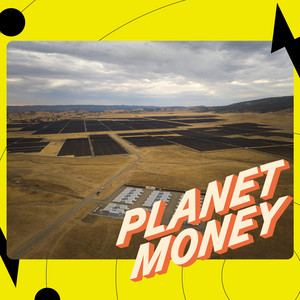
I did. I connected with a battery storage facility that's connected to a solar farm, spread across 2 ,900 acres.
That is huge. It's the equivalent of more than 2 ,000 football fields.
It really did feel huge.
It took a long time to drive through.
The whole operation is called Cal Flats.
It's owned by an independent power producer called Eryvon.
Justin Johnson is the chief operating officer there.
Will you grab my hard hat back there, Anand?
Yeah. Justin gave me a tour of the facility along with Anand Narayanan, Eryvon's senior VP of asset management.
I'm asked for a couple of hard hats.
At the battery storage facility itself, there are rows of white containers not much taller than a person.
I learned this is where it all happens.
It's like a series of shelves.
Imagine server racks, right?
So it's a bunch of server racks.
You have all your PCs, and it's a bunch of PCs stacked together, which have the batteries in them, the inverter inside them.
There's three per door.
So they're stacked.
If you open up one of these doors...
Could we open one of them up?
No. Yeah, we don't have the keys, unfortunately.
That was a pretty fast no, Koofer.
I just wanted to open the door.
I don't see the problem here.
The do not press button was so tempting.
If I see a button, I want to press it.
Either way, they told me that each one of these cabinets holds the batteries themselves.
They're about the size of a large briefcase and are manufactured by Tesla.
The batteries are similar to what would go in a Tesla car, which is also made up of lithium -ion.
And the site is packed with energy, right?
I heard that Cal Flats has enough storage capacity to power 60 ,000 homes over an afternoon.
I know, yeah, it's wild.
Justin told me how this all works.
There's excess solar in the middle of the day, so the power price can be low.
So we can take the extra solar that's produced in the day from the arrays and store it for use later in the evening or when it's needed most when the sun is going down.
That hum you're hearing behind Justin is the HVAC system keeping the batteries cool because they're charging from that solar energy and probably also the heat just from how hot it is outside.
The sun was very strong when I visited.
Yeah, let's move to the shade.
That's like rule number one in solar is don't visit in the summer either.
Sounds like you might have got a bit of a California tan, Cooper.
Yeah, the sun is not my friend as a redheaded man.
So it sounds like you'll be happier when the sun goes down, which is when a reachback system, keeping the batteries cool because they're charging from that solar energy, and probably also the heat just from how hot it is outside.
The sun was very strong when I visited.
Yeah, let's move to the shade.
That's like rule number one in solar is don't visit in the summer either.
Sounds like you might've got a bit of a California tan, Cooper.
Yeah, the sun is not my friend as a redheaded man.
So it sounds like you'll be happier when the sun goes down, which is when Erivon sells the power when prices are high.
Erivon then moves the renewable electrons onto underground cables to transmission lines to the grid.
For this power specifically, Erivon has two customers that buy this power, Apple and PG &E, California's biggest electricity provider.
It's such a big facility.
There's so much power generated that it's hard to find one buyer to take it all.
So we ended up splitting the output to two different buyers of electricity.
That means that somebody's home, say in Fresno, they turn on their lights and were literally anyone who takes PG &E.
Exactly. Yeah, this power is kind of, I mean an electron's an electron.
It's hard to tell where it actually came from once it hits a transmission line.
Alright, so how did we actually get here?
Remember that utility providers were saying to Nancy Skinner that this was some kind of pie -in -the -sky, California dream -in -concept.
Yeah, we put that question to Justin.
Right. So like all the scale and advancements that went in the manufacturing to bring the scale up and then to drive the cost down just weren't there yet to do it economically.
So we're at that really nice intersection where the technology has improved enough, the cost has come down at that intersection where you're meeting the demand at the price they need to be successful where it allows us to build these sorts of plants to serve that need.
And so what we're left with is a totally new way for renewables to interact with the electricity grid.
The power created by the sun or wind can go further now, tapped into whenever a - Reliability in renewables is very attractive to tech companies like Google, Microsoft, Amazon.
They already use solar and wind power, but they have power -hungry data centers to feed things like artificial intelligence.
So they're buying up battery storage too.
Tech companies aren't alone.
Electricity demand is spiking worldwide, due to data centers, but also electric cars, trains, cryptocurrency mining.
Demand is also coming from grid services, like serving as a backup power if there's ever a blackout due to maybe an overworked grid.
I think if you have a solar plant or a battery plant or a combination anywhere in the U .S.
that's ready to be built these days, you can find an offtaker, someone to sell the power.
There's just tremendous demand for it.
In 2019, California had limited battery storage capacity.
In April of last year, batteries could power 10 million homes for a period of time.
Just six months later, that number grew to 13 million homes.
California has a long history of expanding.
its alternative energy sources.
Historically, the Golden State has been way ahead of the curve on renewables, going all the way back to the 1980s with support and subsidies from both Republican and Democratic governors.
But when it comes to the ongoing battery expansion, Justin Johnson says things are just getting started.
But this phenomenon you've seen in California, it's going to occur elsewhere in the U .S.
It's just because California has the highest penetration -level renewables anywhere in the U .S., and it created the demand for storage.
As penetration levels increase throughout the U .S., as they have in Texas and elsewhere, the storage market is going to follow in those areas too.
And everyone's ready for that.
Justin's company, Erivon, believes in grid -scale battery storage so much, it's invested $2 billion in the space.
They already have five facilities in California, including Cal Flats, and it's looking at six more.
now california got where it was because of planning from politicians like nancy skinner but in texas they take a bit more of a hands -off free market rodeo type way of doing things so let's go to texas i'm gonna hop out here and darian let you and indicator co -host wailen wong pick it up after the break.
This message comes from ADP.
ADP knows any new technology, any old competitor, any trendy thing, even a trendy thing that everyone knows isn't a great idea, but management just wants us to give it a try for a bit, can change the world of work.
So whether it's a last minute policy change or adding a new company holiday, ADP designs forward -thinking solutions to help businesses take on the next anything.
ADP, always designing for people.
This message comes from Tourism Australia.
There's something for everyone in Australia all year round.
Hiking Mossman Gorge in the Daintree rainforest is the perfect spring activity.
Melbourne in the summer means music festivals and front row seats to the best shows.
Meanwhile, the changing leaves of Cradle Mountain give peak fall, and wine lovers have their pick of cool climate wines in the Barossa Valley.
No matter when you visit, there's something for everyone all year round.
Come and say good day.
Explore more at Australia .com.
This message comes from Capital One with the Venture X Card.
Earn unlimited double miles on everything you buy.
Plus, get premium benefits at a collection of hotels when booking through Capital One Travel.
What's in your wallet?
Terms apply. On a hot September day in 2023, the operators of Texas' power grid were getting nervous.
The warmth from an unusually hot summer was pushing later into the year.
That meant more air conditioners, more fans, and more staying inside.
But keeping up with that thirst for electricity was a scramble.
The sun was setting earlier as the summer gave way to fall, and that meant less solar power in the evening.
That day, the wind was forecast to be low, so not much wind power just when people got home and turned on their ACs and TVs and ovens.
Also, a few power plants are out of commission.
Watching all of this was Stephanie Smith.
She's the chief operating officer of Eolian, which is a company that, among other things, builds battery plants in Texas.
It was just one of those perfect storms of events where a few went offline at the same time in the DFW area.
For Texans, the deadly winter blackouts from a couple years earlier were front of mind.
And the question that evening in September was, could Texas's grid batteries save the day this time?
Texas's approach to the power grid is rather different than the one in California.
California takes more of a longer -term planning approach.
Project approval is finalized after more assessment of how generators might fit into these plans.
And the state offers long -term contracts to give electricity generators certainty before they invest in, say, a new grid -scale battery project.
Texas, on the other hand, is a more boisterous free market.
It's not that Texas has no regulation or government intervention whatsoever.
It's just comparatively hands -off.
And that can put companies wanting to install batteries at the whim of the invisible hand.
But to Stephanie Smith, the chief operating officer for Eolian, That's the way her battery building company likes it.
We'll have more risk in some cases, but yeah, that's the idea.
More risk, more reward.
In Texas, if the price goes very low, well, then maybe some operators need to stop producing power.
If there's a spike in the price of electricity, great.
That gives operators like Aeolian the incentive to put more electricity onto the grid.
And one opportunity for reward that Stephanie's company saw was in helping top up the grid for short periods of time when a lot of people wanted electricity, but there wasn't enough being generated.
And the company seized that opportunity by building giant battery plants.
Picture a football field full of shipping containers, and you kind of know what a battery project looks like at the scale that we're building.
Imagine rows and rows of those shipping containers filled with hundreds of electric car batteries.
The easiest use case to imagine is overnight, when the sun's not shining on solar panels.
The price of electricity could be high, and Eolian then releases some of its batteries.
And then, when the sun is shining the next day and electricity is cheap, it tops back up those batteries.
But actually, a big part of what Eolian does is what's called ancillary services.
This is kind of like top -up and maintenance to ensure a steady stream of electricity through the wires, regardless of whether it was originally generated by renewable or fossil fuel sources.
By putting a little juice into the wires when it's running low and taking it out when it could get overloaded, the overall grid becomes more stable.
You don't want excitement on a grid, you don't want surprises, and batteries are amazing at doing all of those things and reacting within microseconds of whenever their need is.
And that day in September 2023 was the ultimate test of whether Texas's free market batteries, like the ones that Stephanie's company owns, could stabilize the grid and avoid blackouts.
And you remember these moments because for anyone in the company working on this stuff, it gives you a heart attack every time it happens.
Demand was high, generation was low, at least in the places that needed it.
The power grid operators pleaded with Texans to limit their power use.
They just issued another notice to conserve energy.
As evening came, Texas's power reserves dwindled.
A bunch of wind electricity was being produced in the south, but was overloading the wires, taking them to the north, where a lot of the demand was.
This was a dangerous situation of congestion.
At one point, people in Stephanie's company noticed the signs of a huge gap in electricity needs.
The grid operator sounded an elevated emergency alert, the alert just below the level of potential rolling blackouts.
And beyond just alerts, the electricity market was going ballistic.
A megawatt hour of electricity usually goes for a little over $100.
It was now hitting $5 ,000.
If there was ever any companies to discharge their batteries, it was now.
It was unexpected and went really fast.
And because batteries can react within microseconds, a bunch of batteries jumped in, including ours, and stopped that frequency fall and brought the grid back into balance and kept the lights on.
So that was a fun experience.
Very stressful. Stephanie's got some threshold for fun.
Yeah, living on the edge of the grid.
Ooh, that should be their new company tagline.
Aeolian's batteries drew down their electricity.
Given that high electricity price of $5 ,000, they were presumably rewarded handsomely for doing so.
As the night progressed, Texans turned off their washing machines and microwaves and went to bed.
Partly thanks to batteries, there had been no blackouts in Texas.
It's like the duck paddling.
You guys are the feet paddling very fast, and the duck just cruises along the pond.
That's exactly right.
If we're doing our jobs, nobody knows.
I nearly had a heart attack, but you kept your AC on.
So is this a story about the beauty of prices and visibly guiding company behavior all around Texas?
Is this a free market fable?
Starring a duck and a battery?
Maybe called Friedrich Heuquack?
Oh, Darian, someone get you a book deal.
Well, the debate isn't settled.
Critics argue that Texas shouldn't have been that close to a blackout in the first place, that a little more central planning like in California might have been helpful.
What's more, batteries in Texas are agnostic about whether they're helping smooth out renewable or fossil fuel generators.
More planning could ensure the batteries are specifically focused on helping wind and solar generators, speeding up the energy transition to a low -carbon grid.
Whatever the case, the Texas system is encouraging companies to build a lot of grid -scale batteries.
From basically nothing in 2020, by 2024, the state had enough batteries to power an entire small city for a day.
In the Battery Race of California, Texas is coming second, but it is catching up fast.
Sounds like the tortoise and the hare.
Yeah, which one's the tortoise and which one's the hare?
Ooh, stay tuned. There's a third episode of the Indicator series all about what it takes to produce lithium batteries.
You can find that at the link in our show notes.
And if you want to hear about how this whole series came together, check out our next bonus episode for planet money plus supporters we take you inside our reporting and share some fun stuff that we just couldn't fit into the series to hear that and get sponsor free listening sign up for npr plus just
go to plus .npr .org and finally if you haven't already go follow the indicator from planet money in any podcast app five shows every week always 10 minutes or less these episodes of the indicator were produced by me cooper cats mckim and cory Bridges.
They were edited by Kate and Cannon and fact -checked by Sierra Juarez.
They were engineered by Jimmy Keeley and Neil Tevault.
Alex Goldmark is our executive producer.
I'm Cooper Katz McKim.
This is NPR. Thanks for listening.
This message comes from Tourism Australia.
No matter what you're into, Australia has something for everyone all year round like the Daintree Rainforest this spring, Melbourne's music scene in the summer, and the wineries of Barossa Valley in the winter.
Come and say g'day.
More at australia .com.
This message comes from NPR sponsor Informatica.
Everybody's ready for AI to help with the next big breakthrough.
Accept your data. Get your data AI ready at informatica .com slash AI.
Informatica, where data and AI come to life.
This message comes from ShipBob.
Go global in 2025 using ShipBob's e -commerce fulfillment solutions.
Store your inventory and fulfill orders from over 50 ShipBob fulfillment centers worldwide.
Save money and time.
Go to shipbob .com for a free...