We talked to HBO and they said, well, what do you mean 65 millimeter?
And, you know, I said, well, we were just thinking of it, you know, for the wide shots.
A couple of days into shooting, you know we're doing a wide shot and we go.
What happens if we do a close up on 65?
They loved how how it looks.
So we just kind of figured, well, let's not mention it and keep going.
I think we always knew that her at the beginning is at dawn.
So it's like we start with the dawn so it couldn't be a night.
But also, too, I think that, you know, we had done so much night work in seasons one and two.
You know, I wanted to tell this story in the daytime and I wanted to find the shadows in the light.
It just felt like a nice contrast to what we had been doing.
That could give it a different visual sense and also, you know, could represent California and kind of our collective dream of whatever California may be or may not be.
This is the first season where I wanted to root it in a specific place.
You know, I want people to watch it and go like, oh, that's what California looks like.
You know, even if it's not exactly what it looks like it's, you know it's our exaggeration of it.
My first sort of you know thoughts on it in terms of the season was, you know, giving it a bit more objectivity in the sense that previous seasons our aspect ratio is 178 or 185.
And in this season I wanted to kind of open up the frame a little bit more and feel the world around them and sometimes how small they are.
And it just added to the danger and also just thematically, you know, the idea that we're kind of getting outside of the emotional, melodramatic aspects of psychology and more into what real life is.
And so I was drawn to Westerns specifically and started to look at it through kind of a Western lens.
I mean, we always talk about movies and I know what Sam likes and I know actually, and when we very closely, then I know exactly what he's watching as well.
It's always like dangerous to talk about these specifics, because you're not wanting to look like a John Ford movie obviously, but But you were inspired by some of the courage of those movies.
But yes, we talked about movies and we watched some movies both of us and ended up choosing our little tool set based on those movies, I think.
The first test, it was supposed to be anamorphic 35 millimeter film.
And then we started to test for specific things, 65 millimeter film.
I think it just blew us away.
Yeah, I mean, we talked to HBO and they said, what do you mean 65 millimeter?
You know, I said, well, we're just thinking of it, you know, for the wide shots, you know.
So we did some tests and then they said OK well, you guys, you know we'll let you carry a 65, you know body, you know for shooting.
So then a couple of days into shooting, you know we're doing a wide shot and we go what happens if we do a close-up on 65?
So so you know, then we move the camera in and hbo, just they loved how how it looks.
So we just kind of figured well, let's not mention it and keep going Yeah, so we ended up shooting like 60, I don't know.
Maybe more.
Most of it on 65.
Yeah, and Kodak.
A few years back we had tested a couple of different film stocks that hadn't been released.
And we landed on this particular stock that is just absolutely beautiful.
But it gives it, I think, a very unique look for this season.
Yeah, it's gonna be released now.
It's a new film stock.
I was talking to Kodak and especially like Vanessa Bendetti at Kodak.
Based on our conversations with Sam, we really wanted to have a stock that a little edgier than the film stocks available nowadays.
It's just too good for certain things.
It has an amazing latitude and you have all these looks with it.
But we were thinking about a film stock that has the richness of of, like classical film photography from the 50s, from the 60s, all those colors that kodak had at the time, and technicolor yeah, at the time, and they were like look, we're a small company now, we're not the company we used to be anymore.
But What if you could choose from all the film stocks that are available in stills film but not available in motion pictures?
So I started to take pictures with all kinds of film stocks, and I knew a lot of them already.
And we settled on a certain stock that I don't know if I'm allowed to say, but eventually they got us a few thousand feet of that film.
So we could test it and we thought okay, this is something interesting and something that we could use for this season.
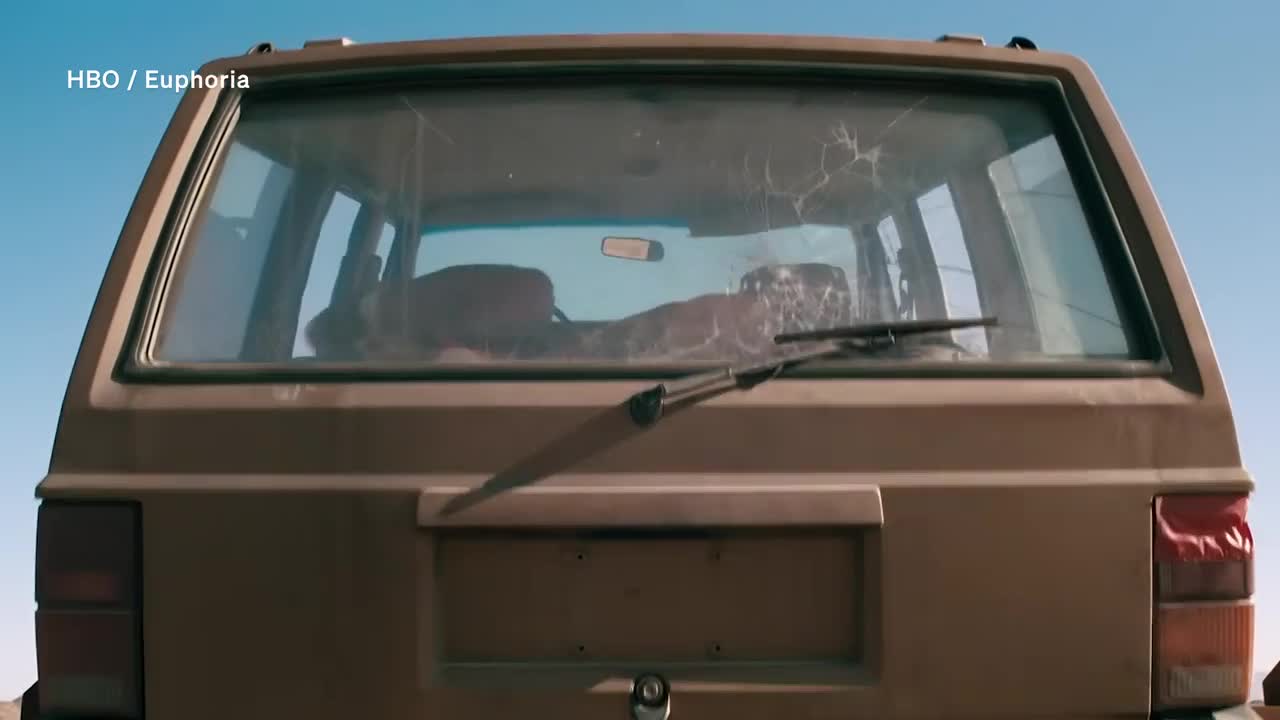
Know, it's a scene in which rue is stuck in the mud out in in chihuahua, mexico.
She gets some like k rail, you know, off of a biker and tries to drive her jeep over the us mexico border wall and back into the states.
Initially in the script it was her crossing a river and she gets swept under and lost.
But when we started location scouting and talking to some of our consultants from the Drug Enforcement Administration, we went to visit their headquarters in Los Angeles.
And on the wall they have all these photos of different busts.
They've done cocaine and money and things.
And then suddenly I see this one picture of a Jeep stuck on top of a border wall.
And I said, well, what happened here?
And oh, some idiot tried to drive a car over the border filled with cocaine.
And I thought, that feels like the kind of dumb thing Roo would try to do.
But then it posed a number of logistical questions and problems, you know, the main one being can we use the real US-Mexico border wall?
Can we try to shoot this on there and drive a car over it?
The answer was no.
So we built 200 feet of a border wall in the middle of the desert.
And you know, Mark had designed this kind of hydraulic system where they could get the car up there and it can start to tilt forward and backwards and Rue would be stuck in it.
And Zendaya is so kind of calm and cool about this stuff, I think, from her work on Spider-Man.
So she's up there on a wire, you know, trying to get out and climb down.
But I think it it just right at the beginning kind of highlights the humor of this season and and the tension of it, so that they're kind of working, you know, in tandem and also it becomes this sort of bigger, i think, metaphor for you know, her journey, where she's just teetering you know one false move and she's, you know, and she's going over the edge.
Biggest is always the sun, because it's we're out in the desert and the sun is moving.
I mean, it's like maintaining a certain angle of the sun and and trying to get these pieces, like trying to be strategic about when we shoot the wide shots, when we can get away with a close-up on a feet with a different, little bit different angle of the sun, and also like how we can get this done in the amount of time.
So we built two walls, basically.
We had like this 15-feet wall and then we had just a 5-feet wall where we could get like tighter shots at the same time with another unit.
We've been on a technocrane up there Your access is limited.
It's also safety.
There's a safety factor to it.
You can't have your whole crew up on top of the wall.
So you're trying to reach these specific positions.
Meanwhile, you're stuck in sand.
You're fighting the elements to get there, but you always want to be in the right angle and get the right shots and get the right movements.
And sculpt the suspense of it.
I think like there's like three sections of this scene.
It has this humor to it, but you also want to keep the tension of it.
So you have her going up the ramp, which you don't exactly know at the time what she's up for.
Then there is the part of it when she's inside the car realizing that she's stuck, and we the audience realize that she's on top of this wall.
So you have this section of it her inside this little casket.
You have that big gag of like, tilting back, she's like spidering the window.
Yeah.
All that stuff.
You're now.
You're inside with her, your camera angles are mostly inside, and then there are these big jumps to these wider shots.
And then there is the moment when she steps out of the car.
Now she's up in the open and we have this big crane shot going from under to over her, like revealing the vertigo of it all.
So playing those strategically, those moments of tension and moments of humor was, I think, kind of the key.
Yeah, and the challenge and also what's fun about it.
Here we go.
It really clicked when I saw it with the mixed sound.
The danger aspect of it, it really kicks in with those creakings of the car.
And up until then, you're watching it like, oh, will this grade work on this shot?
But once you can see it with the mixed sound, that's when you can turn your alertness off.
You know, we had this thing where she walks off into the desert and the car is stuck there.
And then I kept thinking, but what's the button of this sequence?
And so you know, I'm thinking, you know, does the car fall off and they go?
Nah, it's too expensive and all.
So then, you know, I thought well, what if it's like a hawk just comes and flies in and lands on this car and suddenly it teeters back, you know.
So it's now in balance and everyone's going.
Well, you know, how are we gonna?
We're shooting this.
You know, today and tomorrow we can't we gotta train a hawk to do it.
And all this
So I said, well, let's see if we could train a hawk to do it.
So they bring in this hawk and they're saying the hawk is never gonna land.
The wind is blowing this way, 20 miles an hour.
And I said well, I have faith in this hawk, let's just see what he does, you know, and so you know we, we have that nice wide shot and we're, we're going.
You know, z keep walking, keep walking.
You know she's walking, and this hawk takes off and flies right, you know, against the wind, and just lands on it and it just it timed out perfectly where it goes.
Back to things.
So it became this sort of nice button.
And then, when we went into editorial Julio, who I've also been working with for 10 years, added that little whip sound with the Euphoria title card after the Hawk lands.
And it just, it felt perfect.
And it's like, that's the spirit of the show right there.