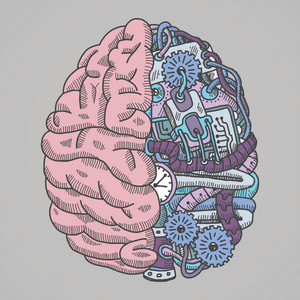
This message comes from Greenlight.
Parents rank financial literacy as the number one most difficult life skill to teach.
With Greenlight, the debit card and money app for families, kids learn to earn, save, and spend wisely.
Get started risk free at greenlight .com slash NPR.
This is the TED radio hour.
Each week, groundbreaking TED Talks.
Our job now is the dream big.
Delivered at TED conferences.
To bring about the future we want to see.
About around the world.
To understand who we are.
From those talks, we bring you speakers and ideas that will surprise you.
You just don't know what you're gonna find.
Challenge you. We truly have to ask ourselves like, why is it noteworthy?
And even change you.
I literally feel like I'm a different person.
Do you feel that way?
Ideas worth spreading.
From TED and NPR, I'm Min 9 Should kill mother.
Brody. In 2017 Nita Farahani and her family went through a devastating experience and it's something she's okay talking about now.
Yeah. So we suffered the loss of Our second daughter.
Callista. she fell ill with RSV and ultimately, after a prolonged hospital stay, she died from complications of it on Mother's Day in 2017.
The day to day became almost unbearable for Anita.
From the first moment that I took her into the emergency room and the weeks and months in the hospital, there were just so many vivid images that really left me with so much trauma.
And I ended up with PTSD because some of the kind of harrowing cries and moments just seared themselves on my brain.
So got to the point that I couldn't sleep and I was pretty dysfunctional.
Nita tried traditional therapy, but it didn't do much.
And then eventually a psychologist helped me through it and was able to help me using exposure therapy, which was also really dramatic.
Basically, I would clench up every time I, you know, tried to go through the exposure therapy and not allow myself to, you know, kind of re -experience the memories.
But that's a really painful process to go through.
At the time, Neda thought, if only there was a way to reprogram her brain so she could stop having these intrusive thoughts and feelings.
And now, there is. Today there are more innovative neurotechnology procedures that are available, that, had they available to me I would have opted for in a heartbeat.
Neurotechnology, devices that let us peer into the brain, monitoring, even guiding its activity.
In Neeta's case, she believes a treatment called decoded neurofeedback might have helped her.
Basically, you know, you can go into a fMRI machine a functional magnetic resonance imaging where, you know, when you recall the memory, it's mapped in your brain.
once doctors know which path your brain is using to recall that memory, they can start using it to do something else.
Take it over. That mapping allows for the development of something like a game like playing basketball to implicitly reactivate those same pathways where by playing that game, which is much more pleasant experience than remembering the trauma, you can essentially overwrite those memories with more positive
associations instead.
So when that path in her brain was activated, instead of feeling total panic, Nita would have felt more relaxed.
And so it's a different, and you know, in many ways, less traumatic way of working through PTSD or working through any kind of traumatic memory or experience.
So that's just one of the different techniques that people have been working on to, you know, have innovative uses of neurotechnology to enable people to work through trauma or to work through different neurological diseases and disorders.
So, the memory is still there, but the visceral -ness of that thought is lessened?
That's right. Yeah.
So, it's... Like any other memory, it's faded more now.
It's not literally reliving it and re -experiencing it.
and PTSD for me, at least, and I think for a lot of people who experience it, you're back there.
You're feeling it all again, all of the overwhelming, you know, fear and trauma that you're experiencing in the moment, you're re -experiencing as the memory kind of takes over again, versus how we usually remember, which is, you know, kind of at a distance with reflection.
It may hurt still, but it doesn't grip us and take us over and put us back there in that same kind of way.
So that does sound amazing and if there was technology that could help with that more easily than the years of therapy that you went through, that would be great, but also it makes me think there are some things that people would like to forget and are we going to get to the point where, you know, like
in that movie, Eternal Sunshine of the Spotless Mind there will be technology that could maybe They, uh, help us do that.
I mean, they're, it could be.
So, Nina Fairhpalney knows a lot about neurotechnology and its pros and cons.
Because she's a law professor at Duke University, studying the ethics of how we should and shouldn't use this technology in the future.
Which she says is coming faster than we might think.
Neurotechnology, in headbands smartwatches, earbuds, will be able to track our health With, including eventually our thoughts And emotions.
Yeah. So I mean, there are brain sensors that pick up electrical activity in the brain, major tech companies are really racing to embed these brain sensors to be like the heart rate sensors and other sensors we have in everyday objects, but tracking something very different, which is being able to tell
if a person is happy or sad or if they're paying attention or their mind is wandering or if they're bored or gauged, tired or falling asleep with the wheel for example.
There are companies like SmartCap that have been selling these EEG head caps that allow a driver or a pilot or somebody who's in mining for example to track their fatigue levels and give more accurate data about whether they're starting to get to dangerous levels of sleep.
I mean this sounds cool, easier, but where do we start to cross the line between technology understanding our intention based on tiny movements or brain activity, to understanding our thoughts and ideas and our feelings.
Yeah. That's a great question.
So there was this amazing study that came out in, I think, April of last year, where using more sophisticated neurotechnology with just these giant MRI machines that a person goes into, So they had people listen to podcasts and then trained a generative AI classifier using GPT -1 to say, like, this is what the person was listening
to, this is what their brain activity looks like, this what they're listening to, this is what their brain activity looks like.
And then had them listen to something and have the classifier try to decode what that was.
And it was with a really high degree of accuracy, able to decode a lot of what the person was hearing or what they were imagining just based on brain activity.
And that again is more sophisticated technology than EEG and you know it's peering more deeply into the brain but other researchers are applying that same concept to try to decode EEG activity.
And so the question of words that cross the line, as you're starting to where everyday devices you know earbuds that are tracking your fatigue levels or picking up your intention production to type or to swipe.
But it's recording that brain activity at all times, and these models are getting more and more sophisticated at being able to decode what that means.
It's not that hard to see that we're quickly moving into a world where what you're thinking and feeling is just as transparent, and can be just as easily decoded, using AI and neurotechnology.
Over the past decade, there have been incredible advances in understanding how the brain works.
Now we are on the cusp of a new era of brain monitoring and enhancement.
And the exciting potential, and pitfalls of merging our minds with machines and manipulating the brain — well, they're mind -boggling.
And so, today on the show, brain hacks.
Neuro -technology that could treat devastating, cognitive diseases, mental illness, and brain injuries.
But, as legal scholar Comeira Farahani warns, also put our most private thoughts and emotions in jeopardy.
And that's the part that I fear that when, you know, we get to this world of brain transparency, if we don't have the right kind of safeguards in place, that that which I think is so fundamental to what it means to be human, what it means to flourish as a human, may suddenly not be our own.
Here's Neeta Farahani on the TED Stage.
This new category of technology presents unprecedented possibility, both good and bad.
Consider how our physical health and well -being are increasing while neurological disease and suffering continue to rise.
55 million people around the world are struggling with dementia, with more than 60 to 70 % of them suffering from Alzheimer's disease.
Nearly a billion people struggle with mental health and drug use disorders.
Depression affects more than 300 million.
Consumer neurotech devices can finally enable us to treat our brain health and wellness as seriously as we treat the rest of our physical well -being.
Regular use of brain sensors could even enable us to detect the earliest stages of the most aggressive forms of brain tumors like glioblastoma, where early detection is crucial to saving lives.
The same could hold true for Parkinson's disease to Alzheimer's, traumatic brain injury, ADHD, and even depression.
But all of this will only be possible if people can confidently share their brain data without fear that it will be misused against them.
You see, the brain data that'll be collected and generated by these devices won't be collected in traditional laboratory environments or in clinical research studies run by physicians and scientists.
Instead, it will be the sellers of these new devices, the very companies who have been modifying our personal data for years.
which is why we can't go into this new era, naive about the risks or complacent about the challenges that the collection and sharing our brain data will pose.
Brain sensors provide direct access to the part of ourselves that we hold back that we don't express through our words and our actions.
Brain data in many instances will be more sensitive than the personal data of the past because it reflects our feelings, our mental states, our emotions, our preferences, our desires, even our very thoughts, I would never have wanted the data that was collected as I worked through the trauma of my personal
loss to have been commodified, shared, and analyzed by others.
These aren't just hypothetical risks.
Take entertainment, a Hangzhou -based company who has collected millions of instances of brain activity data as people have engaged in a mind controlled car racing, sleeping, working, even using neurofeedback with their devices.
They've already entered into partnerships with other companies, to share and analyze that data.
I mean, what's your biggest fear here Anita, what is the worst case scenario if we don't start to put some legal safeguards around this tech?
I think honestly, that human flourishing is at risk here.
I mean, in a minute, Nita Farahani explains how our ideas of civil liberty need to change in this new era of neurotechnology, to protect our most private ideas and thoughts.
On the show today, Brain Hacks, I'm Manautia Zamirotti, and you're listening to The Ted Radio Hour from NPR.
We'll be right back.
This message comes from Gramerly.
89 % of business leaders say AI is a top priority.
The right choice is crucial, which is why teams at one -third of Fortune 500 companies use Gramerly.
with top tier security credentials and 15 years of experience in responsible AI, Grammarly isn't just another AI communication assistant it's how companies like yours increase productivity while keeping data protected and private.
See why 70 ,000 teams trust Grammarly at grammarly .com slash enterprise.
This message comes from Charles Schwab.
Independent financial advisors focus on building a relationship with you that goes beyond your portfolio.
As fiduciaries, they must act in your best interests, always.
The relationship they have with you will be based on transparency and trust, and they are committed to bringing you advice that fits your values.
That why Schwab is proud to support them.
Visit FindYourIndependenceAdvisor .com Support for NPR in the Following Message come from Edward Jones.
What does it mean to be rich?
Maybe it's about measuring life and laugh lines in time.
time. Not by how much you have, but by how often it stands still.
Edward Jones believes the key to being rich is knowing what counts, where dedicated financial advisors provide one on one support meeting you where you are through all of life's changes.
Because what matters most is living a life you love.
Let's find you're rich together.
Edward Jones Member S I P C.
Support for the following message comes from LinkedIn ads.
As a B to B marketer, you know how noisy the digital ad space can be.
If your message isn't targeted to the right audience, it just disappears into the noise.
By using LinkedIn ads, you can reach professionals who are more likely to find your ad relevant.
Target them by job title, industry, company, and more.
Get a $100 credit on your next campaign at linkedin .com slash results.
Terms and conditions up bye.
On the show today, Brain Hacks and The Future of Neurotechnology.
We were just talking to Duke Law professor Nita Farahani.
She's the author of the book The Battle for Your Brain.
She says we need to rethink what our right to privacy even means in this new era.
So, for me, you know, what I've been talking about is our right to cognitive liberty or right to self -determination over our brain and our mental experiences.
and what I mean by that is fundamentally your right to develop your own identity, your own thoughts, to have a space where you're able to reflect, to think, to think about being a child and trying to sort through who you are, and have a third grader, so an almost nine year old, and watching her more
and more come into her own and trying to figure out who she is, All of that happens in this safe space, the safe space of mental reprieve, you know, in one of the most jarring things, I think, in researching my book I came across was, you know, the classrooms in China where children were being required
to wear headsets that tracked their brain activity to track their attention levels throughout the workday.
And the thought of a child, kind of no matter what that longer can or can't pick up, but the chilling effect that that has on the ability to think freely, to be able to develop your own internal sense of self, to you to dare to think differently at an age where it's so hard already to go against the norm.
That's the space that I worry about us eroding.
Getting to a place where people you know are afraid to even think, and if we are afraid to even think freely, the capacity to be able to figure out who you are and to, you know, dare to dream big or to dare to, you know, help us change the path in the course of humanity or your own path in life is compromised.
When I hear you say that, it makes me particularly worried because I think worth talking about technology that will be very subtle ,right?
Like you know when I tap something or I swipe something but if I think something or if someone is collecting a brain wave, right, that seems very discrete.
It's very discreet and hidden and invisible so one of the risks I worry about is a lot of times the, with an emerging technology, especially a whole new class of technology.
It becomes normalized and hidden in ways that we can't see.
So, just to give you an example of that, some of the places in which these EEG headsets have been introduced already, are places like you go into an IKEA store to look at a series of rugs and you're given a headset and told, like only if your brain can prove that you love the rug, are you going to be
able to take it home?
This actually happens.
What? Yeah, they had this marketing gimmick in Brussels where they had these limited edition rugs.
They were worried that the idea of these limited edition rugs was to bring art to people at a reasonable price and people were buying them and reselling them on places like eBay.
And so they ran this marketing campaign where you had to wear a EEG headset while looking at the rugs to prove you loved the rug, and if you did, you could take one home, and if you didn't, you couldn't.
We can laugh at that in so many different ways.
It was clearly a marketing gimmick, but it normalizes it, right?
You encounter technology in situations, novel technology in situations that are non -threatening, that are invisible.
You don't realize what's being collected.
And suddenly, we've breached this category of giving away our most intimate selves without even realizing that we're doing so.
I don't think people realize what that world might look like.
It's not just that you've given up your mental privacy, you've given up the keys to who you are to be able to mentally shape and change you.
That's happening already with algorithms, but the ways in which this can happen so much more precisely and so much more in a customized way.
I worry about a world of more almost brainwashing of people in ways that really limit our ability to think freely.
And lest people have individual control over their brain data, it will be used for microtargeting or worse, like the employees worldwide who have already been subject to brain surveillance in the workplace to track their attention and fatigue, to governments developing brain biometrics to authenticate
people at borders to interrogate criminal suspects' brains, and even weapons that are being crafted to disable and disorient at the human brain.
Brain wearables have not only read but write capabilities creating risks that our brains can be hacked, manipulated .
And even subject to targeted attacks.
We must act quickly to safeguard against the very real and terrifying risk to our inner most selves.
So somebody listening is like, OK.
I don't want that future.
Tell me what to do right now.
What would you say?
Well I'd say the first place that I've been advocating that we address is like a system of laws and that's not just because I'm a law professor.
I think it's because we're starting in a world in which the balance is not in favor of individuals right we've gotten to this place where like the collection of data is the norm and so the balance is in favor of the tech companies and we have to reclaim some of that power for individuals.
And in the past year a lot has happened.
So Unesco has launched a new project around trying to develop ethical guidelines around neurotechnology.
The UN has a committee that's putting together a report on neurotechnologies and its impact on human rights and a lot of the AI legislation that's been happening and the conversations that have been happening, some of those have started to recognize the convergence of these fields and include some,
you know, specifics around the processing of biometric and personal data.
There needs to be a lot more convergence between the AI conversations and the neuro technology conversations.
And so I've been advocating for a global right to cognitive liberty, a right to self -determination over our brain and mental experiences, and that really just....
that's a framework to update three existing human rights, which is our right to privacy, to explicitly include a right to mental privacy, the right to freedom of thought, to more explicitly cover a right against interference and manipulation and punishment for our thoughts, and the right to self determination which has been
recognized as a collective and political right to also be an individual right.
It feels like we are hurtling towards an era and this sounds so dramatic but where man and machine are merging in many ways.
I agree with you. How do you think about it?
So, you know, I think of it as kind of co -evolution.
The way I see that is human thinking is relational.
And so, you know, our technology and our dependents and interdependence on technology is increasing, which means our relational thinking with respect to technology is being shaped and changed with that of technology.
I want us to be more in the driver's seat of that.
Actually knowing what's happening with that co -evolution and to be able to drive that co -evolution, rather than the technology in the hands of a few powerful people deciding how our brains are relationally going to change with respect to that technology.
And I think this is a whole category where it has such a huge implication for how it could reshape what it means to be human, that it's so important that we get it right.
That's Nita Fere041, she's a law professor at Duke University and the author of The Battle for Your Brain Defending the Right to Think Freely in the Age of Neurotechnology.
You can see her full talk at Ted .com.
So to get to a future where all this neurotechnology is even possible, a lot of technical work is being done in labs all over the world, like one that I visited in Brooklyn at a company called OpenBCI.
I was there to try out a brain -sensing virtual reality headset called the Galia.
I'm just gonna adjust this island back here.
It's a helmet -like contraption that is at the bleeding edge of neurotechnology.
And costs about $25 ,000.
And the one in the back also has three active EEG electrodes.
So, what are they collecting then?
They are collecting brain activity.
So, it's mostly academics, medical researchers, and other tech developers who are using the hardware as a starting point for their own projects.
Founder Conor Rosamono walked me through what was happening as I looked at a screen.
And all the sensors attached to my scalp and earlobes began processing lots of data, and building a very rough profile of how my mind works.
It kind of records your EEG, your eye tracking, your heart rate, your heart rate variability, all these things against these stimuli.
The result is a display of all my brain waves.
This is delta, theta, alpha, beta, and gamma.
It's like a rainbow of brain activity that I'm looking at.
I feel like naked, because I feel like you can look at these brain waves and be like, wow, she's a nervous wreck inside, but she presents as like a normal human being.
But we, Connor could not read my mind but he, and the computer, could quickly make sense of the electrical pulses my brain sent out to move tiny muscles.
Let's try flexing or kind of winking your left eye.
And then an incredible thing happened with barely a wink of an eye, I was able to save a virtual cat from evil rats.
All right here I go.
All right, so there's the left, try out right.
There it is, wow nice, try it right again, then you wanna collect those bones.
But you gotta avoid those pesky rats.
All this incredibly impressive complicated.
Starting the UDP stream now.
And expensive technology to play a video game.
I know, but it's early days.
And the goal is to get to the point where we can just think something and have it happen on a screen.
You know, at OpenBCI we're really focused on the path of least resistance to solving the problem, which is decoding the mind, intention, emotions, what makes us who we are and then how do we augment that, how do we improve that?
To do that, Connor and his team are piecing together how the mind works, with the data that's easiest to collect.
fact, like the brain waves that show up when I twitch my eye.
The computer begins to understand that an eye twitch shows a specific wave pattern, and that means move the cat.
Eventually, with a lot of repetition, I could just think about moving the cat, and it would know to move it.
So this is, maybe, the beginning of mind -reading technology.
If we figured out the right way, it becomes the greatest tool that humanity has ever created.
When you say the greatest tool tell me, tell me give me an example, like, to somebody listening, like what do you mean the greatest tool, how is that gonna help me?
Okay. So, if you knew your computer was keeping track of your emotions, your deepest darkest secrets, but also just, like, are you focused?
Do you need an app?
Do you need, uh, to go for a walk?
Are there these kind of like basic things that you don't even know about yourself, but I do because I understand your subconscious better than you do.
We're already there in a lot of ways, but we have the power, the potential with modern neurotechnology and computers to make it even more powerful.
The understanding of our subconscious.
And so when I think about in a real world context, I do want the ability to walk down the street and not have to bend my neck down, and to look at my emails and not have to be like, man, I gotta like open up Google Maps and copy and paste that address from my text thing and then like make sure that it's
Northeast not Northwest.
You know like, could be turning down the brightness of the display in your sunglasses because it's noticing that you are getting too much light or you're being stimulated too much and it knows that, so instead of giving you more of what it thinks you want, it knows that it should be prioritizing what you
need and not what you want.
But that's not what Conner thought the purpose of this technology was when he first started the company in 2013.
He learned a lot just watching how people in other fields used his hardware.
In the beginning, our goal was to build an inward -pointing telescope and to share the blueprints with the world so that anybody with a computer could begin peering into their own brain.
At first, we were an EEG -only company.
We sold brain sensors to measure brain activity.
But, over time, we discovered people doing very strange things with our technology.
Some people were connecting the equipment to the stomach to measure the neurons in the gut and studied gut -brain connection in the microbiome.
Others were using the tools to build new muscle sensors and controllers for prosthetics and robotics.
What we learned from all of this is that the brain, by itself, is actually quite boring.
Turns out, brain data alone lacks context.
And what we ultimately care about is not the brain, but the mind, consciousness, human cognition.
When we have things like EMG sensors to measure muscle activity or ECG sensors to measure heart activity, eye trackers and even environmental sensors to measure the world around us.
All of this makes the brain data much more useful, but the organs around our body, our sensory receptors, are actually much easier to collect data from than the brain and also arguably much more important for determining the things that we actually care about, emotions, intentions and the mind overall.
Additionally, we realized that people weren't just interested in reading from the brain and the body.
They were also interested in modulating the mind through various types of sensory stimulation, things like light, sound, haptics, and electricity.
It's one thing to record the mind.
It's another to modulate it.
The idea of a combined system that can both read from and write to the brain or body is referred to as a closed -loop system or bi -directional human interface.
This concept is truly profound, and it will define the next major revolution in computing technology.
It sounds like you'll truly think that we're at a moment where on and off are not going to be the way we live anymore.
Yeah, there's all these moments where there's friction and there doesn't need to be.
Like, the computer if we trusted it would just accessed that information for us and it would understand that it put the wrong thing in and we're frustrated and it would change it without us changing it for it.
And we're already there, right?
Like, most people feel uncomfortable.
people when their phone is not with them.
That's true. Most people feel like there's a piece of them missing and they're like, where's my phone?
Where's my phone? Oh, my gosh.
Did I lose it? Oh, what does that mean?
That I've lost part of my brain.
There's memories in there that I don't have without my phone.
This is part of our mind right now and it changes us.
It manipulates us. and I think, you know, we're right at this inflection point where we're figuring out how to put real human emotions directly into the computing loop.
When you have products that not just are designed for the average user but are designed to actually adapt to their user, that's something truly special.
When we know what the data of an emotion or a feeling looks like and we know how to make that data go up or down, then using AI, we can build constructive or destructive interference patterns to either amplify or suppress those emotions or feelings.
In the very near future, we will have computers that we are resonantly and subconsciously connected to, enabling empathetic computing for the very first time.
Okay, so tell me what that looks like to you.
Like, if everything goes according to plan for you, what is the potential that you see coming from the technology that you're building?
the potential is immense.
And so, in my mind success is building a new type of personal computer where the owner, the user of the computer has total agency over their own data and how the computer is augmenting their mind.
We're working on what I believe is the greatest challenge of this century and maybe the greatest challenge that humans have ever faced.
which is understanding intelligence, human intelligence.
That's Connor Russimano, CEO of OpenBCI.
You can watch his full talk at ted .com.
On the show today, Brain Hacks.
I'm Anoosh Zamorodi, and you're listening to the Ted Radio Hour from NPR.
Stay with us. to Askboys.
And I'm not going to get to ask, I'm going to get a letter from amp, which is it's not going to be much big enough to a star show?
Or are you of your sort of team Interview bottom line, like where can we have a Supplement today, but that is an PBSP policy.
Well, we committed to serious gambling campaigns, where you wouldn't know that and there was state dancing conditions in the year.
I'm not going toredit it.
principles of leadership to your own unique personality.
Like I would never be the hardcore drill sergeant type.
That's just not my personality, I'm a bit more collaborative, professorial, and so I had to adapt kind of the Marine Corps vision of leadership to my own unique personality and innate traits, if that makes sense.
That was like a jaw -dropping moment when I realized what it means to be a leader.
Like you have to take ownership of those under your command.
Totally and I agree with you.
I think there are qualities we're all born with, but we also have the ability to adapt and be made and learn, etc, etc.
Listen to Tech Unheard wherever you get your podcasts.
The future of AI is built on Arm.
Support for NPR and the following message come from Mint Mobile.
If saving more and spending less is one of your top goals for 2025, Switch to Mint Mobile.
Maximize your savings with plans starting at $15 per month when you purchase a three month plan.
Go to MintMobile .com slash Radio Hour, $45 upfront payment required, new customers on first three month plan only.
Speed slower above 40 GB on unlimited plan.
Additional taxes, fees, and restrictions apply.
See Mint Mobile for details.
This message comes from Home Instead.
Home Instead knows that if you leave home to seek aging care, you leave behind more than just empty rooms.
You say goodbye to the place where you built your life.
So why not stay Home Instead?
With help from Home Instead and their trusted caregivers, you can stay in the place where your memories were made.
Learn more at homestead .com.
Home Instead, for better what's next.
It's the TED Radio Hour from NPR.
I'm Manoosh Zamorochi, on the show today, Brain Hacks.
So far we have talked about technology augharementing the brain.
But what if there were a way to diagnose.
and even treat severe neurological diseases at the molecular level.
These are really severe conditions for which we have a very poor understanding of the biology and no therapeutic insights.
So those are the conditions that we're focusing on.
This is Dr. Sergio Pashka.
He's a professor of Psychiatry and Behavioral Sciences at Stanford University.
He also directs the Stanford brain organogenesis program where he researches neuropsychiatric disorders including the most debilitating forms of autism.
I've been very interested in autism early on when I was actually in medical school and met my first patient with autism and was just like struck by I guess like how little we could do for patients with autism.
And still today is the case, we can still do very little.
We still don't understand the biology very well, we still diagnose disorders the way we were doing in the nineteenth century.
Psychiatry and of course neurology there are to a large extent the only branches of medicine where the organ of interest, the brain, is inaccessible.
So if you have a patient with cancer, you remove that tumor, right?
Or you take a biopsy.
You bring it to the lab.
and you can directly study those cells in a dish, identify where the molecules and the pathways that are abnormal and come up with treatment.
In psychiatry we can't just take the human brain out.
What the past few decades of medicine has indicated is that to find new treatments that are biologically inspired you need access to the tissue and really this has become my mission.
Surgeo Pashka continues from the TED stage.
Today, most of what we know about the human brain comes from studies in animals, typically mice.
And while we've learned a lot from these animal brains, the characteristics that make the human brain unique and uniquely susceptible to disease remain mysterious.
This function in the human brain causes brain disorder, such as autism and schizophrenia and Alzheimer's disease, devastating conditions that are poorly understood.
Nearly one in five individuals suffers from a psychiatric disease.
What is even more striking is that the lowest success rate for finding new drugs is in psychiatry, out of all the branches of medicine.
Likely because until now, we couldn't really access the human brain.
So, you have found a way of studying brain tissue.
But take us back to how you went from being a clinical psychiatrist to one who is researching disorders at the genetic, even molecular level.
Yes, absolutely. And so as I was finishing my clinical training about 15 years or so ago there was a remarkable breakthrough made by a Japanese scientist, Shinya Yamanaka, who reported at that time that under some condition, you could take a cell that is already fully formed and mature and push it back
in time through a genetic trick to look pretty much like the stem cells from which like the entire organism is built.
So this was called cell reprogramming, he received the Nobel Prize for this remarkable discovery a few years after.
And it essentially involves taking skin cells from any individual.
You take a few skin cells or blood cells, putting them in a dish and then inserting in those cells a few genes, just briefly and the dream was at that time that you would be able actually to make human neurons at the bottom of a dish from those patients in a non -invasive way that would not involve taking
any neuron from anybody's brain, but rather reconstructing or reverse engineering this process in the laboratory.
I'm here to tell you that we can finally grow parts of the human brain from any individual, and then build functioning human circuits in a laboratory so -called tradition.
We start by asking a patient to provide a small skin sample.
We then take those skin cells, reprogramed them by putting a series of genetic factors, and pushed them back in time so that those skin cells become stem cells.
It's like cellular alchemy.
These stem cells have almost magical abilities to turn into any other cell type So what do we do?
We take these stem cells, we dissociate them, we then aggregate them so they form spheres or tiny balls of cells We then take those, move them into a special plate where there is a kind of chemical soup And that chemical soup will allow them to grow and transform and turn into a a brain organoid.
And let me be clear, this are not brains in a jar.
These are parts of the nervous system in a laboratory dish.
Each of them contains millions of cells.
And we can even listen as they fire electrical signals.
Or we can watch them as they sparkle with electrical activity.
Or we can image inside and watch the cells as they communicate with each other.
Isn't it remarkable to think that just a few months ago these cells were skin cells in a patient and now there are neural cells at the bottom of a dish that we can study at ease.
Wow! So you can figure out how your patient's brain cells evolved by using stem cells to grow neural cells that you call brain organoids.
I mean, it's amazing.
Can you give me an example of what you have learned from this process?
I know you specialize in a particular form of autism called Timothy's syndrome.
Yes, so for Timothy's syndrome, which is very rare, the patients will not just have autism and epilepsy, but later on, they'll have a heart problem.
them, they're more susceptible to infections.
But the patients have literally just a letter in their genome that has been modified.
And that tiny, tiny mutation in a calcium channel has devastating effects.
And this mutation that causes timbitase syndrome was predicted to cause that channel to stay open slightly longer so that more calcium would get inside the cell but of course nobody has ever seen it, so the first experiment that we've done which is still vividly remember even today, you know, the night
when it actually worked for the first time and I was in the microscopy room and we finally had neurons and could actually see that there was more calcium going inside the cells and that was really, you know, a very exciting moment because it actually showed us that you take the cells from patients you
can see a defect and a biological consequence of a mutation.
We now have literally hundreds of genes that are associated with autism, intellectual disability, ADHD, schizophrenia.
And the reason why that is important is because genes are closer to the molecular pathways.
So they offer a great entry point.
And of course, I am convinced that in understanding the molecules that are important for that?
We're going to discover very important pathways that are causing disease.
So, the forecast for me, if you had a fantasy come true, what would that look like?
Would it mean that you would be able to stop neurons from having dysfunction or problems before they got there?
Would it mean that you would do genetic testing?
I want to understand the implications of what if this might mean for future generations of people.
Sure, so we've helped close to 250 labs around the world to learn this technology.
We're going to start to understand what goes wrong in those cells.
And I can tell you that for Timothy Ingram, in particular, we got such a good understanding that a therapeutic opportunity just arose pretty much naturally out of those experiments.
And so we designed a strategy strategy, where we essentially destroy that RNA that carries the mutation.
And this would likely involve an injection of this therapy.
Of course, we're still far away from that.
But in principle, it would involve injecting a piece of DNA that will modulate that.
Huh, so in theory you could stop the mutation in its tracks, but how old would a person have to be to get a treatment like this?
I mean, I guess in utero?
route. Certainly for neural developmental disorders you want to intervene as early as you possibly can because you know once damage has been done to the nervous system it's going to be probably hard to reverse.
And so it is foreseeable that some of these patients actually will be diagnosed within the first few week after being born.
Which means that one could intervene very early on in the course of this disease.
Where do we start to think about what the ethical implications are of when we intervene in the development of someone?
This is a great uh, this is a great issue and something that actually preoccupies me quite a lot and I spend a lot of time now thinking about the ethical societal implications of the work that we do both in terms of delivering some of the therapies and ...
how early you would intervene For Timothy syndrome, it's likely to be justified to intervene very early, with a therapy like this, especially because these children are very sick, very debited by this condition.
But there will be other neuropsychiatric conditions that are perhaps not as severe, where we're not as good as predicting.
And I think there we're going to have to think very carefully, when do we want to intervene and what are the risks for intervention.
I think that's important to keep in mind.
Because I'm sure there are some people listening who think, you know, we've just gotten to a point in society where we've started to appreciate that people's brains work differently.
The word neurodiversity is used often—that we start to understand that, you know, people come in all sorts of shapes and sizes in ways of seeing the world.
Absolutely, and certainly our goal has never been to try to either change or cure anybody who doesn't want to change in any way.
most of our work has been focused on addressing this devastating conditions of the human brain.
Severe intellectual disability where any improvement, very small improvements, there will make a huge difference because there are no therapeutic approaches that are even close to being curative in those conditions.
I think it's gonna be a exciting time for human neurobiology for psychiatry.
And my hope is that slowly but surely, psychiatry will be moving into a molecular era.
That's Dr. Sergio Pashka.
He's a professor of psychiatry and behavioral sciences at Stanford University, where he directs the Stanford Brain Organigenesis Program.
You can see his full talk at tad .com.
So we have talked about all kinds of brain hacks.
And we want to end our show with a very personal story.
So for people with neurological conditions like epilepsy, the lack of control over their brain can be terrifying.
It's very — it's a crushing limitation, for sure.
This is Kate Faulkner.
She's a sous chef in Colorado.
shadow..., she's also the sister of Ted Radio Hour Producer Rachel Faulkner -White.
And when Kate was a teenager she started having tiny seizures, called absence seizures.
— Where I would shake a little bit and drop whatever I was holding, but I wouldn't black out or fall over, or lose consciousness or anything like that.
— At the time she didn't know what they were.
And she wasn't formally diagnosed with epilepsy until a few years later.
My first big seizure was in the summer of 2017, and luckily it was with other people but I have no memory of it happening.
It was one minute I was sitting at the kitchen table and the next minute I was with a bunch of EMTs who were in the living room with me.
After that, Cated started on medications that were supposed to prevent these seizures and And they seemed to help at first.
But a few years later, she had another big one.
I was driving in my car, which was terrifying.
Luckily, it was the only place on the route that I was driving that didn't have any trees or guardrails and I just kind of drifted across the field.
After that one, I stopped driving.
This kept happening more and more frequently.
I was having seizures alone at home.
I was having seizures at work.
I eventually had to leave that chef job because open flames and sharp knives and seizures are not a great combination.
It's devastating to feel so limited in what I can do.
It's the idea of hurting someone else if I was driving a car.
Like, I don't know how I managed to not hurt anybody.
I am haunted by the idea of what could have happened.
and I really missed having the freedom to go where I wanted and to go hiking by myself or go to the store by myself or go swimming or take a bubble bath.
But in 2023, Kate's neurologist had a new idea to surgically implant a vagus nerve stimulation device.
Which is a battery that goes in your chest on the left side, just underneath the skin, and it's connected to a wire that wraps around the vagus nerve, which is part of the parasympathetic nerve system.
And the battery is programmed by the neurologist to emit small electrical pulses.
It sends an extra burst of electricity into the brain and can increase blood flow to certain areas of the brain and can prevent seizures from happening.
right now my battery is programmed to send a pulse every five minutes for a 30 second interval and the interesting side effect is that whenever the electrical pulse goes off the there it goes so yeah so as you can hear it happening right now the battery is going off the vagus nerve also works around
your vocal cords and so your voice goes a little strange it's not painful at all I remember for the first couple weeks it felt like it was really hard to catch my breath.
Even though I was breathing normally and breathing fine, it's kind of that same feeling.
So that was hard to get used to.
And after 30 seconds then it goes away and it's – my voice goes back to normal.
It's not a cure for epilepsy, and it's not effective for everyone.
But for Kate ... I haven't had a seizure since I got the device put in.
I now have control, to some extent, over a part of my brain that I didn't have before.
The possibility of the freedom that this could potentially bring, like, I might be able to start titrating off the epilepsy drugs that I'm on, which those have some not fun side -effects.
And I want to be able to go through a day without having the intrusive thought of, I'm carrying a 40 -gallon pot of hot soup and thinking, on today's episode of Bad Times to Have Seizures, it'll be wonderful to have that kind of freedom.
I mean, it's an incredible piece of technology.
And I'm, even though I have a weird voice now, it's of I'm optimistic that this'll make life easier and open up possibilities.
That's Kate Faulkner, we are so grateful to her for telling her story.
You can learn more about her condition and treatment at TED .NPR .org.
Thank you so much for listening to our show Brain Hacks!
This episode was produced by Rachel Faulkner -White, Kadie Montel Umb, and Fiona Gearon.
It was edited byz Sanaz Meshkampur, James Delhihousi, and me.
Our production staff at NPR also includes Matthew Cloutier and Tarshana Hada.
R .E .N .Goochie is our executive producer.
Our audio engineers were Robert Rodriguez, Margaret Alaska, and Ted Mebane.
Our theme music was written by Hallam tin Aerer -Blui, our partner, that Ted, are Chris Anderson, Michelle Quint, Alejandra Salazar, and Daniela Balloreso.
I'm Anushha Zamarodi.
And you've been listening to the Ted Radio Hour from NPR.
Support for this podcast and the following message come from Arm.
Aarim CEO René Haas discusses leadership and the role of AI in national security with the head of Palantir's defense business, Mike Gallagher, in the latest episode of Tech Unheard available on all podcast platforms.
This message comes from NPR sponsor Viking, committed to exploring the world in comfort journey through the heart of Europe on an elegant Viking long ship with thoughtful service, destination focused dining and cultural enrichment on board end onshore And every Viking voyage is all -inclusive with no children and no casinos.
Discover more, at viking .com.
This message comes from Warby Parker.
What makes a great pair of glasses?
At Warby Parker, it's all the invisible extras without the extra cost, like free adjustments for life.
Find your pair at warbyparker .com, or visit one of their hundreds of stores around the country.