Discussion keeps the world turning.
This is Roundtable.
You're listening to Roundtable with myself, He Young.
I'm joined by Steve Hatherly and Yushun in the studio.
Coming up, typing all day, staring at screens and sitting for hours.
Sound familiar? Office worker or shall I say professional gamer?
That stiff neck, aching wrist, and tired eyes aren't just minor annoyances.
They're signs that your body is begging for help.
Forget the spa. Let's talk about how hospital rehab might actually be the better fix for office warriors like you and me.
And once the ultimate status symbol, the designer handbag reigned supreme in every fashion forward professional's wardrobe.
But lately, a new trend is taking over.
Going bag free is the era of the handbag over.
Our podcast listeners can find us at Roundtable China on Apple Podcast.
And if you have something of a question you'd like to get some answers and AI or Google or Baidu does not help, then send that question to us.
We'll do the research and possibly discuss it on our show in our heart to heart segment.
So please feel free to send in a voice memo of that question to roundtablepodcast at QQ .com.
You might just hear your voice on our show.
Now let's move on to the next topic discussion today.
Long hours at a desk and constant screen time can take a serious toll.
Think stiff necks, dry eye syndrome, tension, headaches, lower back pain, and even chronic fatigue.
These persistent minor ailments may not require immediate medical intervention, but they can significantly affect daily life and productivity.
In the past, people turned to spas and massage studios for temporary relief.
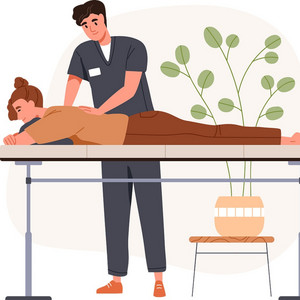
Now, more are discovering that hospital rehabilitation departments offer structured physiotherapy for lasting improvement.
In our discussion, we explored the best ways to manage these minor but real health issues and help office workers stay healthier in the long run.
So, guys, the persistent minor health issues has been something that's been talked about on Chinese social media for years.
So give us an update.
So the reality is that it seems to be younger and younger.
So because of busy work schedule and unhealthy live habits, maybe many young office workers are facing more these kind of minor health issues than before.
Most of them are like spinal or neck problems caused by a prolonged head down poster and prolonged sitting.
and some suffer from the problem after even some bat massage services from massage studios.
So some office employees even joke that after a few years of working, almost everyone suffers from these kind of minor health issues.
And if one does not have any of such problems, he or she may be doubted as not working hard.
If your body doesn't hurt, you're not working hard.
That's terrible. Yeah.
So many of them go to these kind of massage shops and gyms, first of all.
And then many massage therapists lack professional knowledge, which may cause pain or even worsen the condition.
And also, personal trainer fees are high.
And without professional guidance, there is a risk of sports injuries.
And then, as a result, they turned to the hospital's rehabilitation department.
Huh. Interesting. Interesting so up until now your common office ailments you know stiff back sore neck sore wrist I get that sometimes your wrist your hand is always on the mouse which is troublesome in the past people would go to the gym maybe get a trainer that's expensive as you mentioned and then
yeah if you go to the gym and you don't really know what you're doing number one it's easy to injure yourself.
Number two, it's not very efficient.
So then maybe we should go to get a massage, but then the massage places, some are fantastic, but maybe others not so fantastic that might end up doing more harm than good.
So now young people are looking for a new outlet and the new outlet is the hospital rehabilitation department.
What do we need to know about this?
Because when you think common little ailments from the office, like a sore neck or something like that you don't necessarily think head straight to the hospital do you yeah so they you know try to find a kind of a solution in these formal hospitals um or this kind of a rehabilitation departments of hospitals
and it has become more difficult to get a kind of registration for the department in big hospitals and um speaking of this department in hospitals many may think only patients who have already suffered, you know, fractures, just received a surgery or even need to use wheelchairs, have the need to go
there. That's why I said we don't necessarily make the connection about, you know, your common office ailment and heading to the hospital, because typically going to the hospital means for something really serious, like a broken bone or surgery required or something like that.
This is not the case at all.
Yes. However, this department and actually treats a broad scope of health problems you know office workers who suffer from cervical stiffness or wrist pain can get like formal treatment there and rehabilitation doctors will use professional methods to precisely relax your damaged muscle groups and fix
your problems without much pain and maybe give you some of the tips to you know have a better lifestyle and the good gestures or postures when you're working?
I'm thinking physiotherapy, kind of, right?
If you go to these rehabilitation departments, they have a lot of equipment just like a gym there.
And then, as you should mention, the doctors there, they'll offer some help, some guidance on how to help you avoid injuries.
It's not a place that you just go to show off your muscles, right?
It's kind of the opposite of that.
The doctor will typically first give you a basic check of your body and then offer some advice on some type of treatment.
This can be more affordable than a gym membership.
Of course, gym memberships vary in price, don't they?
Some can be very, very expensive, but some can be on the cheaper side.
But oftentimes, this will be more affordable as an option for office workers.
So that's a plus too.
Well, affordable or not, this is subjective.
Yeah, fair point. Yeah, because sometimes going for a spa, it ranges from if you live in a smaller city, maybe you can take care of it with like 50, 60 yuan.
That's possible. Or if you live in places such as Beijing or Shanghai, often you're asked to purchase something similar to a membership, basically a package of like 10 spas or whatnot, and then you average it out.
It's still like 100 or 200 per spa, and that's expensive.
The reason why some say this is affordable is, you know, for a healthy worker who doesn't visit the hospital at all, you get no chance to use up the money sleeping in your medical insurance fund.
But here, if this really, we say it's a minor ailment, but it could be really annoying and causing pain and discomfort for a person.
And this person actually feels like you need to go to the hospital to register, to see a doctor, to get it sorted out.
Then, yes, after going through the medical procedure, you can use those funds.
And if you use it strategically, it can be relatively affordable because you're also using up the money that's already in your fund.
Yeah. And that's why some workers feel that, oh, this is actually one new territory to venture into.
And the best news out of this, I suppose, is that people are getting professional medical help in an area that previously people just didn't know.
That actually, this is a type of medical attention despite the fact that, you know, no major treatment or medical intervention is happening.
And also, you can get that kind of personalized service or one -on -one treatment.
I imagine if you like attend a group class in the gym the train may not have the you know energy to pay attention to each one of you in the group.
But in the this kind of hospitals department you can get a one -on -one treatment with the doctor well without others disturbance.
Also, it's quite suitable for the elderly or those in poor health when you cannot do these intense exercises.
If you're trying to like, you know, get better through all of these ailments, these rehabilitation treatments are relatively gentle and making them ideal for individuals who cannot handle high intensive exercise.
Yeah, that's a great point.
You don't need to be athletic to go and receive treatment like this.
I think this is an important topic because with these types of things, we tend to or I think it's easy to ignore them and let them go untreated.
And if you do this for a long period of time, you know, you go to work every day.
And if you're a person who sits in front of a desk and in front of a computer for many hours of the day, then these problems will will certainly add up.
There was a study from January of 2024 from JAMA Network Open, and they said that people who predominantly sit at work have a 16 percent higher risk of mortality from all causes and a 34 percent higher risk of mortality from cardiovascular disease.
Now, that's a separate study on kind of a different topic, but I just wanted to bring that up as a point that we need to remember that if we are sitting in that kind of sedentary position and that sedentary lifestyle that can come from that, then this is something that we need to deal with.
We can't continue to ignore it.
So having options available to us, like the gym or like a massage, if that's your thing, then that's your thing and that's great.
But if it's not, knowing that these hospital rehabilitation centers are there, knowing that they're somewhat affordable, relatively speaking, it's a great option for people to know.
And this should be on your radar.
So my advice would be if you feel like something's been nagging you, something's been physically bothering you, don't ignore it.
Go check it out. And maybe it's nothing, but it's better to be safe than sorry.
Yes. It's really important to pay attention to your health and have those checked out or sorted out.
I have a little personal anecdote I could share here.
What's wrong? It has nothing to do with the rehabilitation department, but I suppose this could resonate with a lot of office workers.
And trust me, my situation is worse than yours.
Hopefully that will make you feel a tad better.
I had these severe eye issues, like I couldn't see sometimes after like a few hours working in the office.
And then my eyes are so achy and they get so really dry.
Yeah. And I'm just in tears.
Basically, I'm just in tears and I can't even open my eyes.
And that's why I can't see.
So then after this going on for a little while, I decided that it's a dread.
but I'll definitely go to the hospital.
You have to register a couple of days or a week ahead of time.
It's a pain, but it's worthwhile.
So I actually did go to the hospital and the doctor assigned me to a combo of warm compresses, painful massages, and nebulized steam therapy or wu hua xun zheng therapy and then that helped quite a bit wonderful but i had to go through that session after session for two months and then it stopped the always
having teary eyes and then the doctor said this is really common and you've waited too long yeah because some and And also I have allergic issues with my eyes.
But yeah, for office workers, you know, when you have the dry eye issue, you well, I used to just dip the the eye drops, but they stopped working after a while.
And then the doctor advised that if you start having these issues, then it's better to take care of them early on than waiting for it to become a real problem.
just preventative action is always key when it comes to health issues.
And then the first time when I went, it was the first time or the very first few times that I actually activated the funds of in my medical insurance.
And I thought, oh, great, it's not coming directly out of my pocket.
But actually, when these procedures add on to each other, you'll start paying more.
So affordable is a myth.
I mean, yes, for maybe the first few, it looks okay.
But then when the medical bills.
Because you have to go back so many times.
Yeah, at least that was for my my situation.
And that's interesting.
I think for now people are turning attention.
And I think it's really good attention on you know, not only fixing yourself when you absolutely need to, but with these preventative care, or also these, you know, just all these minor treatments that we're talking about today um it's good to take action and um I hope yours doesn't take that many procedures
because when it add up that the pills will add up well done though and about that I think I've also seen some people like wear these kind of um hot thermal eye masks and that will help release some of your maybe stress of your eyes a little bit and then I think that's probably kind of a little bit ed
up, aside from that kind of professional treatment.
Interesting. Interesting.
I'm an expert in this, so I'll let you know.
Okay, so the kind of steam eye masks that you mentioned, they can be useful, especially if you're not really particularly patient.
It's just your eyes are feeling tired and dry, that kind of thing.
But be aware. A lot of them come with fragrances, and then those could be chemicals that you don't want near your eyes so you must be careful with those actually there's a this is also recommended by the doctor the really simple way is just to use towels clean towels at home boil it in hot water and then
dry them and then just put them on your eyes before you go to bed and for like 10 minutes Leave them damp, you mean.
You leave them warm and damp.
Damp on your eyes. And that's like a really cheap and good way to alleviate the issues early on.
And then what I had in the hospital is actually the medical way of doing it, the nebulized steam therapy.
And they incorporate traditional Chinese medicine into the steam.
And then you're kind of wearing these these goggles and then they heat up your eyes with these TCM elements.
And personally, it took too long.
They weren't really very useful for me, but maybe they could be for other people.
But the point, I guess, is that after all your treatments, you are feeling better, right?
It was okay -ish, but the real issue for me was actually I had major allergic reactions to lots of trees.
I'm sorry. I've been, this is not all about me.
I'm just an example when it comes to, you know, these wellness practices, which it's kind of worth your time.
I think you're doing a great thing right now because you're sharing your story.
And for a lot of people who suffer from these office type of ailments, they don't talk about it.
They think I don't want to complain about it.
I don't want to share the story.
But it's important that you do and it's an important thing that you try to get it taken care of.
Yes. And it's important that you like go to see the doctor in time, because I think in this case we are our brains are connected.
You know, speaking of tips of getting rid of all of these minor issues, maybe we'll think of, OK, get more exercise, get quality sleep or like.
stress management and that kind of thing.
But actually, one more important thing is that you need to sometimes go to see a doctor when you are feeling something is wrong with your body.
And for young people, especially with these, you know, persistent minor issues, over time, we start to, as Steve said, get used to them and see them as just a part of our lives.
But in reality, if we like, you know, get checked and treated early, we might not have to deal with these problems at all.
That's a good note.
Coming up, could leaving your handbag at home be the key to a more efficient and stress -free workday?
Yes. No, never. We fight.
Right after this break.
Looking for passion?
How about fiery debate?
Want to hear about current events in China from different perspectives?
Then tune in to Roundtable, where East meets West, and understanding is the goal.
You're listening to Roundtable with myself, HaYang.
I'm joined by Steve Hathorley and Yu Xun.
The latest trend among Chinese office workers, aside from visiting the hospital rehabilitation department, is surprisingly minimalistic.
That is commuting without a bag.
What does this movement say about how we view work status and personal space in today's fast -paced society?
Could the no -bag commute be more than just a fashion statement?
It could represent a fundamental shift in how we navigate both our personal and professional lives.
So is it true that Chinese office workers are ditching their bags?
Okay, so we don't have that kind of like stats here, But Hu Xiu, which is a Chinese technology and business news platform, is saying that in China, a growing number of office workers are choosing to commute without their bags or carrying bags and leading to a kind of various personal experiences.
Some of them are saying they can have a fresh morning and they can get extra sleep and also more freedom to leave work anytime.
You know, I can kind of resonate with that one.
You know, when facing maybe toxic overtime culture, it is quite important that, you know, not carrying a bag makes it impossible for others to tell whether you're just going to the restroom or just secretly sneaking out.
Yeah, we've talked about this on the show before, right?
Extra sleep in the morning, though.
Could that be true?
One individual shared that by not bringing a bag to work, she could sleep an extra 10 minutes.
And she said she just grabbed her phone and her keys and she skipped the bag and she felt more refreshed throughout the day.
So I guess, yeah, if you don't have to prepare your bag and put all those things in there, all the number one important things, number two important things, and then the things that you may or may not need, I guess that could add up to 10 minutes.
Reduced work stress is another reason because you don't have the bag with you.
You can leave your laptop perhaps at the office or leave it at home so it's not attached to your body at all times.
And then people say as well, just letting go of the obsession with your bag gives you a little emotional freedom, too.
And also, there's one internet user expressed, what job is worth me carrying a Chanel or Hermes bag?
I'll save them for another time.
I mean, that just makes sense.
That just makes total sense.
Listen, we don't have much time, so let's fight about this.
Yes, you accept that.
Yeah, go on. The floor is yours.
No, no. The floor is yours, sir, so I can fight against you.
Hold on. My notes are in my bag.
Oh, no, they're not because I didn't bring one to work with me.
They're right here.
I used to bring my backpack to work with me every day and finally a coworker, another foreign coworker, said, why do you bring that every day?
What? And I said, I don't know.
I literally had no reason to bring that with me every day.
I stopped. I was doing it unconsciously it was heavy I was bringing things with me that I didn't need and I finally stopped doing it you feel so much more unexpected freedom for some reason or another there's weight literal weight off your back you're not bringing with you that are things things that are unnecessary
and it's just more efficient I think it's more efficient But don't you need to carry stuff?
Not really. Anything I need to carry, I can put in my coat pockets or my pants.
What do you think, Yusha?
Sometimes it feels, you know, a bit uncomfortable because, you know, I'm so used to walking out or in of my workplace with a bag.
You know, maybe that's the kind of habit that I had from my childhood.
I always carry all of my textbooks in my backpack when I was in primary school.
I don't know why, when even I don't need them.
But, you know, it gives me a sense of, like, routine between work and off hours.
But actually, over time, I got used to not carrying a bag.
And it's actually much more convenient when I can only just put several necessary things in my pocket.
Okay. So that's Team Steve and Team Yushin argument against.
Go on, Team Huyang.
What's the argument for?
Okay, I think the argument for is possibly for a specific type of people that are fashionistas.
For us people, our handbag is an extension of the self.
A handbag becomes an extension of their identity, offering a sense of completeness and confidence.
Without it, you might feel a little bit naked.
And also, the outfit just is not complete.
And that is not allowed.
Like, if you want to save some time in the morning, well, you know.
Wake up earlier. No, not that.
Well, usually before I go to bed, the night before, I put on a little bit of jazz music, and then I take my time.
I put my outfit together from head to toe, accessories, you know, with all my bling, and, of course, my handbag.
And that's like kind of like a ritual.
And actually, everybody's different.
But for me, I feel that this is me getting ready for work and I take my job seriously.
And then when I'm all done with this, I feel like, yeah, I'm ready for a professional day.
And one day, if I stop doing that, it's either there's some paradigm shift in my mind or I've completely lost the pursuit for happiness in life or enjoying life.
I think, yeah, but everybody's different.
And in China, we're seeing that maybe there is a shift in people seeing, I don't necessarily think that those who are not carrying the bag are truly fashion forward people necessarily.
Some people have not been plagued by that mindset of seeing the handbag or the designer handbag as a status symbol.
It's just, you know, not everybody buys into that fashion philosophy.
Sometimes it's just about being more practical.
And also these days, if you, well, I see this as a fashion trend, athleisure, or, you know, just ever since COVID, people have been wearing just more comfortable clothes with big pockets.
And that's where you can place your keys, of course your smartphone.
And, oh, actually some people have even ditched the keys for young people.
They just use the electronic lock at home so they don't even need to bring keys.
And then somebody was like, you know, what about my power bank?
Because that's like a necessity for some people.
But, well, I guess you just need to rely on your newer version of smartphones that have a longer battery life, which you keep fully charged whenever you get tethered to one of those charging stations.
Yeah, you can have a charging station in your home and another one in the office.
Because those big ticket items, they tend to take up the most amount of space in a bag as well, I guess, don't they?
And they tend to be the heaviest items in there as well.
So, yeah, I get everything that you just said.
I don't agree with it, but I get it.
Yeah, it's like I get what you say, but no, Steve.
No, that's not a polish to look.
As China's economic and work landscape continues to evolve, this cultural recalibration, some may say, might be a sign for some deeper changes that happened in people's minds as how they view status, gender roles, personal achievement, as well as how you want to present yourself and survive in the workplace.
And that brings us to the end of today's roundtable.
Thank you so much, Steve Hatherley, and you should for joining the discussion.
I'm He Young, we'll see you next time.