Get the unmissable news stories of the day.
This is the Beijing Hour.
Examining the events that impact and shape China and the rest of the world.
This is the Beijing Hour.
One hour of news and information brought to you every weekday.
Now here's your host.
Shane Bigham with you on this Wednesday, March 12th, 2025.
You're listening to the Beijing Hour, coming to you live from the Chinese capital.
On today's programme, Washington's 25 percent no exceptions tariffs on steel and aluminum products have taken effect Ukraine says it's ready to accept a u .s.
proposal for a 30 -day ceasefire following talks in Saudi Arabia and China plans for China's plan for economic and social development in 2025 in business China's launched a constellation of commercial internet satellites and today we have part eight of the Yellow River Mosaic Series telling stories of people whose lives are intertwined with the famous Chinese waterway, and today we visit new green spaces in a desert along the river.
Now checking the day's top stories.
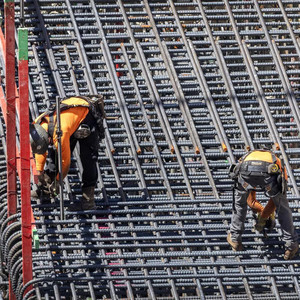
Washington's 25 percent tariffs on imported steel and aluminum have taken effect without any exceptions.
Global stock markets took further losses on Tuesday.
The Dow Jones closed down 1 .1 percent, the S &P 500 shed a tenths of a percent.
The Nasdaq dipped by two tenths of a percent.
Europe's main indices end of the day in the red, as did most in Asia.
The pan -European stock, 600, retreated 1 .7 percent, closing lower for a fourth consecutive session.
The sentiment also extended into Wednesday trading in Asia.
The benchmark indices on the Chinese mainland and in Hong Kong, Australia, and New Zealand, we're all edging down.
Poppy in Putin has more in Washington.
Trump is standing his ground, so to speak, on tariffs and the long term gains that will be reaped in his view for the US economy.
But what we're seeing is a mixed reaction.
Many top CEOs are still playing a waiting game despite the disruption we've seen in the stock markets for a couple of reasons.
Number Number one, they have dealt with Donald Trump before, of course, in his first term, and tariffs were part of his strategic way of operating at that time.
So many companies did diversify supply chains, others are confident that this tariff disruption can be weathered.
But many more are very concerned that the U .S.
could be heading towards a recession.
As we know, markets don't like uncertainty and that's really all we've seen over the last few weeks.
Tuesday was an extraordinary day as onlookers watched this tit -for -tat between U .S.
President Donald Trump and the Premier of Ontario province in Canada, Doug Ford.
Principally, just to recap, we saw the Premier say that he was going to put a surcharge on electricity exported to the United States.
that's essentially a 25 % tariff on those states that import electricity from Ontario, that's Michigan, Minnesota, and New York.
And almost immediately, we saw a huge backlash from Donald Trump saying that if that surcharge went into effect, 50 % tariffs would be slapped on Canada, and that, of course, is a doubling of the 25 % that went into effect last week.
That was Poppy and Putin reporting.
A data from the American Iron and Steel Institute shows that for 2024, Mexico was among the largest suppliers of steel to the United States.
The country was also a major exporter of aluminum scrap and aluminum alloys to Washington.
Experts say Trump's escalating trade war is denting business confidence in the U .S.'s southern neighbor.
Alistair Baberstok has more for Mexico City.
It's all about bad news for North American free trade and this region, in particular Mexican steel and aluminum products, 90 % of everything that Mexico produces in this country is exported to the United States, so it's going to make those metals and those products much more difficult to compete in the international market within the United States.
And that's going to impact the industry here.
and of course just as Canada and China have both imposed retaliatory tariffs Mexico has yet to do so.
It's been able to dodge the first two sets of tariffs achieving month -long extensions each time but how long that can last now that these tariffs are coming into play particularly on these metals is another question entirely.
That was Alistair Baverstark on Mexico's response to Trump's tariffs.
The Chinese Foreign Ministry says the tariff actions taken by the US severely violate WTO rules and significantly undermine the international trading system.
A spokesperson says China will safeguard its legitimate rights and interests.
Meanwhile, Beijing reiterated that any concerns should be addressed through dialogue and consultation on the basis of equality and mutual respect.
It emphasized that China -US trade is reciprocal and cooperation is beneficial to both countries.
The vice chairman of the China Nonferist Metals Industry Association said the U .S.
should be more focused on enhancing its manufacturing technologies.
Chen Shui -sen also said the U .S.
tariffs will have minimal impact on China's steel and aluminum industries.
Yuli has more. On February the 10th, the U .S.
government announced it would impose a 25 percent tariff on all steel and aluminum imports.
Experts note that China's aluminum exports to the U .S.
total around tens of thousands of tons – only about three percent of its overall shipments – and the tariffs will likely have minimal impact.
China's aluminum industry ranks among the world's top tiers.
Instead of imposing additional tariffs on aluminum, the United States would be better position to learn advanced foreign technologies, accelerate technological operating, reduce manufacturing costs, and mitigate carbon emissions." Chen says that U .S.
tariff policies will primarily impact trade ties with major source nations such as Canada and Australia.
These countries would inevitably redirect their shipments to leather markets, thereby exerting profound implications on the existing global aluminum supply chain.
According to the Chairman, the Association will actively develop advanced aluminum alloys tailored for high end equipment manufacturing while enhancing global aluminum industry exchanges and collectively accelerate the sector's transition toward eco -friendly and low carbon practices worldwide.
That was Yuli speaking with Vice -Chairman Chen Shui -sen of the China Non -Ferriss Metals Industry Association.
The European Union will impose counter tariffs on $28 billion of US goods starting April 1.
The countermeasures come the same day.
Trump's 25 % levies on all U .S.
steel and aluminum takes effect.
The EU says it will impose tariffs on another €18 billion of US goods around mid April to match the value of trade impacted by U .S.
tariffs. The proposed new targets could include industrial and agricultural products.
EU Commission president Ursula von der Leyen says the bloc has started to resume trade talks and is ready to engage in meaningful dialogue with Washington.
Australian Prime Minister Anthony Albanese says his country will not impose retaliatory tariffs on the United States despite its failure to secure an exemption from the Trump administration's import taxes on Australian steel and aluminum.
Albanese said the tariffs are entirely unjustified.
Tariffs and escalating trade tensions are a form of economic self -harm.
And a recipe for slower growth and higher inflation.
They are paid by the consumers.
This is why Australia will not be imposing reciprocal tariffs on the United States.
Such a course of action would only push up prices for Australian consumers and increase inflation.
Health Minister Mark Butler said the US tariffs are a disappointing decision.
We think it's a bad economic decision, it's bad for our relationship, it's bad for the US ultimately because we think that the exports we send to them, which are significantly less than the exports they send to us, are good for the US economy, they're good for US industry, they're particularly good for defence, which is an important area of cooperation.
foreign minister Penny Wong said the Australian government will continue discussions with the U .S.
over the issue. Trump's tariff policies have sparked widespread concerns from global investors and businesses.
German business magazine Weibo published an article titled Trump's Major Tariff Blunder.
It criticizes Washington's aggressive measures that aim to reverse the country's trade deficits, which it says will not work economically.
Goldman Sachs has slashed its 2025 GDP forecast for the United States to 1 .7 % down from 2 .4.
It cites the stronger headwinds resulting from the Trump administration's trade policies.
In a survey of small business optimism, the U .S.
National Federation of Independent Businesses says its index fell by 2 .1 points last month while its uncertainty index rose 4 points to 104, its second highest reading.
With more, Philip Hamshear spoke to Zhou Mi, a Senior Research Fellow at the Chinese Academy of International Trade and Economic Cooperation.
They discussed how U .S.
steel and aluminum tariffs will impact the global supply chain, and how intensifying trade disputes could ultimately harm the country's own business and consumer interests.
Yes, we know that steel and aluminum is one of the priorities that travel has done in the first term.
So trying to put more tariffs on those products, I think that is also because they are very fundamental basis for the manufacturing.
We know that the United States has imported so many steel and aluminum from neighboring countries like Canada and also Mexico and they also imported a lot of things from Europe.
So I think these countries, the regions, I rarely have a lot of dependence on the export to the US but if they are going to diversify the I think that is really a matter for them to consider what they can do.
As we can see from the report, the European Steel Association is trying to see that it will have a very large impact on the export of the European countries, especially for Germany.
Jeremy, there are going to be plenty of people out there whose heads are spinning by the current situation.
Trump has been back and forth on his tariff policies.
Sometimes multiple times in one day.
So what exactly do you think are his political objectives here?
First of all, because when he was young, he was in the era when the United States was very strong in the aluminum and steel industry, and also the auto industry.
So, he wants to go back to that era again.
But I don't think that is possible because the world has changed a lot.
And second, I think that he is trying to use these products that not only include it in the steel and aluminum but also in other areas to become very important, the bargain power when they are trying to force other countries and partners to commit some of these promises to the United States.
I don't think that is also useful because that all these other trading partners have already experienced what Trump has done for the term.
They want to be stronger and we can observe from the candidate and also Mexico the attitudes of the government.
We know the United States is the biggest importer of this world and they have imported so many things from other countries.
But it also means that they are not able to do a lot of things.
If they want to have them effectoring back, I think they still need to be patient about that, because they do need a lot of investment and time to reconstruct their industrial sectors.
I don't think that will be even possible in such a situation, because even the investors when they are trying to do more like for investment destination choices, they have to worry about the policy continues and stability.
And the second I think it is also possible for the supply chain to stress on the inflation.
We can see that tariffs is one of the most important cost in the global trade.
So when they have to import something from other countries, you still have to import that.
Although there will be more tariffs, I think that will also be a very powerful and very dangerous thing for United States economy because they have experienced such a high inflation in the previous years.
That was Joe Mee from the Chinese Academy of International Trade & Economic Cooperation.
The US's reversed its plan to double tariffs on steel and aluminum from Canada to 50 % after the Canadian province of Ontario dropped its threat to impose tariffs on electricity exports to three US states.
The back -and -forth between the US and Canada is unsettling financial markets and affecting industries on both sides of the border.
Dan Williams has more from Toronto.
At a vast conference centre on the outskirts of Toronto, hundreds of RV's, or recreational vehicles, are being examined by thousands of visitors.
This is Canada's largest RV show.
This year the show takes place against a backdrop of potentially devastating US -Canada tariffs.
When tariffs were first due to be implemented in early February before a 30 -day pause was announced, RV companies were quick to act.
We cancelled about three million in orders at that time.
On the Monday morning we cancelled everything that we weren't going to get by February 21st and then put them all back in again.
Andrew Thompson is the owner of CanAm RV.
So this is 27 foot international, one of our most popular models actually.
He says for now companies are looking to work around the issue.
We're telling customers that if the tariffs do come in you don't have to take your order.
where we're going to refund your deposit and the manufacturers, we've told them upfront, the stairs come in and we're not going to take any of these.
The RV business in Canada is significant.
Last year the United States shipped almost 30 ,000 units to Canada, worth an estimated retail value of $1 .7 billion.
Although the RV sector is at the mercy of tariffs, other industries could be in for a major boost.
The Canadian Tourism sector is expecting a bump a year ahead, As many Canadians decide to either stay on this side of the border or seek other alternatives.
Part of that is fueled by the drop in the value of the Canadian dollar, while some cite more patriotic reasons.
We're hoping for a very, very solid summer and we believe that we will have a very good summer.
We're hearing a lot of that I'm staying home this summer, we're not traveling, we're going to explore our country and which is – it was just great.
That view is echoed across the Exhibition Hall.
I feel like, myself, I don't want to travel to the States right now, just because of the tariffs, actually going to Europe or Mexico or somewhere is fine, but we do stay in Canada, we do a lot of the camping.
I think a lot of people are looking at the cost of the dollar, everything else and staying in Canada seems to make much more sense.
The threat of tariffs has created uncertainty across many industries, but most here are already making contingency plans.
As Dan Williams reporting, coming up, Ukraine expresses willingness for a proposed 30 -day ceasefire with Russia.
Dive into news like never before with Deep Dive, the podcast from CGTN radio.
Join our global reporters for captivating stories and thought -provoking conversations.
Search Deep Dive on your favorite podcast platforms and get ready to dive in.
16 minutes past the hour.
Ukraine says it's ready to accept a US proposal for an immediate 30 -day ceasefire with Russia after talks with the US delegation in Jeddah, Saudi Arabia.
A joint statement said Washington agreed to lift the pause of intelligence sharing and resume security assistance to Ukraine.
US Secretary of State Marco Rubio says Washington will now take the offer to Russia.
Moscow says it's not ruled out the possibility of of communication with US representatives in the coming days.
Nadia Swann has more from Jeddah.
Here in Jeddah, Saudi Arabia, US and Ukrainian negotiators have come to the end of a very long day of talks.
They met for almost nine hours.
There was progress.
Ukraine agreed to a US proposal for an immediate, temporary 30 -day ceasefire, which could be extended by mutual consent of both parties, as long as the Russians also agree to accept and implement at the same time.
The US is also going to immediately lift that pause in intelligence sharing and restore security assistance to Ukraine, something President Zelensky was very keen on restarting.
Humanitarian efforts were discussed as part of a prisoner exchange.
Detained civilians would be released, and displaced Ukrainian children would be returned.
Both delegations have agreed to name their negotiating teams and begin talks to achieve a tangible, sustainable peace to ensure long -term security for Ukraine.
The United States is going to discuss all these points with Russia.
Ukraine has insisted Europe must be involved in the peace process.
One final note. The US and Ukrainian presence have also agreed to sign a comprehensive minerals deal.
That was Nadja Swann reporting.
EU countries such as Poland and Germany are now considering nuclear weapons as a security guarantee.
Washington's change in tone towards its commitments to NATO has fueled fears of instability in the region.
Johannes Plaszberger sat down with Rafael Grossi, Director General of the United Nations nuclear watchdog, to understand more about the issue.
We have seen Poland's government considering acquiring nuclear weapons and the prospective New German Chancellor talking about coming under the French -UK nuclear umbrella.
Are you concerned about the further proliferation of these weapons at a very tense time?
Well, we are concerned about the stability of the nuclear non -proliferation regime.
People see in nuclear weapons the ultimate guarantor of peace.
It's debatable, whether that is the case or not.
we have been working as a global community in a system which is based on nuclear deterrence, basically with a limited number of countries.
In the case of Europe, that you are mentioning, one has to make a distinction between developing domestic nuclear weapons and, or, having the benefit of other countries, nuclear weapons for protection.
And this, I would say, is not new.
Remember that in Europe, there are American nuclear weapons that have been stationed for many, many years.
Here, the debate is more of whose nuclear weapons should be providing this protection.
Should they be from America or from other countries.
In any case, for the IEA, it is very important in these times of uncertainties in these times of high tensions not to lose the objective of limiting the numbers of countries with nuclear weapons.
That was Rafael Grossi, director and general of the United Nations nuclear watchdog, speaking with Johannes Pleshberger.
Hamas says new negotiations for a Gaza ceasefire have begun in Qatar.
The militant group says it hopes U .S.
Middle East envoy Steve Whitcoff will help initiate negotiations for the next phase of the ceasefire agreement.
Israel has also sent a team of negotiators to Doha, but has yet to comment on the talks.
Hamas is pushed for talks on the second phase, while Israel wants to extend the first phase.
That first phase, which lasted 42 days, expired on March 1 with no framework for long -term peace.
Since then, both sides have largely exercised restraint.
But in recent days, Israel has conducted strikes targeting militants in Gaza setting threats to Israeli forces.
The countries also cut aid and electricity into the Palestinian enclave.
Coming up, China's plan for economic and social development in 2025.
A month after the seismic trade, Halis Luker -Donchic shaping Alleleku's future.
Can he and Lebron James conquer the play -offs?
This week on Sighline Story, we break down Lucas' instant impact in our lay and the dollar's maverick struggle to rebuild trust with their furious fan base.
Subscribe to sideline story wherever you get your podcasts.
Your courtside seat to this NBA drama awaits.
At 21 minutes past the hour, China's national legislatures approved the 2025 plan for national economic and social development at its just -concluded annual session.
The plan outlines primary tasks and policy goals for China's 2025 economic growth, including launching special initiatives to boost consumption, promoting investment efficiency, and unlocking domestic consumption potential.
It includes priorities on expanding high -level opening up and stabilizing international trade and investment.
Commerce Minister Wang Lintao has highlighted areas for cooperation.
From opening to the world, we will promote pilot programs, widening market access in telecommunications, medical services, education and other sectors.
Push for the orderly opening of Internet culture and other sectors, and promote the comprehensive pilot programs of expanding, opening up in the service sector, to spearhead the opening of service sector nationwide, attract more high -quality services and improve the quality of supply.
We will optimize the visa policies of foreigners coming to China, improve the convenience of immigration accommodation payment other services and a cultivate globally oriented education medical service as well as convention education markets.
China's commitment to opening up and building bridges stands in stark contrast to a growing global trend, characterized by a cohort of inward looking politicians refusing to engage with the rest of the world.
To better understand this, we spoke with Chu Chung, a fellow of the Belton Road Research Center under Min Tzu University In China, we have a good stay, and a good method is called the cross river by filling the stones.
China right now is learning its good experience or fill the stones in the freight trade zones.
For example, in Shanghai and Shenzhen, we have the freight trade zone.
In this free trade zone or tax -free zones, we can actually try out lots of different pilot programs.
For example, we can open up the financial services sector, we can open up the publishing houses, open up the education or health care sectors, which in the domestic market, we usually limited the entry of foreign capitals or foreign operation.
But right now we can set up this pilot program so foreign capital and foreign investors can feel very safe to come in in.
But of course, it was, again, they were first starting by investing a very small size or limited the scale of the operation.
But later, if we can prove this all kind of the operation or business can be safe financial financial -wise or legal -wise, and then we can amplify all these operations, duplicate these models into many different regions.
Eventually, we're going to make it very, very open across China.
So this is just a very good experience we have learned in the past.
And the second opportunity, I think, what we can do is we will call it the digitalized services.
In China right now, we have been building many what we call the digital service platform.
And on the kind of platform, we can allow many kinds of the service trade to go back and forth.
And I think, until last year, whole digital service economy size has been reaching about 8 trillion U .S.
dollars. This is our growing double -digit speed, and also the sheer value is already very, very large.
And I think sort of the Belt and Road Initiative and other national cooperation, China is trying to extend its operation and cooperation, obviously the digital service cooperation with many other partner countries for example were building the digital or e -commerce platform with many partner countries with many partner companies tried to build a network to allow this kind of the shopping healthcare research and development and investment services to go across the borders in a safe and efficient way so many of these new opportunities will pop out in the next five years and that will be incorporated
into the 15th five -year programs to come.
That was Chu Chung at Minxet University of China on the country's efforts to step up its high -level opening up and improve trade despite international headwinds.
The future of innovation in science and technology has been a central theme at this year's two sessions in Genkop state, travelled to Shenzhen to meet with Engine AI and learn about its latest robotic creation.
Walking through Shenzhen's technology district, this robot is getting a lot of attention.
The PM01 is the creation of Engine AI, a startup with its office here.
At 138 centimeters tall, and weighing around 40 kilos, the robot can walk continuously for four hours.
It is designed to look physically strong, but the company is also focusing on its emotional side.
It's not just a machine, we want it to feel like a human.
That's why our robot walks naturally.
in the future we hope it's a performance will be such that it will know your joys and sorrows we should be able to achieve this in three years when you chat with it you won't be able to tell if there's a soul inside its body we believe that is what success looks like it's a fascinating talking to the founder of njai I Joe Tong young saying that in the future the ambition is for robots with a soul and he thinks that's only three years away the p1 0 1 made international headlines when njai I released this video of it performing a front flip, a world first, which took the company 10 days of learning
to achieve. The first significant progress is in a power joint itself, it can now support high dynamic movements.
The second aspect is in motion control.
We're currently using reinforcement learning and imitation learning.
These technological methods have greatly accelerated the research and development process.
The robot could have widespread applications, from helping in disaster zones where they can navigate through rubble to firefighting and carrying rescue equipment, but human companionship is the ultimate goal and engine AI hopes to give it cognitive abilities soon.
We believe that the humanoid robot should have an emotional connection with humans, and this way we can say that we have endowed it with a soul.
This is the ultimate point we aim to achieve.
While that ultimate goal may be up for philosophical debate, the speed in which China's robotics companies are progressing in humanoid robot designs is remarkable to see.
That was Jen Pope's stake in Shenzhen.
Quickly in sports, Chinese tennis player Jiang Xinwen has entered the quarterfinals of the WTA -1000 event in Indian Wells.
The Paris Olympic champion defeated Marta Kostiak 6362 in the fourth round, shall next face defending champion Iga Schvantek.
We're at 28 past the hour.
Beijing's down to 4 degrees Wednesday evening.
It'll be overcast in 16 tomorrow.
Nancheng's down to 14, then thunder showers in 16.
Elser and Asia, Islamabad's 12 overnight, then a slight rainfall, and 25 degrees on Thursday.
Vientiane's down to 22, then light showers in 34.
Brongpens 25 this evening, a slight rainfall in 34 tomorrow.
In Africa, Nerobi is getting a slight rainfall in 27 on Thursday, Compateleta's down to 20, then a light rainfall at 25 degrees celsius.
Juba's 27 this evening, then a slight rain in 38.
It's time for a short break.
So far this hour, Washington's 25 percent, no exceptions, tariffs on steel and aluminum products have taken effect.
Ukraine says it's ready to accept a U .S.
proposal for a 30 -day ceasefire following talks in Saudi Arabia, and China's plan for economic and social development in 2025.
Shane Vega -MSD. Stay with us here on The Beijing Hour.
The best military commander is not he who fights a hundred battles and wins every one of them.
The best military strategy does not lead to the decisive case of the enemy's capital city.
Decoding the Art of War will help you understand why there's no art in war and how soon the state undefeatable using the science of war with fun stories and insightful breakdown of famous battles.
Find Decoding the Art of War wherever you listen.
Embark on a century -long journey with CGTN radio's latest offering.
Echoes of Coolia, a gripping audio drama series inspired by real life tales...
...from unexpected encounters to heartfelt reunions immerse yourself in a narrative of love, peace, and enduring friendship.
He's a piece of my lost childhood.
Listen to Echoes of Coolia on radio dot CGTN dot com and all major podcast platforms.
Bing An. Bing. Bing an.
Bing an. Examining the events that impact and shape China and the rest of the world.
This is the Beijing Hour, one hour of news and information brought to you every weekday.
Now as usual Shane bigger than you on this Wednesday still to come in business China's launched a constellation of commercial internet Satellites and today we have part eight of the Yellow River mosaic series telling stories of people whose lives are intertwined with that famous Chinese Waterway to contact us you can email radio at cgt n .com or follow our x account at CGT on radio But first checking the day's headline news.
Here's tan Lu Thank You, Shane.
A Chinese Foreign Ministry spokesperson has expressed hope that all parties involved in the Ukraine crisis will engage in dialogue and negotiation and find a sustainable and lasting peace plan accommodating their concerns.
Meng Ying made remarks after Ukraine said it is ready to accept a US proposal for a 30 -day ceasefire following talks with a US delegation in Saudi Arabia.
US Secretary of State Marco Rubio said they would take the offer to Russia.
Mao said China has advocated political settlement through dialogue and negotiation since the onset of the Ukraine crisis and made efforts to promote peace and dialogue.
A joint statement after consultation between senior US and Ukrainian officials said the truce could be extended by mutual agreement.
It added that the US will communicate to Russia that Russian reciprocity is the key to achieving peace.
The statement also mention that the leaders of Ukraine and the US agreed to conclude a mineral resources deal soon.
China will hold a meeting with Russia and Iran on Friday.
The Chinese Foreign Ministry says the parties will exchange views on the Iranian nuclear issues and other issues of mutual interest.
Chinese Vice Foreign Minister Ma Zhao -shu will chair the meeting in Beijing.
foreign ministers from Russia and Iran will attend the meeting.
A mainland spokesperson says Chinese modernization is a shared effort of people from both sides of the Taiwan Strait, and compatriots in Taiwan have many reasons to join this process and share the triumph of national rejuvenation.
Chen Mihua from the State Council Taiwan Affairs Office said central authorities will continue to encourage Taiwan individuals and enterprises to participate in high -quality development on the Mainland.
The official also said independence is a dead end, expressed the hope that Taiwan compatriots will contribute to reunification.
Chinese authorities have held a ceremony to commemorate the 100th anniversary of the deaths of Sun Yat -Sun, a revolutionary and statesman.
Sun is known to the Chinese people as a great pioneer of the country's democratic revolution for his leading role in the 1911 revolution which ended over two thousand years of feudal rule in China.
Attendees observed a respectful silence and bowed three times in front of Sun's statue during the ceremony in Zhongshan Park in Beijing.
They also presented floral baskets to the statue.
Diplomats, scholars, and business executives have discussed China's high -quality development, scientific innovation, and trade cooperation at a global dialogue in Chicago.
Chinese media group President Shanghai Xiong delivered a video address and pledged to build a media platform for news reporting and information sharing to extend Chinese opportunities to the world.
Chinese ambassador Shifeng said no fools can stop the Chinese people from marching toward a better life, and urged the United States to return to dialogue and work for the sustainable development of bilateral ties." Preliminary data shows that Greenland's opposition Democrats have won the parliamentary election.
The autonomous territory of Denmark saw the Democrats win nearly 30 % of the vote.
The ruling party secured 21%.
With no party winning, an outright majority the Democrats will have to negotiate with other parties to form a coalition government.
Over 28 ,000 registered voters took part in the election on Tuesday to determine the composition of the new government.
The parliamentary election came as US President Donald Trump expressed intention to take control of the island.
Police in Britain have detained the captain of the cargo ship involved in a collision in the North Sea.
A criminal investigation is underway to determine the cause of the incident.
The container ship ran into an anchored tanker off England's northeastern coast.
The two vessels were carrying toxic chemicals including jet fuel.
Authorities are working to assess the potential environmental damage.
Chinese animated blockbuster NERJA 2 is set to hit theatres across Europe.
Media reports say a UK -based distributor has secured the theatrical rights for the film in 37 European European countries and regions, including the UK, France, Germany and Spain.
The film will be in theaters in the UK and Ireland on March 21st, with preview screenings starting on Friday.
Neja too has amassed box office revenue of over 2 billion US dollars.
It has already entered overseas markets including North America, Australia, New Zealand and Singapore.
The film currently ranks the sixth among the world's highest -grossing films of all time.
Right, thank you very much.
That was Tien Luyt with Headline News.
This is Shane Bigham in the Chinese Capitol.
Coming up in business, China's launched a constellation of commercial Internet satellites.
Thanks Shane. Stock market in the Chinese mainland closed lower on Wednesday.
The Shanghai Composite was down over 0 .2%, while the Shenzhen component lost almost the same amount.
The energy equipment and the advertisement marketing sectors were among the top gainers.
Elsewhere in China, the Hong Kong stock market ended lower, with the Hang Seng index down nearly 0 .8%.
Meantime, stocks in Japan remained almost flat.
Hainan Province in southern China has launched a group of 18 low -Earth orbit satellites for commercial Internet Constellation space sail.
The China Aerospace Science and Technology Corporation says the satellites have entered their preset orbit.
This mission was the inaugural launch from the site's number one launch pad on Hainan Island.
It signifies the dual -pad readiness of China's first commercial spaceport for future missions.
The Governor of Hainan says the island province is looking to drive development by cultivating seas, diving into deep -sea exploration and blasting off its aerospace sector to new heights.
Liu Xiaoming outlined Hainan's strategic focus and sector's pivotal roles in shaping the Southern Province's economic landscape.
Liu says the island is aiming to advance the future development of its seed industry.
70 % of China's agricultural seeds are bred and cultivated in Hainan.
It's called the Nanfang Silicon Valley.
Because these seeds are as crucial as chips, types.
Seed projects play a vital role in our country's food produce and food security.
The key is whether seeds can be high yielding, stable and of good quality.
Liu also says the aerospace sector has been developing rapidly in recent years.
The Wenchang spacecraft launch site, also the Hainan Commercial Spacecraft launch site, is China's first civilian -built, operated and managed launch site.
Starting in 2022, we began to build two commercial space launchpads, which became fully operational in 2024.
On November 30 last year, the long March 12 rocket successfully lifted off for the first time from Launchpad 2.
With nearly 2 million square kilometers of ocean under its jurisdiction, Hainan has been at the forefront of deep -sea exploration.
The governor says two submersibles known as the Deep Sea Warrior and Stryver have played crucial roles in this endeavour.
China's railways transported over 620 million metric tons of cargo in the first two months of the year, an increase of 2%.
The state railway group says the industry has been working to optimise transportation services and improve efficiency.
In January and February, railways handled over 300 million metric tons of coal.
Railway passenger trips rose 4 .7 % to surpass 720 million, heating an all -time high.
Official data shows the business receipts indices of Hong Kong's financing, insurance and transportation industries showed double -digit increases in 2024.
fall. The transportation industry rose 14%, while the financing and insurance sectors each climbed over 12%.
According to Hong Kong's regional government, service industries as a whole should continue to expand.
It says steady economic growth globally and for the mainland economy should provide support to businesses.
Hong Kong also says improved sentiment locally in the financial market and sustained growth of employment income, together with initiatives to promote economic growth and development will continue to bode well for various services sectors.
And finally, Egypt's annual headline inflation declined to 12 .5 % in February, from 23 .2 % in January.
A government report attributes the decline mainly to an 8 .2 % decrease in vegetable prices.
Prices of water, electricity and gas remain fixed.
Egypt seeks to reduce its inflation rate to below 10 percent by the end of the year.
Alright thank you very much, that was Wang Zihang with Business.
If you're listening to The Beijing Hour just ahead, we have part 8 of the Yellow River Mosaic series telling stories of people whose lives are intertwined with the famous Chinese waterway.
It was a barren, lifeless land for hundreds of years.
It could bury the farmland.
The house was surrounded with sand.
It fueled every nook and cranny.
However, the desert landscape is vanishing from the map thanks to the afforestation efforts of many people.
One of them is a 100 -year -old man who created a green miracle in the depths of Maos desert.
I hope I can live longer to see the land turn increasingly alive.
This is the very first pop door my grandpa planted.
Follow our reporter's footprints by the Yellow River and hear the story of The Old Man and the Desert in episode seven of our 12 -part series, The Yellow River Mosaic, the Old Man and the Desert.
At 42 past the hour, you're listening to The Beijing Hour.
We continue with our special series, The Yellow River Mosaic.
The Mu 'as Desert, one of the four major deserts along the Yellow River, was once a lifeless expanse.
Well now it's turning green thanks to decades long effort by the locals to combat desertification.
In this episode titled The Old Man in the Desert we meet a centenarian who spent his life planting trees in Jingbian, the first county in Shanxi Province, to stop discharging silt into the Yellow River.
Here's Wu Zhia. September 25, 2021, at the southern edge of Mo's desert, the middle ridge of the Yellow River.
The 100 -year -old man we'll meet today lives in the depths of Mozi Desert – one of the four major deserts along the Yellow River.
His closest neighbour lives eight kilometres away in the 200 household village in Jingbian County, along a major tributary of the Yellow River.
Coming off the main road, after a 40 minute drive from the county town, we drove for another 20 minutes on the bumpy single -lane dirt road into a vast expanse of rough, sandy terrain.
Xiaofei, my colleague and cameraman, said he would not have the guts to travel in this area by himself.
You'd completely lose your sense of direction.
The roadside view had changed from farmland to endless grassland and patchy shrubs.
Now and then, we saw young poplars and Scotspines.
Then a house, a house in the middle of nowhere, came into view.
As we approached, we saw an old man kneeling down by the house.
He was digging a hole with his bare hands.
Snatching a deserted statue, he planted it in the hole, and backfilled it.
He stood up slowly and stormed firmly on the sand around the sapling.
It may grow into a tree you never know.
Our guide Go Shi introduced us to Go Chen Wang, the centenarian, who's devoted his life plonking trees on this land that's constantly threatened by desertification.
We exchanged the greetings.
Wearing a white scrub hat, the short, brown -faced old man looked much younger than his age.
Though his tension prevented him from speaking clearly, his voice was loud and powerful.
Have you seen the publas?
Because I planted them more.
My grandpa has been doing one thing in his life, planting trees.
51 -year -old Guo Jianjun joined his grandpa to plant trees when he was a teenager.
In Mongolian, Mausu means poor water.
Located at the southern border of Mozu Desert, one -third of Jinbian county was covered by sand half a century ago.
We had sandstorms all year round.
Spring was the worst season.
Sometimes, you could barely open the door in the morning with all the sand piled up out in front of it.
They could also bury the farmland.
Inside the house, Guojianjin showed me a fade -in.
black and white photo of three people walking down a sand dune.
Each held a shovel in one hand and tree saplings in the other.
He said his grandpa started planting trees in the 1970s, for very simple reason.
We needed firewood to survive.
There was none. Guo Qiang Wang was among the first of his fellow villagers to contract a piece of land in the desert in 1984.
Guo Xu, our guide, said he was then a primary school student.
People from all walks of life were encouraged to plant trees in the 1980s.
No matter if you were a student, a worker or an official.
When I was a kid we were surrounded by encroaching deserts.
The land was lifeless.
Now many parts of the land have turned green.
Kids nowadays don't even know what a real desert looks like!
Walking around the once arid land that the family has been walking on for decades, we saw clusters of bushes, grass and wild flowers as well as poplars and got spines.
You can still see barren sandy areas but mostly plants.
A large poplar tree caught my attention.
This is the very first poplar my grandpa planted.
It came at the expense of our hog.
Looking up at the tree, Guo Zhen Jin tried to hug it.
It's impossible to wrap your arms around it.
We were so poor at the time that my grandpa decided to sell our hog to buy saplings.
But we raised it to provide the family with an entire year's worth of meat and oil.
My grandma was mad at him, but couldn't stop him.
So, we ended up without eating meat for the entire year.
Gucheng Wang sold the hog for 600 yuan and bought 1200 poplar saplings in 1985.
Only one of them survived.
Grandma and their children complained a lot and asked him to quit planting trees.
But an overjoyed Gucheng Wang thought differently.
My grandpa exalted, wow this one survived, poplars can grow in the desert.
He was so encouraged that he continued to plant poplars in the following years with an ever increasing survival rate year by year.
Next to the large poplar tree is an old well that has run dry.
We dug the well in 1989.
We rented a chain dozer to deliver water pipes.
It took half a month to bring 20 pipes here.
The well enabled us to get water 19 meters underground.
The yield was not great, and each time we had to wait for hours for a bucket of water to befilled and drawn from the depth of the well, but we found clean and quality water in the deep desert, so we stayed.
One year later, the family built a house across the well.
We built the house to save commuting time.
During the tree planting seasons, our fellow villagers came to help plant trees, and we paid them back with firewood.
Twenty men slept in the two rooms on the east side.
The kitchen was in the middle, and women slept in the west wing.
Before the house was built, Grandpa had to walk one and a half hours or more from our village house into the desert.
Carrying saplings, food and water on his shoulders, he departed at 6 .30 in the morning and didn't come home until nine in the evening.
Chiang Nin - RM2's wife married him two years after the house was built.
She said she was so scared she cried upon arrival.
The house was surrounded with sand, it filled every nuke and granny.
Growing vegetables was impossible due to water scarcity.
There was no electricity.
The wind was so strong.
that it always blew away the newly planted saplings, and we had to replant them again and again..
In case some survived, Grandpa would urge us to take the best care possible of them.
I asked Gao Zhenzhiung whether he ever thought of quitting.
Silent for a little while, the man in his 50s said he did think of leaving.
I thought I was still young and didn't want to plan previews for the rest of my life.
In fact, I left once, but stopped halfway.
I thought, if I were not there, my grandpa, who was already in his 70s, would struggle just trying to get drinking water.
So I came back. That was a life changing decision.
Food Engineering now pays his fare villagers to plant trees using a big tractor to carry saplings.
Trees have a lifespan.
My grandpa planted poplars.
They have a life span of 30 to 40 years.
They are growing very old now, and I am replacing them with scotspines.
You can expect scotspines to live for up to 200 years.
In addition to planting trees, Guojianjing keeps two dozen cows and over a hundred sheep with the grass growing from the grove.
At the beginning of 2021, the family hosted a visitor from Iran.
Out of curiosity, he came to see what we were doing here.
He walked around and said, it's incredible to see trees growing in this place.
Bringing the deserts under control, the villagers have started to raise cattle and grow vegetables.
The sandy soil is good for growing carrots and potatoes.
Some of the produce has been exported to Japan, South Korea and the Southeast Asian countries.
Guo Shui, our guide, added that their average income per capita is now 19 ,000 yuan, or about 2 ,800 U .S.
dollars. That's 40 percent higher than that of Shanxi province.
He said the ever -improving living conditions have attracted an increasing number of people from neighbouring towns and provinces, to make a living off the land.
After having lived in the old house for two decades, the Guo family moved to where they live now, which is a 15 -minute walk from the old residence.
The new house covers an area of about half of a football pitch.
Its west courtyard is lush with grass and flowering garden cosmos.
The shed for cows and sheep is located to the east of the house, with a small vegetable garden next to it, growing tomatoes and pumpkins.
To the west is what Guojianjun called an experimental field for cash crops.
Rolls of raspberries have been neatly planted there with some bearing fruit With tears in his eyes the centenarian praised his grandson.
My grandson has done a better job than I have.
I hope I can live longer to see the land turn increasingly alive.
I will go all out to plant more trees with my kids next spring." Guojinjun said he is determined not to let his grandpa's efforts fail.
I am in love with the land.
My grandpa taught me to stick to the thing you've decided to.
He has set a good example.
This place is still a dry, sandy area.
If we stop taking care of it, it will turn back into desert.
On our way back, Guo Xi said every year the locals from all walks of life would follow the tradition to plant trees on March the 12th.
On the national tree planting day, he proudly added that Jingbian County has stopped the My Grandpa passed away!
On the last day of March 2023, Guzheng Wang died at age 102.
We dedicate this story to the memory of the old man who has inspired hope and courage to challenge an extreme environment and heal the land.
That was the Old Man In The Desert from our multimedia series, The Yellow River Mosaic.
You can also visit Radio .cgtn .com for more videos and photos from this series.
A 58 pass the hour check in the forecast before we go for the day and Beijing's down to four degrees Wednesday evening.
It'll be overcast in 16 on Thursday.
Nan chung is down to 14 then thunder showers in 16.
Elsewhere in Asia is Lombavad's 12 overnight then a slight rainfall in 25 degrees on Thursday.
Vientiane's down to 22 then some showers in 34 but on Penn's 25 this evening then a slight rainfall in 34 degrees.
In Africa Nairobi will see a slight rainfall and 27 degrees on Thursday.
Compile us down to 20 then a slight rain in 25 degrees.
Chuba's 27 overnight then a slight rainfall in 38 degrees Celsius.
And that's it for this edition of the Beijing Hour, making news today that Washington's 25 % no exception tariffs on steel and aluminum products have taken effect.
When we took a look at China's social and economic development plans for 2025.
On behalf of the staff, this is Shane Bigam in the Chinese Capital, hoping you'll join us for the next edition of the Beijing Hour, and open a window to the world together.
Take away Chinese where you can take some Chinese away and experience progress day by day.
Take away Chinese. We will promise you a difference.
Hello everybody. Welcome to Roundtable coming to you live from Beijing.
Roundtable! Roundtable!
Connecting China and the world.
We bring you fun and timely discussions about what's affecting our lives everywhere, everyday.
Tune in to Round Table, where the East meets the West, and understanding is the goal.
From North to South, East to West, people in China are chasing their dreams and leaving their mark.
Want to know how they beat the odds and make a difference?
footprints brings you the true life stories of their journeys.