Discussion keeps the world turning.
This is Roundtable.
You're listening to Roundtable.
With myself He Young, I'm joined by Steve Hatherly and Yuxuan in the studio.
Coming up, Meet a generation that swears by herball remedies and won't give up late nights.
Gen Z is all in on outdoor sports, cultural experiences in Yangtzeung or health maintenance in Chinese, but on their own chaotic terms.
Is this the ultimate balance, or just a creative way to reinvent their own lifestyle?
And you've muted your phone, tucked it away, and sworn to concentrate.
Yet here you are, checking for notifications again.
Turns out, the quieter your phone, the louder your curiosity.
Why do we keep reaching for it, even when we've chosen to disconnect?
Our podcast listeners can find us at Roundtable China on Apple Podcast.
Now let's move on to the next topic discussion today.
Chinese Gen Z and younger Millennials, those born in the 2000s and 1990s, might be cycling to bars one moment then sipping wolfberry tea the next.
Culture. Wellness. Today's young Chinese are spending on them all, but they are also fully embracing their vices, just as passionately, living it up one minute, detoxing the next.
Enter Yang Sheng, the Chinese self -care philosophy focused on health and longevity through balanced traditional remedies and mindful habits, traditionally associated with older generations.
But now, younger folks are giving it a twist.
Does their combination of wild nights and wellness routines show that taking a punk approach of self care is the way to go?
Actually a few years ago, I remember this term first surfaced, and today I think we're seeing it being leveled up in some shape or form.
So tell me, how health conscious are young people these days?
Oh yeah. So this kind of concept, Yangsheng, or health maintenance or traditional health and wellness, once actually associated with older generations and now it is embraced by a lot of Yang people from their dietary choices to skincare and fitness routines, they actively pursue a kind of healthier or kind of slow and traditional lifestyle to make themselves healthier.
More people are talking about it, more people are practicing it.
Also market research indicates that compared to previous generations, these people born after 1990s and 2000s who are like under 35 years old, like place greater emphasis on disease prevention and also proactive health management.
They adhere to the philosophy of targeted self care and immediate health benefits.
And they're taking a very serious and meticulous approach to their well -being.
For example. For example, you know, drinking, a lot of, um, traditional Chinese, um, Madison based tea or Jews, that kind of thing.
We talked about that on the show, I think, right.
how that that industry was growing.
Yeah that sour plum juice that kind of thing.
I love that stuff by the way I had that in Xi 'an for the very first time and I thought it was fantastic.
Well that's good to know I didn't know that was a healthy drink.
It is a healthy drink good actually it is a kind of medicine to be honest it is good for you to release on heat in summer but still I have to say we I think we've mentioned that before people call it medicine and it is medicine and doctors call it a medicine so when young people are trying to chase these kind of trends that you know okay these are healthy drinks of course you can drink it and it won't be that harmful but they're still medicine we different type of people with different you know physical condition are not you know going to or suitable for drinking everything that It comes with Chinese
traditional medicine.
See, like, medicine for you, just a super sweet drink for me.
So, yeah. Depends on how you look at it.
And also how it's being worth a concoction.
Because sometimes, let's just take your plum juice as an example again.
Once you just pour lots of sugar in it just to make it taste better, you know, how healthy is that?
Natural, natural. remember, we learned about that.
So people tend to have different ideas on this, some people view this as more like a cultural belief and maybe the placebo effect.
You think that, oh, this is something to do with TCM, then it's a great selling point as we've established multiple times on recent shows.
But it is one trend that Chinese people happily, fully embrace.
I think if you look at just the general lifestyle trend where younger people are focusing on their health, at least to a certain degree, I think you can attribute that to perhaps higher education levels or easier access to health information.
You can find that online.
There's the widespread awareness education of diseases or early onset diseases, and people are learning about that.
that they have access to that kind of information and easily, by the way, and it's prompting young people perhaps to be more proactive in managing their health in pursuit of a better life and a healthier life and a healthier individual.
That's so interesting.
In a way, this is totally the placebo effect.
People think that as long as I pay for it, I've bought something, whether it's online, some course, or I've paid for that drink, or whatever that thing that's associated with TCM, I feel better." This person could be sleeping two hours a night playing video games or hitting the bar when it's maybe better time for bedtime already, but they're doing all this other stuff which I think is great as a young person.
go party." But also they're like, yeah I've paid for that thing and it makes me feel better and am I leading a healthier life?
I'm not the one to judge.
What do you think is happening here?
So that is something that young people are kind of chasing after because of course they are doing these kind of things.
And with, you know, now not only young people, all of these like stores and shopping moths, they are also kind of promoting this kind of idea, okay, you are having a healthier lifestyle and we're offering you a healthier lifestyle.
For example, many hot pot restaurants now use traditional Chinese medicine, you know, herbs as ingredients for their broths, right?
And then this shows actually their idea of how they can make young people not giving up anything for the sake of health, but rather incorporating like wellness into their lifestyle in a kind of balanced way.
So, okay, young people will think not young people, these kind of people will think, okay, I am getting healthier with all of these kind of tricks, but also I am also enjoying the lifestyle that I used to enjoy with all of these maybe barbecues or hot pods.
And this is kind of a balanced way and win -win situation.
Yeah, exactly. and it makes you kind of feel better about your unhealthy choices when you're balancing it with some really healthy choices.
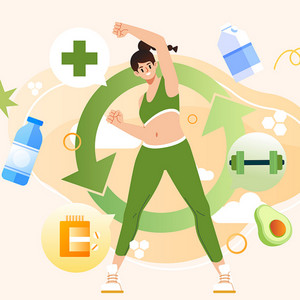
Outdoor sports is booming.
There's a high annual consumption with a yearly average spending on a single outdoor sport ranging from about $270 to about $680.
$80 .00. That's about 2000 to 5000 yuan.
And in terms of consumer groups who's doing that, individuals born in the 80's and 90's, they've become the core of the outdoor sports community.
That's from a 2020 report from the general administration of sport in China.
We're talking about cycling and hiking and trail running.
They've been growing.
Young people are investing in the gear, right?
Because when you're doing the sport, you got to have the gear that goes with it, tennis, rock climbing, even billiards has been growing in popularity.
And I think all of this is really kind of cool, not to mention ice and snow sports, right?
We talked about ice and snow sports here on round table quite a bit during the winter season and the growth in popularity.
Yes, this is definitely a trend that's picked up steam since COVID.
During COVID I remember doing multiple shows about how cycling has become such a popular outdoor choice for people and it and then since covid maybe we've seen the popularity dip a little but for a lot of folks young folks out there it's kind of promising to see that they've decided to keep this habit and also we see that mental health or emotional well -being is something that people are willing to invest in as well yeah I think we can absolutely see that kind of trend that People are paying more attention on their emotional or mental well -beings.
Cultural activities like tea tasting, flower arrangement workshops, and traditional handicrafts provide a kind of mindful escape from urban stress and people would like to go to temples for a visit for their weekends and also visiting libraries, spaces have become, you know, popular relaxation hubs.
Also, many industry reports are revealing that young people are increasingly willing to spend on travel, which is kind of also outdoorsy and learning, respectively, relatively taking up of 36 % and 23 % while spending on fashion and beauty is comparatively lower, which is about like 16%.
That is a report from the conference led by China Newsweek, which is a domestic magazine.
So this is the trend that young people are having and healthier lifestyle is something people will chase after.
Yeah. There's a lot of things that go into it, right?
that you have your foods, you have your exercises, but then you've got that emotional aspect as well.
And I was looking to see if there was anything going on in the news, relatively speaking in the Western world, and I found exactly that type of thing.
Microdosing of joy, I love that term, microdoses of joy.
So I think they call them glimmers, right?
That's where you get creative about how you show your gratitude or feel your gratitude, taking a moment to, it's a cliche but stop and smell the roses.
Look up at the clouds just for a minute, just for a second.
That's why they call it a micro -dose.
Just for your emotional wellbeing, I found another post talking about L -O -Ling yourself better.
Ha ha ha. Yeah, like laughter is the best medicine.
That's the English expression, right?
and feeling good, it's about honest conversations with people that you love, it's about finding joy in that aspect of your life, too.
That's a focus for young people in the West.
Oh, that's great. This might sound like quite an abrupt turn.
Also, what do you see as the economic impact?
Sorry, guys, a little abrupt.
All right, we're happy, you're happy, Now, how can we make money from this?
It's not us, but it's interesting to see how the industries have really sort of catered towards these demands.
Oh, 100 percent. And you're right, there is an economic impact here.
In the health industry, you look at things like fitness applications.
Those are big business.
We talked about organic food brands.
Those are popular. Smart wearables when it comes to technology.
Wellness tourism too is growing.
All the things that I just mentioned are rapidly growing.
Yeah, and speaking of all of these outdoor activities and these sportswears are also becoming very popular in recent years, I would say.
Because back in my childhood I don't think a lot of people will wear these sportswears outside.
and nowadays in subways, while these Lululemons and Arcterix are just so everywhere, and it is absolutely helping and promoting the economy of all of these industries.
Yeah, that's a really good observation, and we might have a topic regarding that coming up in the near future, yes, and, you know, that's all great, But apparently, you know, these health -conscious living lifestyle is creating possibly a new set of social pressure as well.
Yeah. There could be, I suppose, the people who are following these trends, these wellness trends or this wellness aesthetic.
It could make you feel a pressure to maintain a healthy image.
There could also be, you know, that's from a personal point of view.
a person's point of view, but then from a business point of view you could be looking at over -commercialization, right?
So, brands will push these supplements which tend to be very expensive.
They'll push the fitness gear, they'll push all of these products, these foods too, as quote -unquote essential to a healthy lifestyle, and when you see that as a customer, you see essential but you're not buying it, well, then how are you gonna feel?
You might feel guilty, right?
Because you're excluded.
You're excluding yourself, and that might make you feel bad about not participating in the hiking trend or the mache latte trend or whatever the trend is.
So when we're getting all of these pressures, I think having a kind of, you know, realistic wellness journeys instead of these kind of idealized social -media perfect lifestyles is more important because you can absolutely go outside and do some sports with your friends, not wearing these expensive sportswear, or buying all of these gadgets and gears to be a fully equipped, like, athletic man, right?
So, as long as you are doing something that you think that is healthy for yourself, I think it is fine.
And also, I think in recent years, more and more people are not only paying attention on their physical health, also mental health, and I think that is absolutely a good trend.
Especially, you know, after I saw a growing trend when people are getting more self -conscious on their mental well -being.
I especially felt this after experiencing the pandemic.
Sometimes physical activities like outdoor exercise can truly have an impact on our mental health.
Oh, definitely. I think we all learned that from those years.
Yeah, yeah. Yeah, being locked down.
And you highlighted multiple times you should how the relevant gear is selling, just flying off the proverbial store shelves.
And it just reminded me of that Chinese saying, Chinese saying, is there a nicer way to address these students, the least performing students have the most stationary?
Okay, right. So the person who isn't going to exercise very hard will have the most expensive running shoes or something like that.
Something like that.
I'm not here to rain on your parade, to say that you're buying the amount of gear you're buying necessarily has much to do with performance with actually executing those healthy ideas.
But I think, essentially, I mean, this could be an adjustment of lifestyle that doesn't involve a lot of money.
I just find it kind of make me chuckle a little bit when when people don't sleep for example when in fact That's just the cheapest and healthiest way to get well and then you spend so much on all these things and Tell yourself that I'm gonna be okay.
Yeah, but I mean I'll just push back on that a little bit because data from matron showed that the searches for fitness related services grew by 70 % year -over -year and gym memberships and 24 -hour self -service fitness options were gaining traction as well, so it's kind of a direct correlation, right?
If you see a rise in gym interest, even short -term gym memberships, you're probably going to see an increase in athletic wear sales as well.
If more people are going inside the gym, they at least want to dress like they're going to go inside the gym.
So, do you see that this trend?
Because it seems like the demand for a more healthier lifestyle is there?
And how do you see this pan out in a wider scale in the future?
Maybe with more technology in the field, like AI powered fitness coaching will replace these kind of simple workout plans, also smart apps will analyze a person's movement, heart rate inhabitants to create customized exercise routines even though we have already seen a lot of these like smart mirrors or wearables are helping you to do these kind of things but when we are having more smart gadgets like this I think at least when you when we when you bought this you will have the motivation to do this yeah and and and having that kind of tech on your body or available to you, that could lead to
some really wise, preventative measures that people would take.
Instead of waiting for something to go wrong with your body, you track your body, how it's doing, and make sure that you do your best to not get sick.
And then if your body's feeling good, then your mind's feeling good.
And if your mind's feeling good, then your soul is feeling good.
And that just makes for a happy person.
I think so too. And while Gen Z's approach to health may seem paradoxical, their creative mix of indulgence and self -care signals a shift towards a more personalized and flexible view of well -being.
And it's always really interesting to keep track on these new trends.
Coming up, you know who's FOMO's best friend?
Not FOBO, which we've covered on a previous show last week.
It's actually your silent phone.
Stay tuned to find out more on this!
Looking for passion?
How about fiery debate?
Want to hear about current events in China from different perspectives?
Then tune into Roundtable, where East meets West, and understanding is the goal.
You're listening to Roundtable with myself, Hye Young.
I'm joined by Yu Sun and Steve Hatherly.
We've all been there.
You put your phone on silent, thinking you're finally free to focus, but somehow it keeps pulling you back like an invisible string tugging at your attention.
A tiny red dot, a phantom buzz, or just the nagging thought of what you might be missing.
Is silent mode actually helping or a digital illusion?
Guys, what is your habit of muting your smartphone?
I basically mute my smartphone 24 -7.
I keep it on silent almost 24 -7.
Really? Mm -hmm. I'm so surprised.
I'm the only one, then, that only mutes my phone for the live show.
Oh, you keep it on for the rest of...
the ringer on for the rest of the time?
I do. I just manage my notifications, which is I do not have any notifications.
and when somebody really needs me, for example, our work needs me, then they'll call me and yeah.
I'm in some group chats with some friends that are in Canada and the United States.
So when it's 2 am in Beijing, it's like 2 in the afternoon, so they'll be messaging each other in the group chat, I don't need to be hearing ding, ding, ding at 2 am.
Why do you still keep your notifications on?
I thought you were going to say why do you still keep in touch with your Canada and American friends?
I know you have friends all over the world.
But then I got to go into the app.
I got to find the thing, they turn off the notifications.
And then if I want to know, then I got to go in and turn it back on.
So I just leave it and put it on silent.
Yeah, I'm more like, I would like to go see what notifications are rather than they tell me what to see.
So after like a period of time when I used my phone and then I go check all of my notifications.
And that's why I don't like them to ring every time that there is a message.
So anyway, that's us.
Let's get to other people from the study.
They did a study from a tech media group.
They looked at 138 iPhone users.
They wanted to know the impact of silent mode on people's work performances.
So among the participants, the majority – which was 42 % – They were used to keeping their phones on vibration mode only followed by 36 % who set their phones to ring and vibrate and 13 % only who used the phone in ringing mode and 9 % who chose silent mode with no sound or no vibration.
Yushin, you and I are in the ultimate minority here in this group.
The phone usage habits were pretty typical so we don't need to go over those numbers.
Here's the interesting finding from the study.
Users who set their phones to silent mode were the most likely to pick up their phones.
The individuals checked their phones, talking about checking notifications, and using social media more frequently than others, and those who kept their phones on silent mode were also more likely to pick up their phones compared to those who kept the ringer on.
so the people who put their phone on silent mode thinking okay I'm gonna really focus on my project here at work this afternoon those are the ones who picked up the phone the most the students who think I'm really gonna focus on my my studies for the next three hours those were the students who actually literally picked up their phones the most right and a lot of people are attributing FOMO to the whole phenomenon of the fear of missing out But why is it that even when you've you still fear missing out when you've actually actively sent your phones to silent?
Well I think the thing is is that you're curious, right?
When your phone's on buzzer or ring then you can hear it.
You know when someone contacts you, when you've got it on silent mode you don't know when someone contacts you.
So you go ahead and pick it up.
That's one reason. Another reason they say is that we are bombarded all day every day, every minute.
There's a new piece of information about something coming onto our feeds so we think we're always missing something that's happening.
It's kind of FOMO, but it's kind of just I wonder what happened in the last 10 minutes type of thing.
Yeah, also, individuals with a kind of, you know, high need for belonging are more likely to pick up their phones while it's on silent.
The logic behind this is quite similar, you know, for them, checking messages and gaining these kind of social support or getting messages from their friends.
Or a sense of belonging is more important than the task at hand.
And so they actually, that's in some way that the mindset of I will like to do something very, very focused, and then that kind of mindset made them want to see their cell phone even more frequently.
It's totally counterintuitive, isn't it?
It's completely going against your goal.
So I guess the takeaway from this is, if you really want to disconnect for a couple of hours or whatever.
Turn the ringer on and leave it there and if you don't get messages then it's not gonna bother you because if you're that type of person who suffers from FOMO or maybe is just overly curious all the time you're gonna be picking up your phone even more so.
Or even just snobbering your phone that afternoon...
What are you talking about?
What! Oh my God my heart just stopped for a second.
I I've been living in this digital world for so many years by now.
I thought that we've known better to manage your notifications, to switch some of them off, some of them on.
And also, can I remind everybody, JOMO, the joy of missing out, not so much is deserving of your attention.
It's perfectly fine.
It could even give you a microdose of joy sometimes that you're not wasting your time on what?
somebody just had a wedding?
What does that have to do with me?" And that brings us to the end of today's Round Table.
Thank you Steve and You Shouldn't for joining the show.
I'm Hye Young. We will see you next time!